Milford Sound — Waterfalls in the Mountains, Animals in the Sea, and Margaret in a Waterfall.

2 Comments

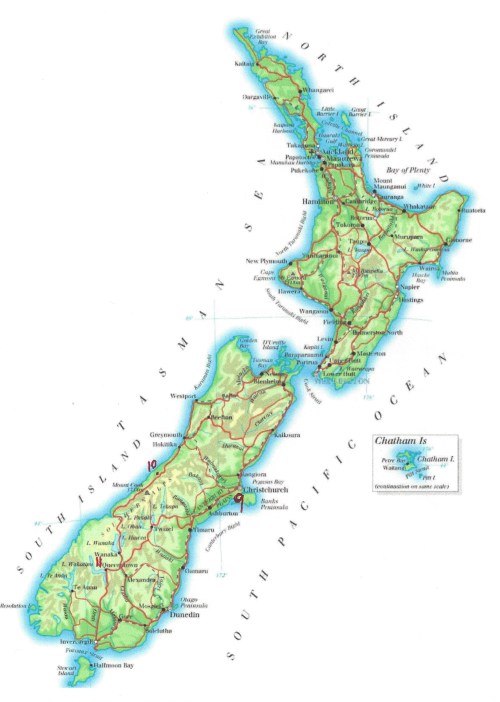
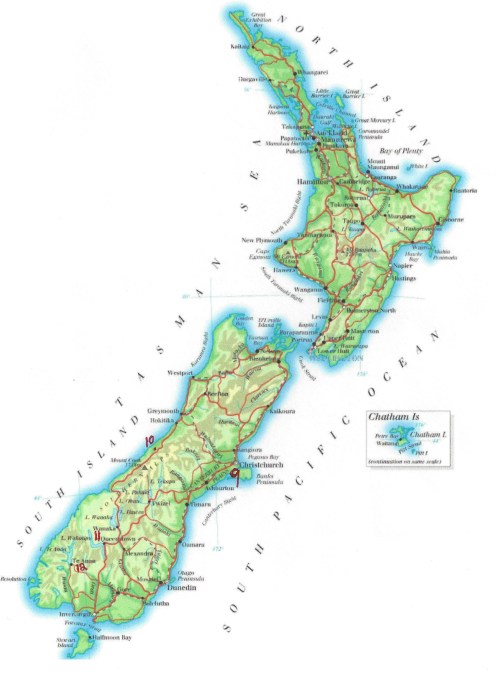
Nov. 9, 2017 — Te Anau to Milford Sound Cruise, New Zealand (see MS on the west coast of the South Island).

New Zealand MS

P1050476

We had heard from many people that we should definitely go on a Milford Sound cruise and this was today’s goal. Today was probably the most visually stunning day of the trip and will have the most pictures of any blog entry. It would be hard to come up with a single best highlight of the trip but this may be it.

The road from Te Anau to Milford was closed due to snow on the day before (Nov. 8). It is also a fairly treacherous ride. The red areas on this map are the areas where it is forbidden to stop due to the danger of avalanches. There are areas where they ask you to use your gears to stop not your brakes. Driving on the left through an avalanche seemed like a lot of fun.

IMG_8716

I was happy not to feel like a wimp for not wanting to drive since it did seem a little sketchy, especially if we encountered snow (which we didn’t). We took a bus tour to get to the cruise and were very happy to have done so. The bus had a glass roof and full picture windows. I ended up seeing so much more from the bus than trying not to get killed driving. Interesting how sometimes not going on your own lets you do and see more. Usually it’s the other way around.

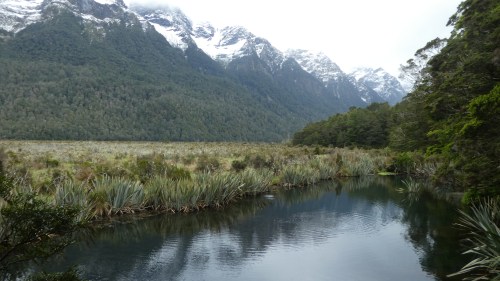
The bus driver was very entertaining and we had frequent stops. One was at Mirror Lakes. The sign was reversed so that you could read it in the reflection.

P1050453

P1050459

P1050470

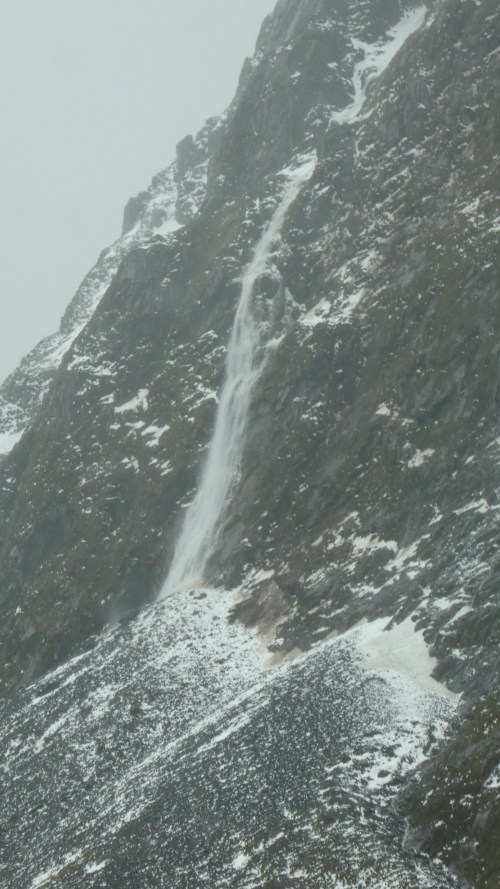
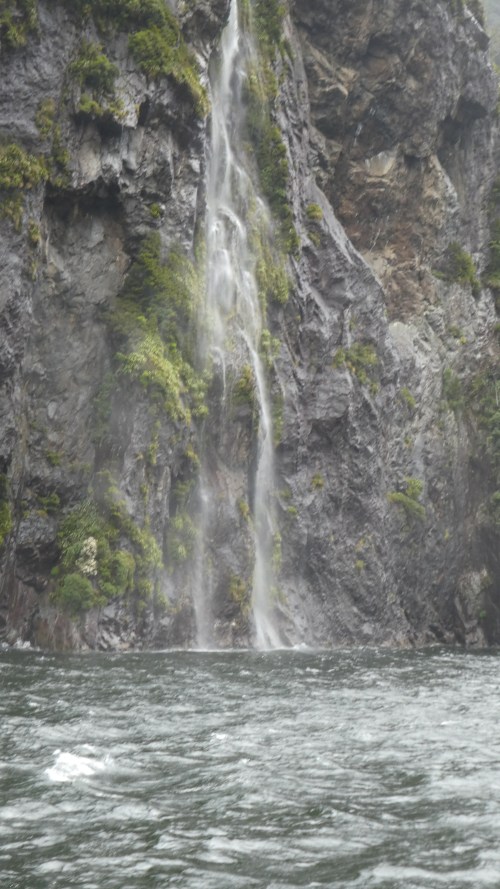
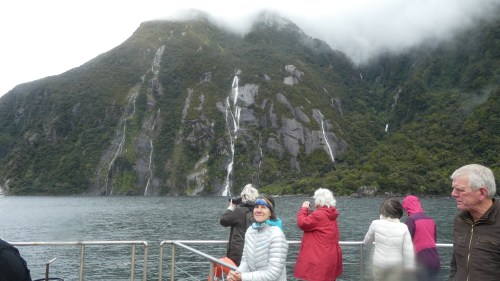
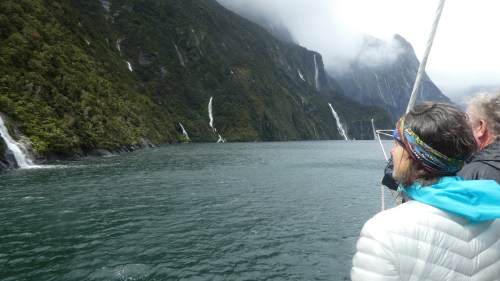
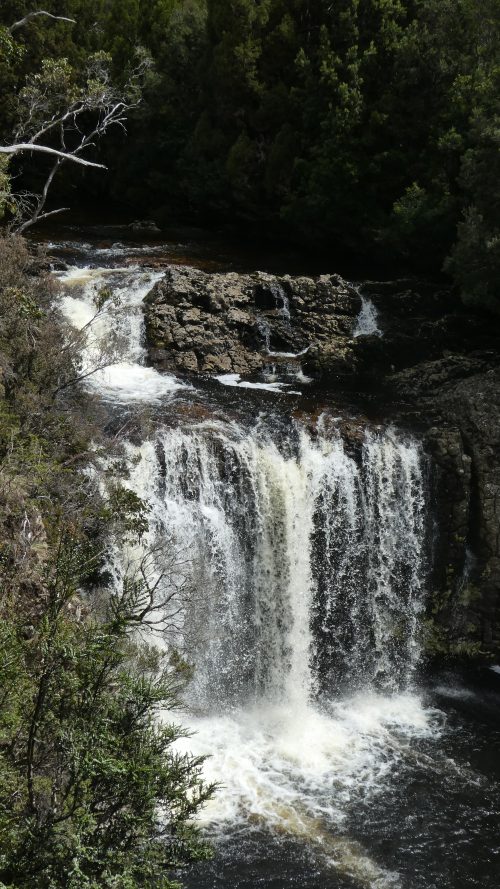
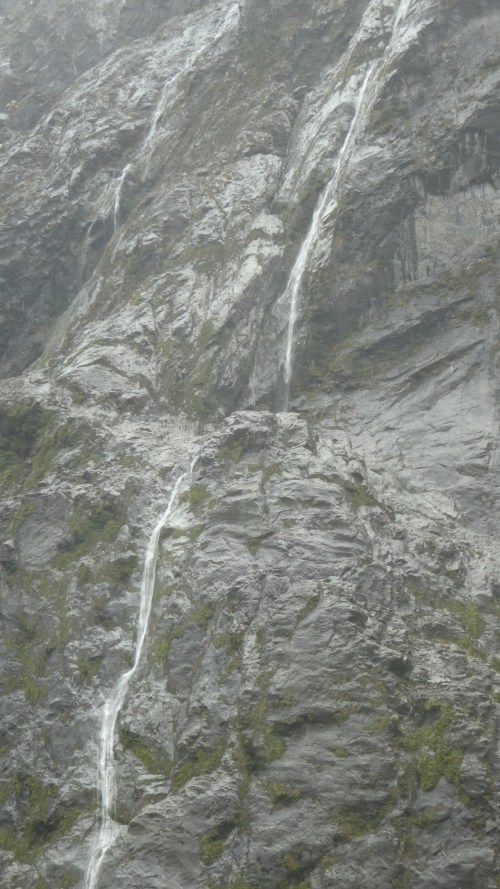
Because of the snowfall the previous day, the waterfalls were very full.

P1050471

P1050500

P1050485

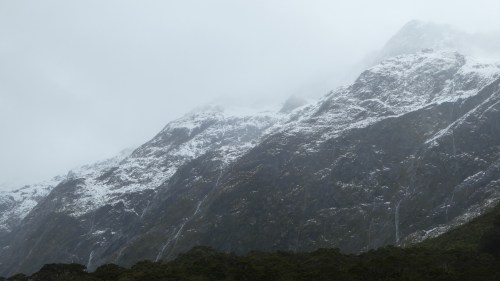
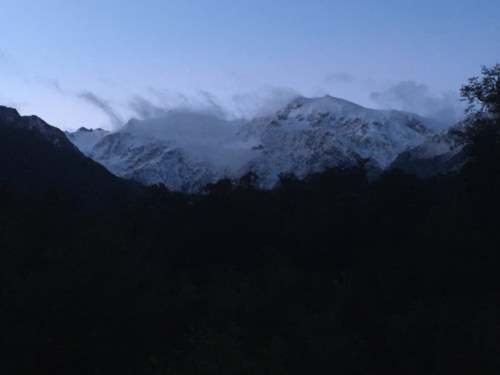
View of mountains from the bus

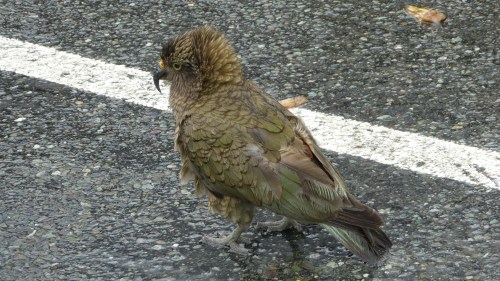
At one of the stops we saw a Kea, a rare type of parrot.
P1050493

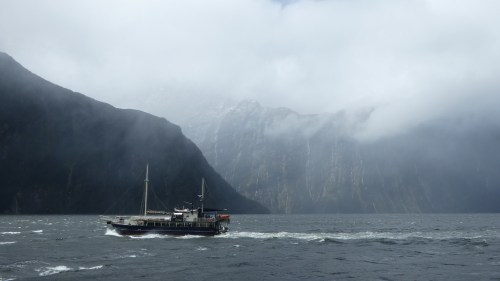
After the bus we moved on to the ship.
P1050505

View from the Milford Sound port

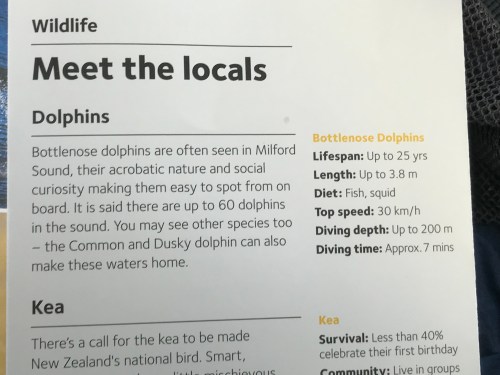
The guide said that it’s unusual to see all three of the main sea animals (penguins, seals, and dolphins) in one day but we were there on a good day.  This description from a brochure describes two of them.

IMG_8724

P1050539

Penguin at the top

P1050538

Another penguin

IMG_8730

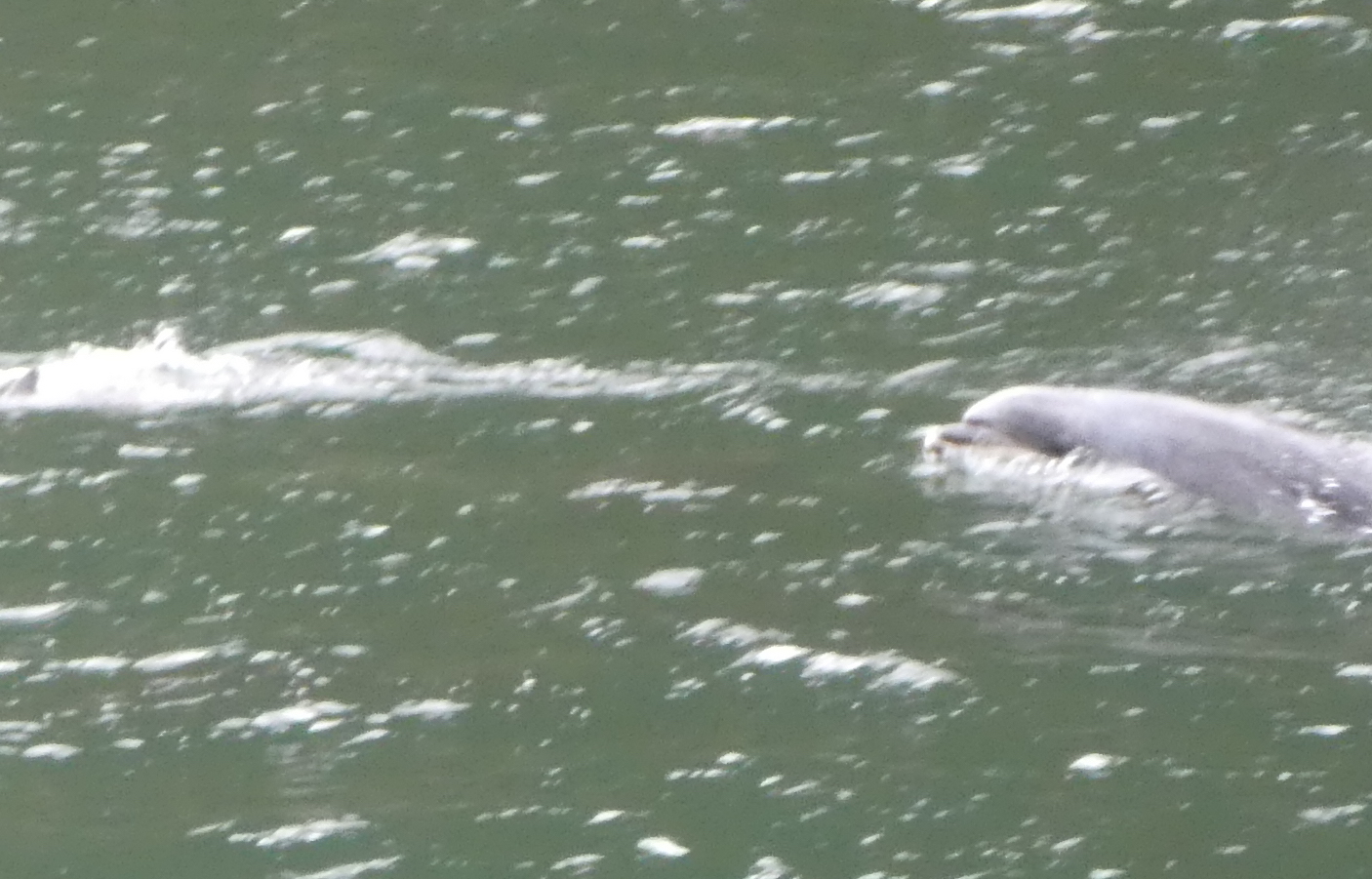
I tried to ask the dolphins to stop moving for a while so I could get a good picture but they seemed to be in a hurry, maybe to keep up with the ship. Here’s my best attempt.
P1050556a

Bottlenose Dolphins off the side of the ship

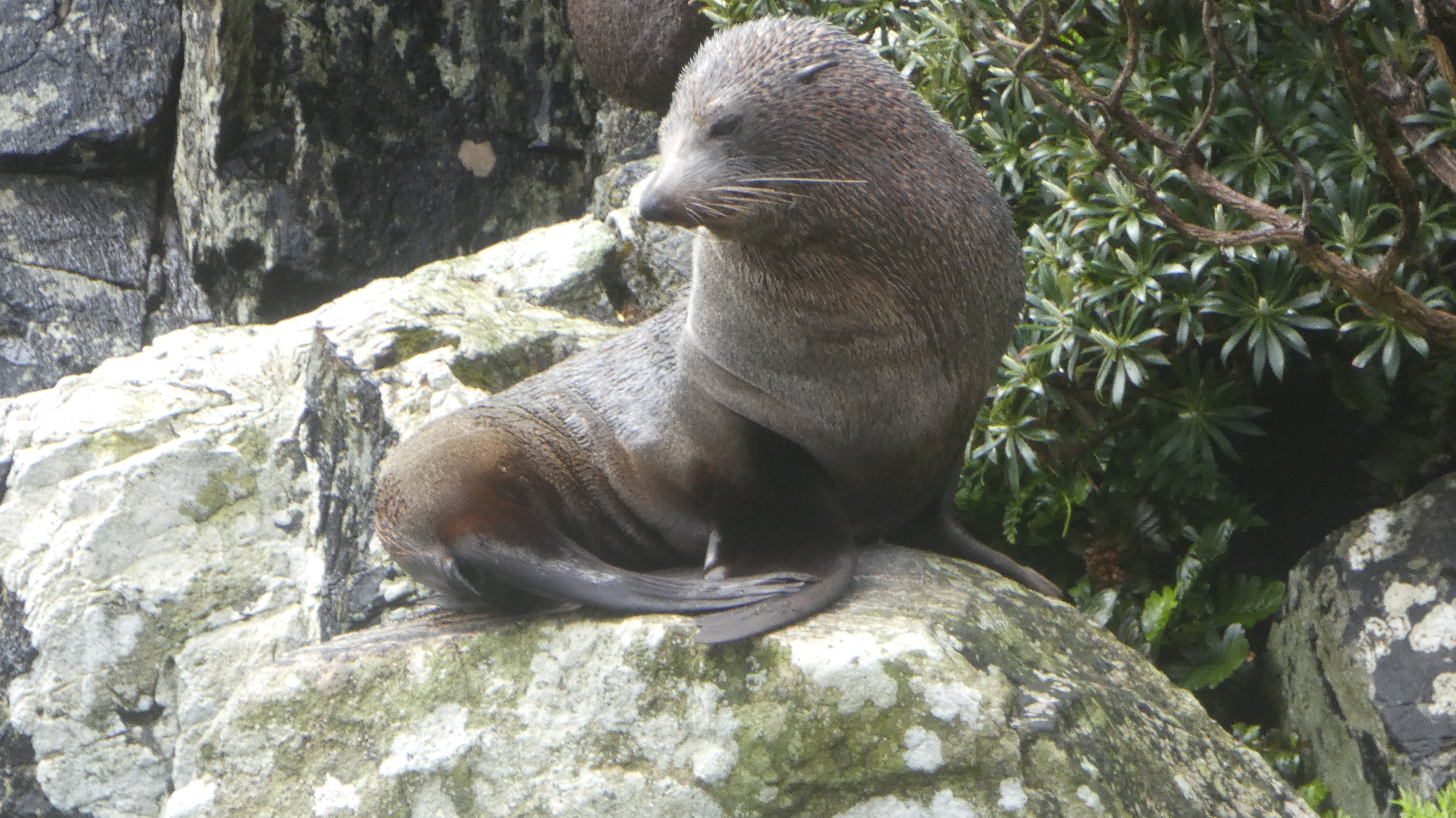
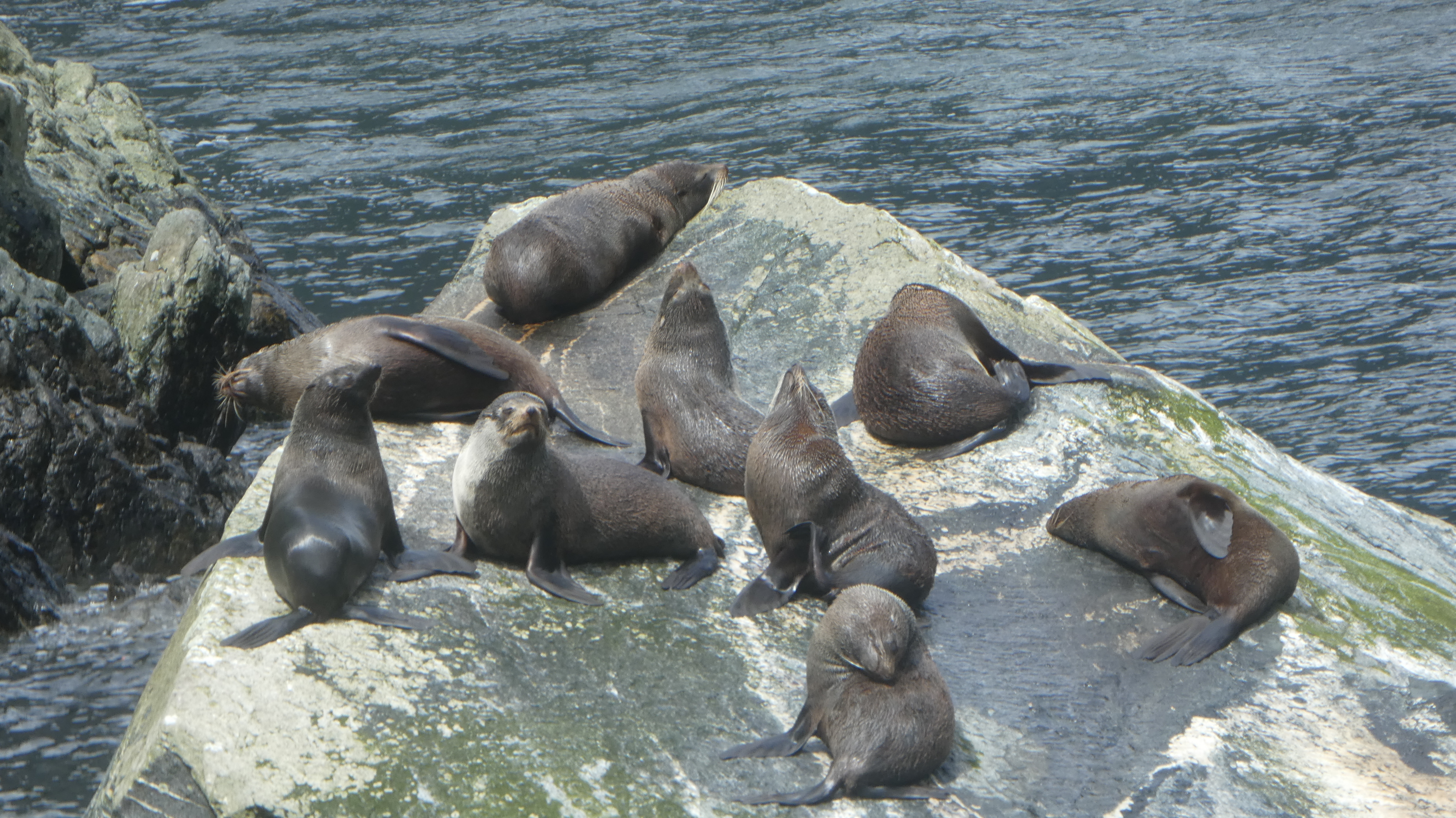
The female seals were sunning as a large group while the big male was off on his own. This seems like a sick human male fantasy.
P1050576

Female seals

P1050584

Male seal

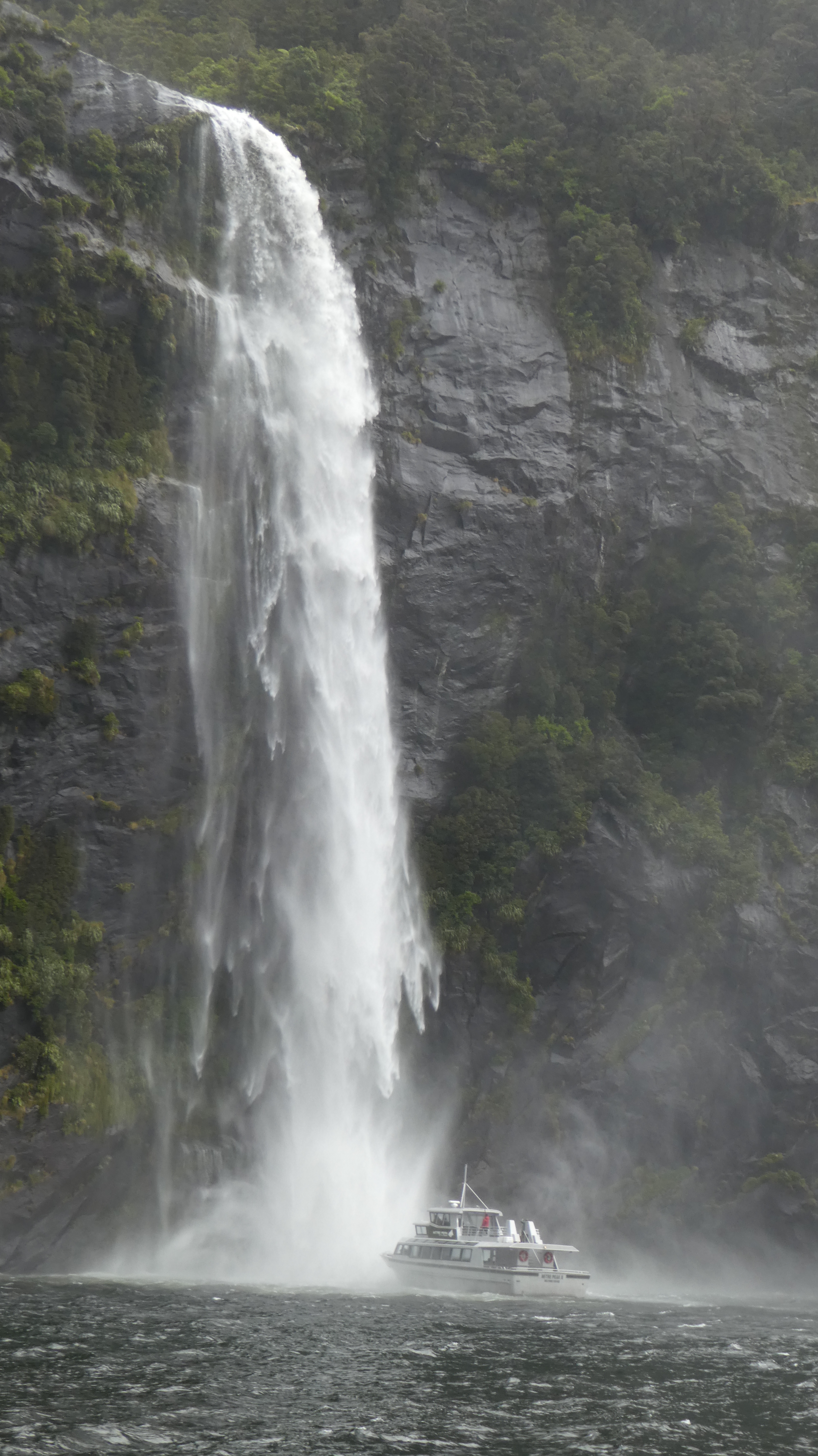
My wife can be fearless. I’ll probably never forget this incident for the rest of my life. The guide warned us that we were about to go right into a waterfall to experience its power (some what like the Maid of the Mist at Niagara Falls). We saw another ship go in before us.
P1050522

We were about to go where this ship is

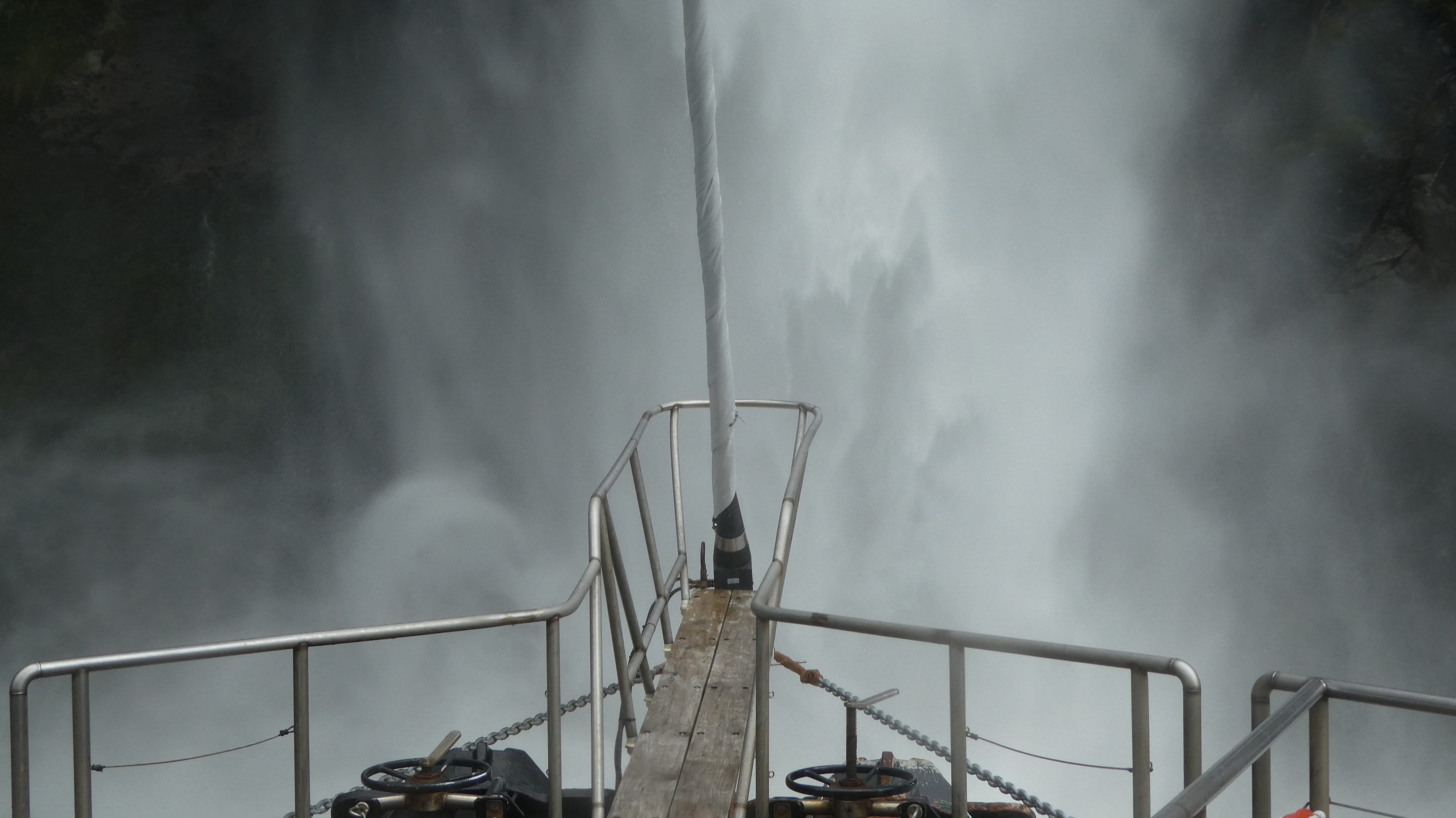
Many people including Margaret and I rushed to the front of the ship to see the waterfall up close.
P1050528

Just before the deluge

Soon it started getting wet. I mean wet. Really wet. I moved back as far as I could while still being outside. Most people scurried inside. Margaret stayed right up front.

P1050591

P1050588

Margaret as one of the very last to leave, soon to be the only one left

Soon everyone else had left. I was soaked to the bone. There were only a few dry spots on my body and I left way before we got to the very worst of being inside a waterfall. Margaret stayed up front the whole time.

P1050589

My very last picture before I wimped out. Margaret is still there somewhere.

I’ll never forget the crowd thinning out more and more until only one intrepid passenger remained. One of her pockets was a miniature pond.

Here are some pictures of waterfalls and mountains. It is possible to get bored with beauty. I remember being almost annoyed at seeing elephants in the Kruger park in South Africa since we had seen so many of them. How many waterfalls can you see before it’s enough? Fortunately, we didn’t get anywhere near that point.

IMG_1575

Looks like a lace veil spread out

P1050515

P1050552

P1050561

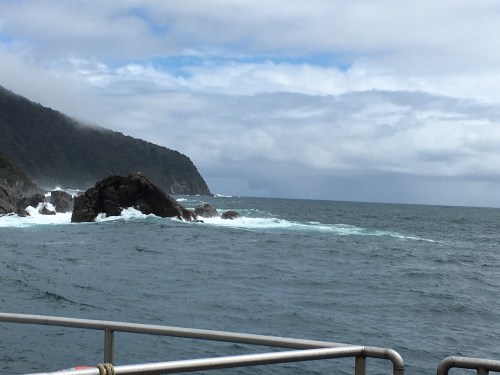
The furthest point we got on the cruise was to Tasman Sea in open waters.
IMG_1570

Tasman Sea

While the bus on the way down made frequent stops and gave a lot of commentary, on the way back he announced that he was going to be quiet and concentrate on getting us back as quickly as possible and without stops. This was exactly what we were hoping for. We were done for the day but we weren’t sick of the views.

IMG_8750

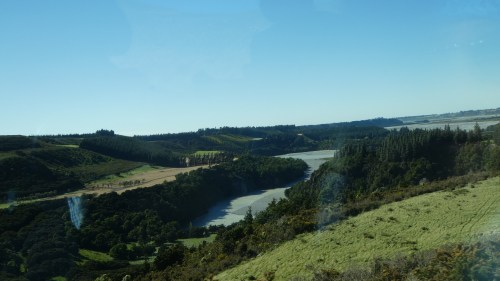
More mountains and waterfalls on the way back to Te Anau from Milford Sound.

IMG_8760

Just before the tunnel entrance on the way back
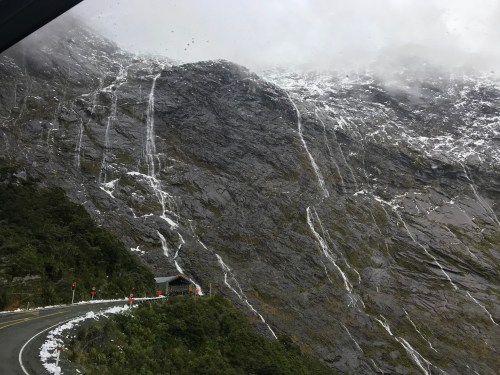
IMG_8757

Glad they build this tunnel rather than trying to drive on a road through these mountains

Some days when you travel things just work out, like this one. The snow closing the road the day before and not this day led to us being able to see very full waterfalls. We saw all the main animals. I spoke with people who took the cruise before us and they complained of heavy cloud cover that we didn’t have. The decision to take the bus made for a much more enjoyable day. The company that ran the hotel pickup, bus, and boat (Real Journeys) had everything really well organized. I wish all of life could be like this.
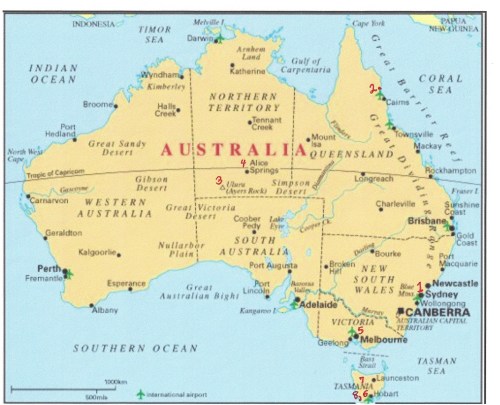
Yes, We Like To Count Things — Where We Were and Some Numbers

1 Comment

As retired professors of mathematics, we feel that there were not enough numbers in these blogs. Therefore, here are some counts related to our travels:

  • 29 days away from home
  • 14 flights
  • 13 different airports
  • 4 different airlines
  • 11 boat rides
  • 6 cable car rides
  • 2 trains
  • 12 different hotels
  • 14 hotel check-ins
  • 10 time zone changes
  • 236 miles covered by Margaret on foot, as recorded on Apple Watch Moves
  • 59 miles covered by Larry on foot, as recorded on Apple Watch Moves
  • 16 degrees south, latitude closest to the equator: The Great Barrier Reef, AU
  • 45 degrees south, latitude furthest from the equator: Te Anau, NZ
  • 131 degrees east, longitude furthest west from home: Ayers Rock Resort, AU. (That is, 160 degrees of longitude between home and Ayers Rock)
  • 175 degrees east, longitude closest west from home: Auckland, NZ. (That is, 106 degrees of longitude between home and Auckland)
  • 29 degrees Fahrenheit, lowest temperature we experienced (Cradle Mountain, Tasmania)
  • 101 degrees Fahrenheit, highest temperature we experienced (Kata Tjuta, Northern Territory)
  • $2.12 per litre, cost of gas in New Zealand dollars (Equivalent to $5.56 per gallon, in U.S. dollars; a fun math problem!)
  • $1,000,000+ average cost of a house in Auckland, in New Zealand dollars. (Equivalent to $680,000+ in U.S. dollars)
  • 5 states or territories (out of 7) that we visited in Australia
  • 5 regions (out of 16) that we visited in New Zealand
  • Countless memories and experiences

Australia8

Overnight Stays in Australia, sequentially:

  1. Sydney
  2. Trinity Beach (near Cairns)
  3. Uluru
  4. Alice Springs
  5. Melbourne
  6. Hobart
  7. Cradle Mountain
  8. Hobart


NZ14

Overnight Stays in New Zealand, sequentially:

  1. Christchurch
  2. Franz Josef
  3. Queenstown
  4. Te Anau
  5. Queenstown
  6. Auckland

Return to Queenstown — Glow Worms, Sheep Farms, and Deer Farms

2 Comments

Nov. 10-11, 2017 — Te Anau to Queenstown, NZ

Te Anau, NZ

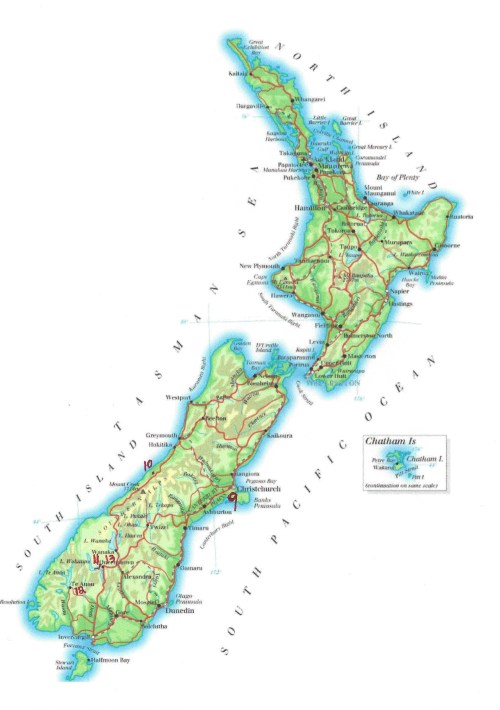
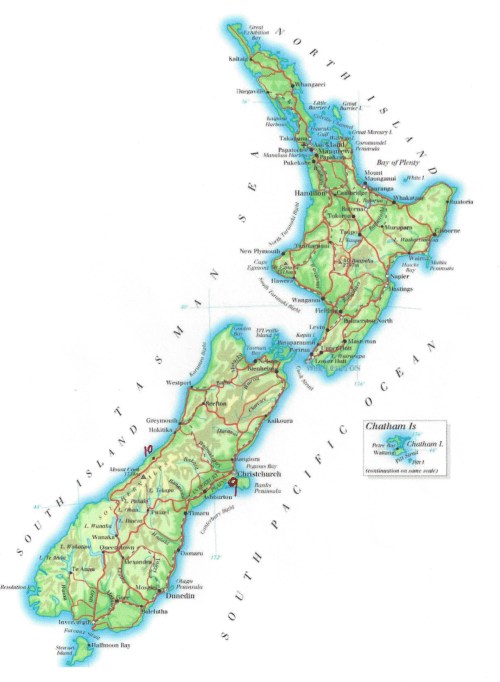
Te Anau is in the southwest corner of the South Island (see #11 on the map)

NZ11

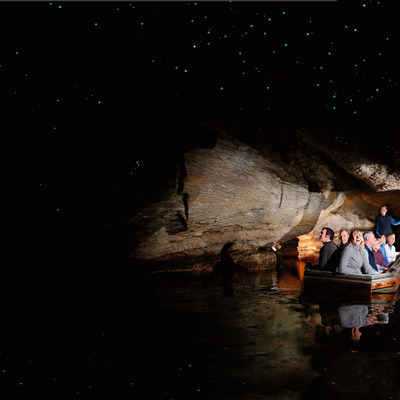
While Margaret was hiking on part of the Kepler Track (see her separate entry), I went on another Real Journeys excursion to see the Te Anau Glowworm caves. As they hyped it “Experience a mysterious underground world of rushing water before drifting in silent darkness beneath the luminous shimmer of hundreds of glowworms.”

It was a short 2.5 hour trip which began with a cruise across Lake Te Anau then a walk inside the caves. They didn’t allow any photography since it was mostly in the dark and the flashes would have disoriented people. We had to crouch into a small opening and on a slightly treacherous walkway (at least for someone with mobility problems) but it wasn’t that bad.

These pictures are from their web site — realjourneys.co.nz/en/experiences/glowworm-caves/te-anau-glowworm-caves/

real-journeys-400x400x2

They then moved us into these small boats through the cave.

real-journeys-400x400x

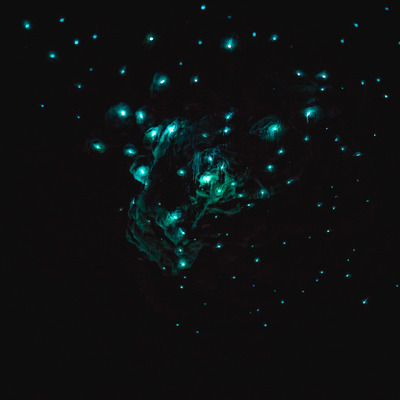
We reached the highlight, which was the luminescence provided by glow worms. Each glow worm weaves hooks to catch insects and has its lights to help the bugs find them.

real-journeys-400x400x

Stock photo of the “luminous shimmer” of the glow worms

I felt like an intruder in this beautiful private world of the glow worms. Hopefully, we weren’t disturbing their life cycles. I’m really glad they banned picture taking and were very strict about being totally silent in the cave. Someone asked if there was a waterfall in the distance but the guide said it was probably someone breaking the silent rule in another boat. Sounds carry very far down here.

Just as I got off the boat on the return to Te Anau Margaret arrived at the dock. This wasn’t as amazing a day as the Milford Sound cruise the day before but it was many times more active for me than I’m used to at home (or that I maybe should be doing).

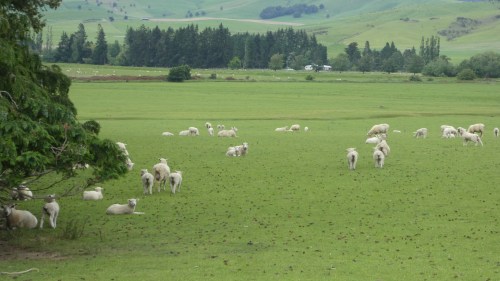
The next day we got back in our car and drive back to Queenstown. No trip to New Zealand is complete without a picture of sheep. According to Expedia, there are about 39 million sheep in New Zealand or about 10 sheep for every human.

P1050615

A couple dozen of the 39 or so million sheep in NZ

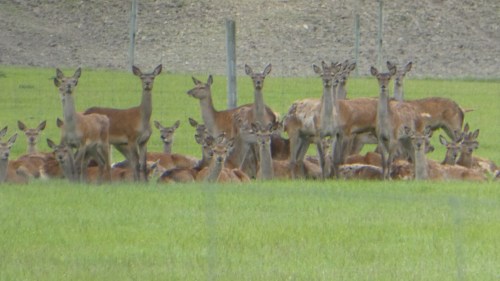
In the US. we’re used to deer running wild, not being farmed so we were surprised to see deer farms all over. Most restaurants we went to had venison on the menu. Again according to Expedia, there are approximately 1.7 million deer on 3,500 deer farms. NZ is the world’s largest and most advanced deer farming industry. https://en.wikipedia.org/wiki/Deer_farm

P1050611

Deer having a rare opportunity to see people from the US

I was looking forward to the end of a week’s worth of driving with some pain and trying to remember to keep left. We did get our money’s worth by being able to stop all along the way from the northwest corner to the southwest corner of the South Island. It will be good to start getting right again.


Spend your 20’s exploring and other thoughts about people

Leave a comment

Everywhere on the trip — Oct. 18 to Nov. 15, 2017

Note — This is not a visual blog entry and I would recommend reading a different blog, such as the one from Milford Sound if you’re looking for travel pictures and commentary.

I’ve had people who are parents of 20-somethings complain that their children don’t seem to be going anywhere with their careers. They may have a master’s in a science field and be waitressing or spending six months traveling the world on next to no money.  My advice was always that the 20’s can be really well spent making bad decisions (if they’re not long-term), trying out what turn out to be bad career choices, working at low paying jobs, and traveling. That’s not to say that someone like our son who found a career that works well for him right out of university is doing the wrong thing. (He’s also doing several international trips with vacation and time he has purchased).

My advice was that the time to worry is if your child is still in his / her 30’s and living at home with no career. My incredibly wise aunt Lil had the theory that everyone needs to rebel at some point in their life. If they don’t do it in their teens or twenties, they’re due in their 40’s or 50’s and in a possibly more destructive way.

The reason for bringing this up here is everywhere we went on this trip we were served and guided by people in their 20’s. Many of these people had come to Australia or New Zealand from all over the world. Maybe they were leaving their home for a good reason or maybe they had no reason to leave but had always wanted to come to this part of the world.

Of course, I spoke with literally dozens of these 20-year olds. I always asked them where they were from and what their dreams were, while they’re serving us dinner or taking us on a tour. The most common response was that they had no idea what they were doing long term but that life was good for them at this moment in their lives. One Polish young woman in Franz Joesph Glacier was an exception. Something unhappy had happened to her in NZ. My guess was that a partner broke up with her but I don’t know,. Besides her they all seemed pretty happy (or as happy as you can be serving a nosy old man from the US).

Many were from Europe such as an afternoon guide we had at Cradle Mountain, Tasmania. He had spent enough time here to become an expert on the plants, animals, hiking trails, and history to have a good job. He had bigger dreams for moving on to other environments.

P1050166

An interesting character was this guide from New Zealand, for our laid-back lake cruise in Franz Joseph. At first glance, he seemed a little like a redneck, for lack of a better word.  He was very progressive about human rights and very much into hunting and fishing. He didn’t like the new progressive female Prime Minister of New Zealand, because he thinks she is trying to make too many changes too quickly. He was an excellent guide who knew a lot about the animals, plants, and native legends.

P1050346

Our lake guide explains the strength of a hemp plant.

These two couples in their twenties were not working, just traveling. One couple was from France the other from Italy. I started up a conversation with them so I could practice my French. It turned out someone had given them a picture from the 1970s’ of two couples at that very spot who were about their age. They were too shy to ask but I volunteered to get a picture of them posing just like the people in the postcard.

P1050690

For the most part, I didn’t take pictures of these twenty-somethings. It was one of the highlights of the trip to be able to vicariously experience their lives for a few brief moments each. Their lives were also filled with the drudgery of their jobs but the excitement of meeting others like themselves from all over the world and of being these beautiful places.

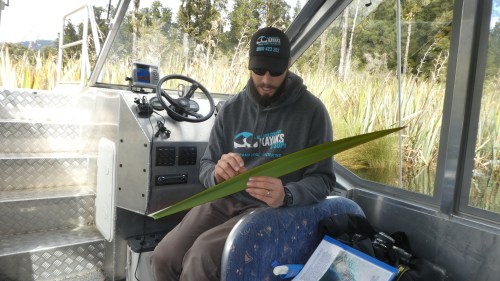
Besides the twenty-somethings, I talked with many people from all over. Some we became friends with for a brief time. I’ll just relate one situation here. On the Milford Sound Cruise, we shared a table with two couples who represented two extremes of the travelers we met.

One couple was newlyweds from the North Island of New Zealand. This was their first time in the South Island. She worked as a cake designer and this trip was obviously taking up much of their savings. We really enjoyed these people and they were probably more thrilled to be on this cruise than the other couple.

In contrast, the other couple was from Lake Tahoe (the Nevada side, with lower taxes). They were world travelers and about as high energy as any travelers I’ve ever met. In one day in Queenstown they were busy from early morning to late at night  with something like 7 different activities —  a zip line, city tour, cruise, cable car, midnight sky tour, and ate in the best restaurants. They could not imagine spending 4 weeks in ANZ, because they see what they believe to be everything in a very short amount of time. I made a joke about spending our children’s  inheritance and they got very defensive, explaining in much more detail than I wanted about how well they had all their financial bases covered. They were clearly Republican because all they seemed to care about was lower taxes.  While these people were fascinating to talk to for a few minutes, the other couple would be much more fun to spend time with.


Onto Auckland

1 Comment

Nov. 13, 2017 — From Margaret

Auckland is in the northern part of the North Island (see #14 on the map)

NZ14

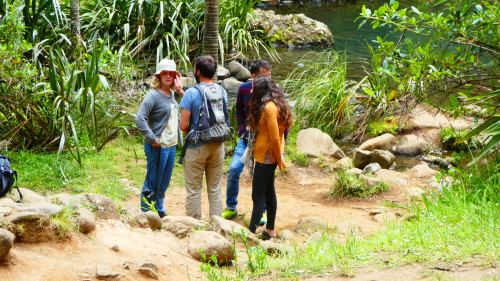
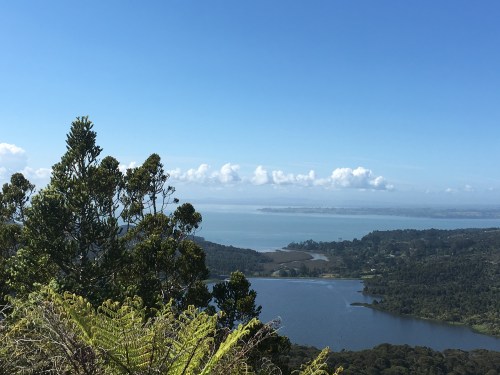
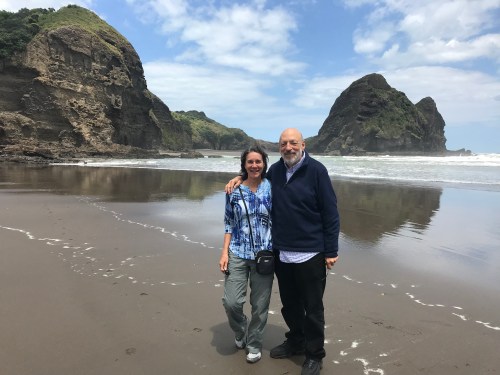
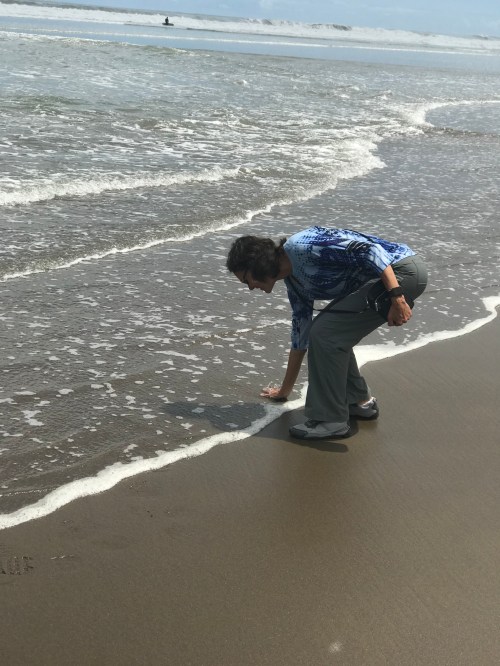
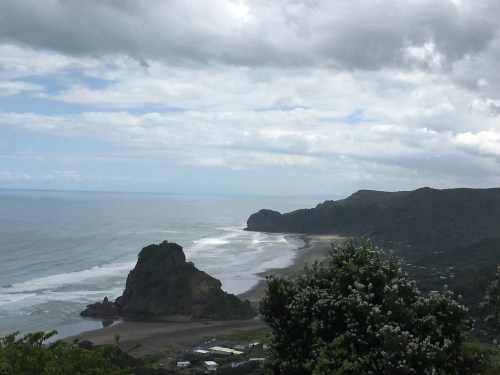
Auckland has a different feeling from other places we’ve been. It is a large city, heavily populated (1.5 million), with heavy traffic. But it does have parks close to downtown with some elevation climb (Albert Park and Auckland Domain)! So I do find places to run, just as I have everywhere. On our first full day there, we took a guided tour of the area – mostly in the area surrounding the city proper, with Time Unlimited (their Maori tour). We were a small group of three couples, and our guide facilitated social interaction, which added to the experience. We made stops at beaches, waterfalls, tops of mountains, taking in spectacular views, including the Waitakere Ranges. Auckland borders the Tasman Sea on the west and the Pacific Ocean on the east. The water felt rather warm!

IMG_1604IMG_8818

IMG_8813IMG_8816

IMG_1616

P1050699

Kelp on the beach that look like discarded belts.

The Polynesians settled on these islands between 1250 and 1300 CE. Our guide, Sofia, is intimately connected to the flora and fauna of Auckland, the cultural origins and diversity, and the surrounding mountainous areas. Her passion, enthusiasm, and knowledge made for a great full day tour. Sofia shared stories and folktales about the Maori people, the birds, and the healing properties of some plants. We couldn’t help but fall in love with the Auckland area after the time we spent with her!

P1050670

During one of our snack breaks, we tasted Marmite (we had already tasted the similar Vegemite in Australia). It is a thick black food spread made from leftover brewers’ yeast with vegetable and spice additives – it tastes salty, bitter, and malty. On some of our short walks in the woods, Sofia asked us to disinfect our shoes – we sprayed a chemical solution on the bottom of our shoes so as not to contaminate the soil and vegetation of the region. Protecting the native flora is of paramount importance to New Zealanders. Sofia points out the fern (Maori koru) that is in the logo for Air New Zealand.

IMG_8805 P1050685

P1050683

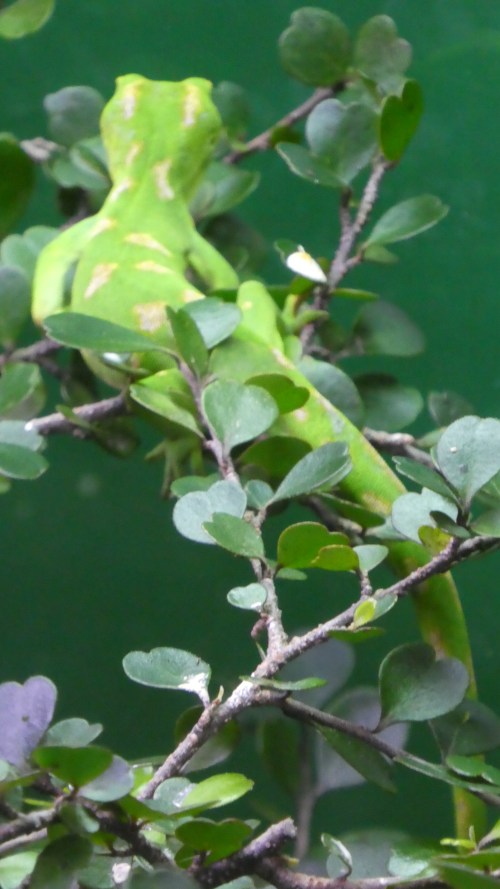
An unknown lizard blends in with the foliage.

P1050677


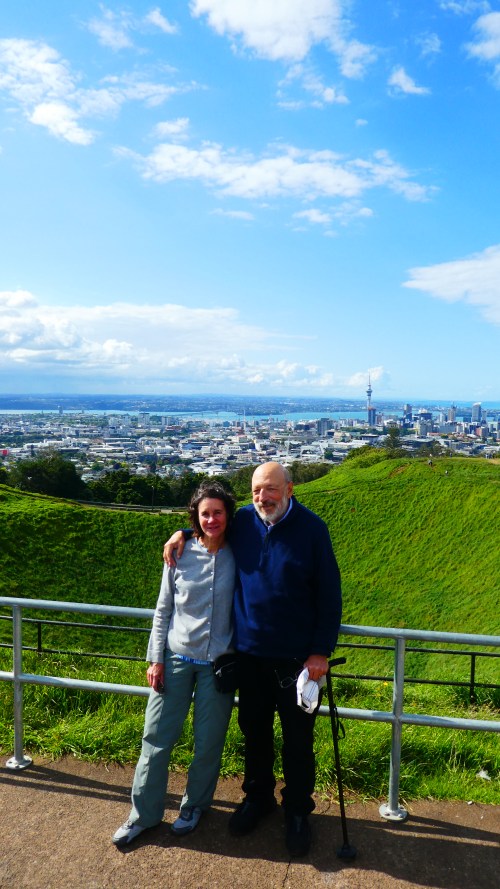
Sofia also points out the similarity between a plant and woodsprites in the movie, Avatar. So many movies have been filmed in both the North and South Islands of New Zealand. It is no wonder to me. Our journey nears its end on Mount Eden, with a great view of the Sky Tower and downtown, as well as the cone of a dormant volcano behind us.


P1050718

P1050709


Goodbye to Queenstown, Stars Above Queenstown, and Other Wonders

1 Comment

Nov. 11, 2017 — From Margaret

Queenstown, NZ

Queenstown is inland in the southeast corner of the South Island (see #13 on the map)

NZ13

We really liked Queenstown! Our hotel was right on the waterfront, and we enjoyed these views from our hotel room.


Larry enjoyed the scenery as he rode the gondola up to Bob’s Peak. In a previous blog entry, I explained how I hiked the trail. We met at the top and enjoyed coffee and views on this sunny warm day.


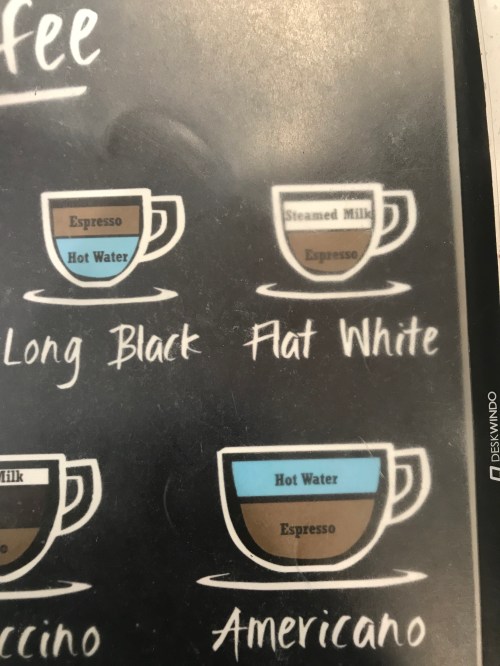
 Speaking of coffee, we had to adjust to Australian and New Zealand tastes, as coffee in our country is usually brewed, and is weaker. We both drink our coffee black, so we usually ordered “long black,” which adds espresso to the hot water. But sometimes Larry preferred “Americano,” which adds hot water to espresso, and is a little weaker. Even with the extra water, he wanted it watered down more, which was often difficult for them to pull off.

IMG_8783

On our last evening in Queenstown, we took the gondola up to Bob’s Peak, where we had been earlier in the day. We met a guide, who led our group of about 15 people on a walk to a dark area with two telescopes. Fortunately, we had a mostly clear sky with plenty of stars, including the Southern Cross. The moon wasn’t there to interfere, because it was a waning crescent moon visible only in the morning sky. We did see a couple of meteors, and a satellite. Our guide explained how there’s a vast area of sky that we cannot ever see in the northern hemisphere. He helped us pick out several stars and constellations. I certainly didn’t need help finding Orion, though it was upside down!

I guess because Orion is so distinctive, this constellation has been an anchor for me for many years – whether I saw it while walking home from teaching a night class, or see it in the early morning while out for a run and walk. Wherever we travel, I try to find Orion, the Big Dipper, and Polaris. In Australia and New Zealand, of these, only Orion was visible. But I learned to also recognize the Southern Cross. Perhaps the regular patterns in the night sky provide comfort. I also pay attention to moon phases and meteor showers, sometimes sitting out in my back yard in the wee hours of the morning with a cup of coffee.

It was a wonderful evening under the stars, and a nice way to end our travels on the South Island of New Zealand. The next morning, we flew to Auckland in the North Island.

P1050658

Looking down on Queenstown at night from the gondola heading down.


Hiking in Te Anau (on the Kepler Track) and in Queenstown

3 Comments

Nov. 8-11, 2017 — From Margaret

Queenstown, NZ

Queenstown is inland in the southern part of the South Island (see #11 on the map)

NZ11


IMG_1514

Early morning hike – the Sunshine Bay Track – along Lake Wakatipu, Queenstown


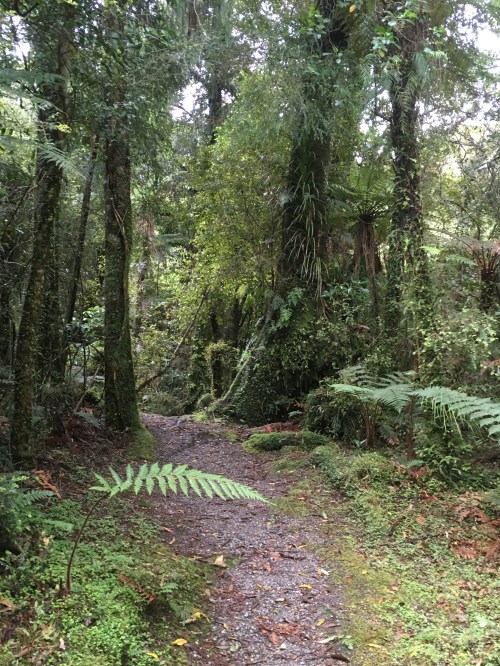
Onto Queenstown!  How fortunate that everywhere we’ve been, there are nice venues for hiking, walking, and running.  Often, the scenery has been spectacular.  We then head to Te Anau.  Shortly after arriving, I head out for a 2-hour hike on a small portion of the Kepler Track, one of what are called the Great Walks of New Zealand.  It is along Lake Te Anau, and offers a different feeling from some other hikes – ferns and moss are prevalent.

Te Anau, NZ

Te Anau is in the southwest corner of the South Island (see #12 on the map)

NZ12

Sometimes when I hike, I ask myself – isn’t it all the same?  Trees, hills, vegetation, the  path in front of you.  What’s different about this trail from others I’ve recently hiked, or those I’ve walked in New York or Pennsylvania?  But I really do get a different feeling in each place.  Sometimes it’s because it really is different in terrain, vegetation, surroundings, weather, time of day, birds, insects, other wildlife, or what you anticipate.  If I were more knowledgeable about some of these things I would probably be even more sensitive to these differences.  It’s also comforting to feel the similarities.  Noting differences where there are commonalities, and noting similarities where there are differences, are ways we use our intelligence.  I can think of so many occasions in mathematics where this deepens your understanding – how is divisibility by 2 the same or different from divisibility by 3?  or 4?  or 5?  The concept of modular arithmetic opens up in exploring this notion.
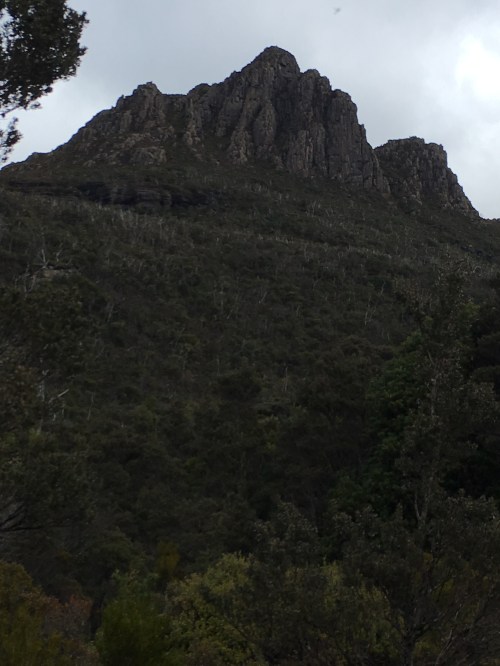
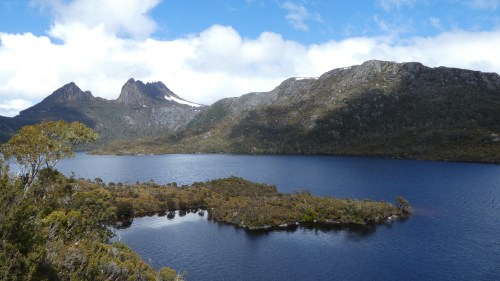
Notice the huge log across the trail – these pictures show a different portion of the Kepler Track that I hiked a couple days later.  This was along a river, and included some climbing, but not too much.

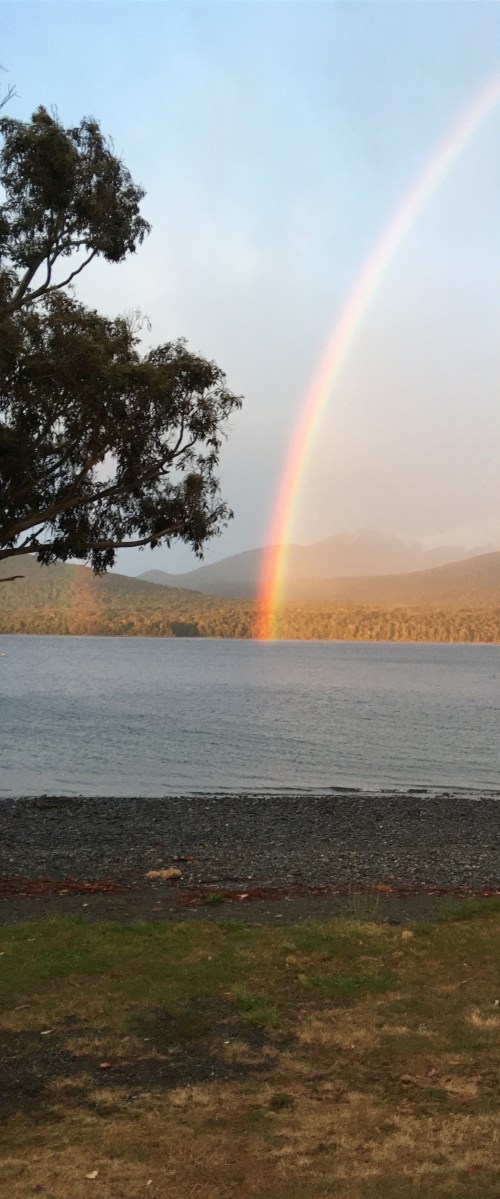
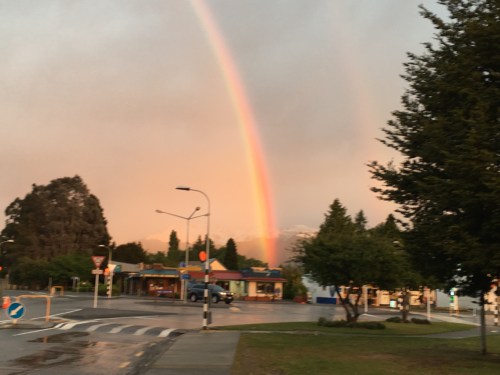
I was treated to a double rainbow on the early morning of November 9, over Lake Te Anau.  It lasted a long time, and changed during that time.

IMG_1548

You can barely make out the double arc here.

IMG_1547

IMG_1544

Our bus trip to Milford Sound and the cruise on Milford Sound was spectacular – waterfalls, snowcapped mountains, steep cliffs, an avalanche, seals, penguins, and dolphins.  Our pictures cannot capture what we felt.  Larry will have a separate blog on Milford Sound.

Queenstown, NZ, Again

Queenstown is inland in the southern part of the South Island (see #13 on the map)

NZ13

We returned to Queenstown and enjoyed a wonderful dinner at an Indian restaurant.  The next morning, while Larry rode the Gondola up, I hiked to the top of Bob’s Peak.  The trail is very steep and rocky in many portions – often, there are steep drop-offs and no railings.  The last part was a much wider path, and while still quite steep, there weren’t the dangerous drop-offs.  In the 2-mile hike, it is 1500 feet of elevation change.  I hung onto tree trunks and rocks as I climbed, and made it without incident.  Fortunately, I took the gondola down with Larry.  What a treat at the top!  The view was spectacular, and it was the first sunny day in a while!!

IMG_1597


Planes, Trains, Automobiles, and a Helicopter (Christchurch and Franz Joseph Glacier to Queenstown, New Zealand)

2 Comments

Nov. 4-7, 2017 — New Zealand Daylight Time (17 hours ahead of EDT but became 18 hours ahead of EST when the USA changed its clocks, 2 hours ahead of AEDT)

Christchurch, NZ

Christchurch is on the east coast of the South Island (see #9 on the map)

NZ9

In a long trip like this (4 weeks), you can’t avoid some long travel days. The flights to Australia and the flights back from New Zealand will take close to 30 hours from door to door. Nov. 4 was another long travelling day. We started at 5 AM with an airport pickup from our hotel in Hobart, Tasmania and ended with a taxi to our hotel in Christchurch, NZ at 11 PM (with a 2 hour time change). Our taxi driver was an Iraqi who had been a translator for the US military and was granted help to live in Australia for all his family. He didn’t seem too positive for the outcomes of the US military in Iraq.

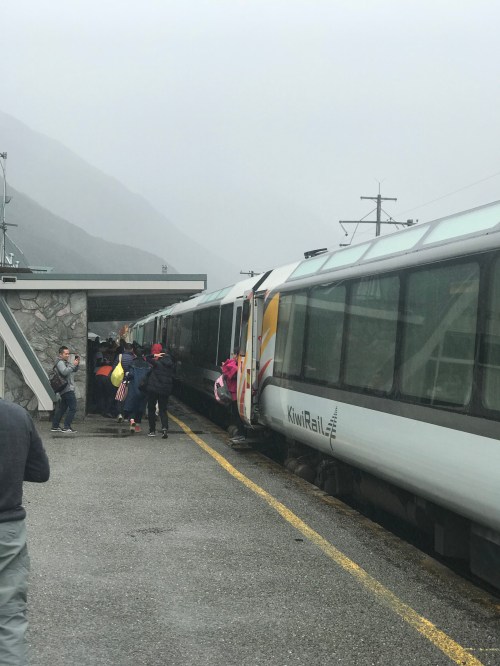
The very next morning we had to be up by 7 (of course Margaret was up way before then) for an 8 AM ride on the Tranzalpine Railroad across New Zealand from East to West. This was incredibly relaxing with beautiful scenery along the way.

IMG_8556

P1050258

Foggy, misty, and rainy for most of the morning on the train ride while crossing the divide between East and West of New Zealand.

P1050260

Clear for a while in a valley


The train ended in Greymouth, where we picked up our rental car (northwest of Christchurch on the map). Fortunately, I had the experience of driving on the left in Tasmania. The roads were windy and narrow but we were along the coast and next to beautiful mountains. If that wasn’t enough, we were also in a rain forest. We suddenly left feeling like we were in the Swiss Alps to feeling like we were in a Hawaiian rain forest when we turned off into Lake Mahinapua at Ruatapu.

IMG_1453

When I was in college, I travelled across Canada for a summer. I had almost no money so when the Hare Krishna religious cult offered me a free meal I gladly took them up on it. What they didn’t tell me was that it came at the cost of over one hour of chanting Hare Krishna with them before the food would come out. I remember the food as being either extremely spicy or extremely sweet. That experience left me with a full stomach for a day and also a life long memory of the Hare Krishna tune — Hare Krishna, Hare Krishna, Krishna Krishna, Hare Hare.

One of my best experiences in India in 2011 was chanting Hare Krishna with my Hindu driver. We grooved out on it for a while and created a close bond. The reason I’m telling this story is that we passed through the tiny village of Hari Hari, I had no choice but to stop and get pictures of the Hari Hari hotel and liquor store.


Franz Josef, New Zealand

Franz Josef is near the middle of the west coast of the South Island (see #10 on the map)

NZ10

When we arrived at our hotel in Franz Joseph, we were greeted by sleet.

P1050319

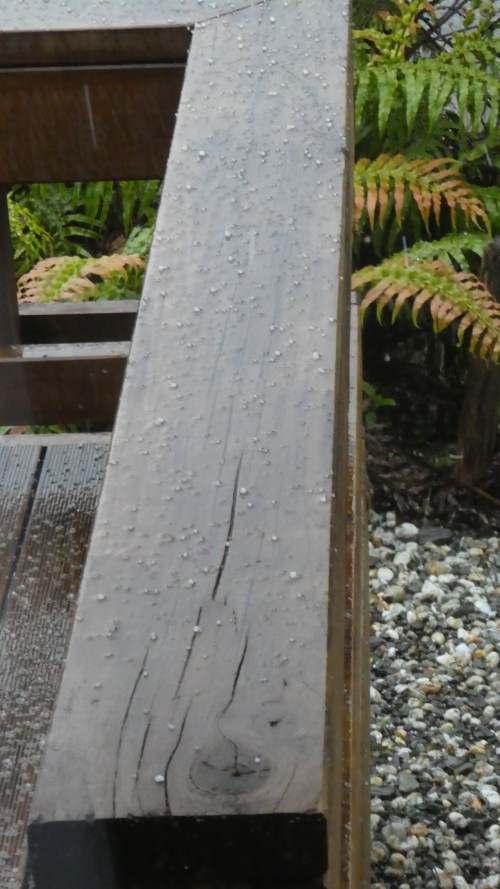
Sleet, not hail (Margaret would be very upset if I confused them)

IMG_8617

The town of Franz Joseph Glacier

Margaret has written in a separate entry about her walk to the glacier. I had been trying for most of the day to get a helicopter ride but they only go up when the weather is very good. It’s hard to argue with a helicopter pilot who says it’s too dangerous to fly. After we checked out of the hotel, I gave one last try and they were running the shortest ride they had so as to make sure they could get back before the weather might change.

The helicopter ride was a real highlight of the trip for me.

P1050357

Looking down at another helicopter taking off

P1050364

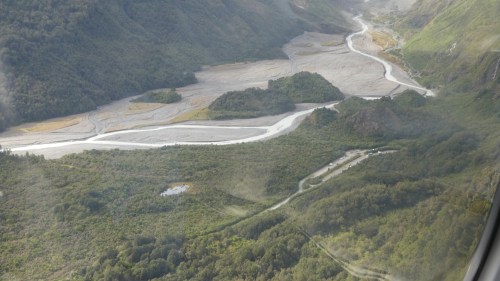
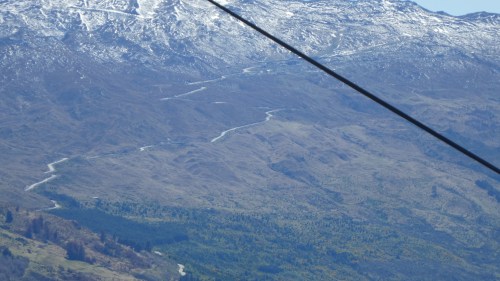
The double road in this photo is where she began her hike to the glacier.

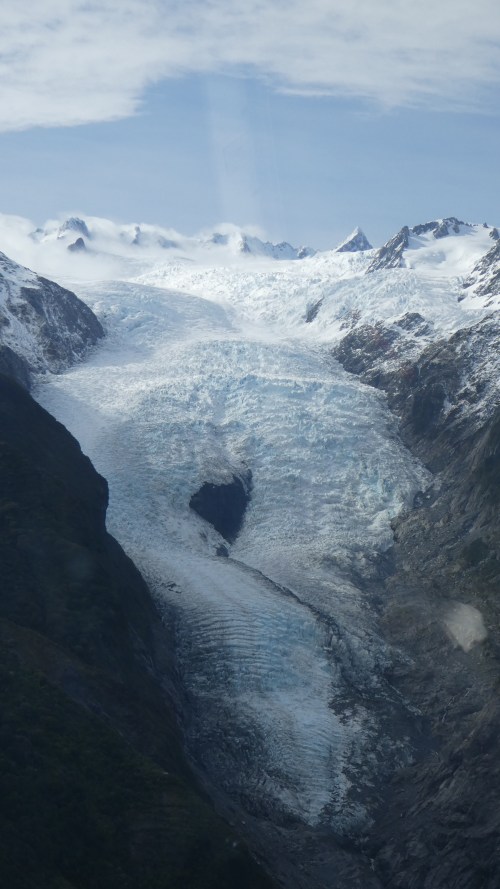
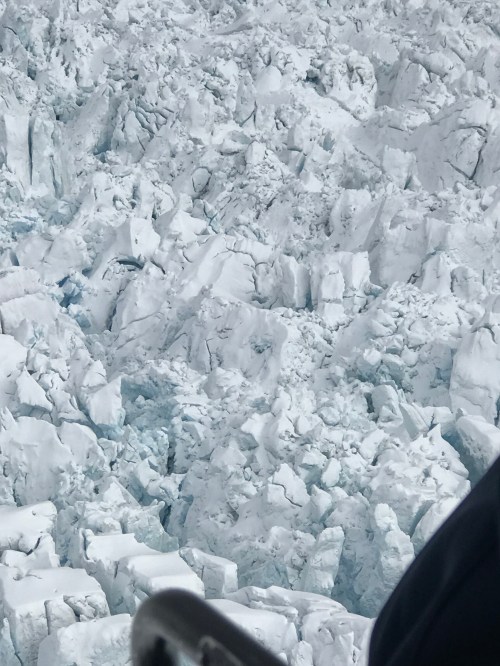
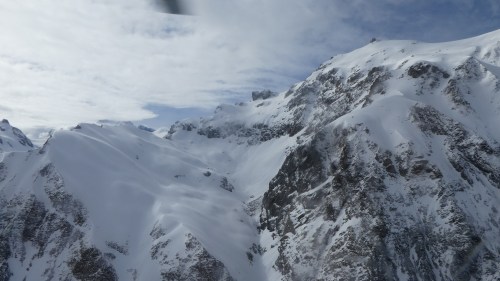
We flew up to the Franz Joseph Glacier and were able to see it up close.

P1050369

Franz Joseph Glacier from the helicopter

IMG_8668

P1050376

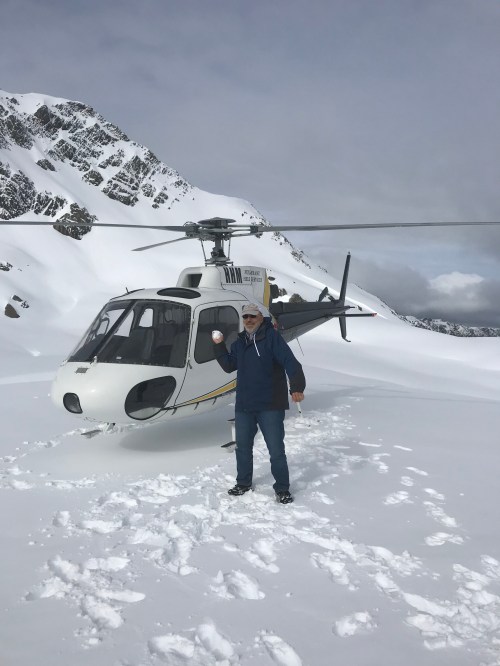
We landed on the snow for about 5 minutes.

IMG_8623

Standing near the glacier

IMG_8657

From there it was an all day drive to Queenstown. The bridges fascinated me in that all of them on this trip were one lane only. The sign on the left indicates that you have to yield under all conditions. The sign on the right indicates that you have the right of way unless someone is already on the bridge coming the other way.


P1050393

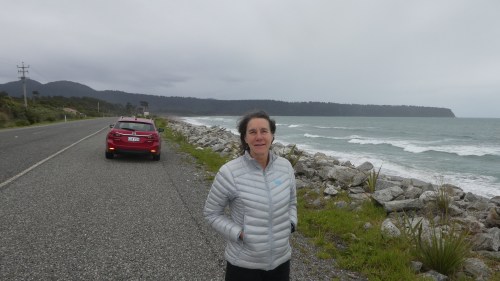
A stop alongside the Tasman Sea on the West Coast of New Zealand

We had the choice of a scary road with 7 hair pin turns to get into Queenstown or a longer route through a wine producing region. I don’t like wine, I don’t really care about how wine is produced, and I can’t tell much of a difference between wines. Margaret likes wine but also doesn’t care about how it’s produced. She however, hates the idea of windy roads. We were going to take the less scary route when someone in a store in Wanaka said we really should take the windy route since it’s much more beautiful and not that bad. It actually wasn’t that bad. If the weather had been bad or if it was icy, no way.

There was an amazing view of Queenstown from the top.

IMG_8696

View from just before the scary windy road. Margaret already is closing her eyes.

P1050647

View of the 7 hairpin turns to get into Queenstown taken from the top of the Queenstown cable car.

These were four ridiculously full days, not as full as the day we had in the rain forest and Great Barrier Reef but exhausting. We will need a vacation when we get back home to recover but we’re having an amazing time.

Gazing at Glaciers

Leave a comment

Nov. 6, 2017 — From Margaret (Larry has a separate entry for Nov. 7-11)

Franz Josef Glacier, NZ (see #10 on the map)

NZ10

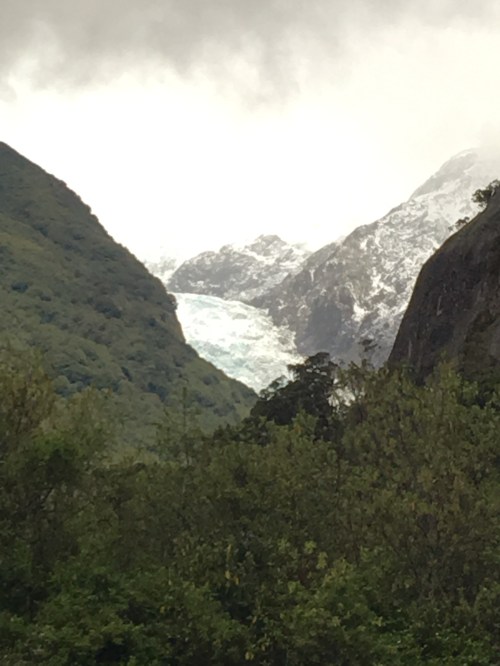
Larry and I enjoy doing lots of activities together. But there are exceptions. Hiking is one. Larry complains that I don’t stop and “smell the roses.” I complain that he’s too slow. While it is true that I probably miss some interesting things along the way, I like the hikes for the sake of physical activity in addition to the scenery. I enjoy moving along and getting to the finish. So Larry wanted to see the Franz Josef Glacier by helicopter. He had a hard time understanding why I did not wish to fly. I just wanted to be on my own two feet. That’s how I enjoy the landscape. True, he really experienced something different from what I experienced, because the hike takes you to 140 meters short of the glacier. The helicopter lands on the glacier. But I got there with my own feet. I loved the hike. It wasn’t really difficult, nor was it long. But I saw steep cliffs, several waterfalls, and rushing rivers. I walked over rocks, gravel, and an occasional stream. The rain forests still seem exotic to me. The sky was sunny and rainy and misty all at once. In addition, I learned that this glacier and the nearby Fox Glacier are extremely unique in the world because their waters run into the surrounding rain forests. Only one or two others in the world do so. I was surprised to learn that there are over 3000 glaciers in New Zealand. What a magical place I am in!

I’ve included some pictures from my early morning run, in addition to glacier photos.

IMG_1483

Franz Josef Glacier

I recall the road race up Mt. Washington, New Hampshire, in 1994. Mt. Washington is the highest peak in the northeast, at 6,288 feet. The race, advertised as “just one hill,” is indeed just one hill, 7.6 miles long, with an elevation change of more than 4000 feet. Larry and I, and Keith (a toddler then), enjoyed the cog railroad ride up to the top the day before the race. The scenery was beautiful. But somehow the scenery looked much more spectacular the next day, after I completed the race. There is always something special for me about the effort to get there. It may seem that I’m in a hurry to finish, but I really do enjoy the physical effort of getting there. If I didn’t, it would be hard to have completed the marathons and ultra marathons that I’ve done – mentally, it’s tough if you don’t like the process and effort of getting there. It can be the same with solving math problems – I enjoy the process, and arriving at the solution feels great when I’ve really put in the effort.

IMG_1465

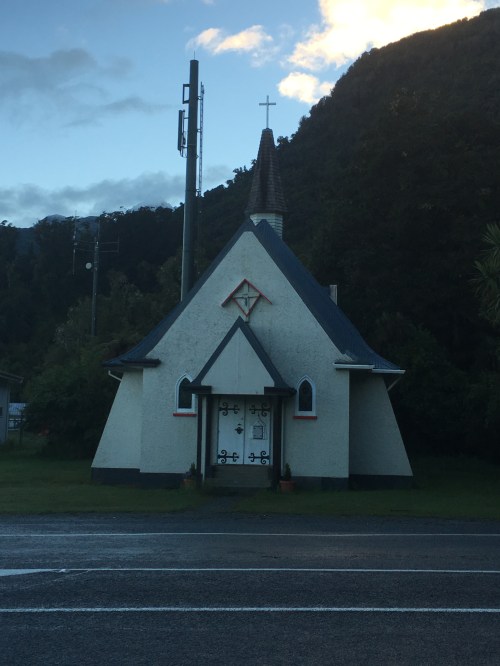
Our Lady of the Alps Catholic Church

IMG_1467

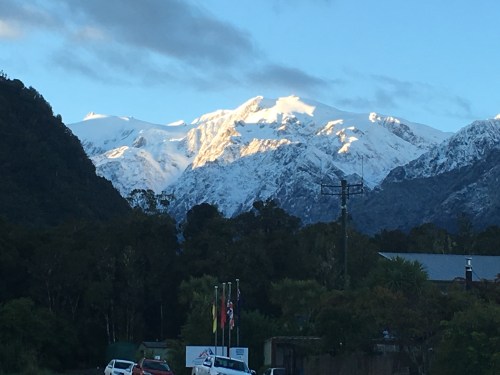
Morning sun hits the mountain.  View from outside our hotel in Franz Joseph Glacier, NZ.

IMG_1456

Tantalizing Tasmania

2 Comments

October 31-Nov. 4, 2017 — Australian Eastern Daylight Time (first time we moved to a new location without a time change, 15 hours ahead of EDT).

Cradle Mountain, Tasmania

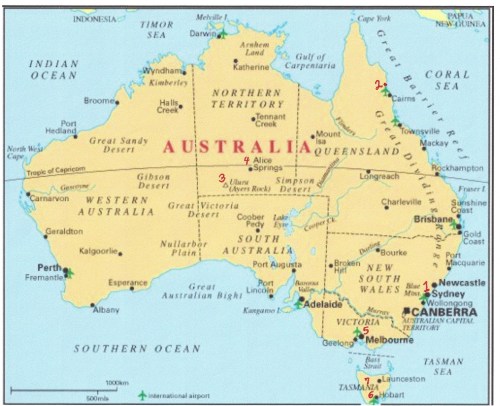
Cradle Mountain is on the island of Tasmania south of the mainland (see #7 on the map).

Australia7

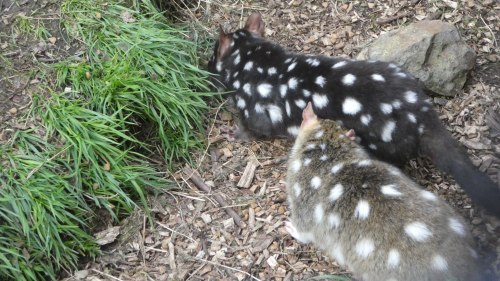
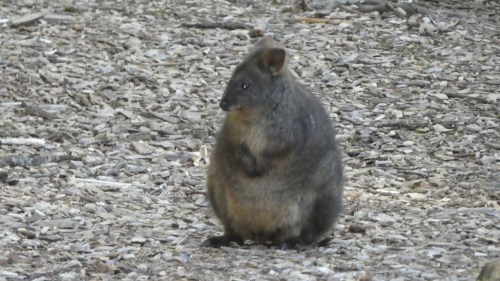
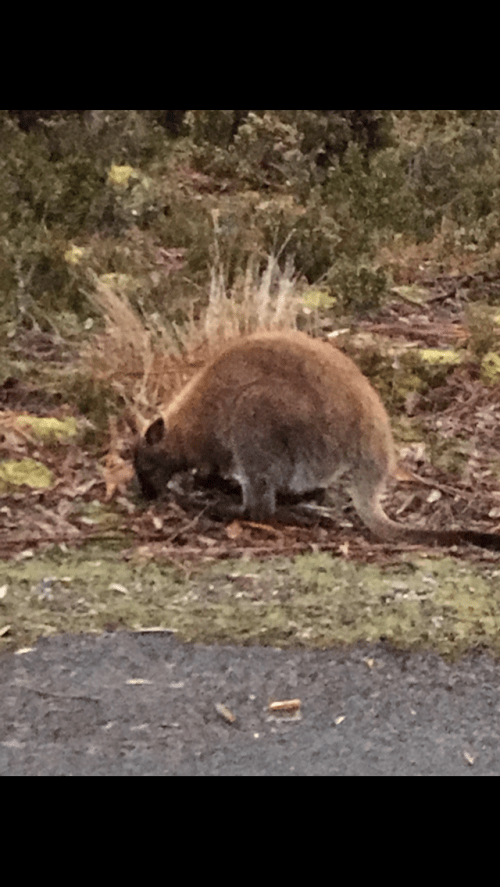
From Margaret — Somehow, Cradle Mountain, in the northwestern/central part of Tasmania feels very exotic. Strange flora and fauna can be observed here. While running and walking, I’m expecting to see a dinosaur come out of this extraordinary rain forest. Well, wombats and wallabies are more like it. I do see a few of those. The landscape here is rugged – the surrounding mountains jagged. Our first night there, we took a spotting tour. Our guides provided us with torches (flashlights) so we could see our way in the dark. After riding around on the bus for a little, we walked on a boardwalk out in the middle of nowhere and the guides used a spotter to find wildlife. It felt a bit like spotting in Allegany State Park to find owls, foxes, deer, bears, etc. Then again, it felt very different. We saw wombats, wallabies, bush tail possums, pademelons, and eastern quolls. We heard Tasmanian Devils calling each other but almost 80% have died off (more about them later) so its rare to see them in the wild. The moon and stars were bright and temperatures were in the upper 30’s (Fahrenheit, not Celsius like in Uluru).

P1050205

Eastern Quolls

P1050193

Pademelon

P1050178

Echidna

P1050130

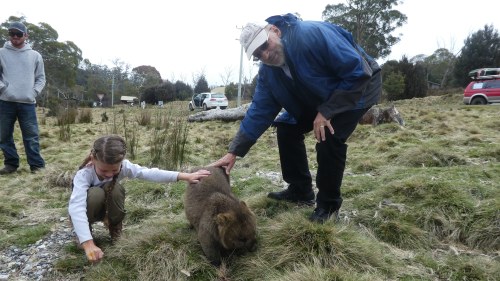
Wombat (we saw many of these)

P1050134

Another Pademelon

IMG_1411

Wallaby

P1050172

Black Currawong

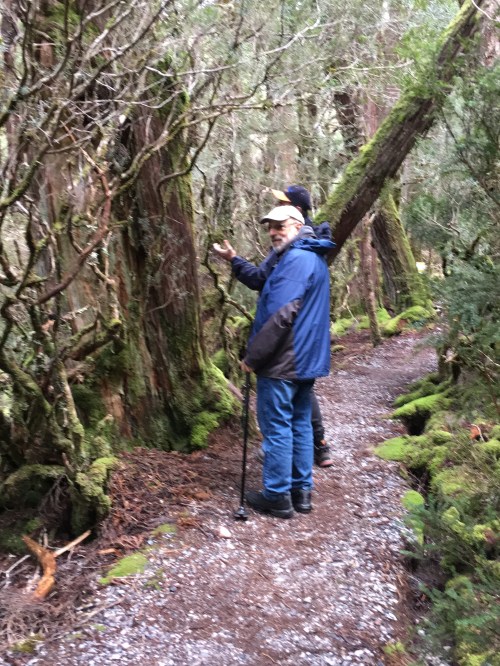
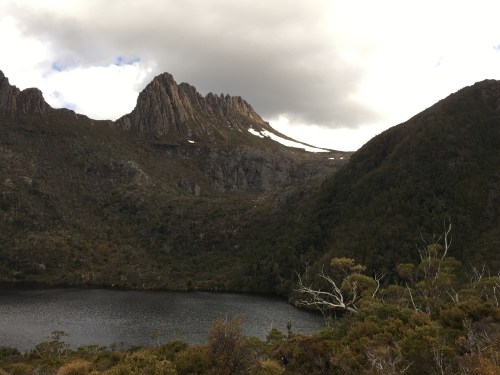
Larry and I walked a small portion of the track around Dove Lake with our guide.  Later, I walked the 3.6-mile loop around the lake.  As I traveled, the feelings and surroundings changed – different landscapes and forests, different feelings of the exotic nature of this region.

P1050143

Larry and I at Dove Lake

IMG_1416

Our guide explains the trees and vegetation unique to this region.

IMG_1414a

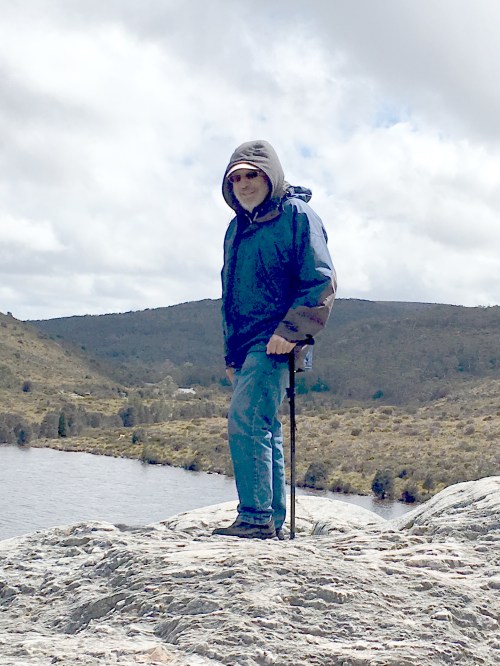
Larry stands on “Suicide Rock” at Dove Lake. For obvious reasons they have changed the name.

IMG_1417

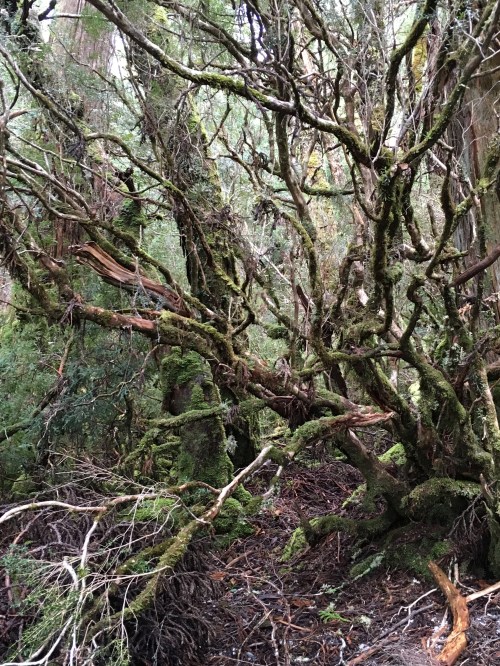
Wild vegetation

IMG_1426 2

Cradle Mountain, during my loop hike

IMG_1421

P1050154

IMG_1427

Boardwalk, slightly snow-covered, on an early morning walk.

P1050132

Larry was told later on never to touch a wombat since they can bite. Whoops.

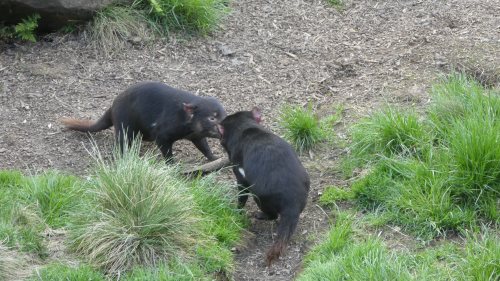
From Larry — We did get to see Tasmanian Devils at a breeding facility. They have a type of facial cancer that is the only cancer that is contagious (fortunately not to humans). Because of this, they have created breeding centers around the country and mix the groups around since one of the problems was that there was too much inbreeding. They were amazingly cute and nothing like the cartoon character except for their howl.

P1050183

Tasmanian Devil

P1050184

Tasmanian Devils fighting over food

Hobart, Tasmania

Hobart is on the island of Tasmania south of the mainland (see #6 and #8 on the map).

Australia8

I wanted to go to Tasmania because it has always had an appeal to me as a far off forgotten part of the world. There are commonalities to island culture around the world. We live in the Pittsburgh region but other regions are within a couple of hours of us. An island like Tasmania can establish a unique culture and unique flora and fauna without easy access to other regions.

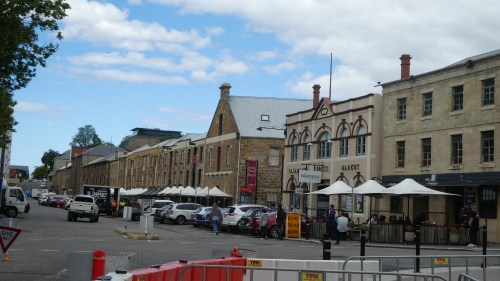
One unique part of Tasmania is that it didn’t get a lot of destructive development that hit other parts of Australia so many of the very old beautiful buildings are still around. When we arrived, we had a two-hour private walking tour around the capital Hobart. The guide was a retired school principal and school psychologist who had a real passion for architecture.  The harbor area of Hobart had the feel of a European small town.

P1050107

Downtown Hobart

P1050092

Old Gallows

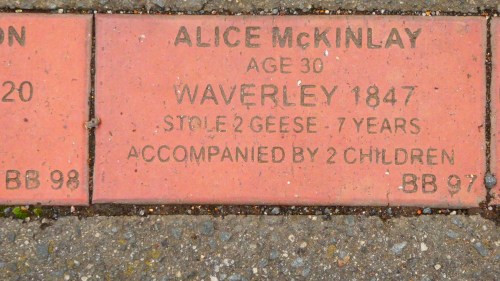
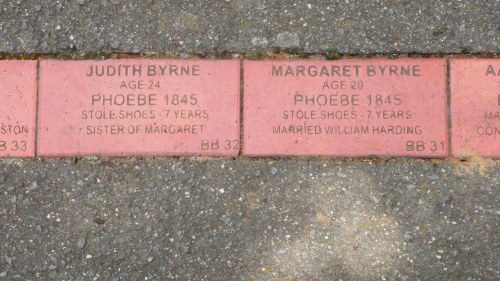
A big part of Tasmanian history is that it was a penal colony (as were other areas of Australia). Residents of a small town on the way to the mountains had purchased bricks to commemorate their ancestors convicted of petty crimes in England. Here are a couple of them.

P1050227

Hard to imagine being sentenced, along with two children, to 7 years of hard labor in 1847 for stealing 2 geese.

P1050221

Two sisters sentenced to 7 years for stealing shoes at age 20 and 24 in 1845.

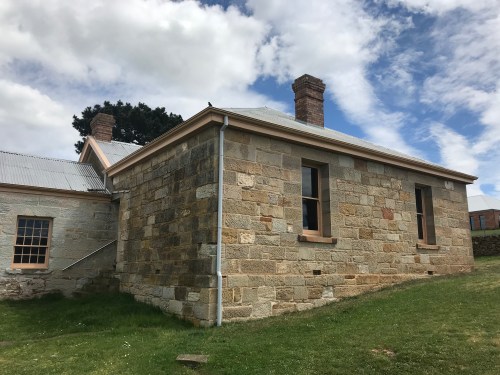
We stopped at a site called a “Female Factory” in Ross where women prisoners served their sentences. The women were classified as Crime Class with hard labor jobs; Second Class with jobs of spinning, weaving, or sewing; or Assignment Class with jobs of cooking and cleaning. The last group were eligible to be assigned to leave the facility to work for free settlers.

Margaret and I are reading a book about Charles Dickens as part of a non-fiction book club and so much of Dickens’ life and novels were about this kind of inhumane treatment.

IMG_8458

Remnants of the Female Factory in Ross from the 1840’s

P1050119

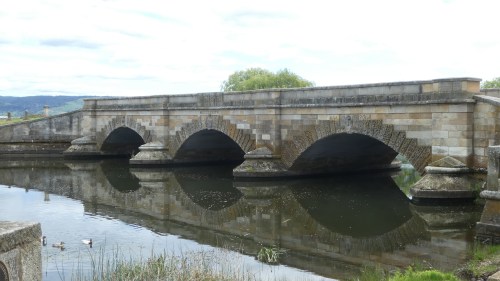
Bridge in Ross built in 1836 by male convicts

This was my first time driving on the left, which was a little scary at first. I had to keep reminding myself to keep left. Roundabouts (traffic circles) are all over the place and I had to make sure I yielded, merged, and exited in the correct lanes. If I had a second to think, I would remember to use my right hand for the turn signal. Otherwise, the windshield wipers came on instead.

The drive took most of a day to get from Hobart to Cradle Mountain and most of a day to get back. It was painful not to able to move my right leg due to my hip fracture. The road was windy at the end and really scenic.

P1050177

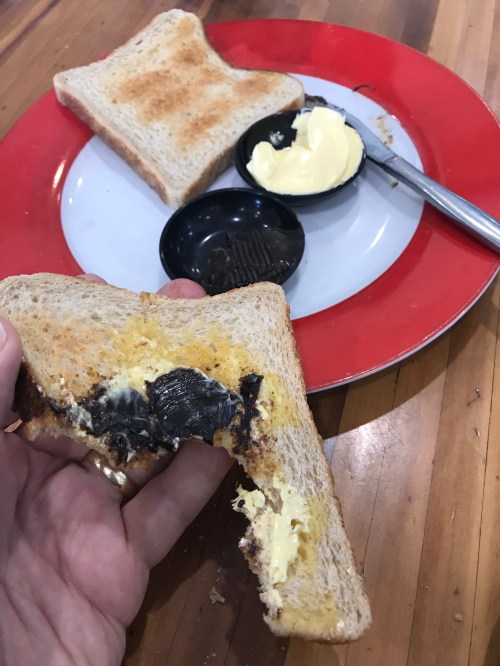
We stopped at a bakery and I found Vegemite on the menu, which is a “thick, black Australian food spread made from leftover brewers’ yeast extract with various vegetable and spice additives. It was developed by Cyril Percy Callister in Melbourne, Victoria in 1922.” (Wikipedia) It was very salty and quite disgusting but it was an experience.

IMG_8524

In spite of the difficulties. I will likely only remember the joy of being in Tasmania. I can justify the other places we went to in Australia. Sidney and Melbourne are the two most famous big cities. Cairns has the Great Barrier Reef and tropical beaches. Uluru and Alice Springs have the Outback and the famous monolith. Tasmania is famous for its wildlife but I think it was mostly its obscurity that attracted me.

This reminds me of the paradox of a contest for the most boring person in the world. The winner of such a contest suddenly becomes interesting so the runner up of the contest has to become the most boring person in the world. That person now also becomes interesting and the process could never end. This has very little to do with Tasmania because no one would accuse Tasmania of being boring.

We’ve done a lot in Australia in just a little over two weeks but now it’s time to move on to New Zealand.

Older Entries