Hiking in Te Anau (on the Kepler Track) and in Queenstown

3 Comments

Nov. 8-11, 2017 — From Margaret

Queenstown, NZ

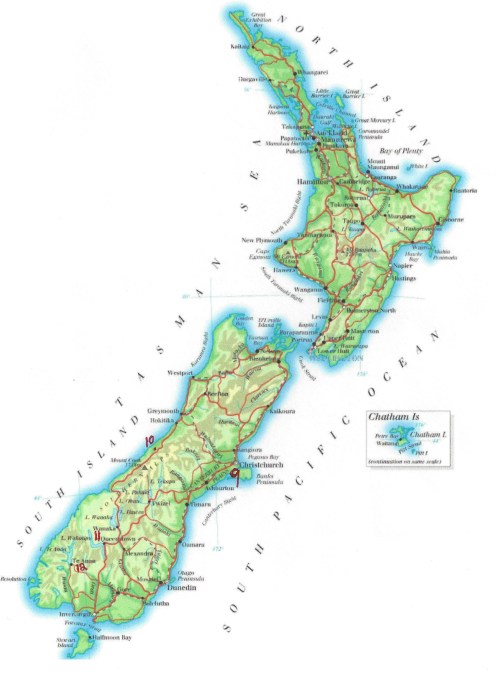
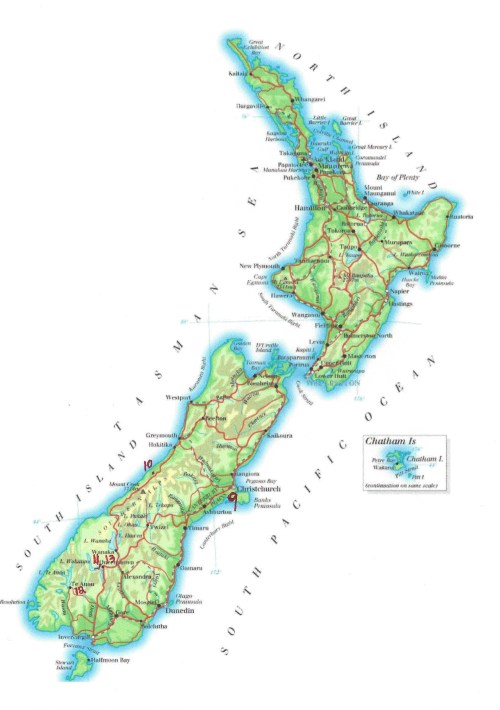
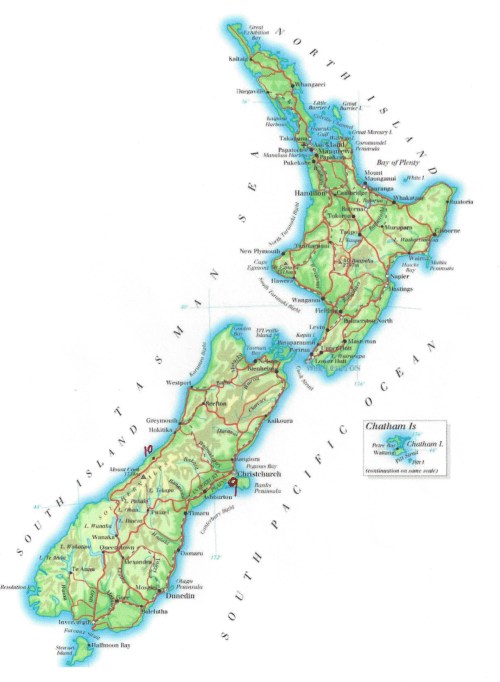
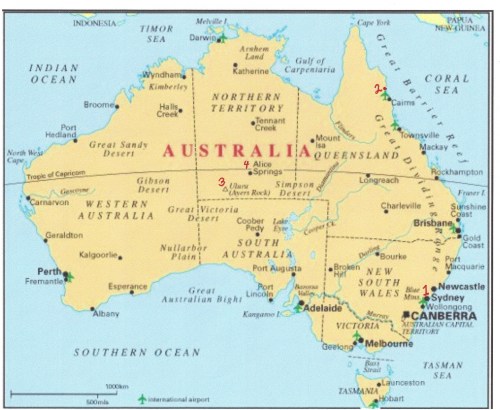
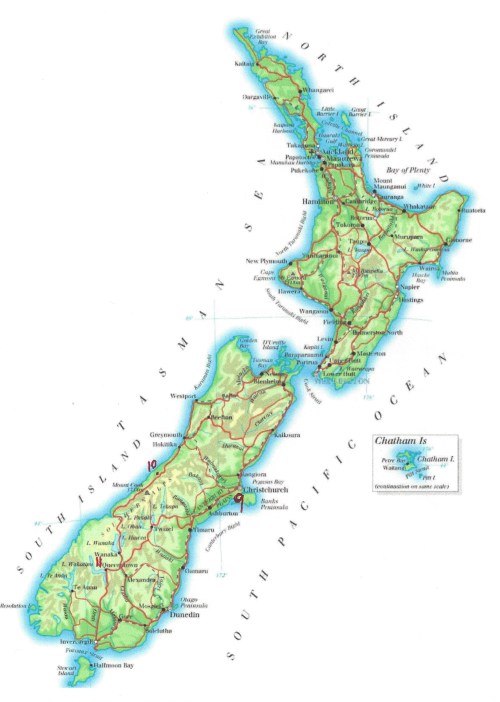
Queenstown is inland in the southern part of the South Island (see #11 on the map)

NZ11


IMG_1514

Early morning hike – the Sunshine Bay Track – along Lake Wakatipu, Queenstown


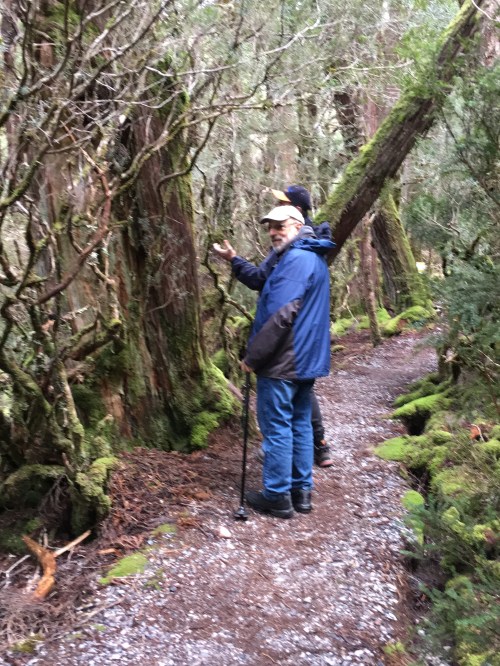
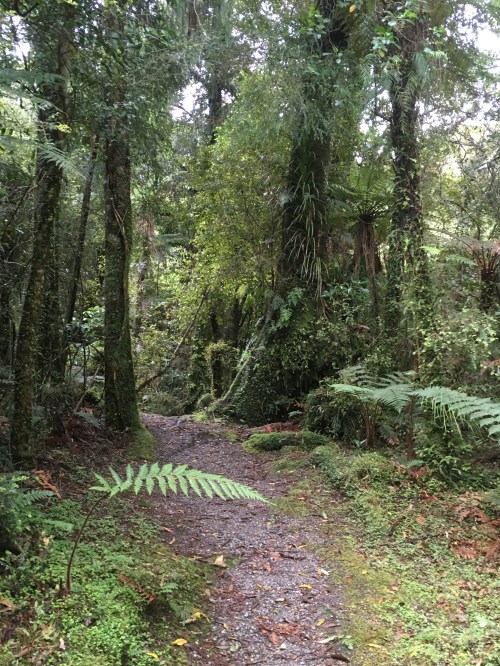
Onto Queenstown!  How fortunate that everywhere we’ve been, there are nice venues for hiking, walking, and running.  Often, the scenery has been spectacular.  We then head to Te Anau.  Shortly after arriving, I head out for a 2-hour hike on a small portion of the Kepler Track, one of what are called the Great Walks of New Zealand.  It is along Lake Te Anau, and offers a different feeling from some other hikes – ferns and moss are prevalent.

Te Anau, NZ

Te Anau is in the southwest corner of the South Island (see #12 on the map)

NZ12

Sometimes when I hike, I ask myself – isn’t it all the same?  Trees, hills, vegetation, the  path in front of you.  What’s different about this trail from others I’ve recently hiked, or those I’ve walked in New York or Pennsylvania?  But I really do get a different feeling in each place.  Sometimes it’s because it really is different in terrain, vegetation, surroundings, weather, time of day, birds, insects, other wildlife, or what you anticipate.  If I were more knowledgeable about some of these things I would probably be even more sensitive to these differences.  It’s also comforting to feel the similarities.  Noting differences where there are commonalities, and noting similarities where there are differences, are ways we use our intelligence.  I can think of so many occasions in mathematics where this deepens your understanding – how is divisibility by 2 the same or different from divisibility by 3?  or 4?  or 5?  The concept of modular arithmetic opens up in exploring this notion.

Notice the huge log across the trail – these pictures show a different portion of the Kepler Track that I hiked a couple days later.  This was along a river, and included some climbing, but not too much.

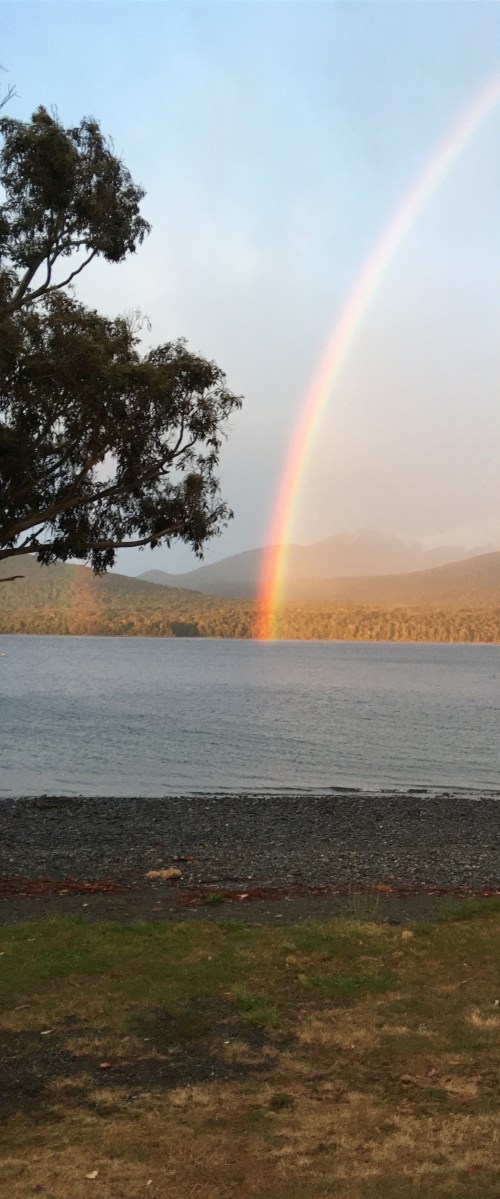
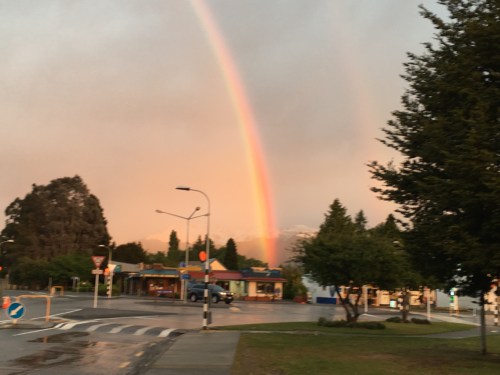
I was treated to a double rainbow on the early morning of November 9, over Lake Te Anau.  It lasted a long time, and changed during that time.

IMG_1548

You can barely make out the double arc here.

IMG_1547

IMG_1544

Our bus trip to Milford Sound and the cruise on Milford Sound was spectacular – waterfalls, snowcapped mountains, steep cliffs, an avalanche, seals, penguins, and dolphins.  Our pictures cannot capture what we felt.  Larry will have a separate blog on Milford Sound.

Queenstown, NZ, Again

Queenstown is inland in the southern part of the South Island (see #13 on the map)

NZ13

We returned to Queenstown and enjoyed a wonderful dinner at an Indian restaurant.  The next morning, while Larry rode the Gondola up, I hiked to the top of Bob’s Peak.  The trail is very steep and rocky in many portions – often, there are steep drop-offs and no railings.  The last part was a much wider path, and while still quite steep, there weren’t the dangerous drop-offs.  In the 2-mile hike, it is 1500 feet of elevation change.  I hung onto tree trunks and rocks as I climbed, and made it without incident.  Fortunately, I took the gondola down with Larry.  What a treat at the top!  The view was spectacular, and it was the first sunny day in a while!!

IMG_1597


Planes, Trains, Automobiles, and a Helicopter (Christchurch and Franz Joseph Glacier to Queenstown, New Zealand)

2 Comments

Nov. 4-7, 2017 — New Zealand Daylight Time (17 hours ahead of EDT but became 18 hours ahead of EST when the USA changed its clocks, 2 hours ahead of AEDT)

Christchurch, NZ

Christchurch is on the east coast of the South Island (see #9 on the map)

NZ9

In a long trip like this (4 weeks), you can’t avoid some long travel days. The flights to Australia and the flights back from New Zealand will take close to 30 hours from door to door. Nov. 4 was another long travelling day. We started at 5 AM with an airport pickup from our hotel in Hobart, Tasmania and ended with a taxi to our hotel in Christchurch, NZ at 11 PM (with a 2 hour time change). Our taxi driver was an Iraqi who had been a translator for the US military and was granted help to live in Australia for all his family. He didn’t seem too positive for the outcomes of the US military in Iraq.

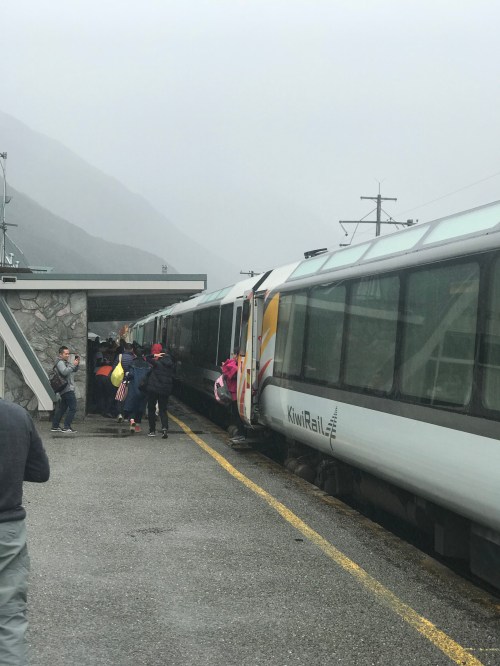
The very next morning we had to be up by 7 (of course Margaret was up way before then) for an 8 AM ride on the Tranzalpine Railroad across New Zealand from East to West. This was incredibly relaxing with beautiful scenery along the way.

IMG_8556

P1050258

Foggy, misty, and rainy for most of the morning on the train ride while crossing the divide between East and West of New Zealand.

P1050260

Clear for a while in a valley


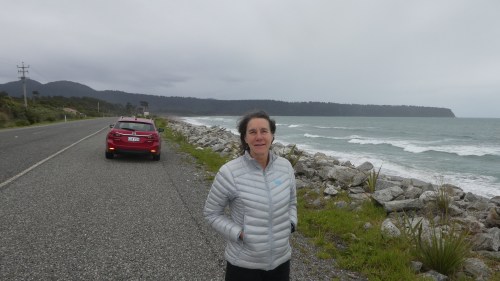
The train ended in Greymouth, where we picked up our rental car (northwest of Christchurch on the map). Fortunately, I had the experience of driving on the left in Tasmania. The roads were windy and narrow but we were along the coast and next to beautiful mountains. If that wasn’t enough, we were also in a rain forest. We suddenly left feeling like we were in the Swiss Alps to feeling like we were in a Hawaiian rain forest when we turned off into Lake Mahinapua at Ruatapu.

IMG_1453

When I was in college, I travelled across Canada for a summer. I had almost no money so when the Hare Krishna religious cult offered me a free meal I gladly took them up on it. What they didn’t tell me was that it came at the cost of over one hour of chanting Hare Krishna with them before the food would come out. I remember the food as being either extremely spicy or extremely sweet. That experience left me with a full stomach for a day and also a life long memory of the Hare Krishna tune — Hare Krishna, Hare Krishna, Krishna Krishna, Hare Hare.

One of my best experiences in India in 2011 was chanting Hare Krishna with my Hindu driver. We grooved out on it for a while and created a close bond. The reason I’m telling this story is that we passed through the tiny village of Hari Hari, I had no choice but to stop and get pictures of the Hari Hari hotel and liquor store.


Franz Josef, New Zealand

Franz Josef is near the middle of the west coast of the South Island (see #10 on the map)

NZ10

When we arrived at our hotel in Franz Joseph, we were greeted by sleet.

P1050319

Sleet, not hail (Margaret would be very upset if I confused them)

IMG_8617

The town of Franz Joseph Glacier

Margaret has written in a separate entry about her walk to the glacier. I had been trying for most of the day to get a helicopter ride but they only go up when the weather is very good. It’s hard to argue with a helicopter pilot who says it’s too dangerous to fly. After we checked out of the hotel, I gave one last try and they were running the shortest ride they had so as to make sure they could get back before the weather might change.

The helicopter ride was a real highlight of the trip for me.

P1050357

Looking down at another helicopter taking off

P1050364

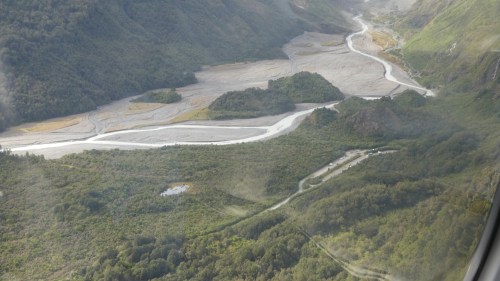
The double road in this photo is where she began her hike to the glacier.

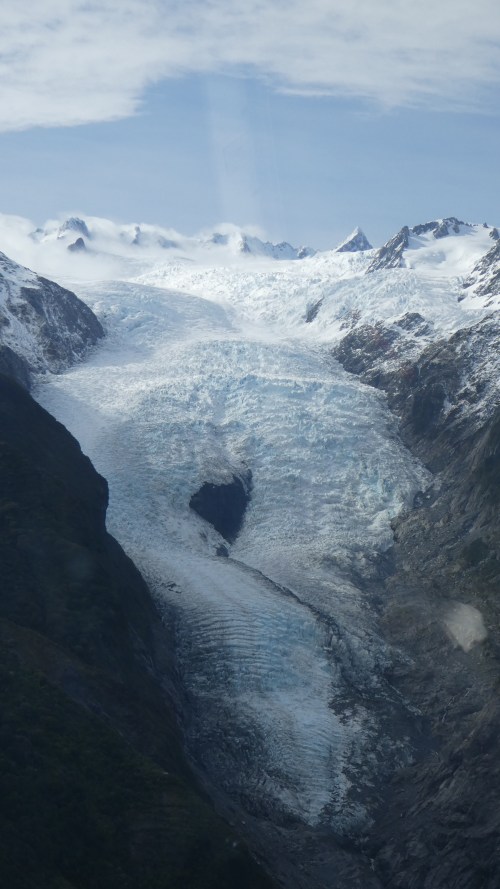
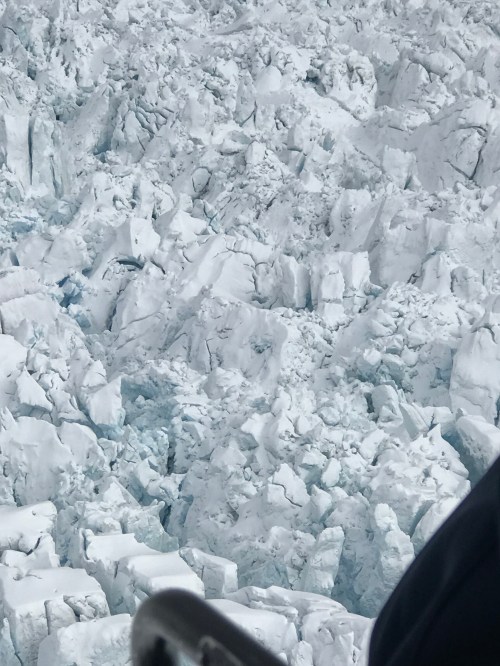
We flew up to the Franz Joseph Glacier and were able to see it up close.

P1050369

Franz Joseph Glacier from the helicopter

IMG_8668

P1050376

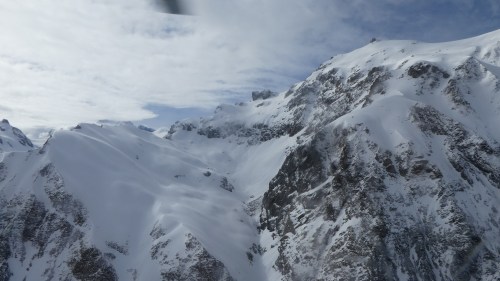
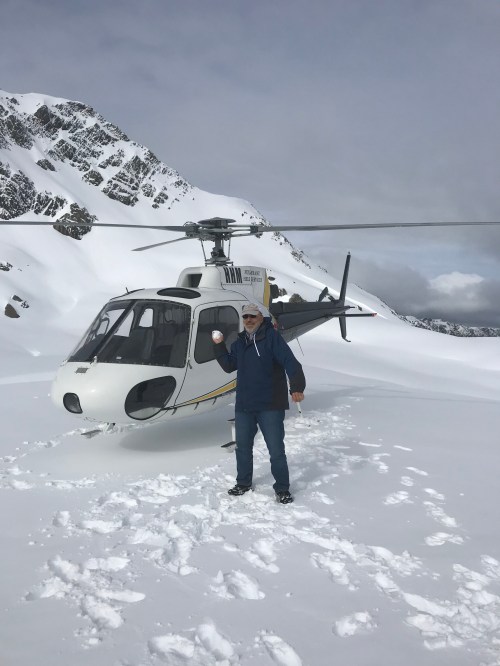
We landed on the snow for about 5 minutes.

IMG_8623

Standing near the glacier

IMG_8657

From there it was an all day drive to Queenstown. The bridges fascinated me in that all of them on this trip were one lane only. The sign on the left indicates that you have to yield under all conditions. The sign on the right indicates that you have the right of way unless someone is already on the bridge coming the other way.


P1050393

A stop alongside the Tasman Sea on the West Coast of New Zealand

We had the choice of a scary road with 7 hair pin turns to get into Queenstown or a longer route through a wine producing region. I don’t like wine, I don’t really care about how wine is produced, and I can’t tell much of a difference between wines. Margaret likes wine but also doesn’t care about how it’s produced. She however, hates the idea of windy roads. We were going to take the less scary route when someone in a store in Wanaka said we really should take the windy route since it’s much more beautiful and not that bad. It actually wasn’t that bad. If the weather had been bad or if it was icy, no way.

There was an amazing view of Queenstown from the top.

IMG_8696

View from just before the scary windy road. Margaret already is closing her eyes.

P1050647

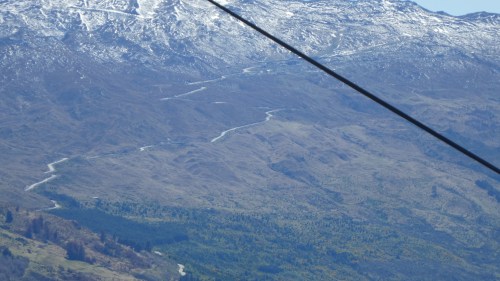
View of the 7 hairpin turns to get into Queenstown taken from the top of the Queenstown cable car.

These were four ridiculously full days, not as full as the day we had in the rain forest and Great Barrier Reef but exhausting. We will need a vacation when we get back home to recover but we’re having an amazing time.

Gazing at Glaciers

Leave a comment

Nov. 6, 2017 — From Margaret (Larry has a separate entry for Nov. 7-11)

Franz Josef Glacier, NZ (see #10 on the map)

NZ10

Larry and I enjoy doing lots of activities together. But there are exceptions. Hiking is one. Larry complains that I don’t stop and “smell the roses.” I complain that he’s too slow. While it is true that I probably miss some interesting things along the way, I like the hikes for the sake of physical activity in addition to the scenery. I enjoy moving along and getting to the finish. So Larry wanted to see the Franz Josef Glacier by helicopter. He had a hard time understanding why I did not wish to fly. I just wanted to be on my own two feet. That’s how I enjoy the landscape. True, he really experienced something different from what I experienced, because the hike takes you to 140 meters short of the glacier. The helicopter lands on the glacier. But I got there with my own feet. I loved the hike. It wasn’t really difficult, nor was it long. But I saw steep cliffs, several waterfalls, and rushing rivers. I walked over rocks, gravel, and an occasional stream. The rain forests still seem exotic to me. The sky was sunny and rainy and misty all at once. In addition, I learned that this glacier and the nearby Fox Glacier are extremely unique in the world because their waters run into the surrounding rain forests. Only one or two others in the world do so. I was surprised to learn that there are over 3000 glaciers in New Zealand. What a magical place I am in!

I’ve included some pictures from my early morning run, in addition to glacier photos.

IMG_1483

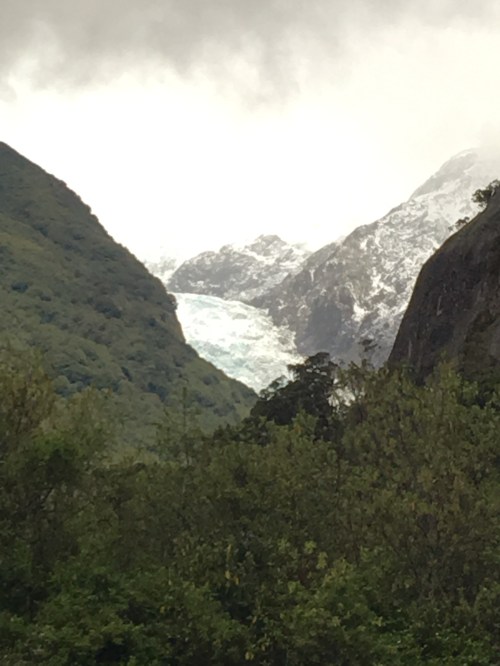
Franz Josef Glacier

I recall the road race up Mt. Washington, New Hampshire, in 1994. Mt. Washington is the highest peak in the northeast, at 6,288 feet. The race, advertised as “just one hill,” is indeed just one hill, 7.6 miles long, with an elevation change of more than 4000 feet. Larry and I, and Keith (a toddler then), enjoyed the cog railroad ride up to the top the day before the race. The scenery was beautiful. But somehow the scenery looked much more spectacular the next day, after I completed the race. There is always something special for me about the effort to get there. It may seem that I’m in a hurry to finish, but I really do enjoy the physical effort of getting there. If I didn’t, it would be hard to have completed the marathons and ultra marathons that I’ve done – mentally, it’s tough if you don’t like the process and effort of getting there. It can be the same with solving math problems – I enjoy the process, and arriving at the solution feels great when I’ve really put in the effort.

IMG_1465

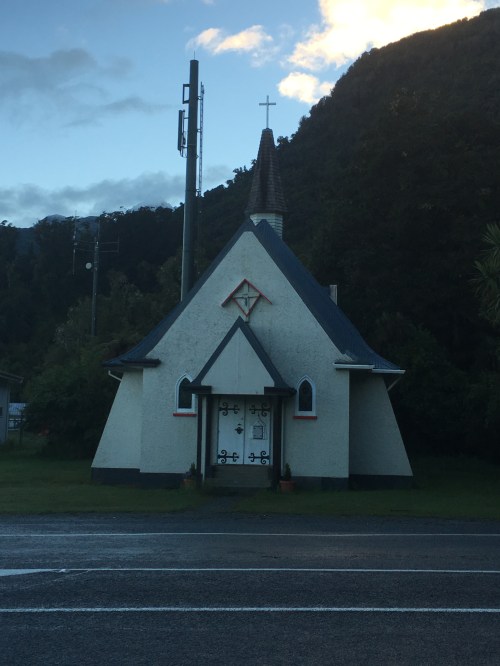
Our Lady of the Alps Catholic Church

IMG_1467

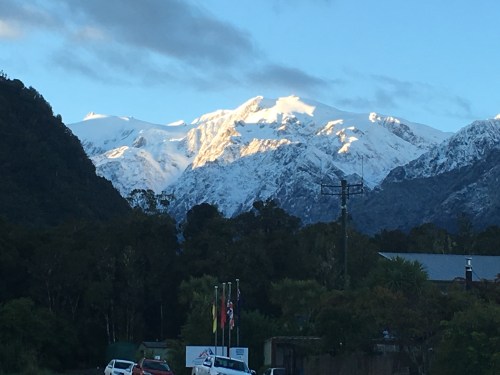
Morning sun hits the mountain.  View from outside our hotel in Franz Joseph Glacier, NZ.

IMG_1456

Tantalizing Tasmania

2 Comments

October 31-Nov. 4, 2017 — Australian Eastern Daylight Time (first time we moved to a new location without a time change, 15 hours ahead of EDT).

Cradle Mountain, Tasmania

Cradle Mountain is on the island of Tasmania south of the mainland (see #7 on the map).
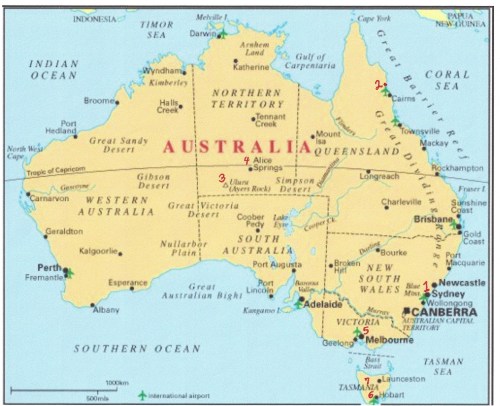
Australia7

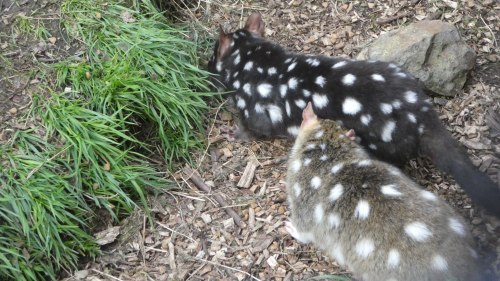
From Margaret — Somehow, Cradle Mountain, in the northwestern/central part of Tasmania feels very exotic. Strange flora and fauna can be observed here. While running and walking, I’m expecting to see a dinosaur come out of this extraordinary rain forest. Well, wombats and wallabies are more like it. I do see a few of those. The landscape here is rugged – the surrounding mountains jagged. Our first night there, we took a spotting tour. Our guides provided us with torches (flashlights) so we could see our way in the dark. After riding around on the bus for a little, we walked on a boardwalk out in the middle of nowhere and the guides used a spotter to find wildlife. It felt a bit like spotting in Allegany State Park to find owls, foxes, deer, bears, etc. Then again, it felt very different. We saw wombats, wallabies, bush tail possums, pademelons, and eastern quolls. We heard Tasmanian Devils calling each other but almost 80% have died off (more about them later) so its rare to see them in the wild. The moon and stars were bright and temperatures were in the upper 30’s (Fahrenheit, not Celsius like in Uluru).
P1050205

Eastern Quolls

P1050193

Pademelon

P1050178

Echidna

P1050130

Wombat (we saw many of these)

P1050134

Another Pademelon

IMG_1411

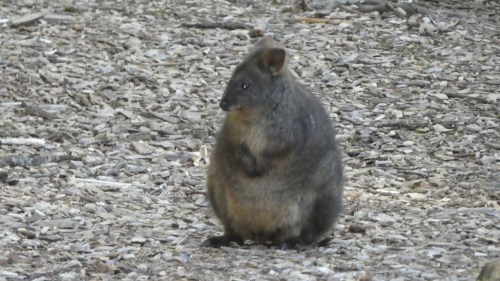
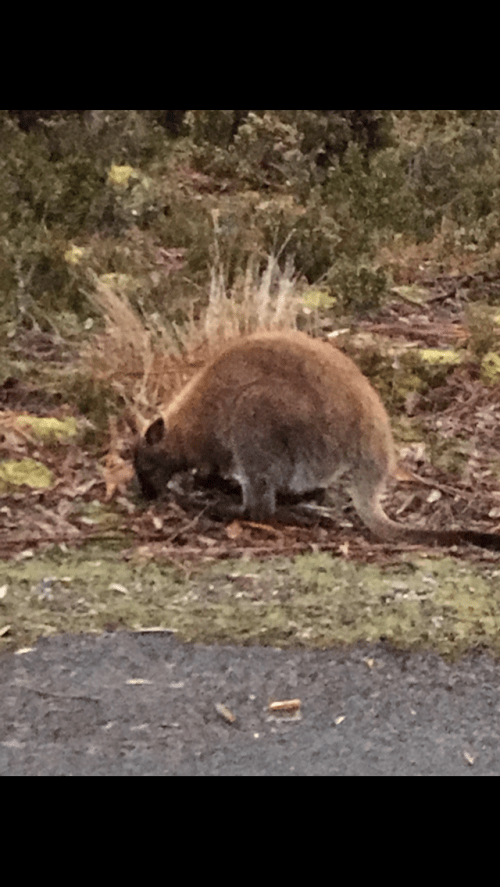
Wallaby

P1050172

Black Currawong

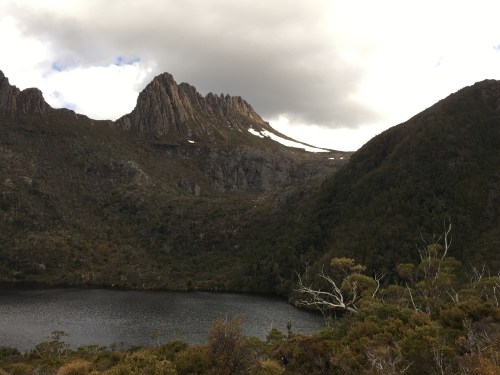
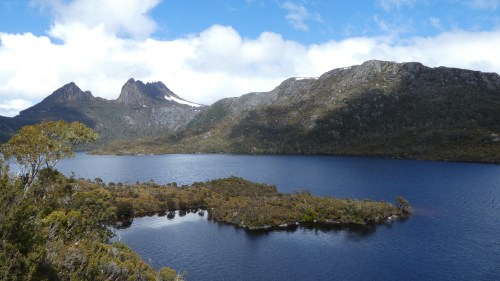
Larry and I walked a small portion of the track around Dove Lake with our guide.  Later, I walked the 3.6-mile loop around the lake.  As I traveled, the feelings and surroundings changed – different landscapes and forests, different feelings of the exotic nature of this region.

P1050143

Larry and I at Dove Lake

IMG_1416

Our guide explains the trees and vegetation unique to this region.
IMG_1414a

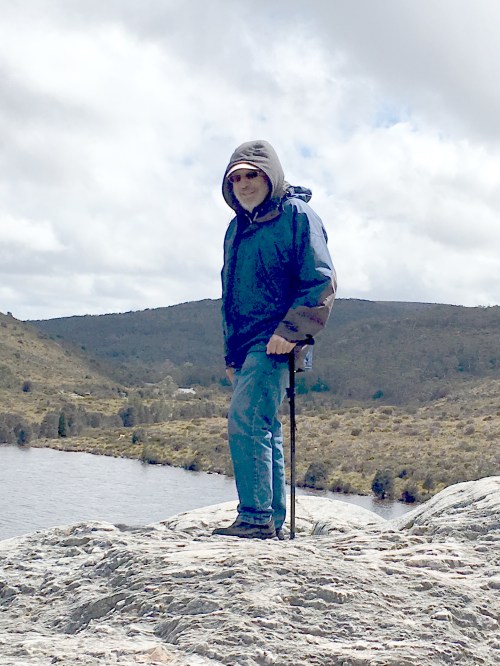
Larry stands on “Suicide Rock” at Dove Lake. For obvious reasons they have changed the name.
IMG_1417

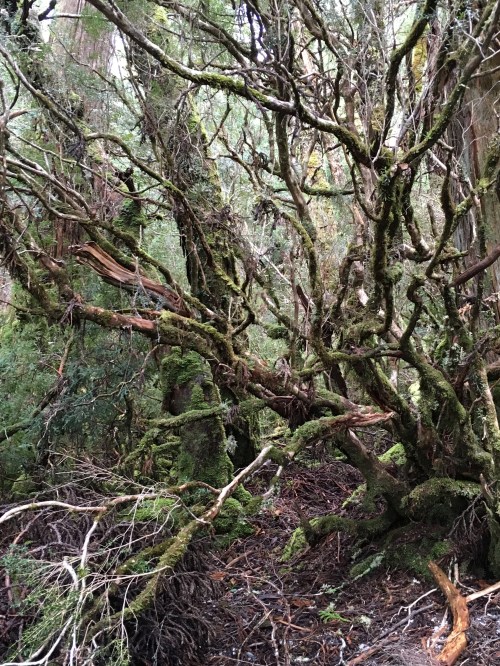
Wild vegetation

IMG_1426 2

Cradle Mountain, during my loop hike
IMG_1421

P1050154

IMG_1427

Boardwalk, slightly snow-covered, on an early morning walk.
P1050132

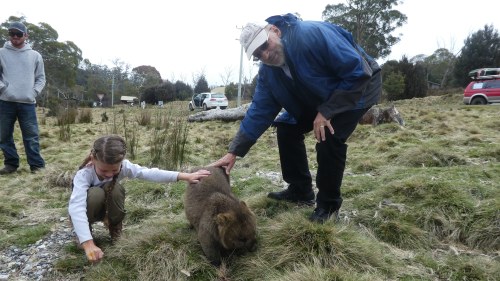
Larry was told later on never to touch a wombat since they can bite. Whoops.

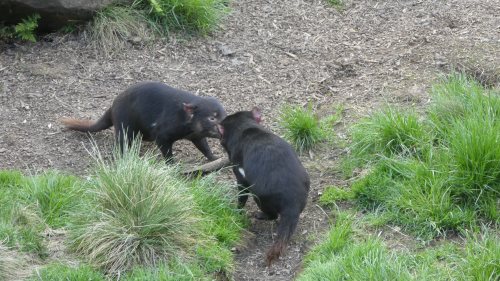
From Larry — We did get to see Tasmanian Devils at a breeding facility. They have a type of facial cancer that is the only cancer that is contagious (fortunately not to humans). Because of this, they have created breeding centers around the country and mix the groups around since one of the problems was that there was too much inbreeding. They were amazingly cute and nothing like the cartoon character except for their howl.

P1050183

Tasmanian Devil

P1050184

Tasmanian Devils fighting over food

Hobart, Tasmania

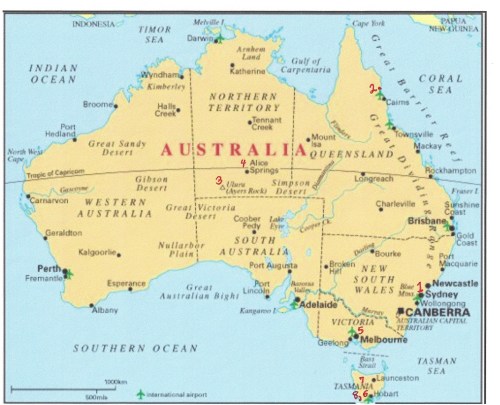
Hobart is on the island of Tasmania south of the mainland (see #6 and #8 on the map).
Australia8

I wanted to go to Tasmania because it has always had an appeal to me as a far off forgotten part of the world. There are commonalities to island culture around the world. We live in the Pittsburgh region but other regions are within a couple of hours of us. An island like Tasmania can establish a unique culture and unique flora and fauna without easy access to other regions.

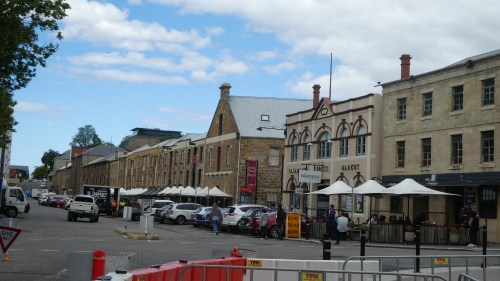
One unique part of Tasmania is that it didn’t get a lot of destructive development that hit other parts of Australia so many of the very old beautiful buildings are still around. When we arrived, we had a two-hour private walking tour around the capital Hobart. The guide was a retired school principal and school psychologist who had a real passion for architecture.  The harbor area of Hobart had the feel of a European small town.
P1050107

Downtown Hobart

P1050092

Old Gallows

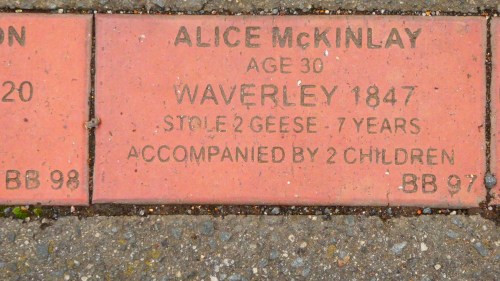
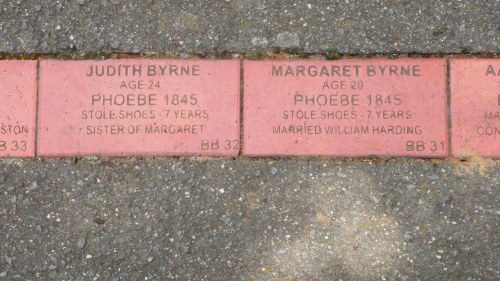
A big part of Tasmanian history is that it was a penal colony (as were other areas of Australia). Residents of a small town on the way to the mountains had purchased bricks to commemorate their ancestors convicted of petty crimes in England. Here are a couple of them.
P1050227

Hard to imagine being sentenced, along with two children, to 7 years of hard labor in 1847 for stealing 2 geese.
P1050221

Two sisters sentenced to 7 years for stealing shoes at age 20 and 24 in 1845.

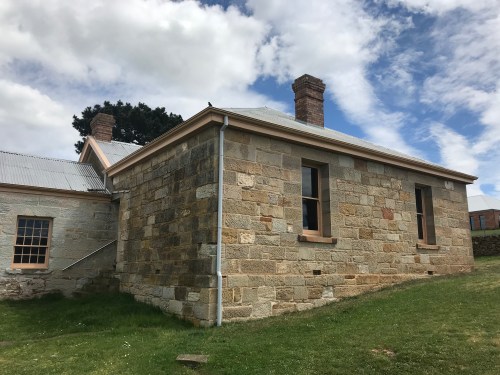
We stopped at a site called a “Female Factory” in Ross where women prisoners served their sentences. The women were classified as Crime Class with hard labor jobs; Second Class with jobs of spinning, weaving, or sewing; or Assignment Class with jobs of cooking and cleaning. The last group were eligible to be assigned to leave the facility to work for free settlers.

Margaret and I are reading a book about Charles Dickens as part of a non-fiction book club and so much of Dickens’ life and novels were about this kind of inhumane treatment.
IMG_8458

Remnants of the Female Factory in Ross from the 1840’s
P1050119

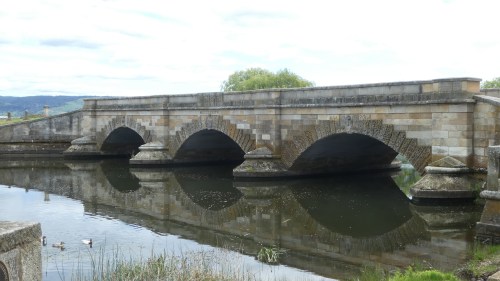
Bridge in Ross built in 1836 by male convicts

This was my first time driving on the left, which was a little scary at first. I had to keep reminding myself to keep left. Roundabouts (traffic circles) are all over the place and I had to make sure I yielded, merged, and exited in the correct lanes. If I had a second to think, I would remember to use my right hand for the turn signal. Otherwise, the windshield wipers came on instead.

The drive took most of a day to get from Hobart to Cradle Mountain and most of a day to get back. It was painful not to able to move my right leg due to my hip fracture. The road was windy at the end and really scenic.
P1050177

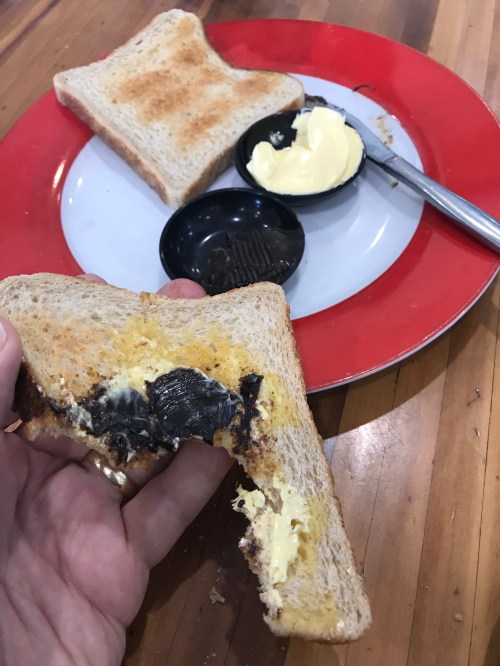
We stopped at a bakery and I found Vegemite on the menu, which is a “thick, black Australian food spread made from leftover brewers’ yeast extract with various vegetable and spice additives. It was developed by Cyril Percy Callister in Melbourne, Victoria in 1922.” (Wikipedia) It was very salty and quite disgusting but it was an experience.
IMG_8524

In spite of the difficulties. I will likely only remember the joy of being in Tasmania. I can justify the other places we went to in Australia. Sidney and Melbourne are the two most famous big cities. Cairns has the Great Barrier Reef and tropical beaches. Uluru and Alice Springs have the Outback and the famous monolith. Tasmania is famous for its wildlife but I think it was mostly its obscurity that attracted me.

This reminds me of the paradox of a contest for the most boring person in the world. The winner of such a contest suddenly becomes interesting so the runner up of the contest has to become the most boring person in the world. That person now also becomes interesting and the process could never end. This has very little to do with Tasmania because no one would accuse Tasmania of being boring.

We’ve done a lot in Australia in just a little over two weeks but now it’s time to move on to New Zealand.
Exotic, Remote, Urban, and Indulgent (Alice Springs and Melbourne, Australia)

1 Comment

October 28-30, 2017 — Australian Central Standard Time then Australian Eastern Daylight Time (1.5 hour time change, 13.5 hours ahead of EDT, then 15 hours ahead of EDT).

Alice Springs

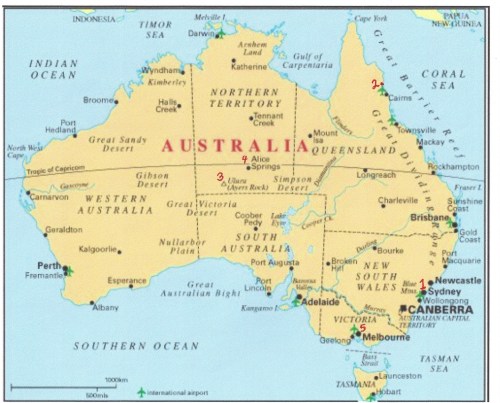
Alice Springs is in the center of Australia (see #4 on the map).

Australia4

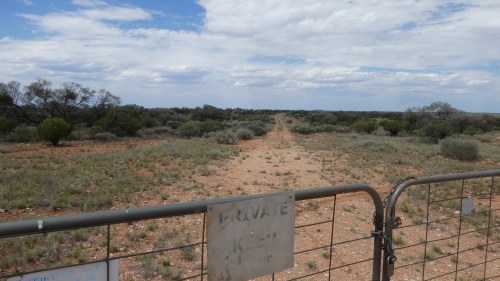
We took a six-hour bus trip from Uluru to Alice Springs instead of an airplane. Unfortunately, we didn’t see any wildlife but it was an experience to be so far away from civilization.

P1040977

A “station” or what we would call a ranch.

P1040988

P1050005

From Margaret:

Alice Springs – a strong pleasant fragrance permeated the air during my walk/run in the early morning. There were unfamiliar sounds and sightings of birds, just as there were in Ayers Rock and Trinity Beach. We got a real sense of the vastness and remoteness of Australia. Our afternoon tour took us to several sites.

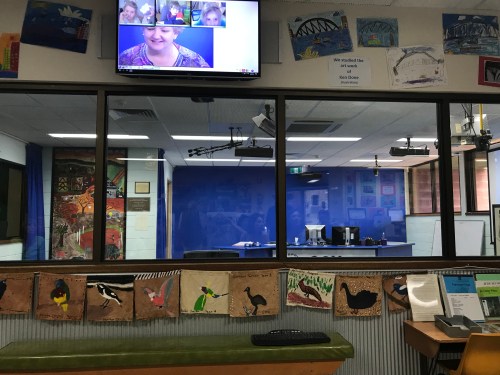
Alice Springs School of the Air explained how children in the Outback are educated – long before distance education had become a thing. Students have to be more than 50 km (30 miles) from a physical school to be eligible for this state run program. They are required to have a “tutor” at their home, usually their mother but not always. The tutor keeps them on task to their schedule when they don’t have one of their 1-2 live lessons a day. In the US, there is a massive movement to replace face-to-face education with online education but the need for online in this situation is very clear.

IMG_8395

Some of the original equipment for lessons delivered by radio.

IMG_8399

One of their modern studios for lessons delivered by the internet.

A second site showed the early telegraph communication. Alice Springs began as the center for the 2000 mile telegraph line that was laid to cross the Outback from near Adelaide on the south coast all the way to Darwin on the north coast. From there telegraph messages could be sent to Indonesia and on to Britain.

P1050018

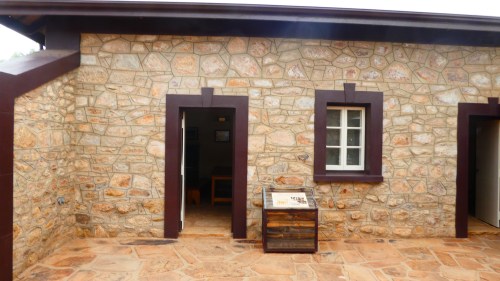
One of the buildings at the original telegraph village of Alice Springs

P1050021

P1050017

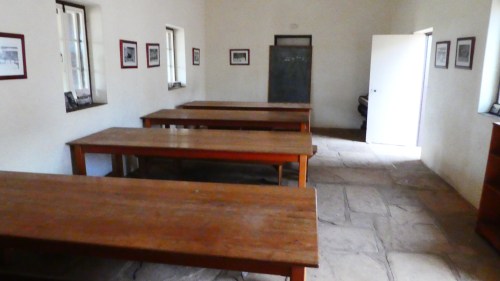
School room for the original settlers in the telegraph station

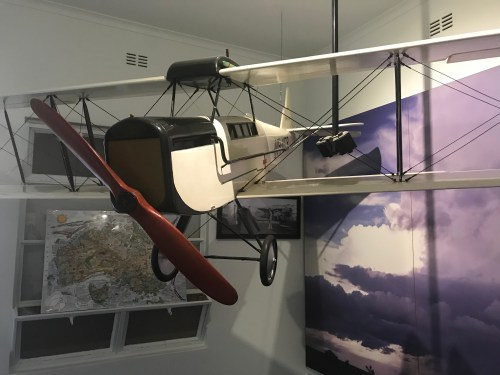
A third site explained how they deliver medical services by air to people in the Outback, and how it has become a lot more advanced than when it began in the 1910’s.

IMG_8401

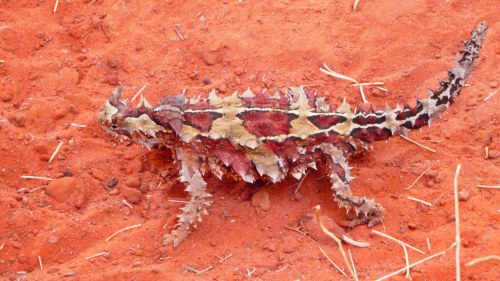
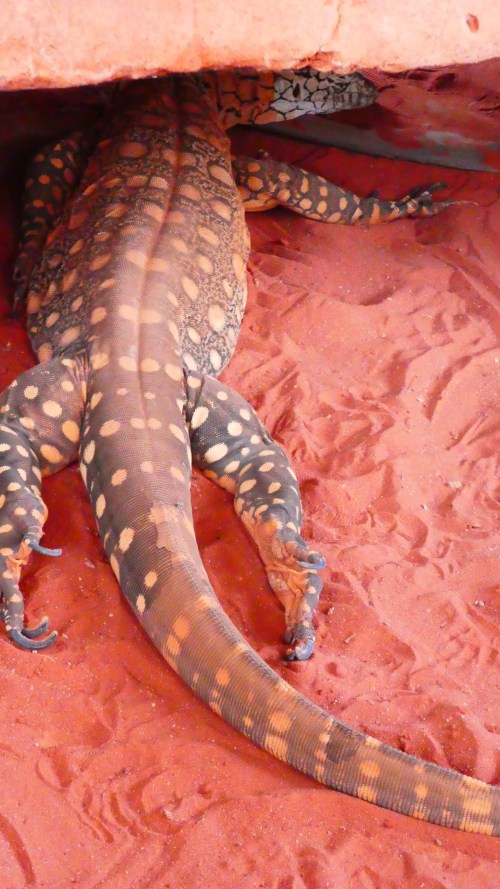
The fourth site was a reptile center. The presenter was perhaps overly enthusiastic about how to survive a crocodile attack or a snakebite. He seemed to enjoy scaring us. “Oh the snakes will be out tonight in Alice Springs! The weather is perfect. Careful where you walk!” I admit that while I was out running and walking the next morning, every stick appeared to be a snake. It is interesting that extremely few people die from snakebites in Australia. They have the most advanced system of delivering anti-venom in the case of a bite. If you wear long pants, you might be protected because Australian snakes have very short fangs compared to other places in the world, such as Sri Lanka. Larry spent 4 weeks in Sri Lanka, including a 5 hour walk through rice paddies and dusty paths. According to the guide here he should have been very scared.
P1050036

Thorny Devil

P1050044

Perentie

P1050057

Two pythons

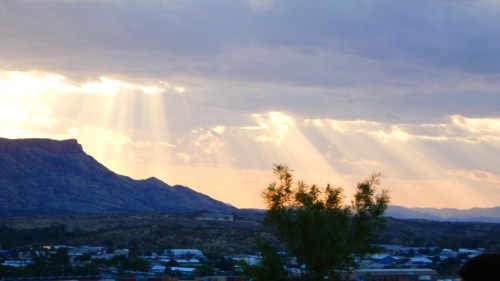
The fifth site was a view at sunset of Alice Springs and the West MacDonnell Range from atop a hill. It was a nice way to finish our tour.

P1050063

Melbourne

Melbourne is on the southeastern coast of Australia (see #5 on the map).

Australia5

Melbourne seemed a world away from Alice Springs, not only because it is a very large city, but because it is lush and green. Like Sydney and other places in Australia, the people are diverse, though the Aboriginal people were more prevalent in Ayers Rock and Alice Springs. We sense a feeling like Toronto, though on my morning runs in the Botanical Gardens, it felt like Central Park in New York City.

IMG_8424

They’re having a mail-in referendum on gay marriage. On Dec. 7, 2017, the Australian Parliament approved gay marriage after the referendum was overwhelmingly in favor.

IMG_8431

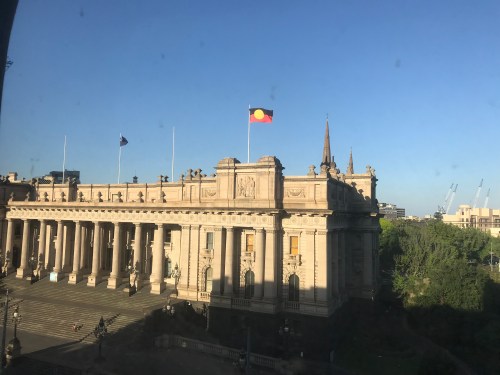
Parliament Building, across from the Hotel Windsor where we stayed.

P1050074

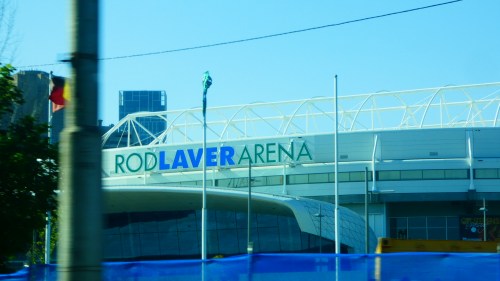
Where the Australian Open of tennis is played

Just one of the many gardens and parks all over the city. On the right is a memorial to JFK.

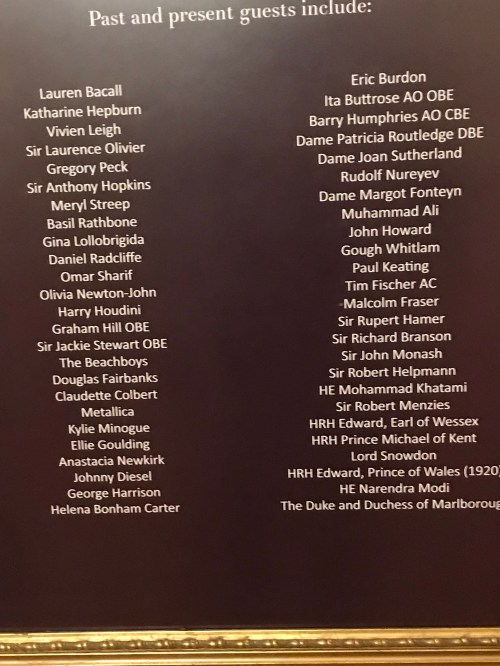
We stayed at the Hotel Windsor, which was built in 1883 during Melbourne’s gold rush. It is way over the top and has had famous celebrities such as Lauren Bacall, Mohamed Ali, Meryl Streep stay here.

IMG_8443

Famous people who have stayed at the Hotel Windsor. They will need to add us now.

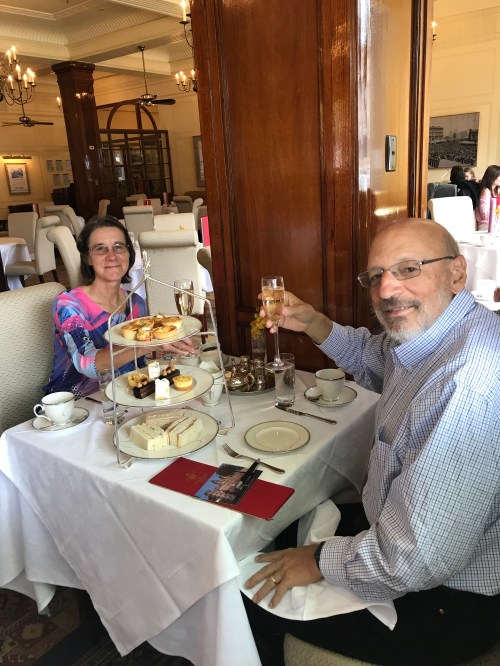
Just to really go too far, we indulged in the traditional British style Afternoon Tea, which had way too much food.

IMG_8434

I was hoping to have a cucumber sandwich with the crust removed and was not disappointed (although they added salmon to it). Champagne, 6 savory pastries, 6 sweet pastries, 6 half sandwiches, and scones. I usually skip lunch so this was a very big shock to my system. It was hard to get up and move around after that. It was worth it to do something like this once.

IMG_8440

IMG_8439

IMG_8437

I prefer living as close as possible to a city. Indiana, PA is not a city but given that our two jobs were at Indiana University of Pennsylvania, living right in town was a great option. We didn’t want to live in what might be called the suburbs. Suburbs have always seemed to be the worst of both worlds. You can’t walk to restaurants, work, and school from suburbs and you don’t have space to yourself like you do in the country. Others would say just the opposite, you’re close to town but have more space.

I’ve never lived in a suburb or in the country (since I was very young) but the concept of living in the country is intriguing. Over the last two days, we had  a brief taste of living in the extreme country of the Australian Outback, followed by the large city of Melbourne. I  can see why people live in both but cities will always be where I’m happiest.