The driving in Ho Chi Minh City was a major step crazier than Cambodia, which was already quite crazy. The driver was totally fearless. He did not stop at intersections. He commanded the road and demanded that others yield. Of course, the other drivers were the same way. Somehow it worked.
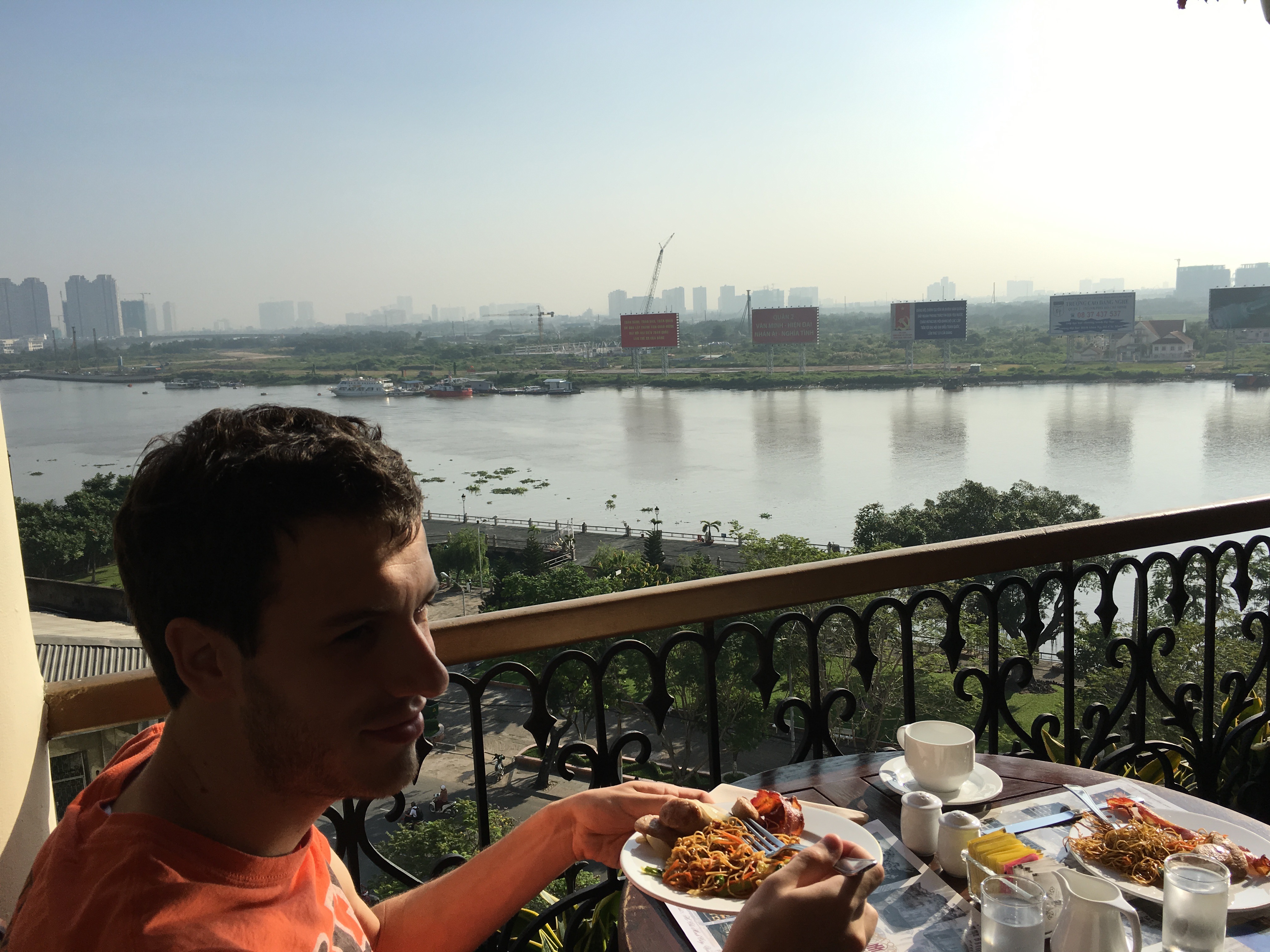
Saigon or Ho Chi Minh City was much faster paced than Cambodia. It was also much more developed, more like America. We stayed at a classic French hotel with an amazing view of the Mekong from the breakfast terrace.
The morning excursion was to Cu Chi, a real site where villagers created tunnels to hide from the US forces. They were supporters of the National Liberation Front but acted friendly to the Americans in the day.
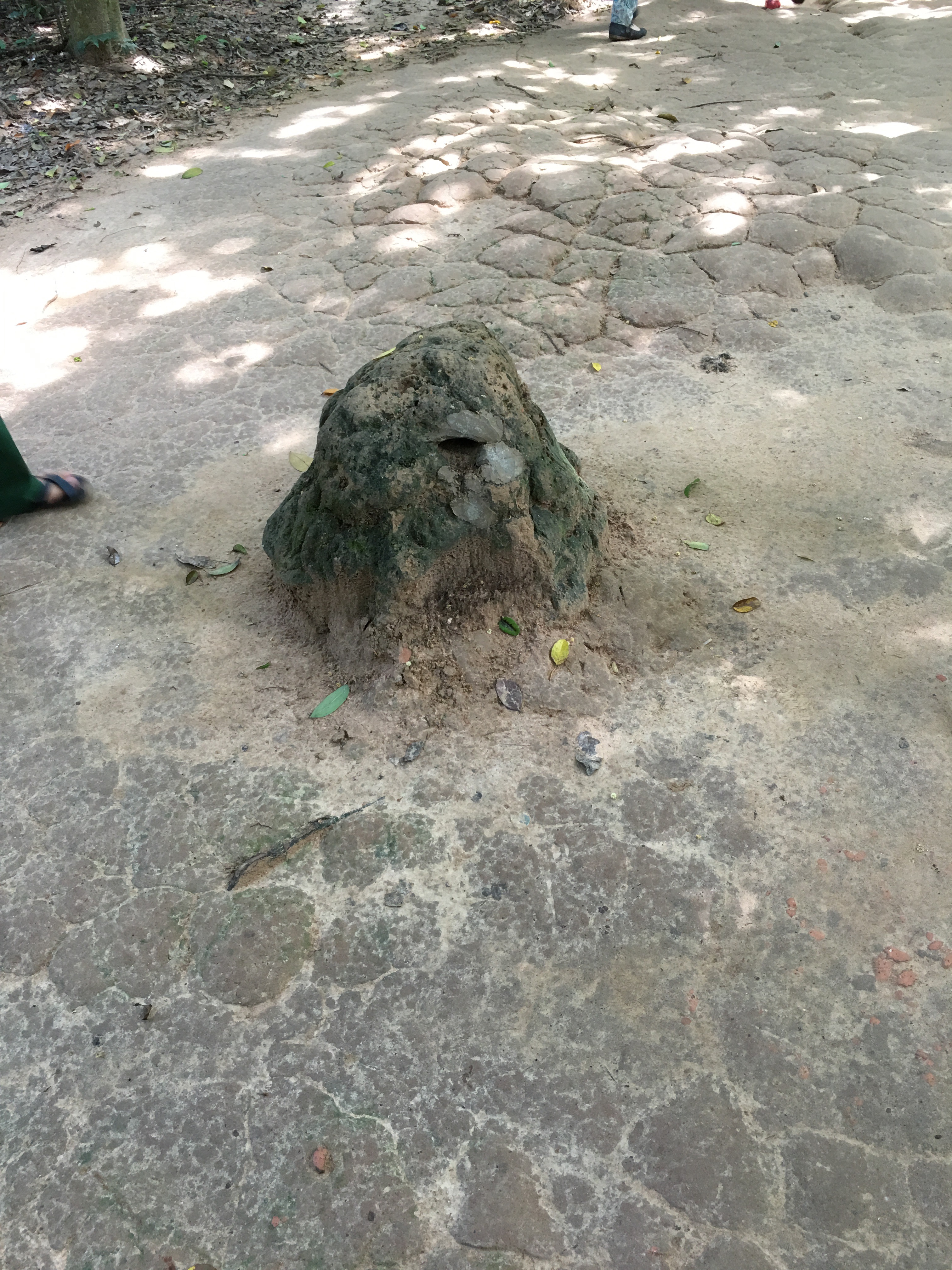
The hole in this mound is a camouflaged ventilation hole for a tunnel underneath.
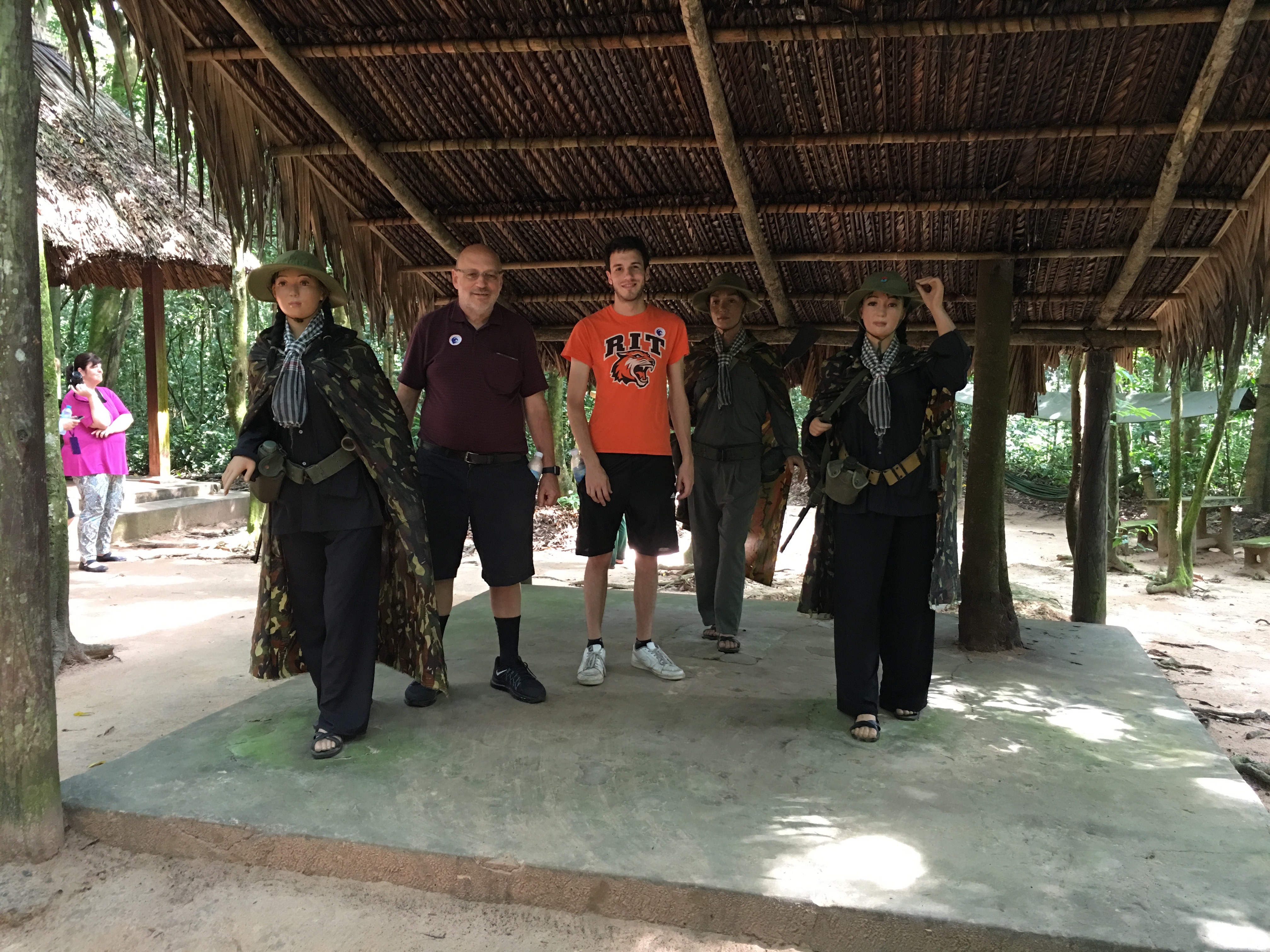
An unlikely pairing — NLF women soldiers and US tourists.
Our guide explaining about the shells dropped in the area.

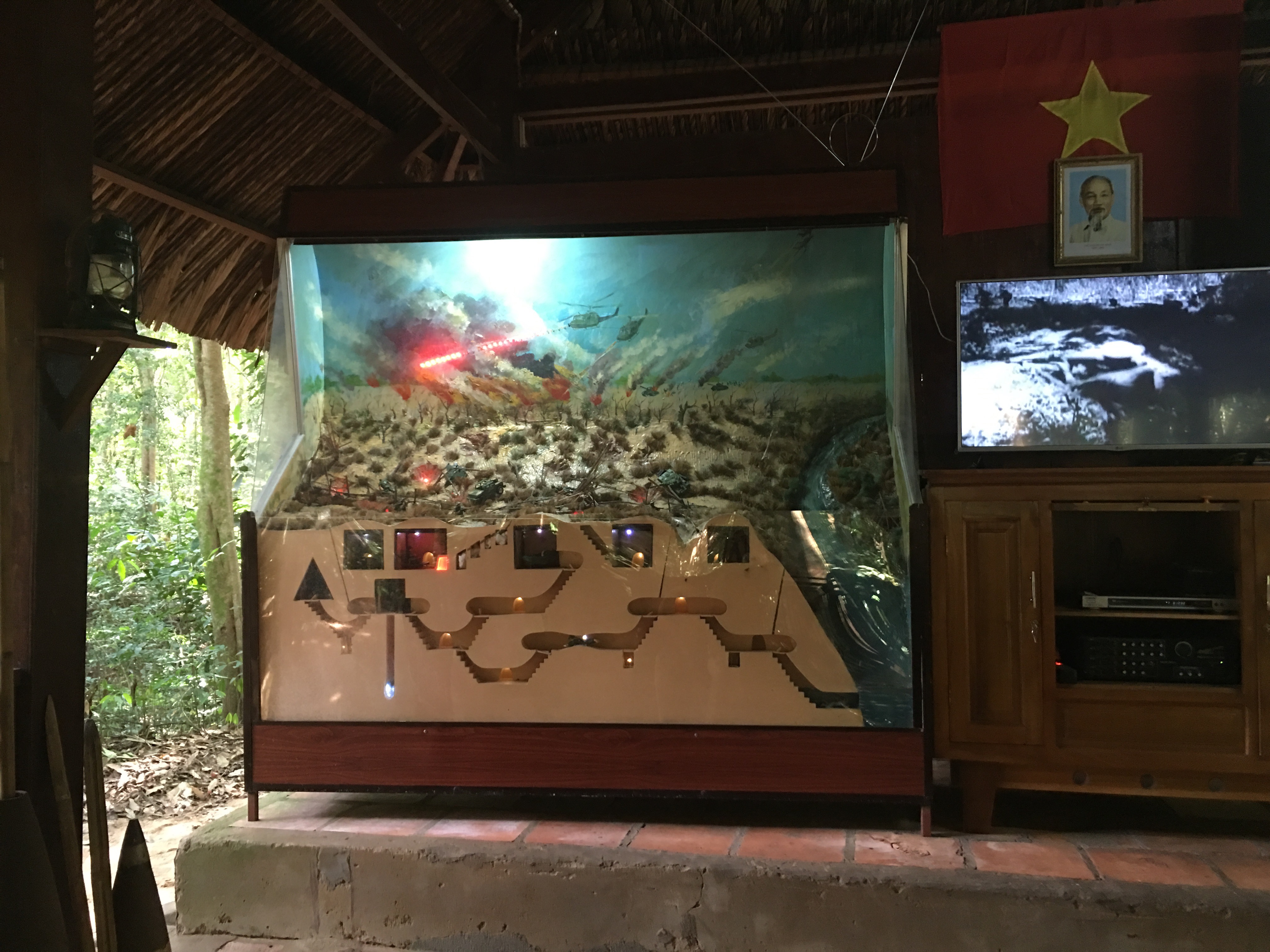
A map of the 4 levels of tunnels. At the far right the tunnel goes into the Mekong river.
I’m climbing out of the only tunnel I went in. This is just after bumping my head. I would not survive as a Vietnamese tunnel resident.

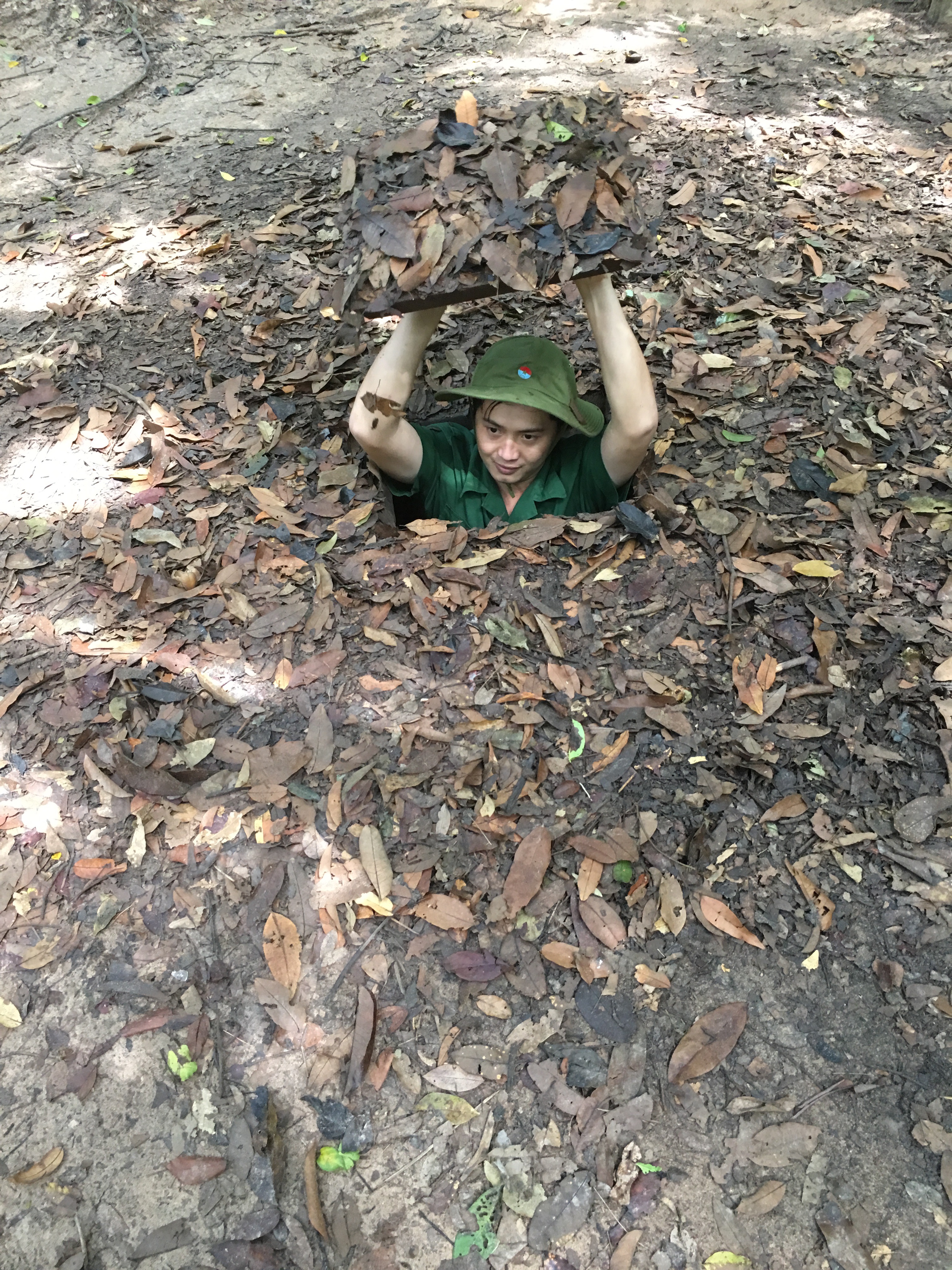
Showing us how they put leaves on top of the tunnel cover for camouflage before they climbed in the tunnel. Just a second later, he is below the leaves.
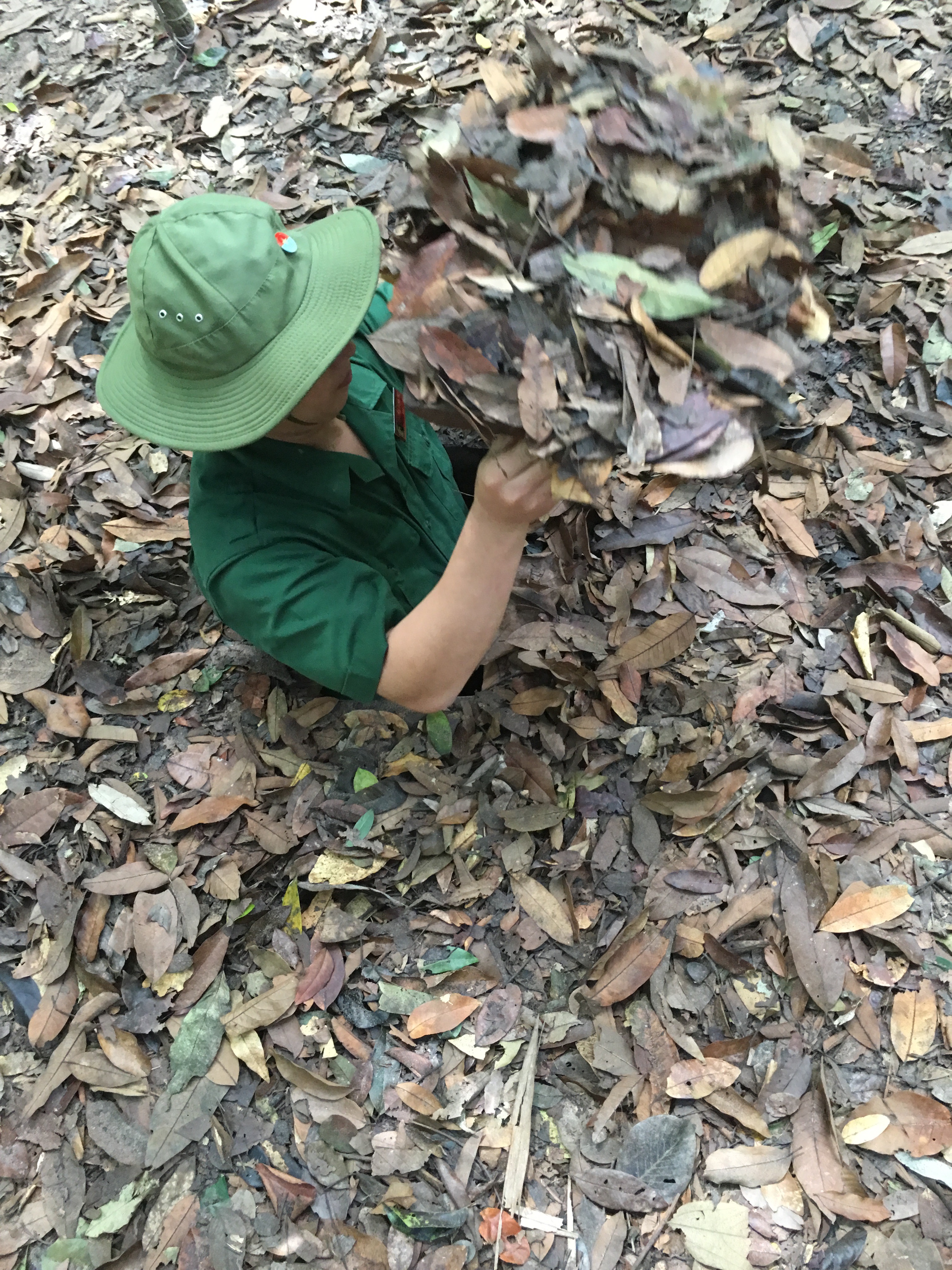

He reappeared at the other end of the tunnel.
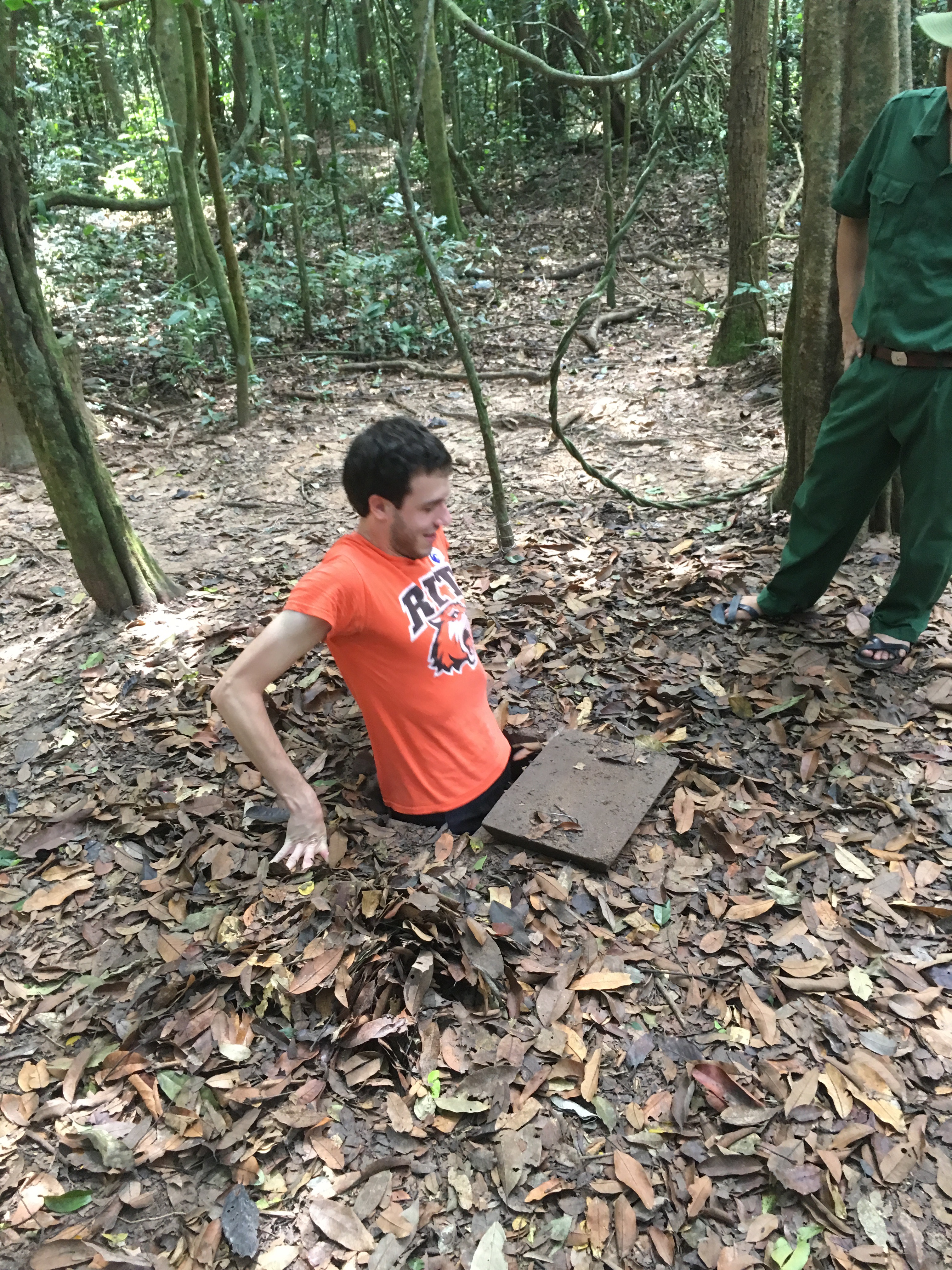
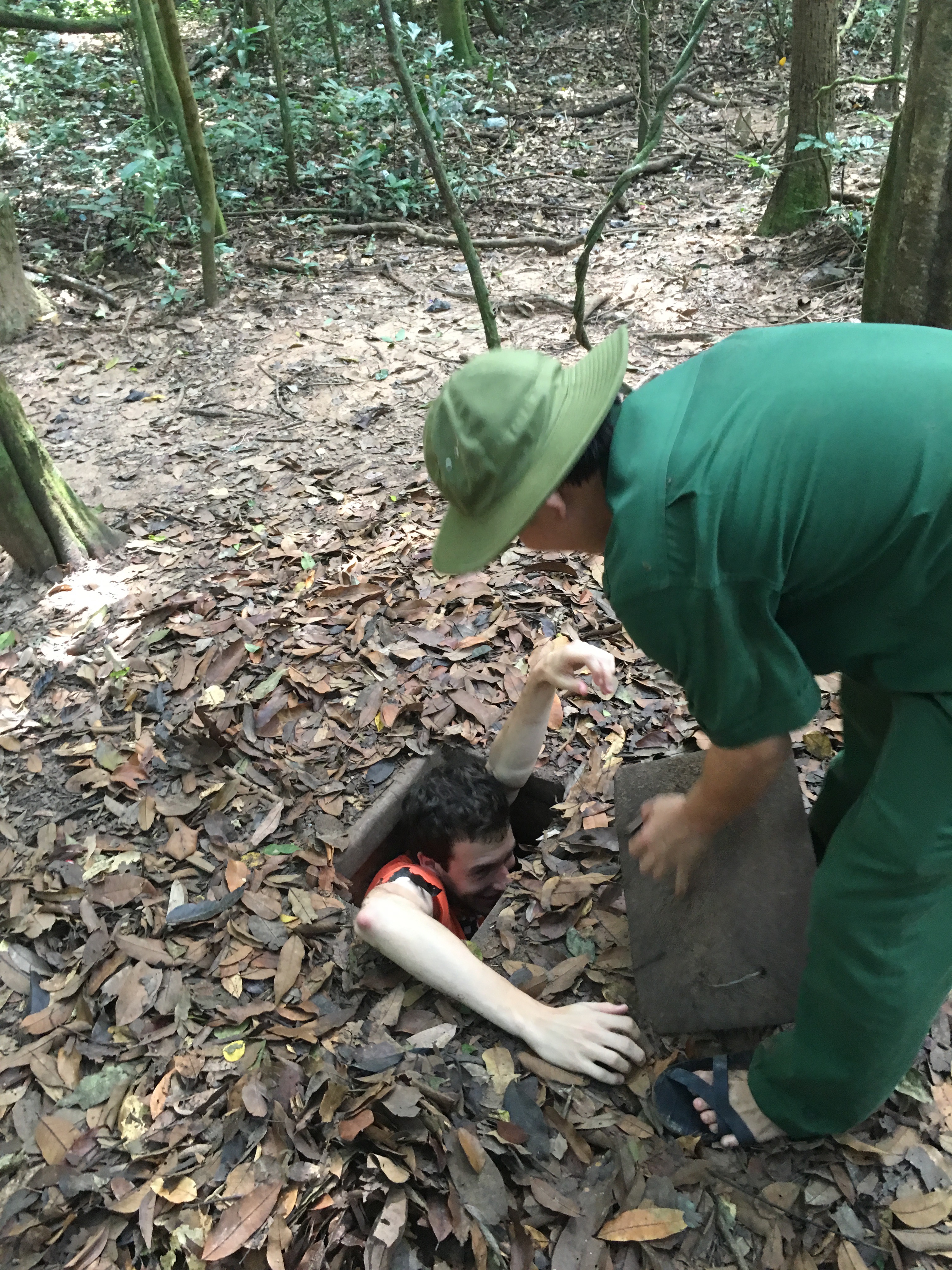
Keith tried to go in that tunnel but this one is only for professionals.
A model of a trap. If you step on the grass, you fall into spikes. There were several other types of traps shown.
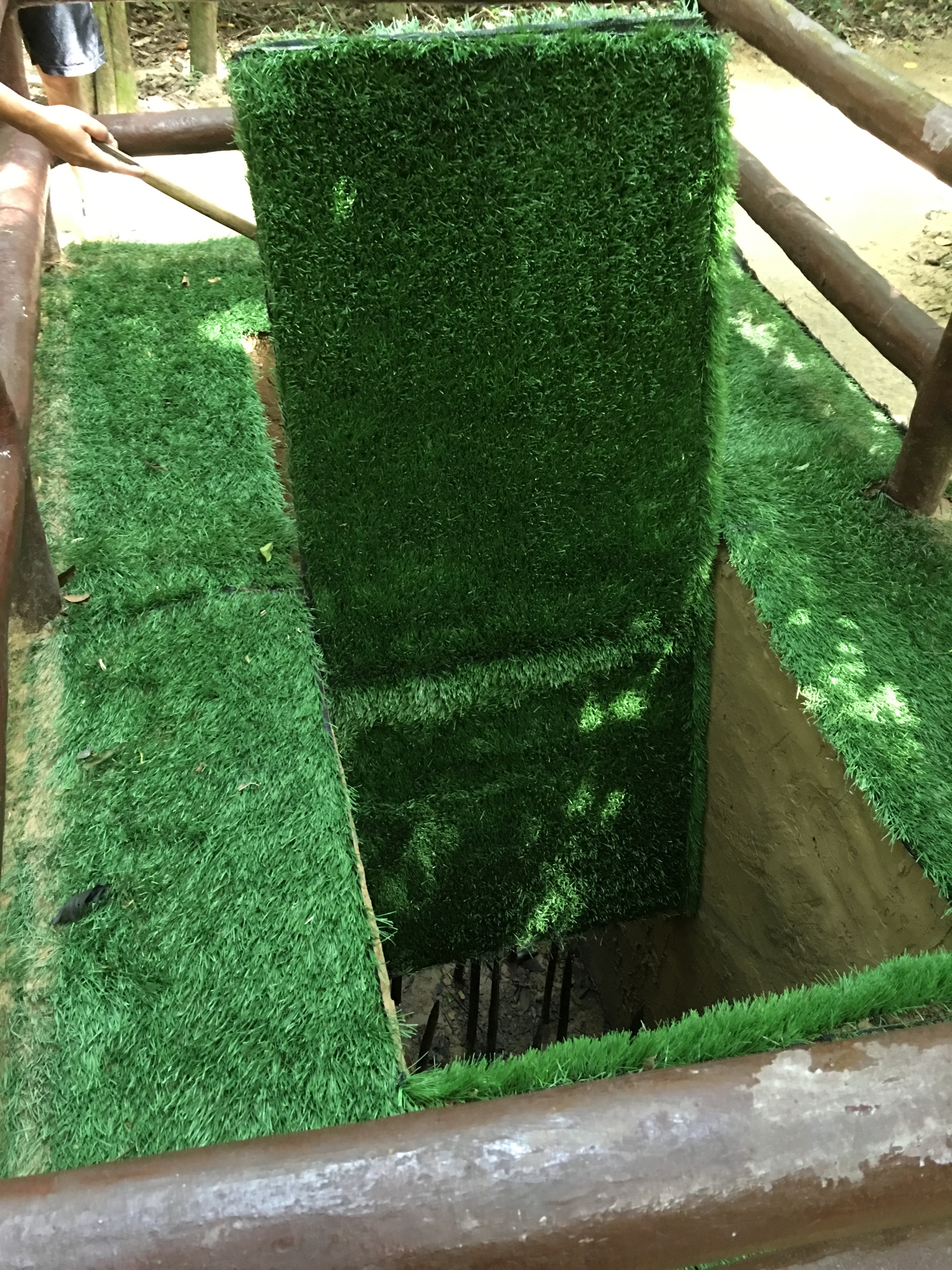
Keith is at the end of this tunnel. He went through half a dozen or so tunnels.

These tunnels were all over Vietnam. It shows how difficult it was for the US and its allies. The US had superior technology but the Vietnamese knew their land and how to use it for their advantage. It’s reminiscent of how the US used its knowledge of the land to defeat the superior British forces in the Revolutionary War.
After lunch we returned to Ho Chi Minh City to the Presidential Palace. I have seen pictures of this with the Vietnamese tanks mowing over the fence on the day that Saigon fell.

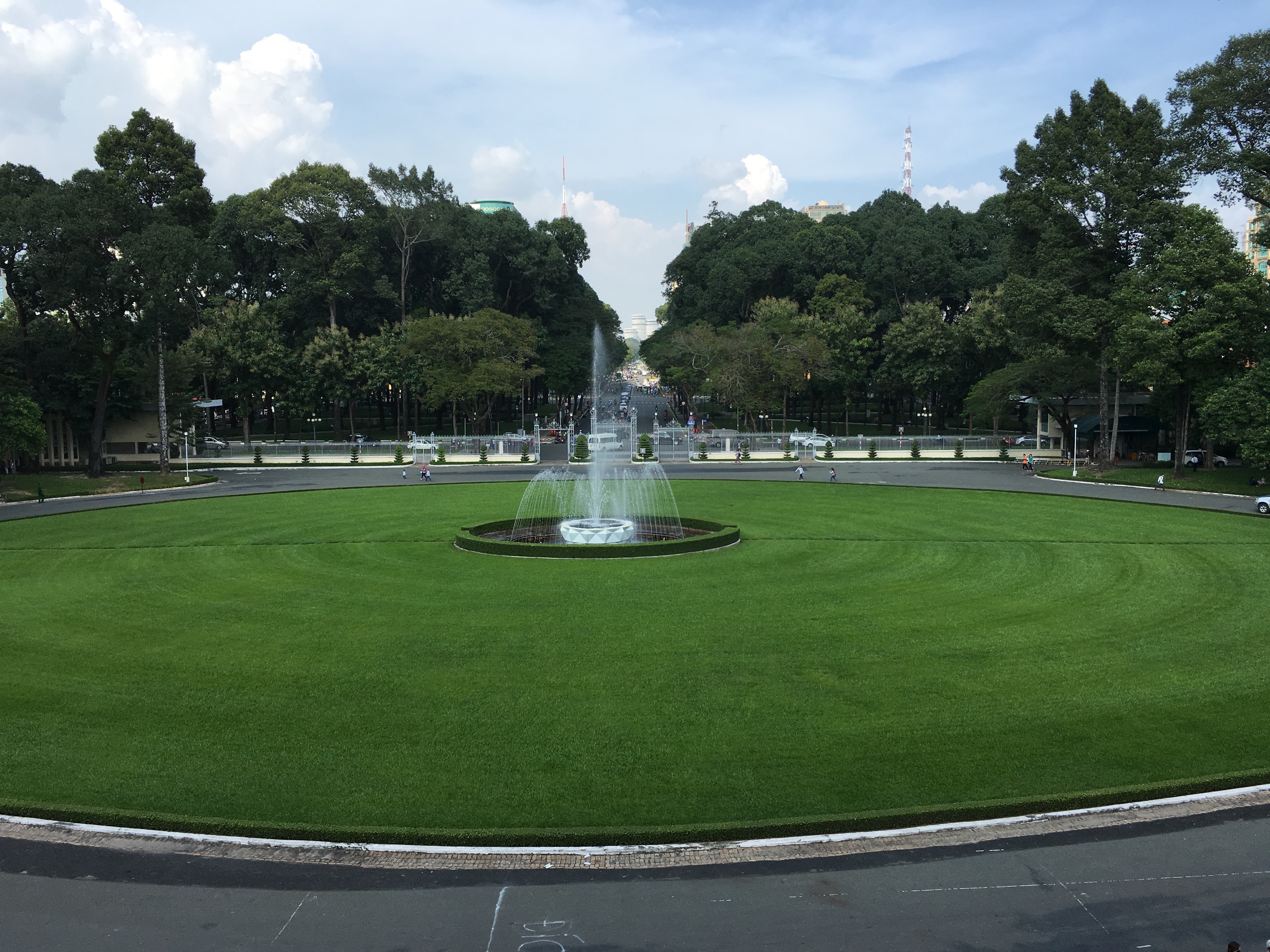
Elegant sitting rooms for the South Vietnamese government. The palace is now a museum.

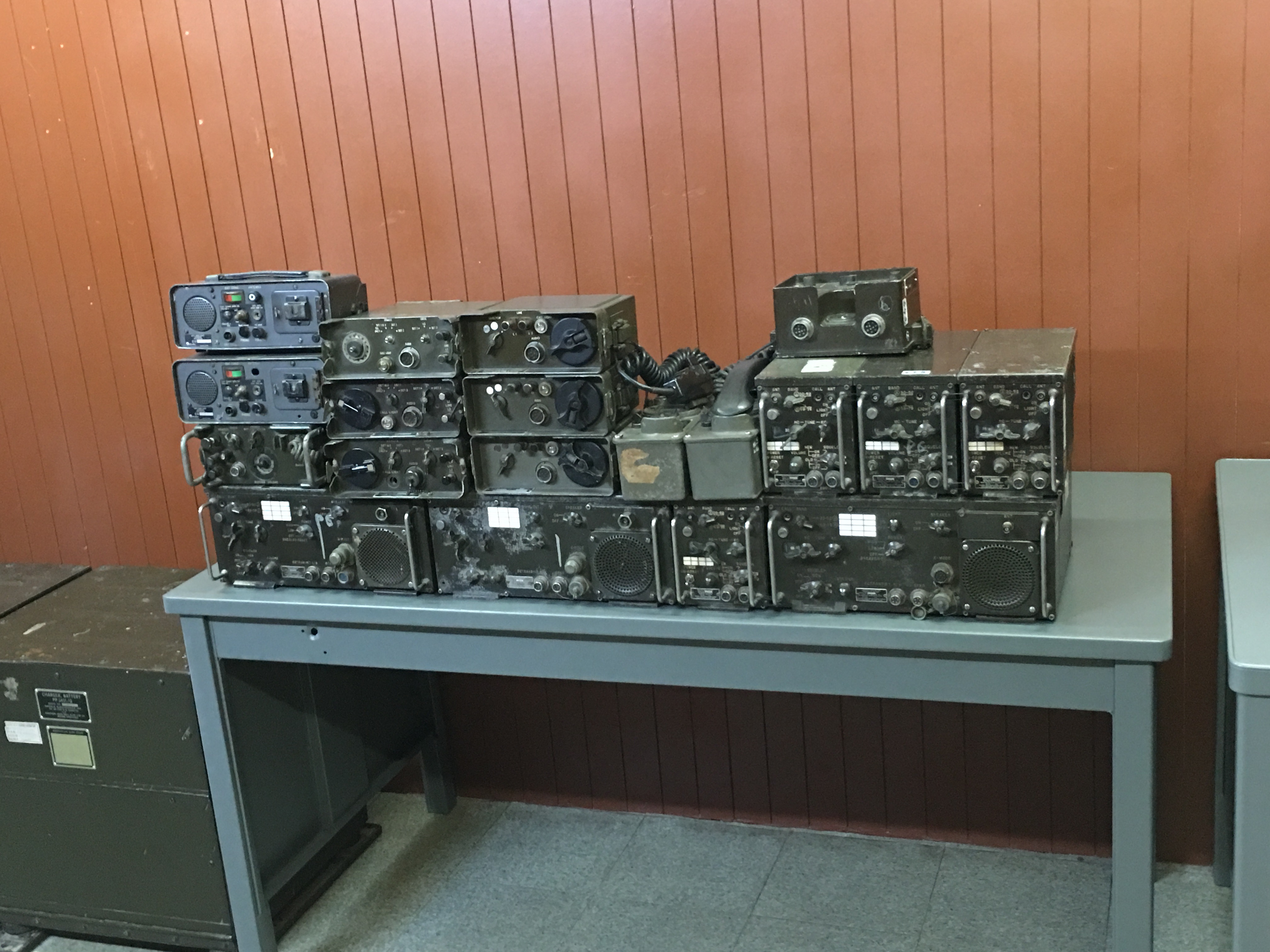
Communications equipment in the bunker of the Presidential Palace.
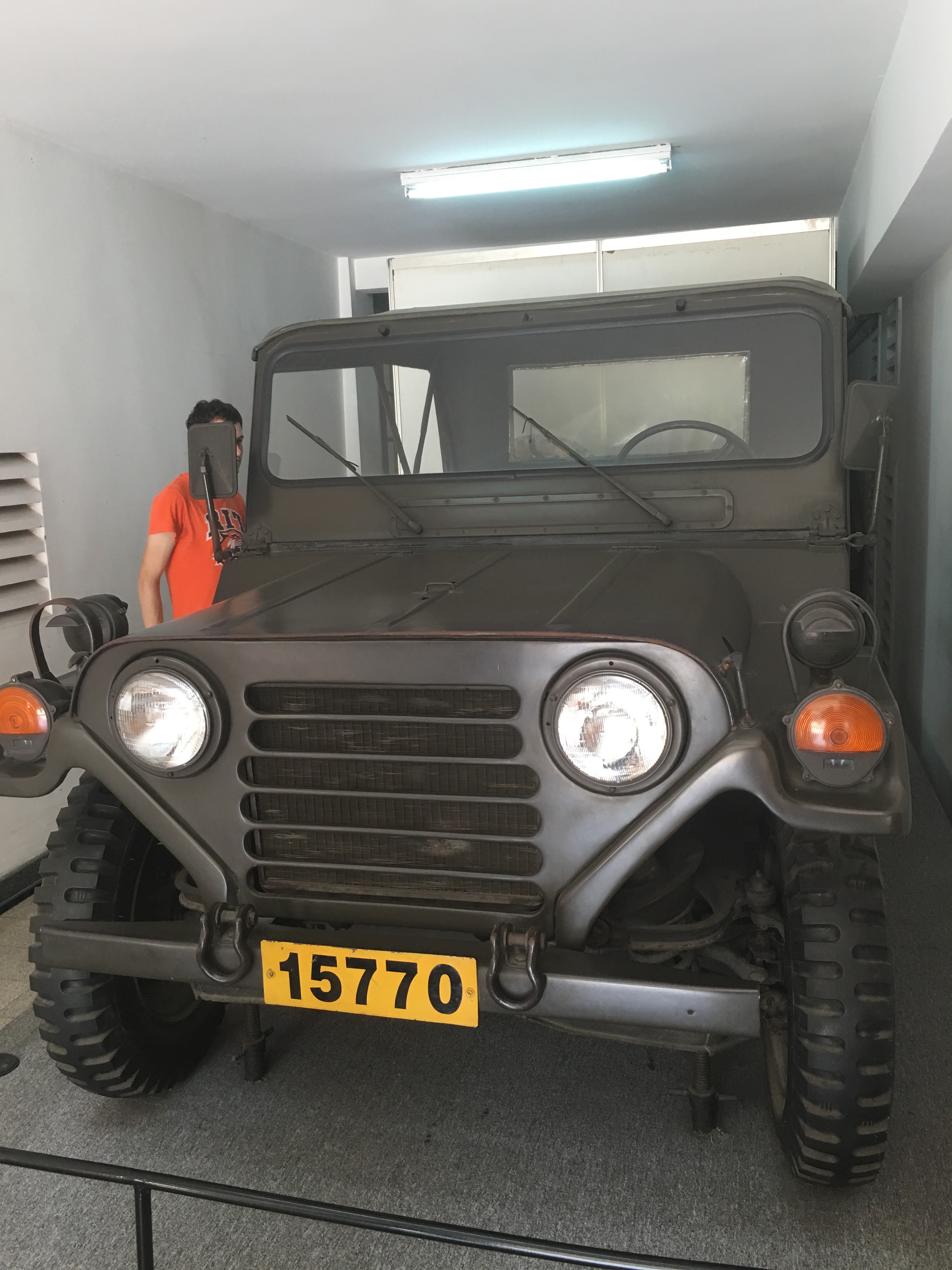
This was a reconstructed jeep like the one that took the President of South Vietnam to his surrender speech on April 30, 1975.
US military equipment seized by the Vietnamese. I associate the Vietnam War with these US helicopters. By the way, in Vietnam, the war is called the American War.


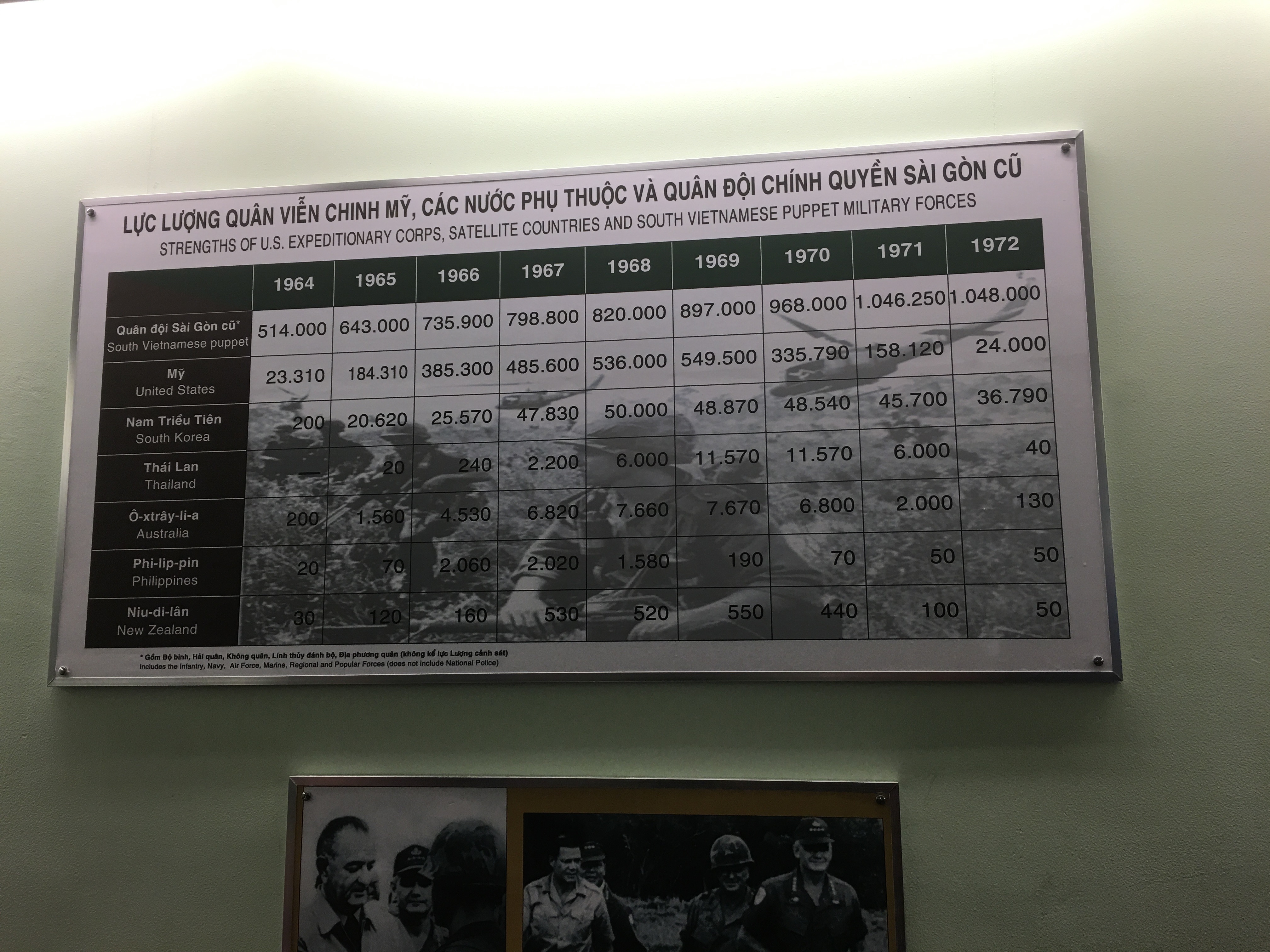
A table showing the number of troops of the US and its allies each year.
- In 1964, there were 514,000 South Vietnamese and 23,310 US troops.
- In 1968, there were 820,000 South Vietnamese and 536,000 US troops.
- In 1972, there were 1,048,000 South Vietnamese and 24,000 US troops.
- By 1975, all the US troops were gone and the war was over.
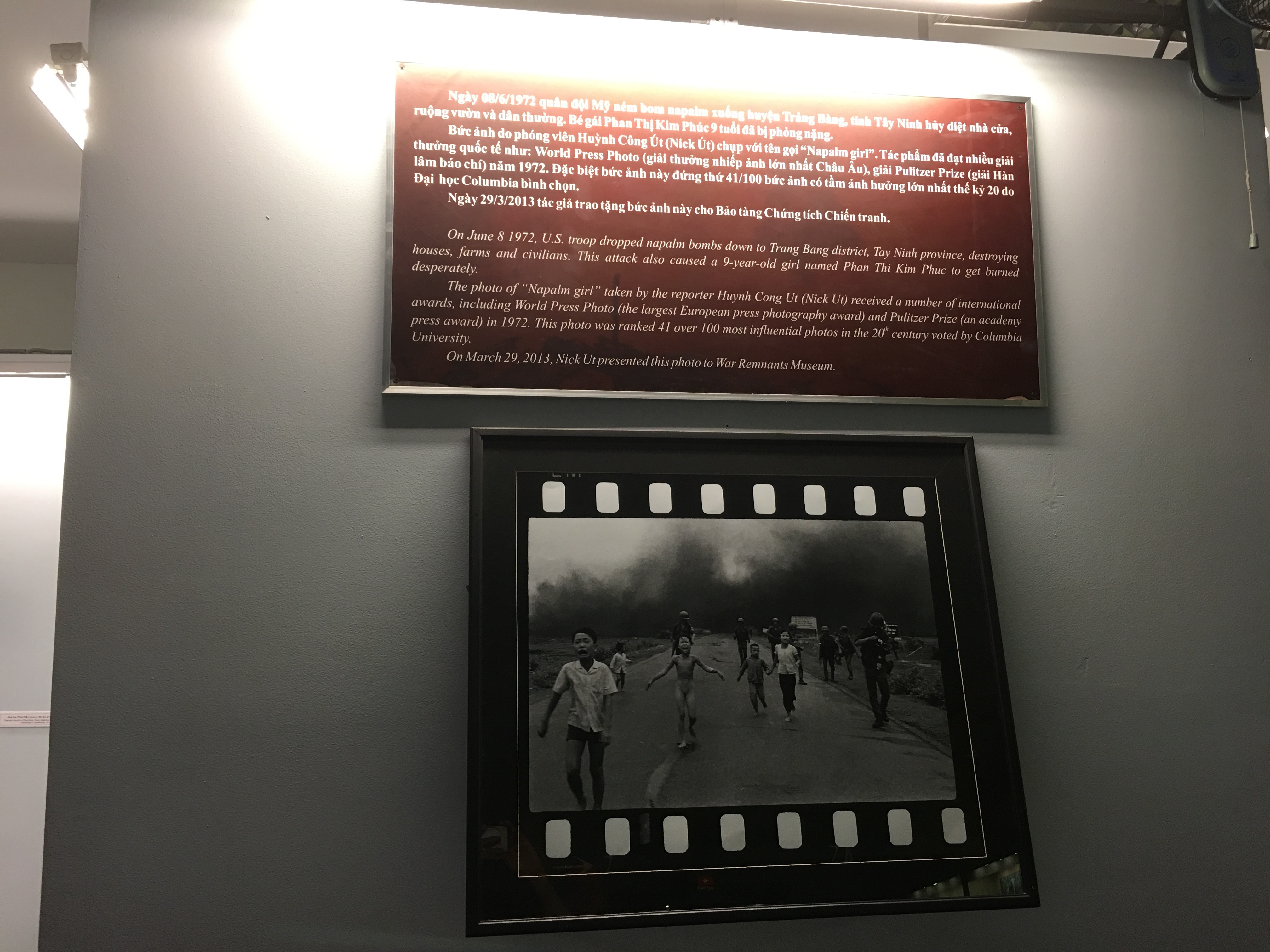
Keith and I both really enjoyed the Museum of War Remnants, housed in the former U.S. Information Service building. It was filled with photos of the war and of protests from journalists around the world. Here is the famous picture of the girl running after being attacked by a napalm bomb.
The day was centered around the war from the Vietnamese point of view and how they fought against the US government and its allies. I’ll give my full point of view in another post.
We only had one full day in Saigon, which was not enough, but we needed to see Hanoi and Halong Bay before Keith left.
 feldmanlarry
Leave a comment