I met my guide Igor at 8:30 to go to see the famous bridge at Mostar, Bosnia. Bosnia is not totally off the beaten track although it is an obscure part of the world. We had a different view of Dubrovnik on the way out, then of the area just out side the city.

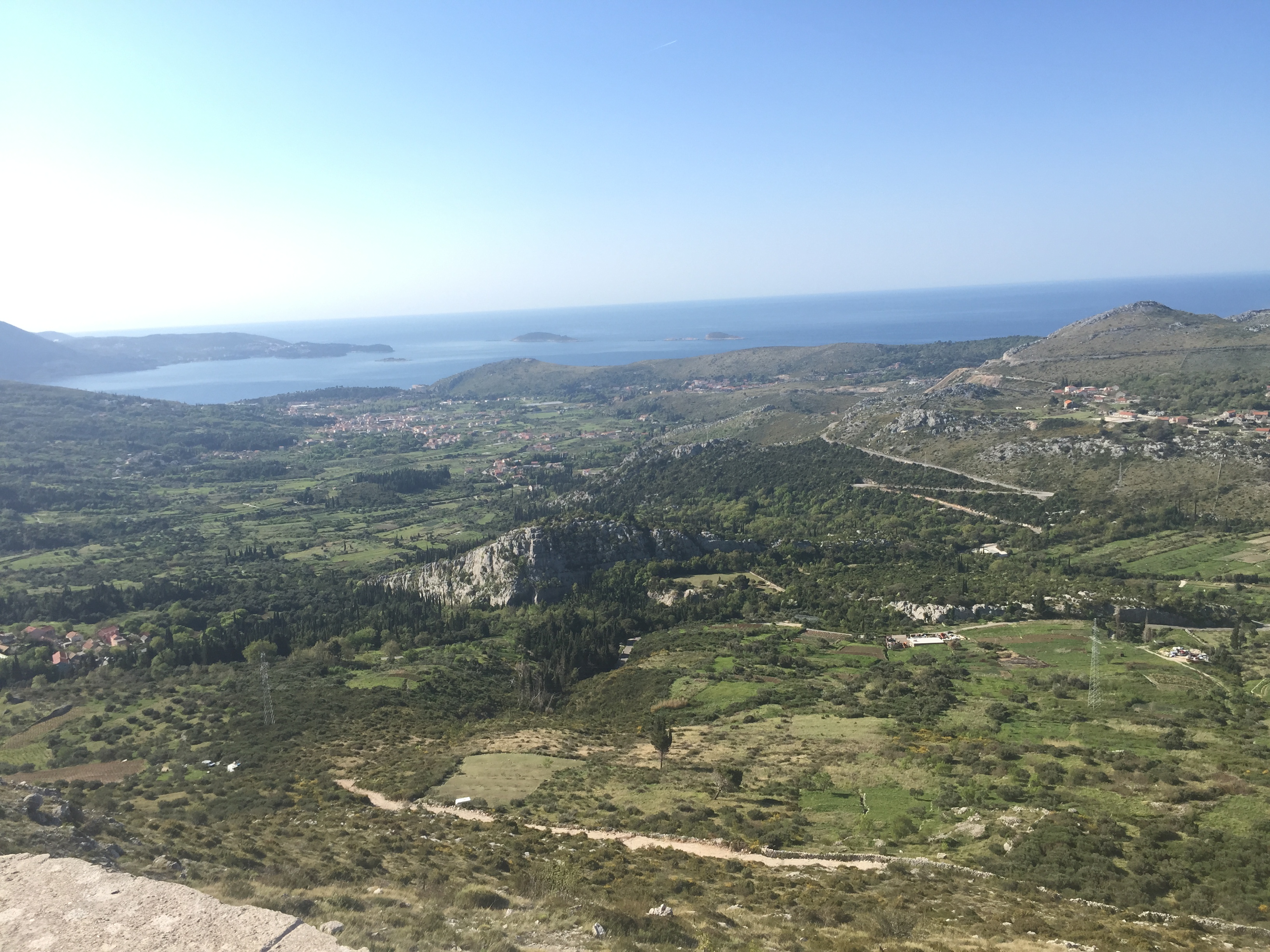
When we reached the border between Croatia and Bosnia / Herzegovina, Igor said to say that we’re friends visiting Mostar. I’m not sure why we couldn’t say he was a paid guide. Fortunately, they didn’t ask me anything on the Croatian or Bosnia side.
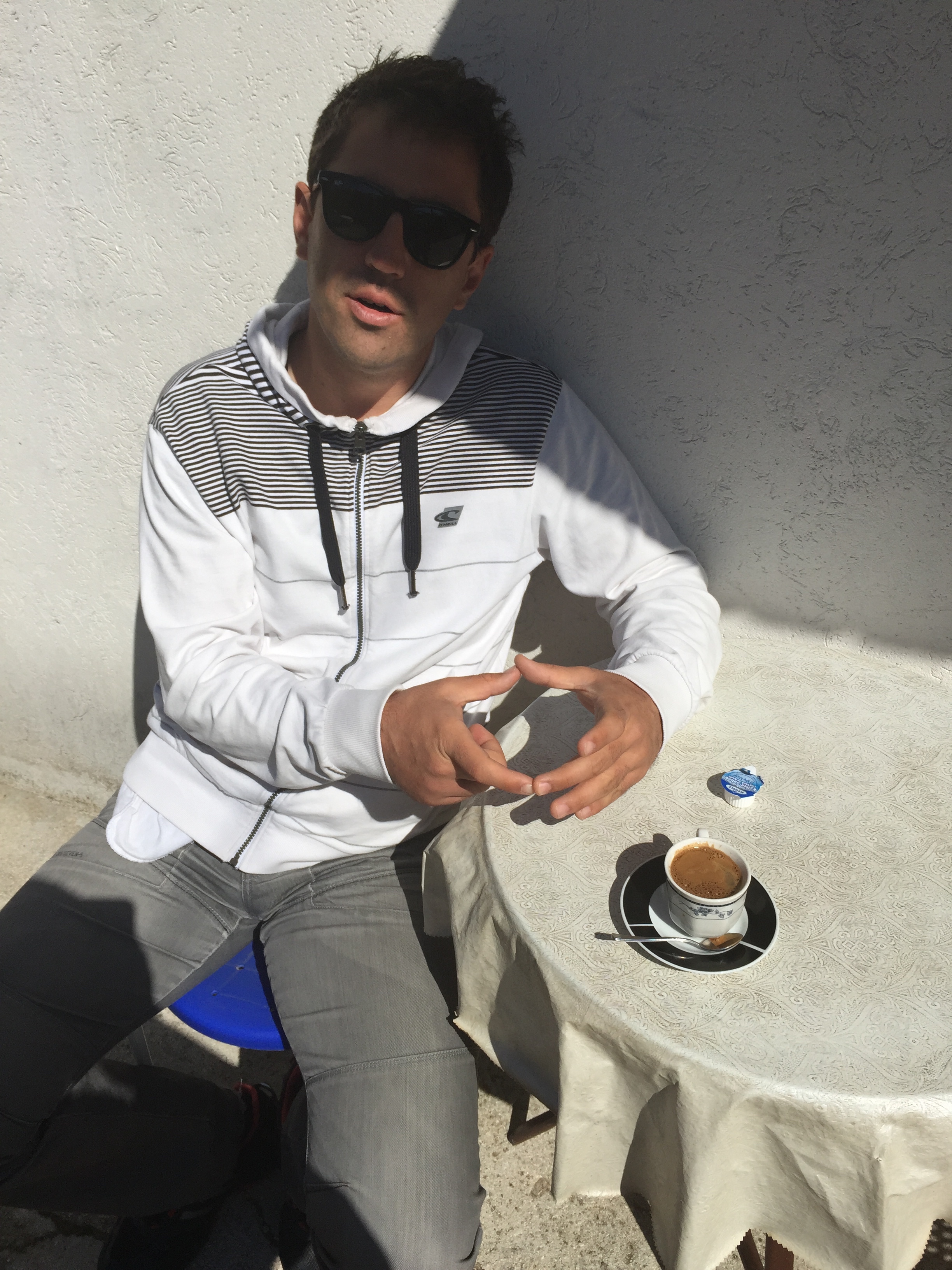
We stopped for coffee at a very deserted little store on the side of the road. The woman used the traditional old method for making coffee, without a machine of any kind. Igor explained the process as follows. First you boil the water in a pot, then take the pot off the fire and add coffee and sugar. Then put the pot back on the fire and let it boil and brew. Then put the coffee in a cup and add milk. This was how they made coffee before coffee makers existed.

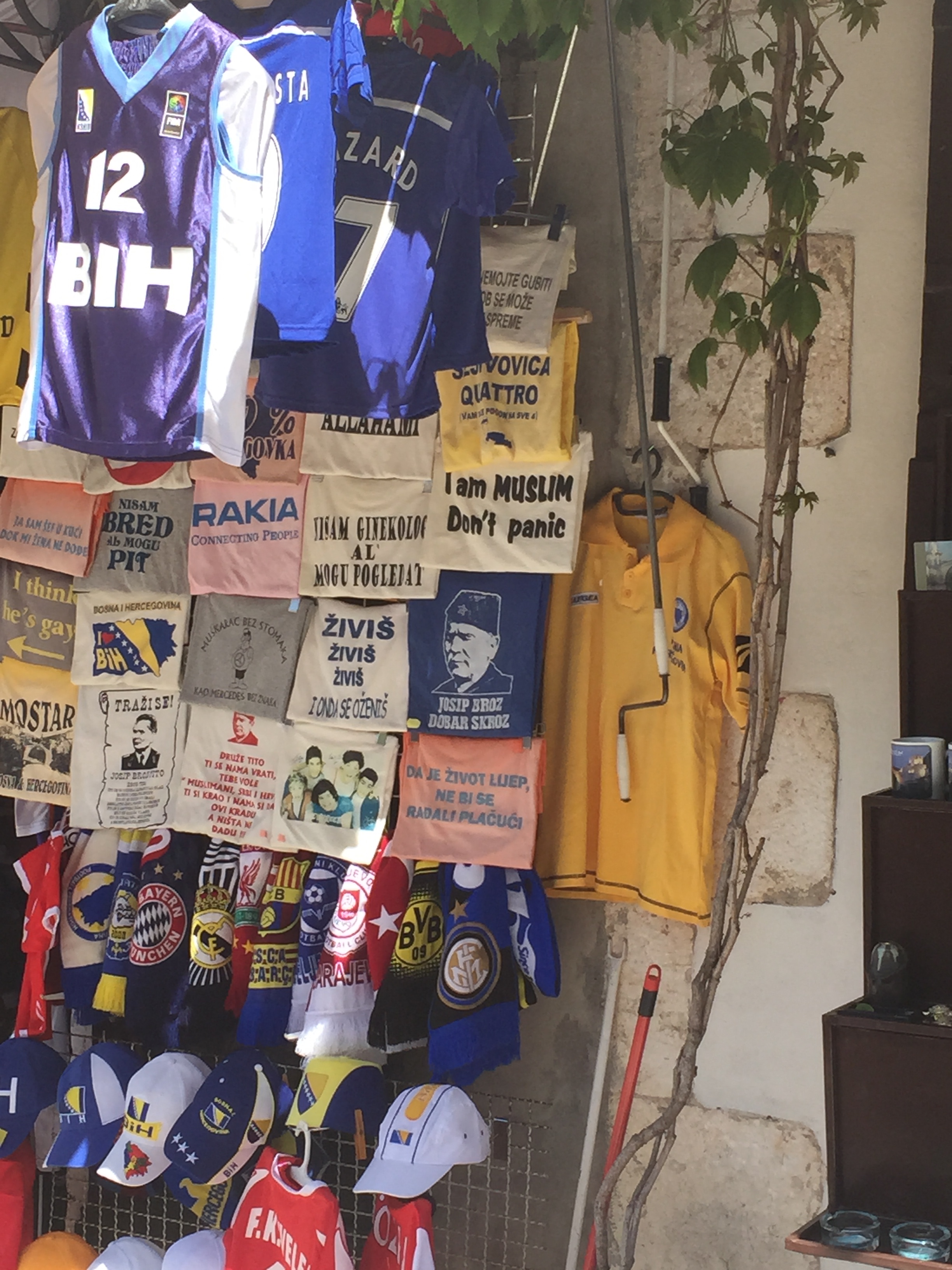
There were two recurring themes today that are unfortunately closely related. One is the effects of the terrible civil war which took place after Tito died in 1989. Tito was a ruthless dictator but he kept all the ethnic groups of the former Yugoslavia together. He was a hero of WW2, fighting for Yugoslav independence. He was a socialist but kept Yugoslavia non-aligned and out of the Soviet Union’s domination. As soon as Tito died Yugoslavia fell apart. Millions died in fighting and Yugoslavia has now turned into 6 separate countries: Serbia, Croatia, Bosnia / Herzegovina, Slovenia (not the same as Slovakia), Montenegro, and Macedonia. Igor told me sometimes it takes a strong leader with a lot of power to keep everybody in line. Other Croatians I met agreed that the days of the strongman Tito were the best. Igor recognized that the problem with a dictator is making sure you have a good one who isn’t in it for himself.
Igor had the full lunch while I had a small subset of this. They’re proud of their sausages in Bosnia and pork cutlets, which were very tasty.

One t-shirt in this store on the right said “I am Muslim, Don’t Panic”. Right below it was an homage to Tito.
The big attraction in Mostar is the beautiful bridge. “Mostar” means bridge city. Here are pictures of the bridge and me eating what else, pistachio ice cream, and touching the water as is my tradition.


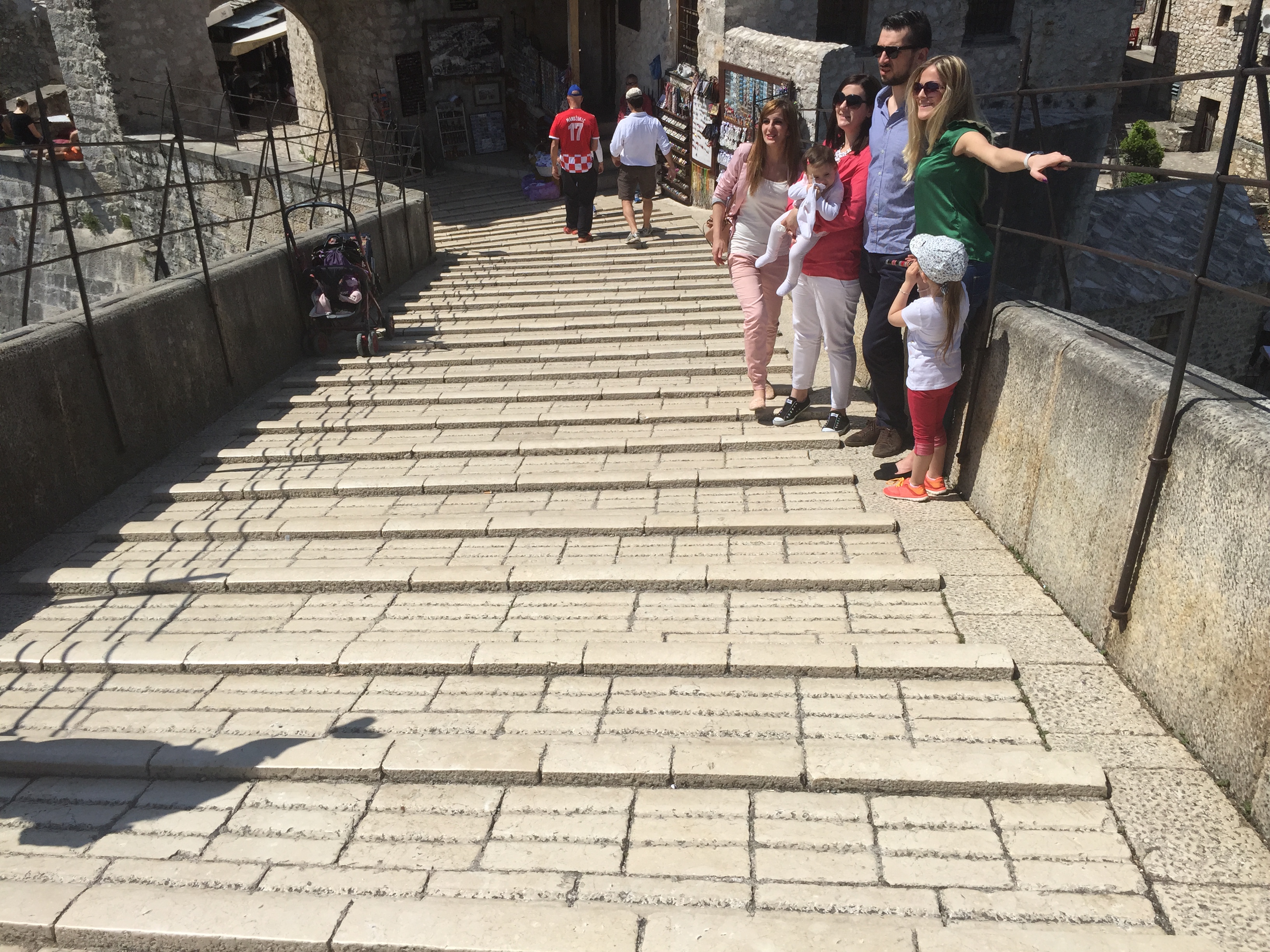
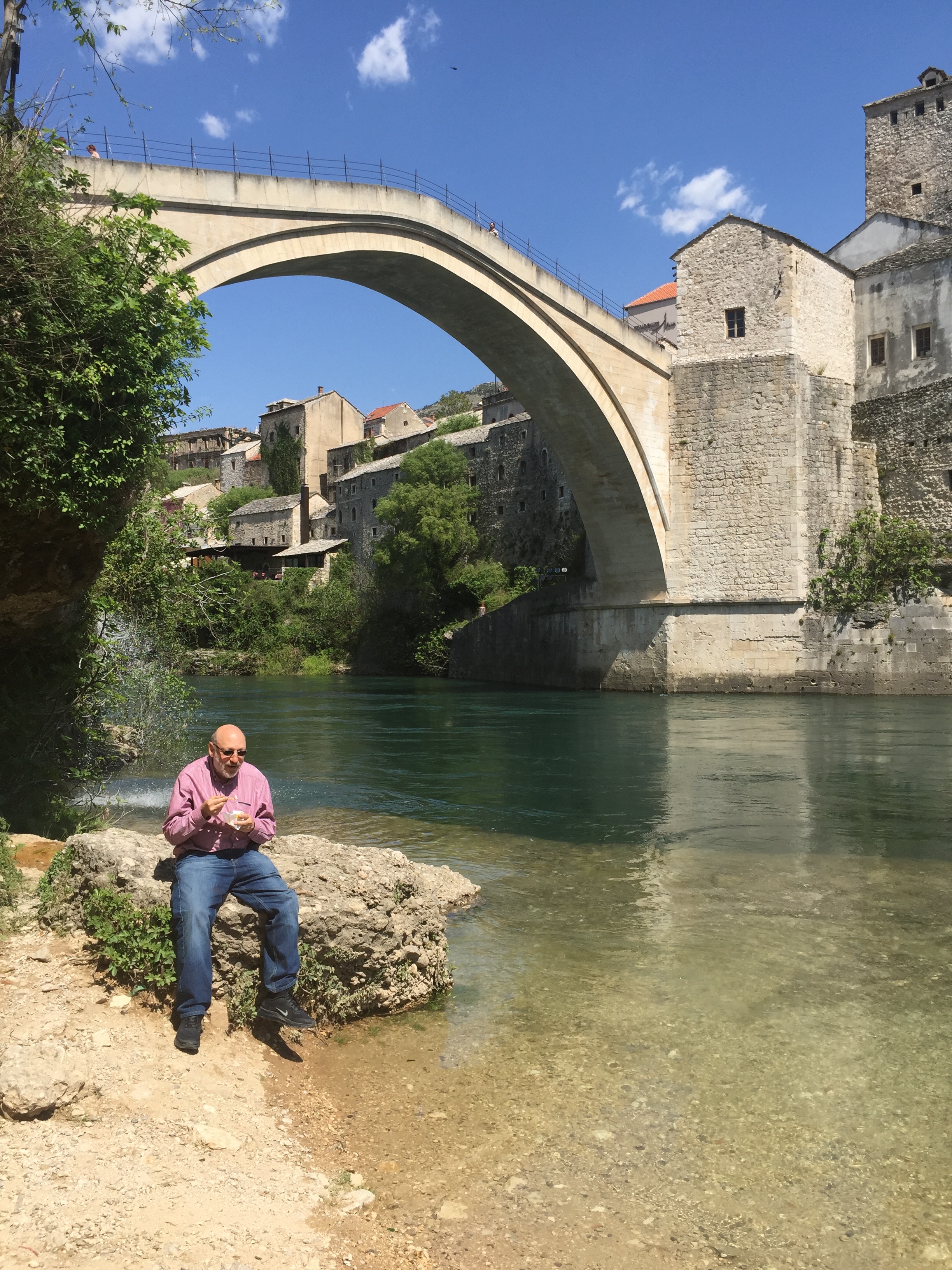
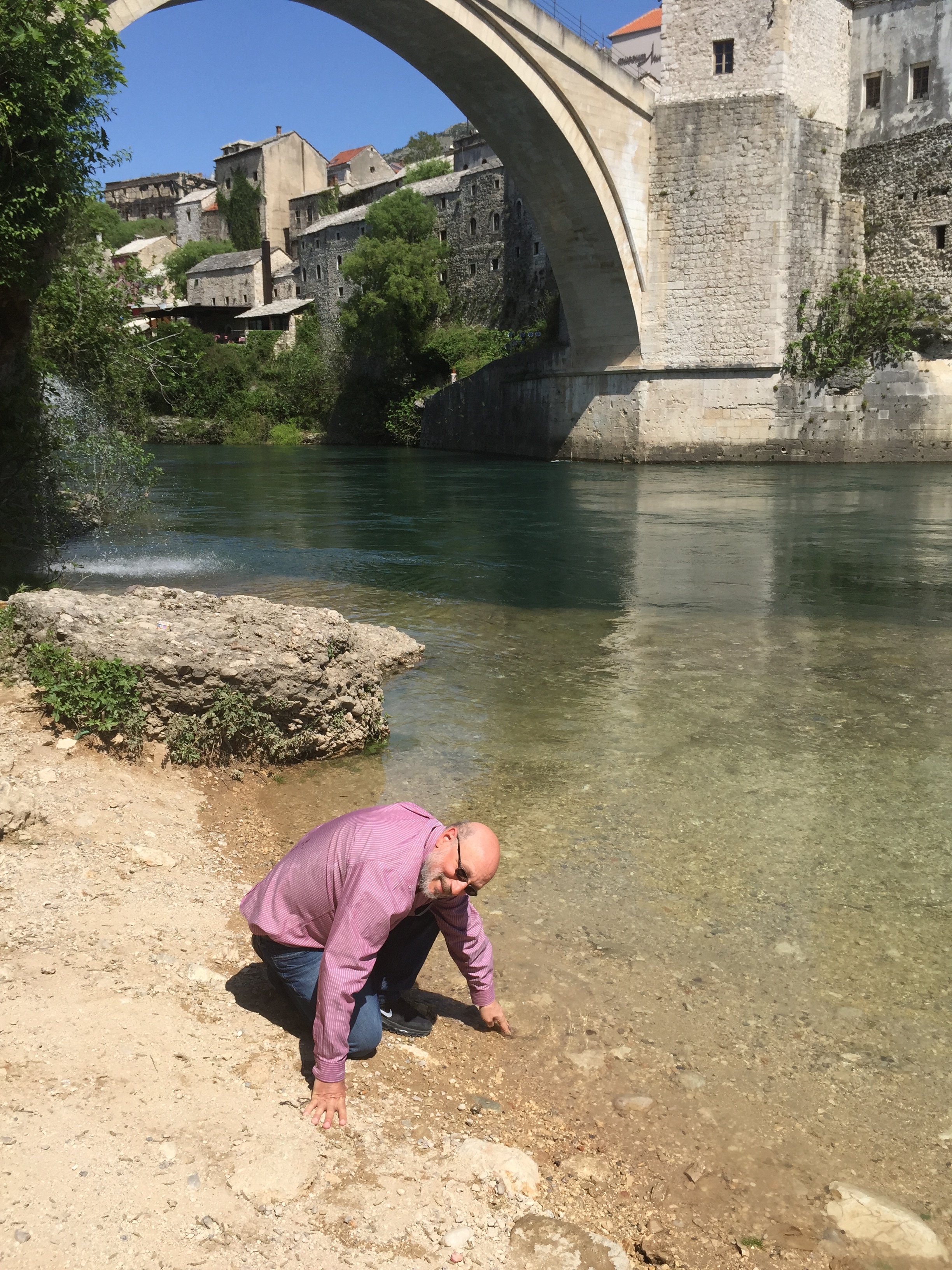
The bridge was built in the 16th century and stood for 427 years until it was destroyed in 1993. It was rebuilt with some of the original stones. You can read more about it at http://en.wikipedia.org/wiki/Stari_Most
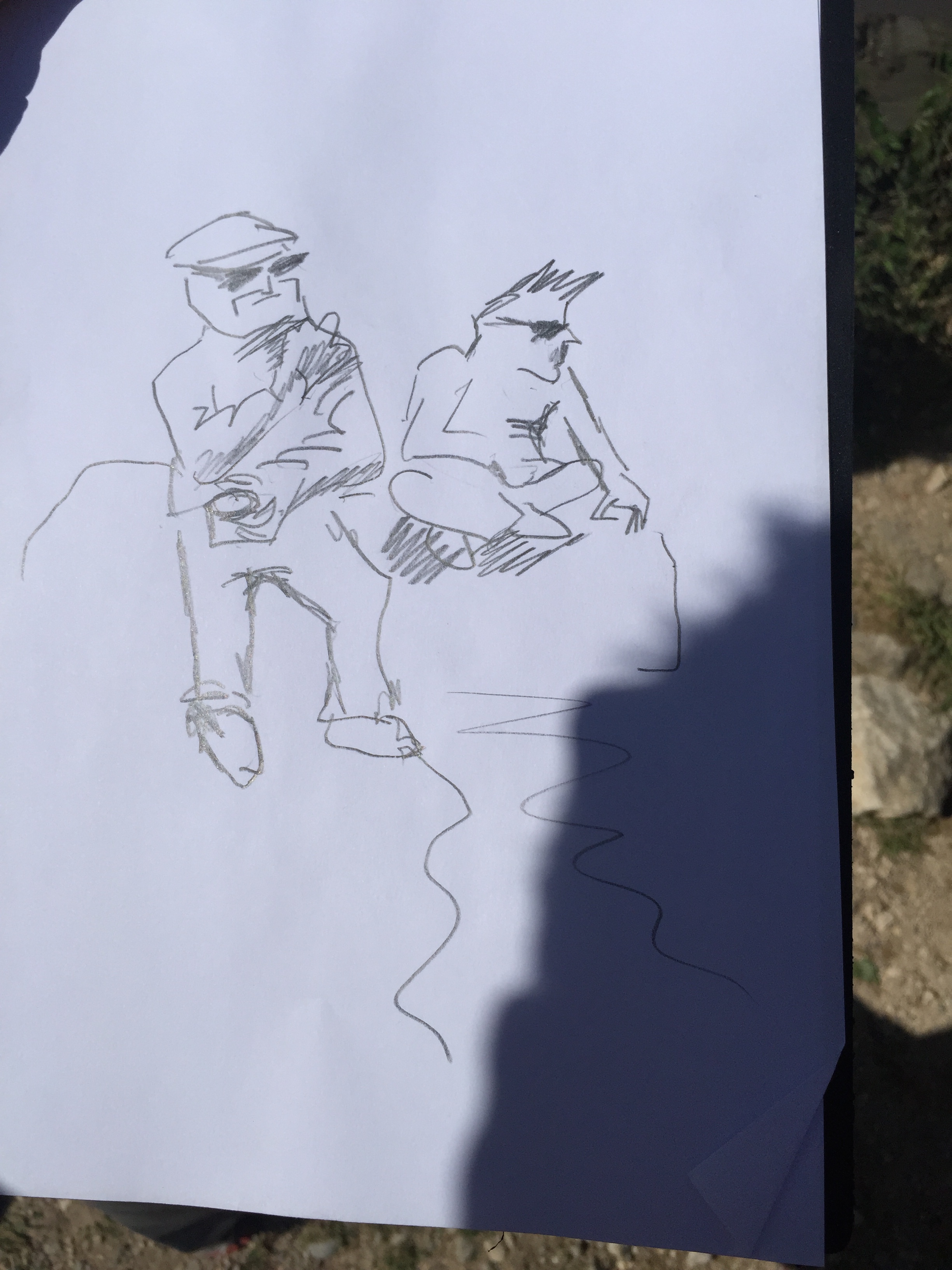
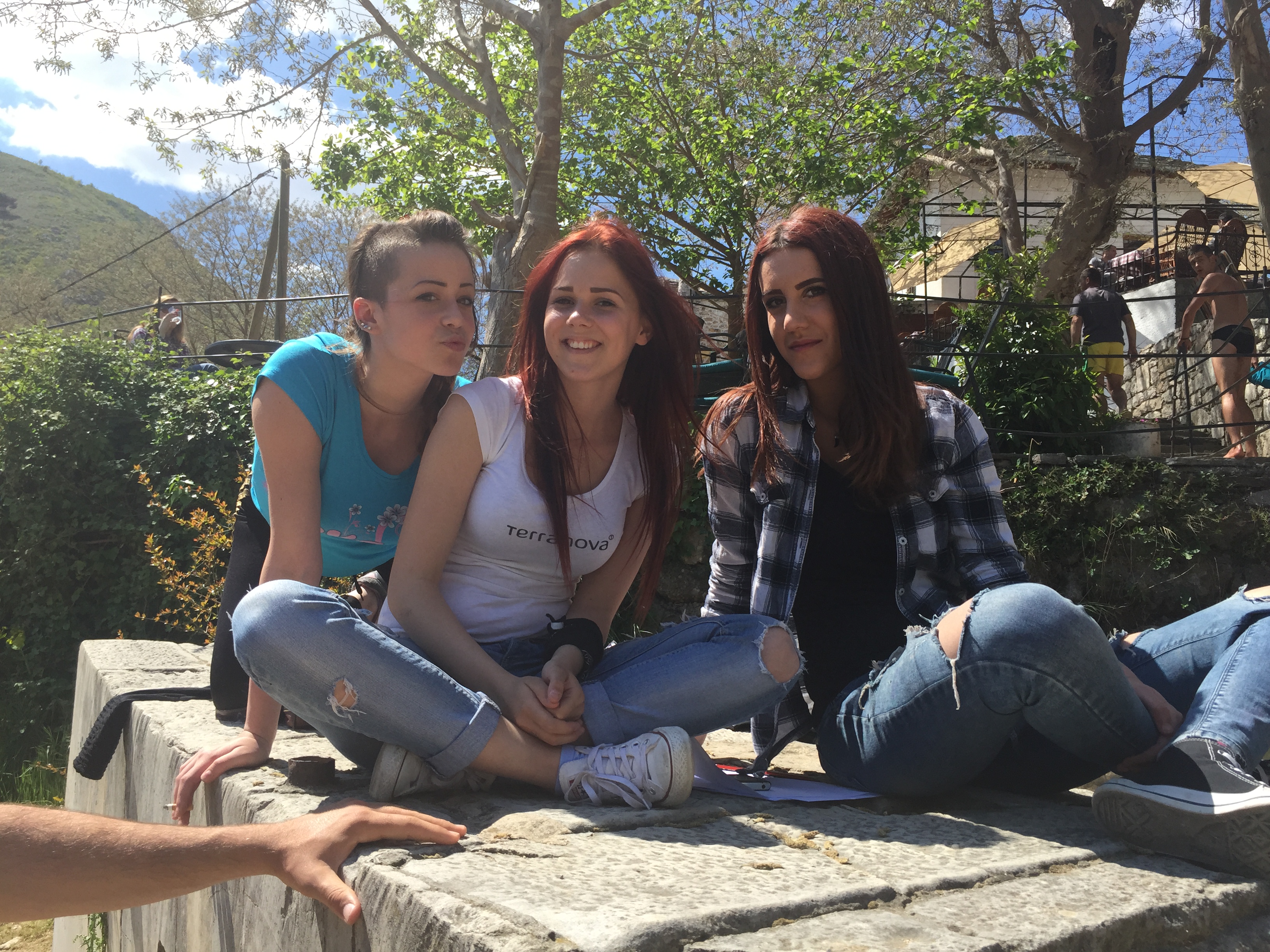
The best experience of Mostar was running into these art students. Their class assignment for the day was to sit on the rock and think about how to paint their feelings about the bridge. One guy made this sketch of me and Igor. These three young women were quite interested in the United States but were happy living in Mostar.
The other big theme of the day was the division of Bosnia / Hersogovenia into areas for: Croatian Catholics, Bosnian Muslims, and Serbian Orthodox Christians. Each village was divided into areas for one of the groups or a village might be for only one of the three groups. In Mostar, the bridge was the dividing line between the Bosnian Muslims and the Croatian Catholics.
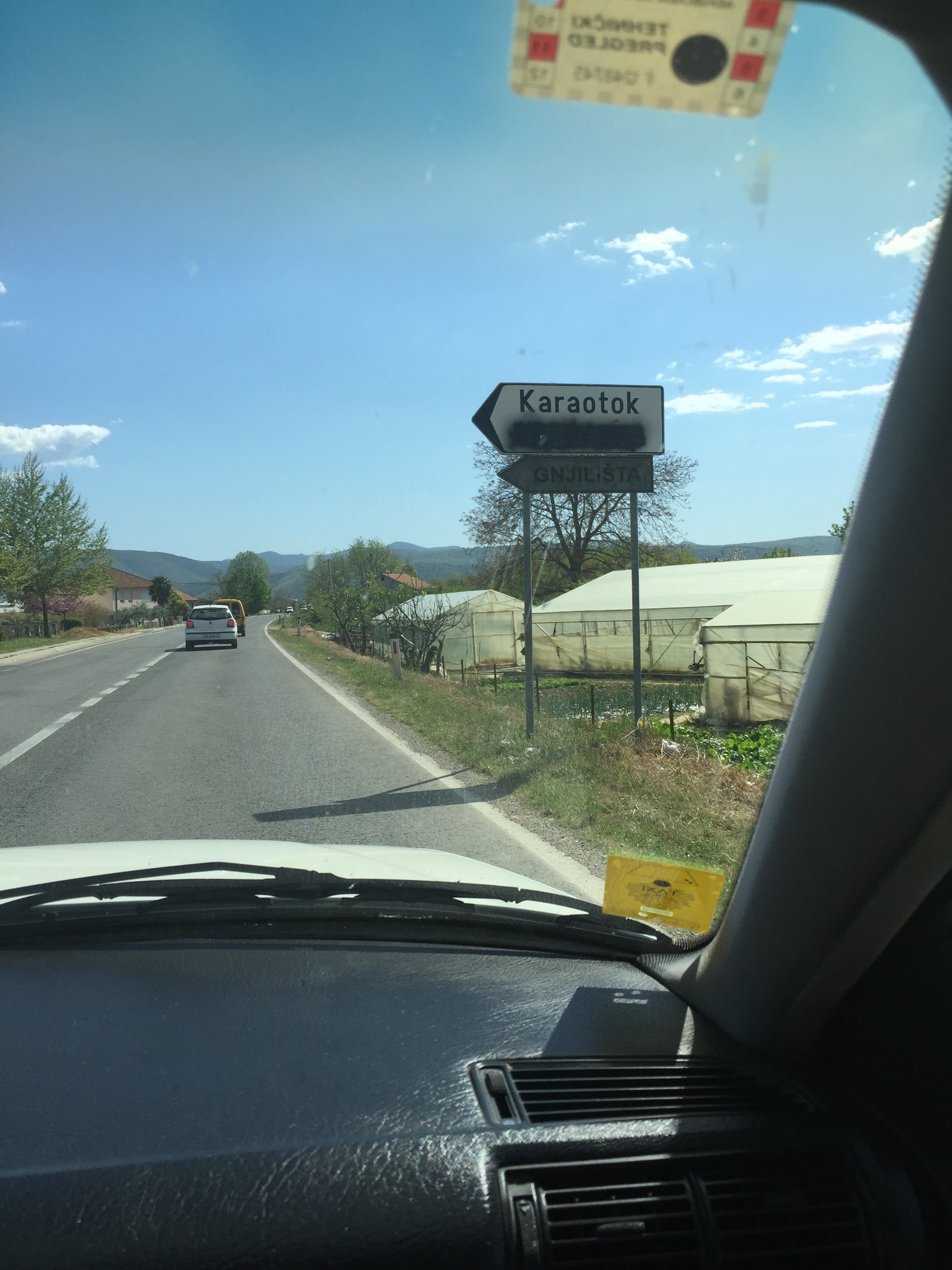
The road signs were in Bosnian, which uses our alphabet, and also in Serbian, which uses the Cyrillic alphabet. Someone had defaced this sign by erasing the Serbian part of the sign.
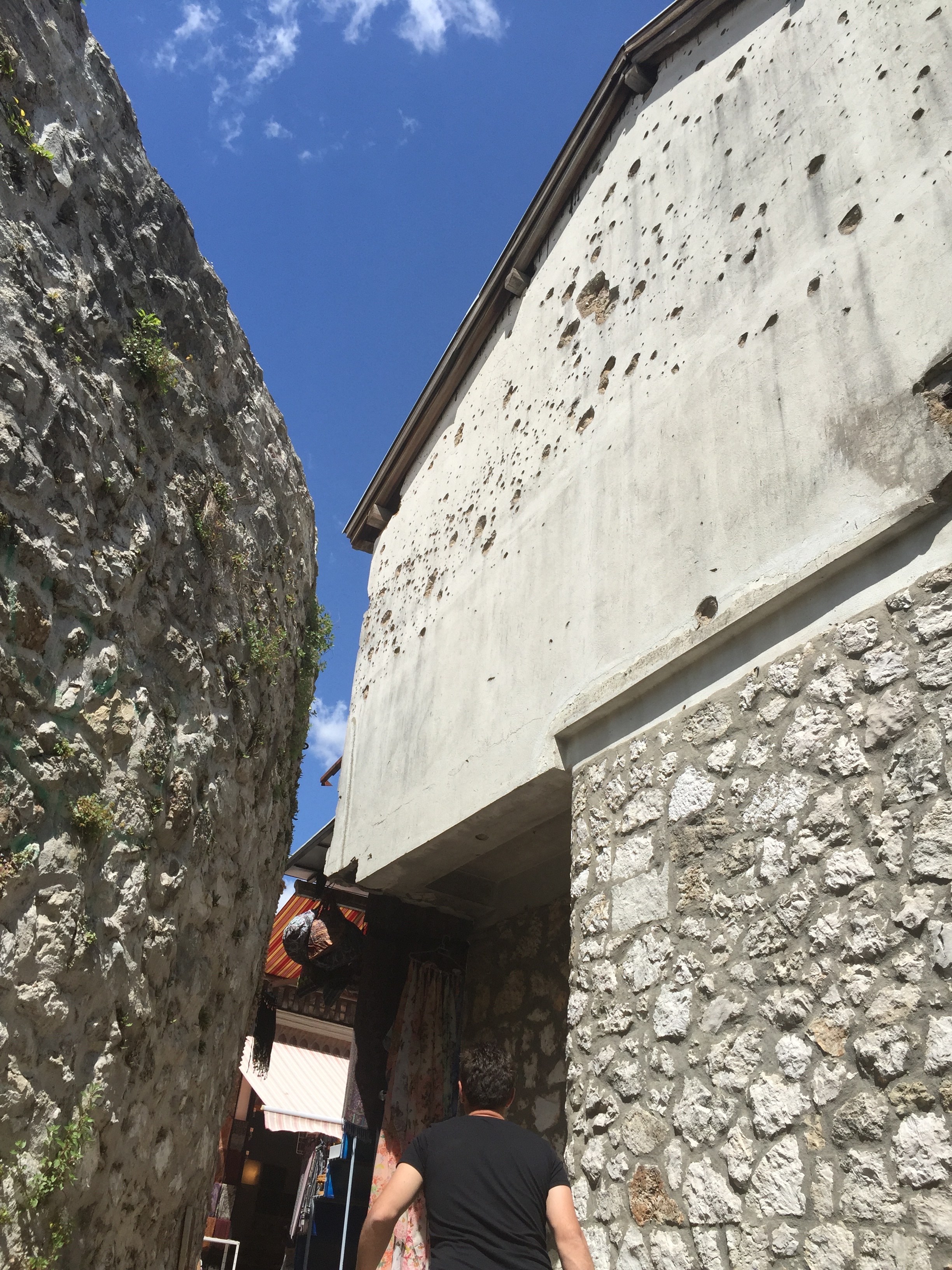
The holes in this building are from shells during the war. There were a lot of buildings like this.
I asked Igor if we could go in a mosque of which there were many on this side of the bridge but it turned out they wouldn’t let non-Muslims in.

Dubrovnik is separated from the rest of Croatia by a strip of Bosnia. You can’t drive to Dubrovnik from the rest of Croatia except by going through Bosnia. So from Mostar we went through a border crossing to Croatia, then back into Bosnia for a few minutes then back into Croatia. Strangely, when we entered Bosnia, a Croatian guard took a long time with our documents but no Bosnian guards checked us. Then when we returned to Croatia, another Croatian guard checked us but again no Bosnian check point. Igor thought it was because Croatia loved to have bureaucrats while Bosnia was too poor to waste money with excessive border guards.
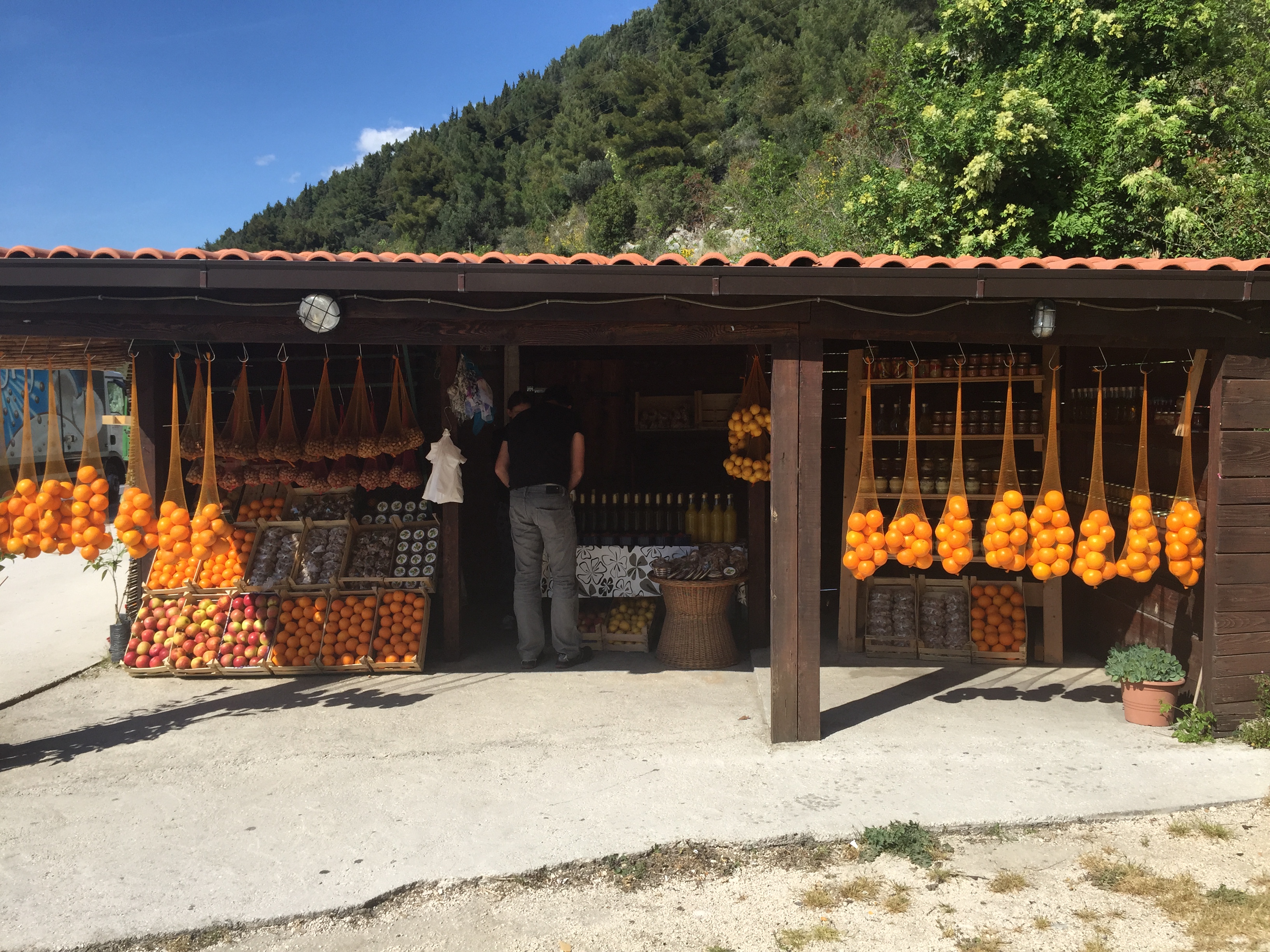
A beautiful fruit stand.
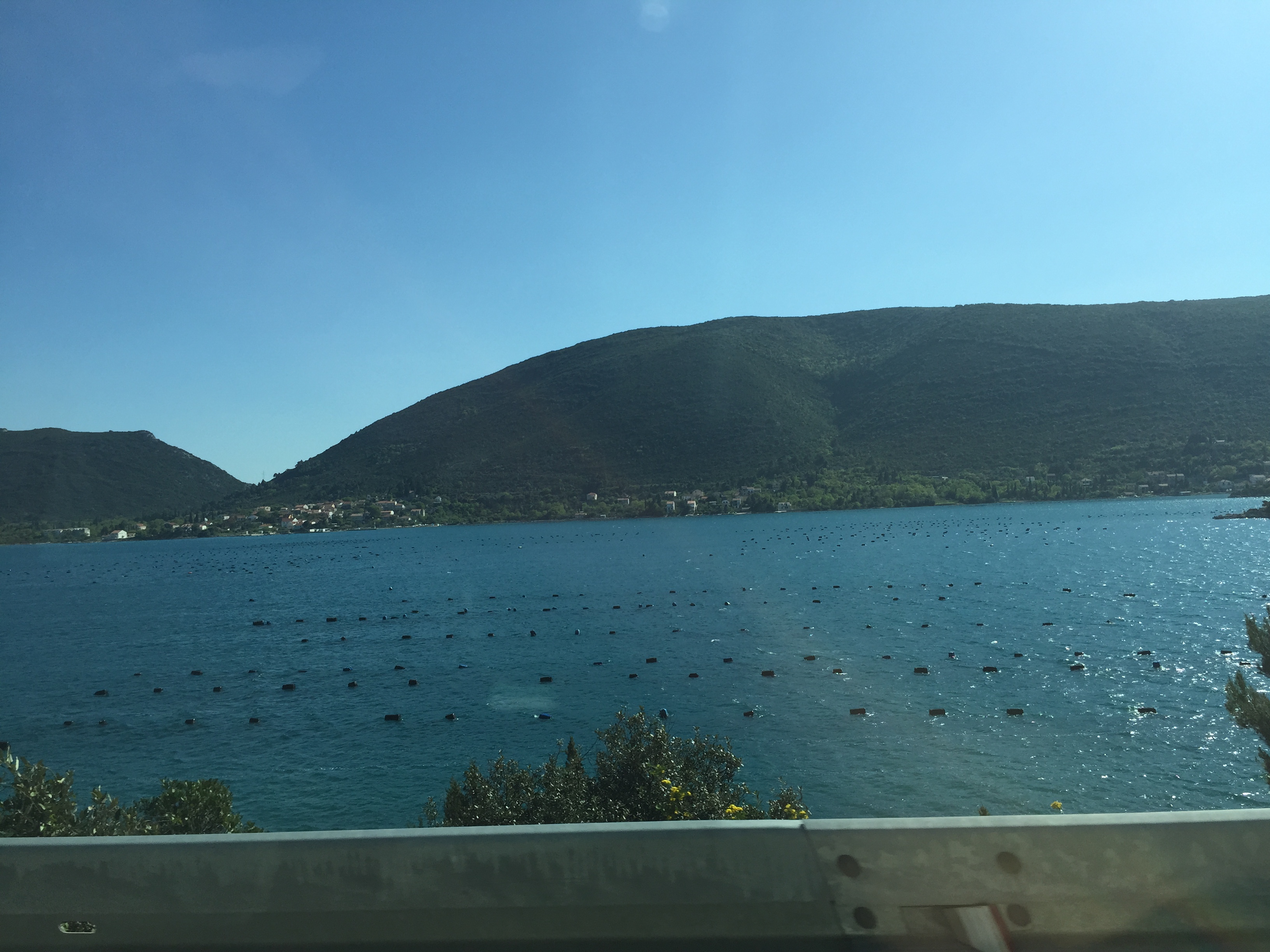
The black buoys in the water here are part of oyster and mussel traps. We went to a roadside oyster / mussel stand twice but it was closed both times. Igor eats oysters with just a little lemon, no Tabasco sauce. He felt Tabasco is for wimps. I’m a wimp.
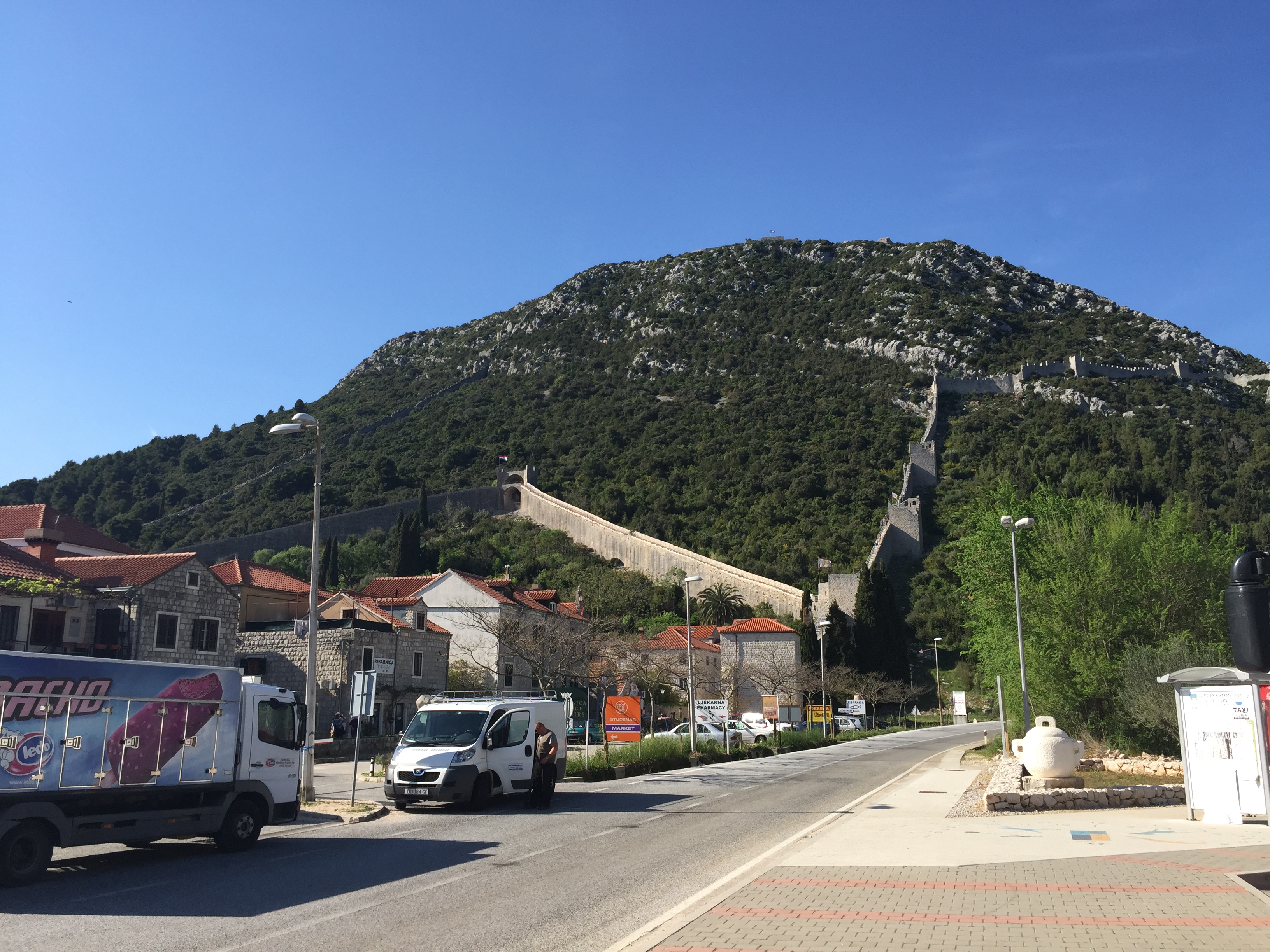
This is the famous wall of Ston, which is 5 kilometers long (over 3 miles) and according to Wikipedia is “a notable feat of medieval architecture.”
Keith lived near this beautiful bridge just outside Dubrovnik. I’m not sure where exactly where.

It was bizarre to be in Bosnia, a place without a lot of tourists and still recovering from the horrible wars of the 1990’s. Apparently, the three groups got along fairly well until Tito died and the wars started.
Mostar represents the end of the road for my trip. From this point on I’m returning slowly to Indiana, PA. Here’s my itinerary.
- Drive from Mostar to Dubrovnik, overnight in Dubrovnik
- Fly from Dubrovnik to Munich
- Change planes to Paris, three nights in Paris
- Paris to Iceland
- Change planes to Boston, one night in Boston
- Fly to Pittsburgh
- Drive to Indiana
This looks long but getting to Mostar was a much longer and tortuous (and fun) route. It took 28 nights to get here and will take 5 to get back.
 feldmanlarry
Leave a comment