Day 17 Feb. 12 The rush of being in the developing world, the best map ever, and ostentatiously extravagandized

Leave a comment

I was finishing my week in Israel with a farewell to my guide Birte, who has been a wonderful companion. But before that, I had to have my last taste of salad for breakfast. Hopefully, it will be my last salad for breakfast for a long time. I really enjoyed my time in Israel and learned quite a bit about history and about myself. I’m writing this in March, a few weeks later but fortunately I have some good notes I took that day.

I’d like to put in a plug for a TV show called “An Idiot Abroad” with Ricky Gervais, who created the TV show The Office in England and in the US. He takes his sidekick to the 7 man-made wonders of the world and subjects him to situations that are designed for the sidekick to hate. One of the shows is about Israel and Jordan, since Petra is one of the seven wonders, which I saw on Day 18. He saw some of the same things I saw and had some similar opinions to mine, which I should be embarrassed about. For example, he felt the wall dividing Bethlehem under PLO control from Israel was more significant that the church at Bethlehem where Jesus was born.  The series also has shows about the Taj Mahal and Great Wall that I’ll be seeing in a few weeks, in addition to the Pyramids, which got cancelled from my trip for obvious reasons. Please check out this show though, I really enjoyed it. It’s on the Science Channel (part of the Discovery channels).

Hopefully the last time I see salad for breakfast
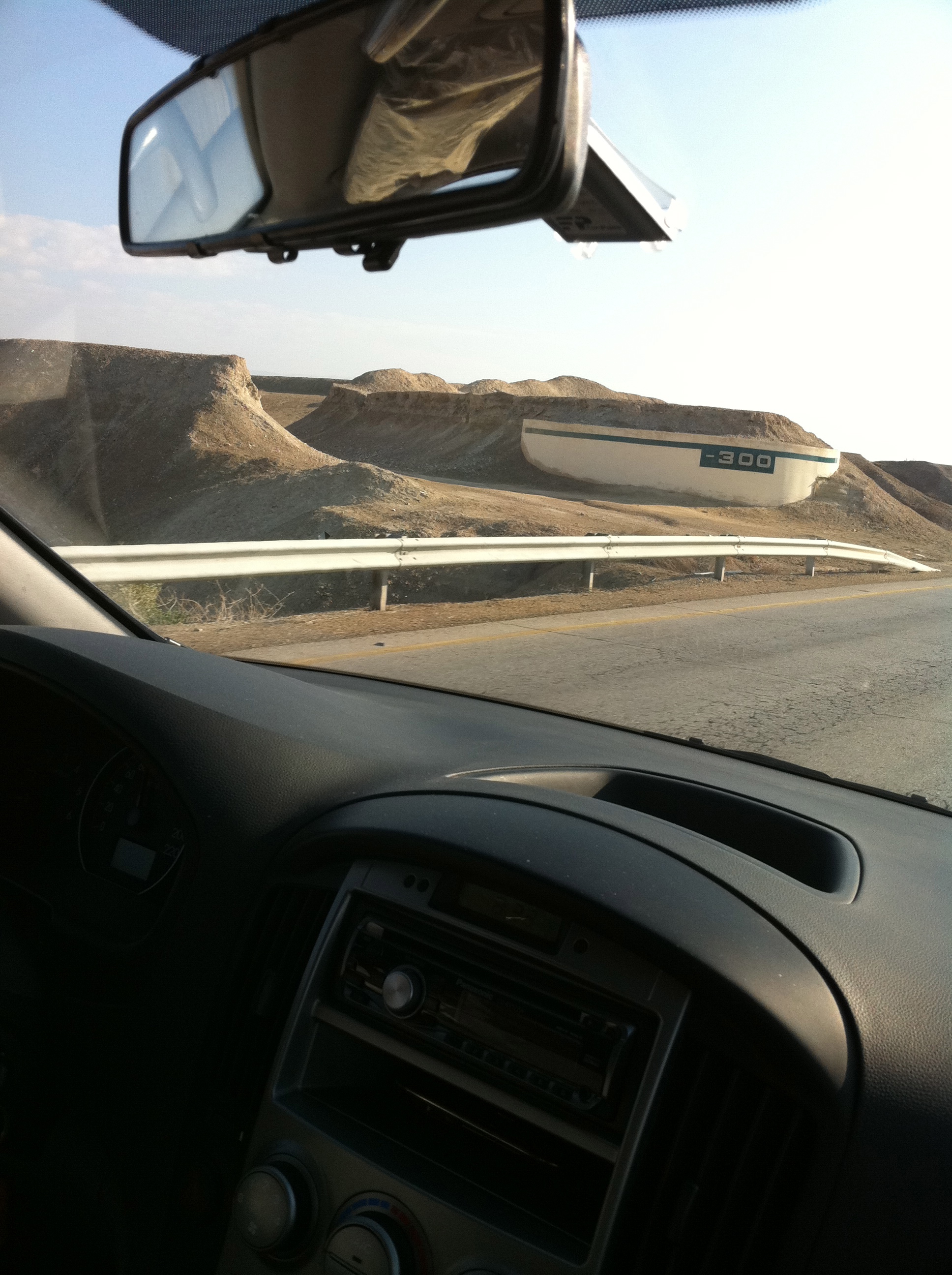
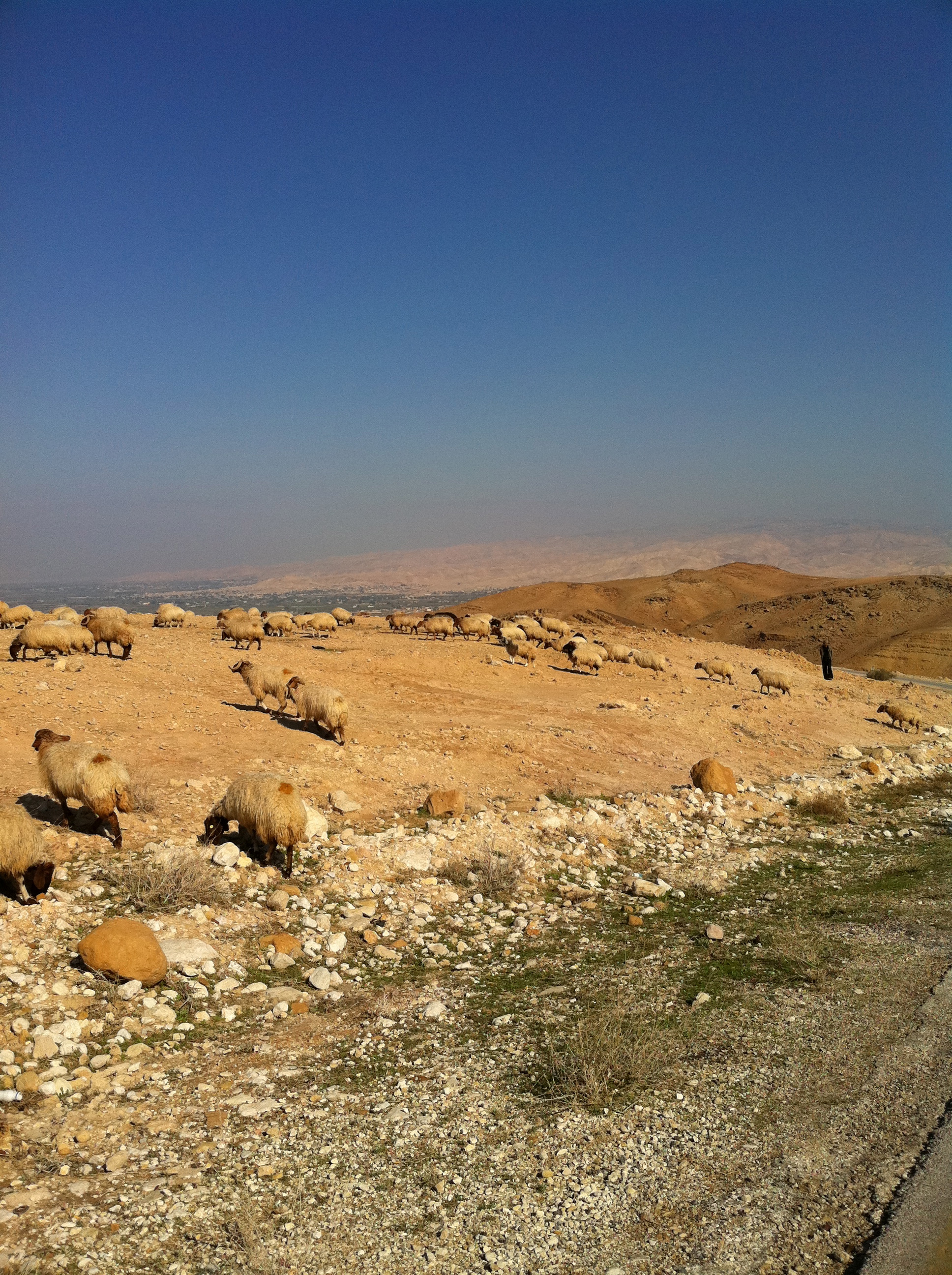
Passing by the 300 meters (990 feet) below sea level sign just before crossing into Jordan (left). Sheep in Jordan (right)

I gave Birte her well-deserved tip and said goodbye as she left me off at the Israel / Jordan border. The bridge is called the Allenby Bridge by Israel and the King Hussein Bridge by the Jordanians and still another name by the Palestinians. I read the Wikipedia entry under Allenby Bridge and it’s very confusing about who is allowed to use this border and under what conditions. Apparently if Palestinians want to fly out of Israel they must use this crossing and then go to Amman, Jordan.

My experience at the border was a little embarrassing. I had what they called VIP service and was whisked through all the multitudes of lines. A young Israeli woman dressed like an airline server walked very quickly to the front of long lines and kept making sure I was following her. I was too embarrassed to look at the other people who were facing these very long waits while I was pushed to the very front. I wish I’d counted but there must have been 8 different lines.

In maybe 10 minutes I was done in what I’m estimating would have been at least an hour probably much more. A minivan picked me up and a Jordanian driver took me across the bridge to another border station. I then realized that all those lines were just to leave Israel, not to enter Jordan.

I was a little stressed since I hadn’t seen my passport or bags in a while but I had faith that this was the process and that I should enjoy my privileged status. Just like flying Business Class, I was ostentatiously extravagandized. On the Jordanian side they had me sit in a comfortable lounge and I drank coffee and watched the celebrations from Cairo over Mubarek leaving on TV while someone else was dealing with everything.

My guide came around 9:30 and told me he wasn’t supposed to pick me up until 10. Everything went so quickly. My guide is a really nice guy, Khalid, and I also had a driver named Raed, as opposed to Israel where Birte did her own driving. Raed also speaks good English and also has a great demeanor. We had a Samsung 4-door car, which was not as fancy as the minivan I had gotten used to but was quite comfortable. I had never heard of a Samsung car before. I felt like it was going to be a very good two days, which it was.

After a while, I asked Khalid about the politics, being sure to reinforce my brash obnoxious American status. Khalid is very passionate about his country and feels that Jordan is a very stable country in a sea of confusion. There had been some demonstrations recently as part of the whole Middle Eastern crisis but they were very minor. The King had replaced the government early on.

Khalid believed that Jordan has a free press and freedom of speech. The lower house of the parliament is elected but the prime minister is appointed by the Prince. The upper house is also appointed by the Prince. If the lower house doesn’t approve the Prime Minister’s program, they can have him removed. The members of parliament are mostly elected based on their regional links and not by party.

I asked him what Jordanians think of the US. His responded that a typical Jordanian will very much appreciate American culture, its democracy and the concept of America in general. What they don’t like is their sense that America is on the side of Israel and not helping Palestinians. Impressive that the literacy rate in Jordan is 99.5%.

Khalid had lived in Chicago for 2 years and the best job he could get was gas station attendant in a rough neighborhood. In Jordan, he’s a well-respected tour guide for a top company. The American dream has worked for millions but not for everyone. However, probably having experienced the US for two years was a big plus in getting the job he has now.

As we drove through a village with its open-air markets, flamboyant signs, and different kinds of clothing, I got a strong rush of joy. At first I thought it might be a sugar rush but that wasn’t it. I realized that I fundamentally really love visiting the developing world, maybe even more than visiting in the West. Not that I’m ready to move but there it really felt good. My brother, Dick, and his wife Beth know exactly what I’m talking about. They’ve lived in Africa and Nicaraugua and have gone to the Yucatan Peninsula frequently. It’s in their blood as it is in mine.
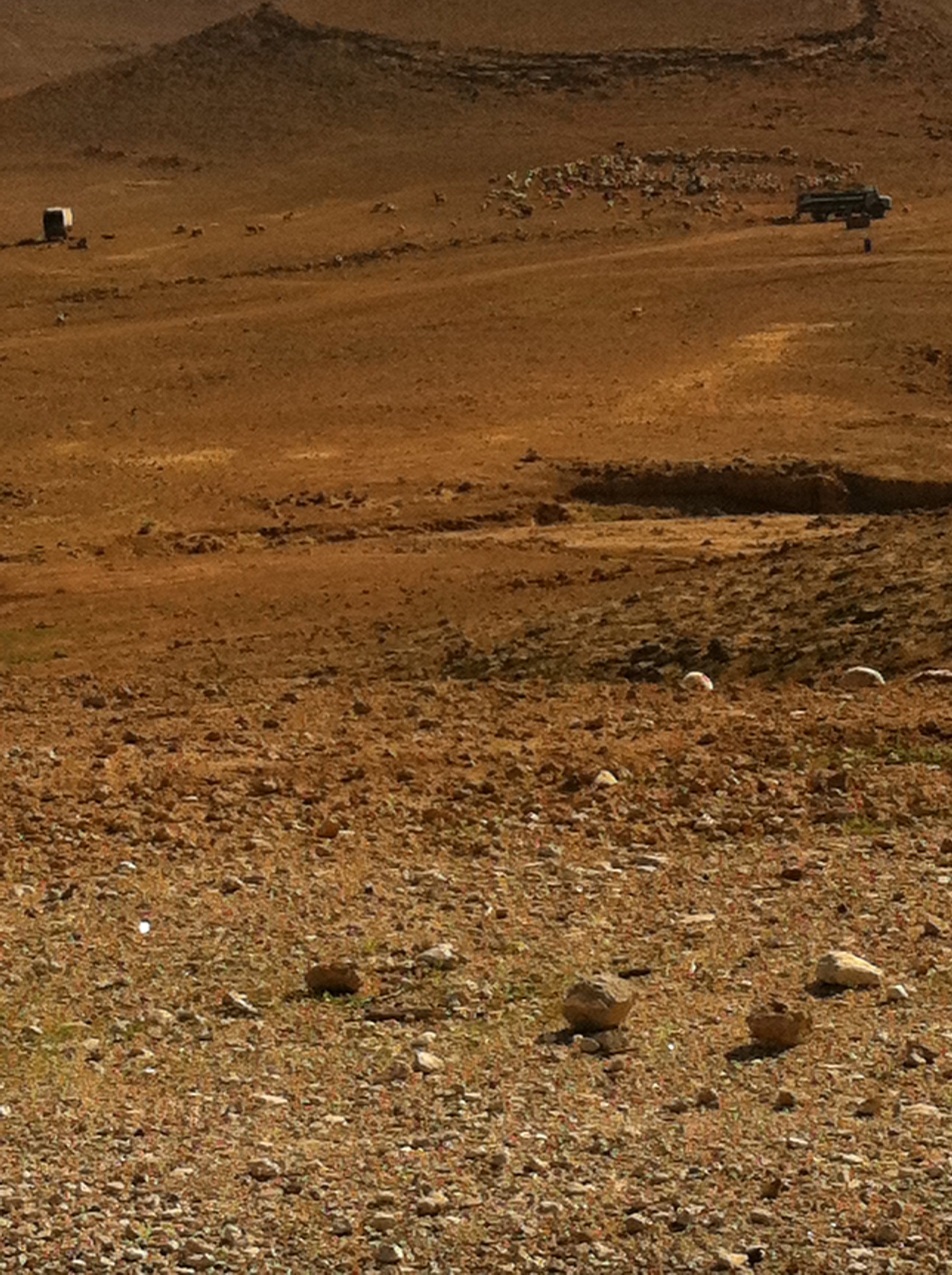


I love being in the third, “developing” world!

Our first stop was Mt. Nebo where Moses viewed the Promised Land, died, and was buried. Supposedly Jeremiah hid the tabernacle and the Ark of the Covenant here. A recent book “Temple at the Center of Time” by David Flynn claims there is evidence the Ark is here. (Wikipedia) I didn’t see it.The view was great, Jericho was visible but it was a little hazy to see Jerusalem and Bethlehem.
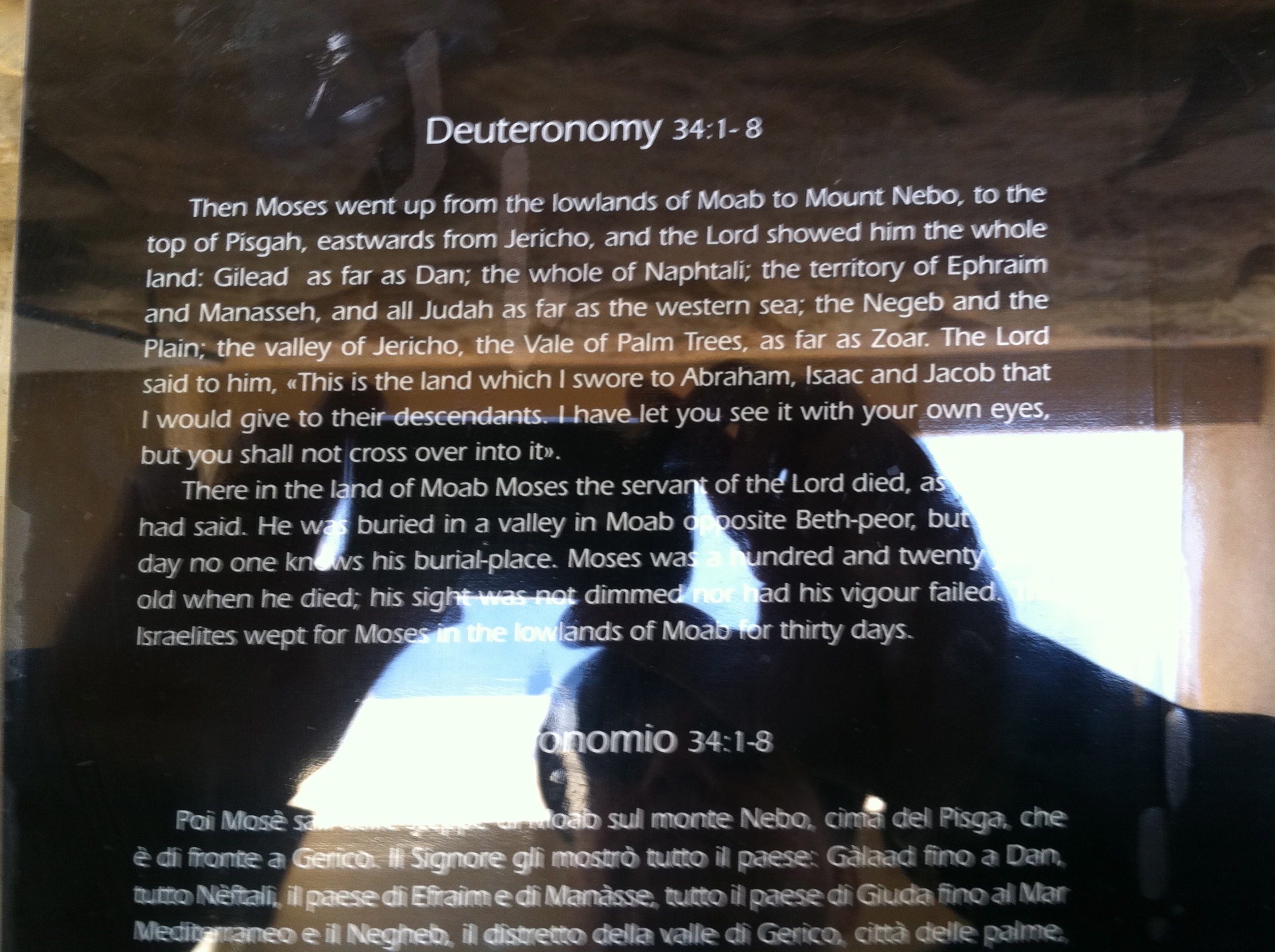

Bizarre picture with my reflection taking the picture at Mt. Nebo of a quote from Deuteronomy 34:1-8 “Then Moses went up from the lowlands of Moab to Mount Nebo, …”

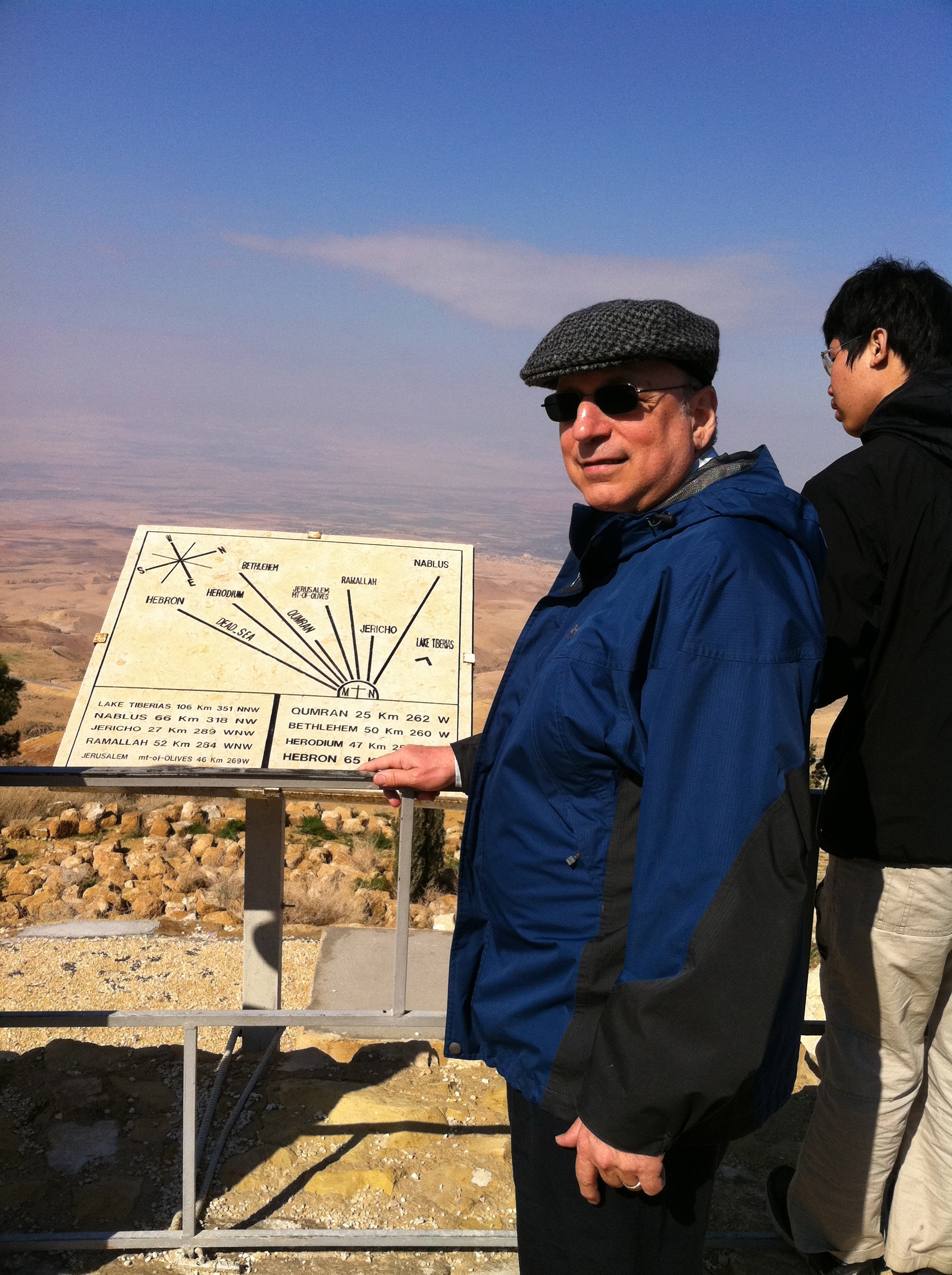
Moses and I had the same view from the top of Mt. Nebo. He didn’t have the sign to figure out what he was seeing though.

Pope John Paul II was here in 2000 and Pope Benedict XVI in 2009. The church was constructed in the 4th century to commemorate Moses’ death and was discovered in 1933. Some great mosaics on the floor.

Mosaic floor from the church at Mt. Nebo

I’ve had a love of maps since I was 4 years old. My parents had me navigating our way through Europe at that age. I absolutely loved the mosaic map at Madaba from the sixth century. It has so much of the Middle East, with beautiful detail of the important monuments. Most of it is intact and a part of it is just covered with a rug over pews in the church. It almost seemed they should rope it off totally but I loved being that close to something that magnificent. Apparently there was a mistake that the Nile goes off the wrong way but almost all of this vast area was correct. It has even been used to locate some modern excavations, according to Wikipedia. Not bad for people 1500 years ago! Even though I promised not to buy any more stuff, I had to get a small paper replica, which I will treasure.

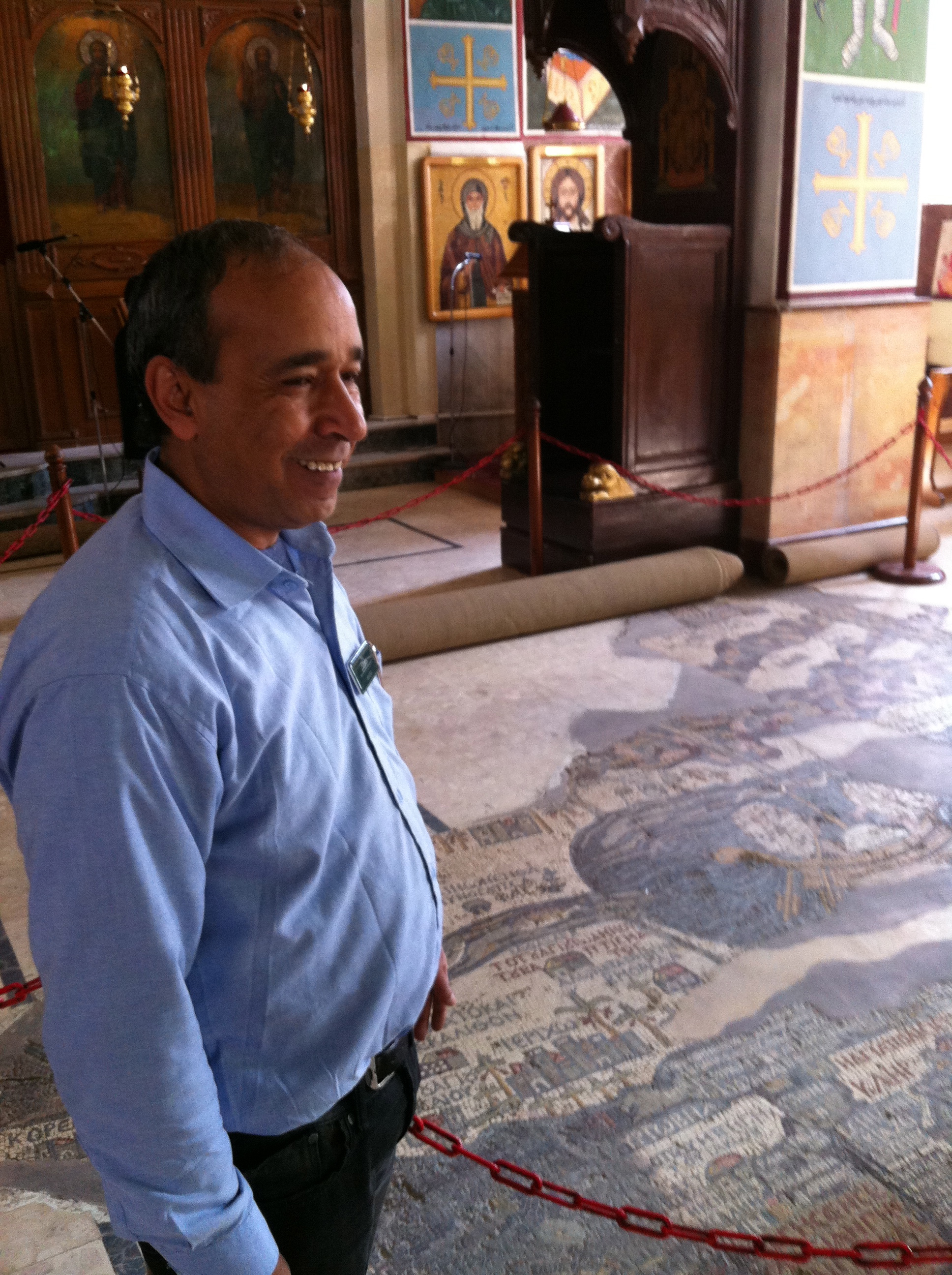
My Guide Khalid and the most amazing map of all time, a mosaic of the whole Middle East, finished by the year 570

Jerusalem from the map (Wikipedia)

The river near the top of my picture here is the Jordan River with the Dead Sea on the right

Reproduction like the one I bought that does not give a good sense of what it’s like

It was disturbing that they let idiots like me get this close to this treasure. That’s my shoe on the bottom of the picture.
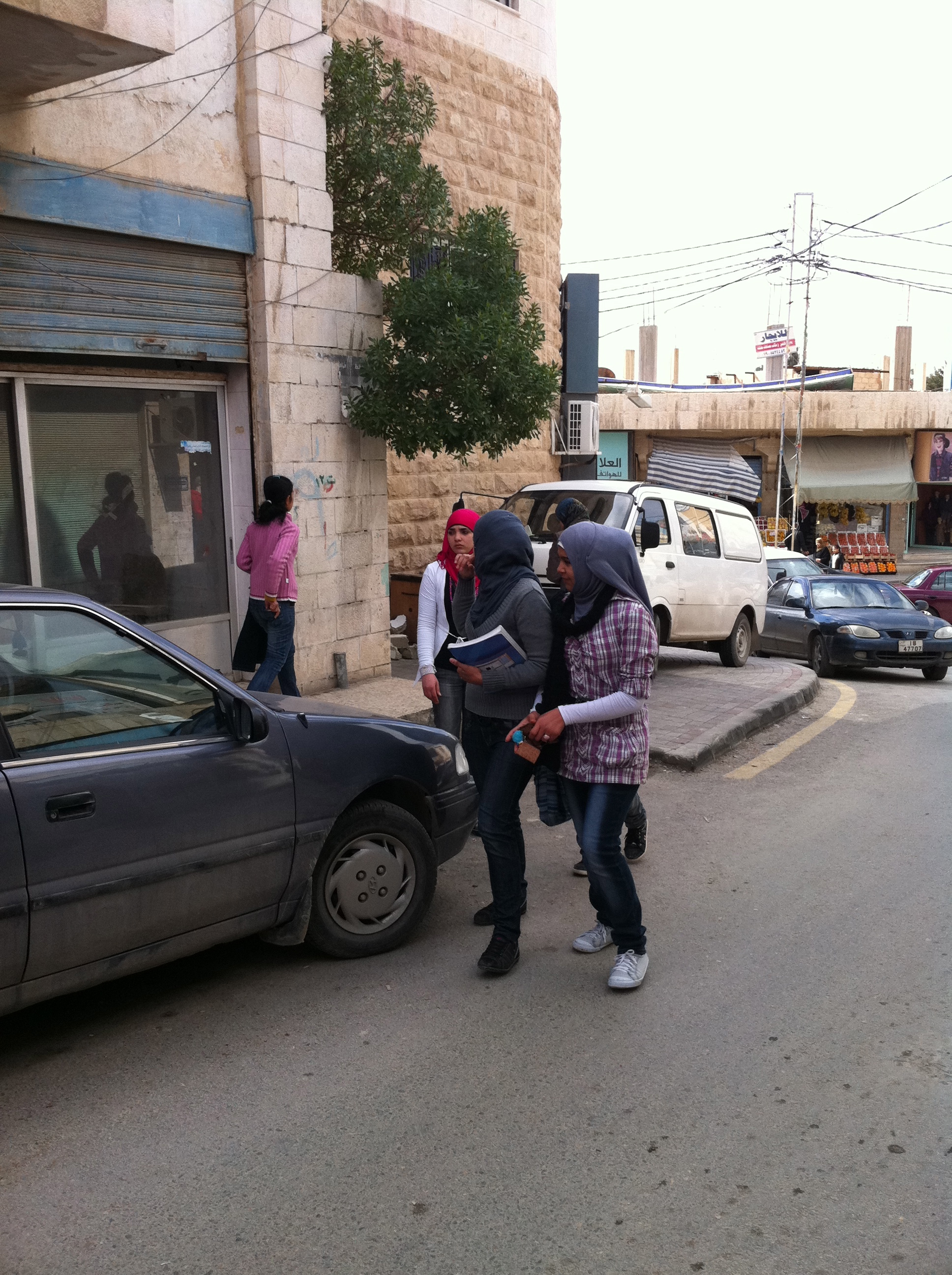


Street scenes in Jordan. Like I said, I love the feel of developing countries.

I won’t bore you with details but the rebellion in Egypt made a mess of a chunk of my plans. The Egyptian people forgot to sk me if it was OK. I would have asked them to wait a few weeks. I was supposed to stay one night in Amman and one night in Petra but instead plans were changed to spend two nights in Petra. Khalid didn’t like that I wasn’t planning to see Amman. He didn’t like that I would get the impression that Jordan is all villages, shepherds, and ancient monuments. But, since the hotel in Petra had been paid for two nights it would have cost $300 to change it.

He came up with a plan that we would make a detour to Amman right away on this day before going to Petra, for $50. This seemed reasonable and I really did want to see Amman. I had been told that there isn’t much to see in Amman but, of course, I’m used to Indiana, PA standards and actually there was a lot to see.

I enjoyed seeing the old city in the East and the very modern part in the West. The Roman theater is from 161 AD and was very well preserved. The movie theaters in Indiana, PA might not last as long.
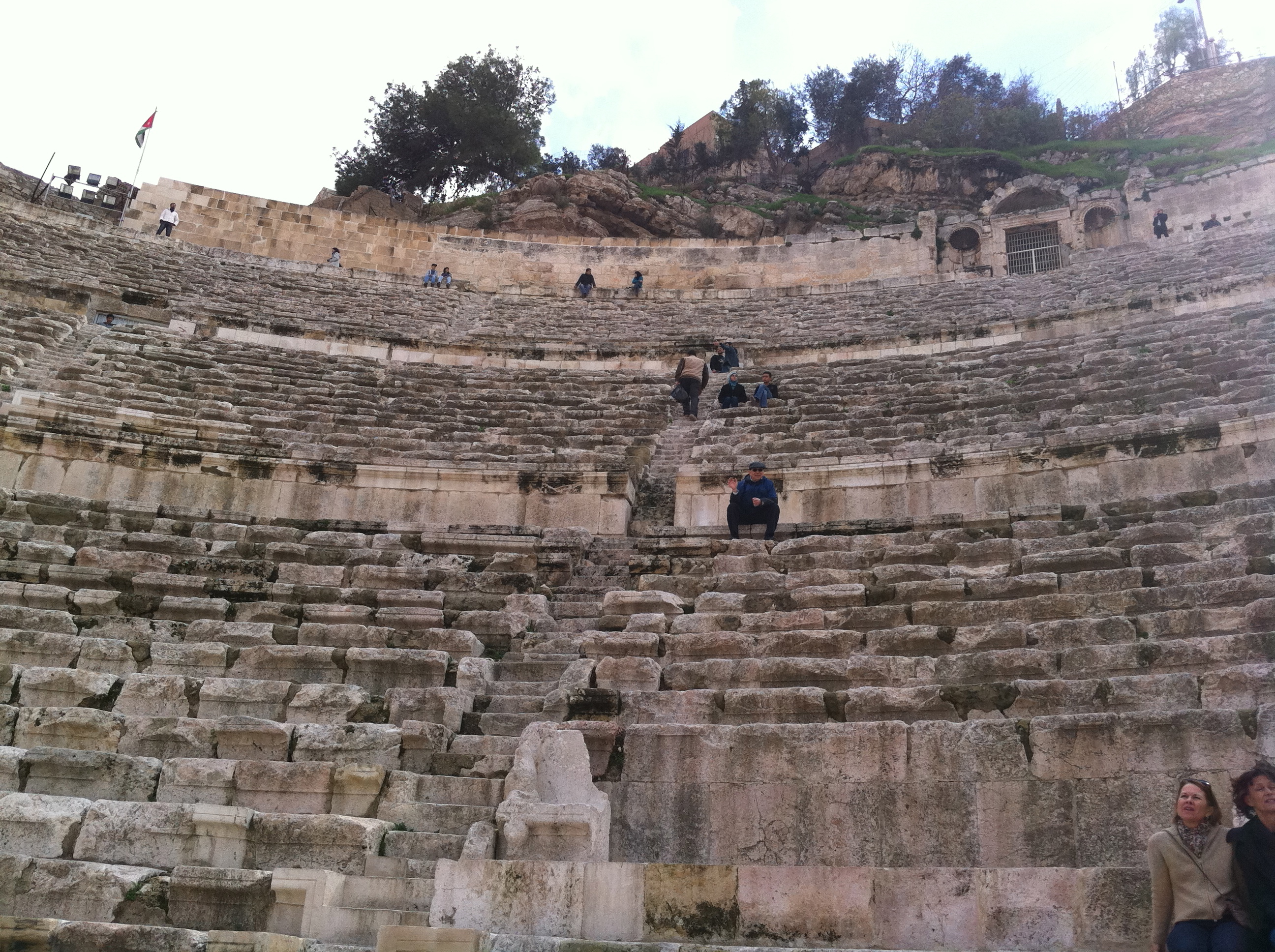
Roman Theater in Amman built in the second century. I’m waiting for the gladiators.

We then went up to the top of the city where there is an archaeological museum. The story Khalid told me is as follows. King David’s troops seized Amman (then called Philadelphia) and Solomon was born at the spot where the archaeological museum is today. David slept with a married woman and then asked the woman who her husband was. She said it was Uriah the Hittite so David told them to let Uriah have a vacation from being a soldier to go home and sleep with his wife. This would legitimize the baby. Uriah refused to sleep with her and just slept on the threshold of the house. He couldn’t enjoy himself while his comrades in arms were fighting. David asked that Uriah be given a difficult mission, as Uriah wanted, and Uriah died in the mission. The son was born and became Solomon.

Temple of Hercules at the Citadel Hill in Amman
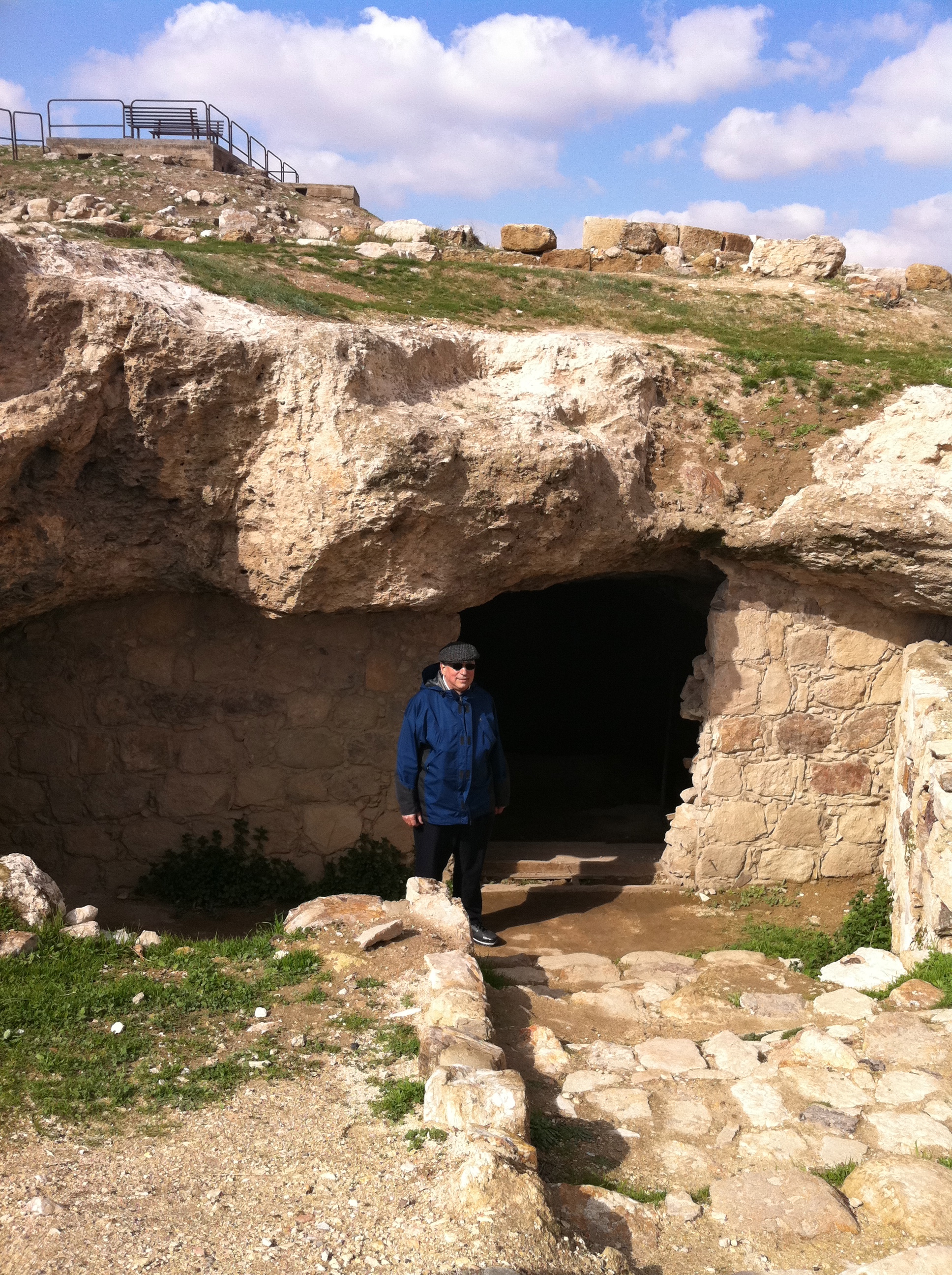
 

Bronze Age Cave from about 2250 BCE
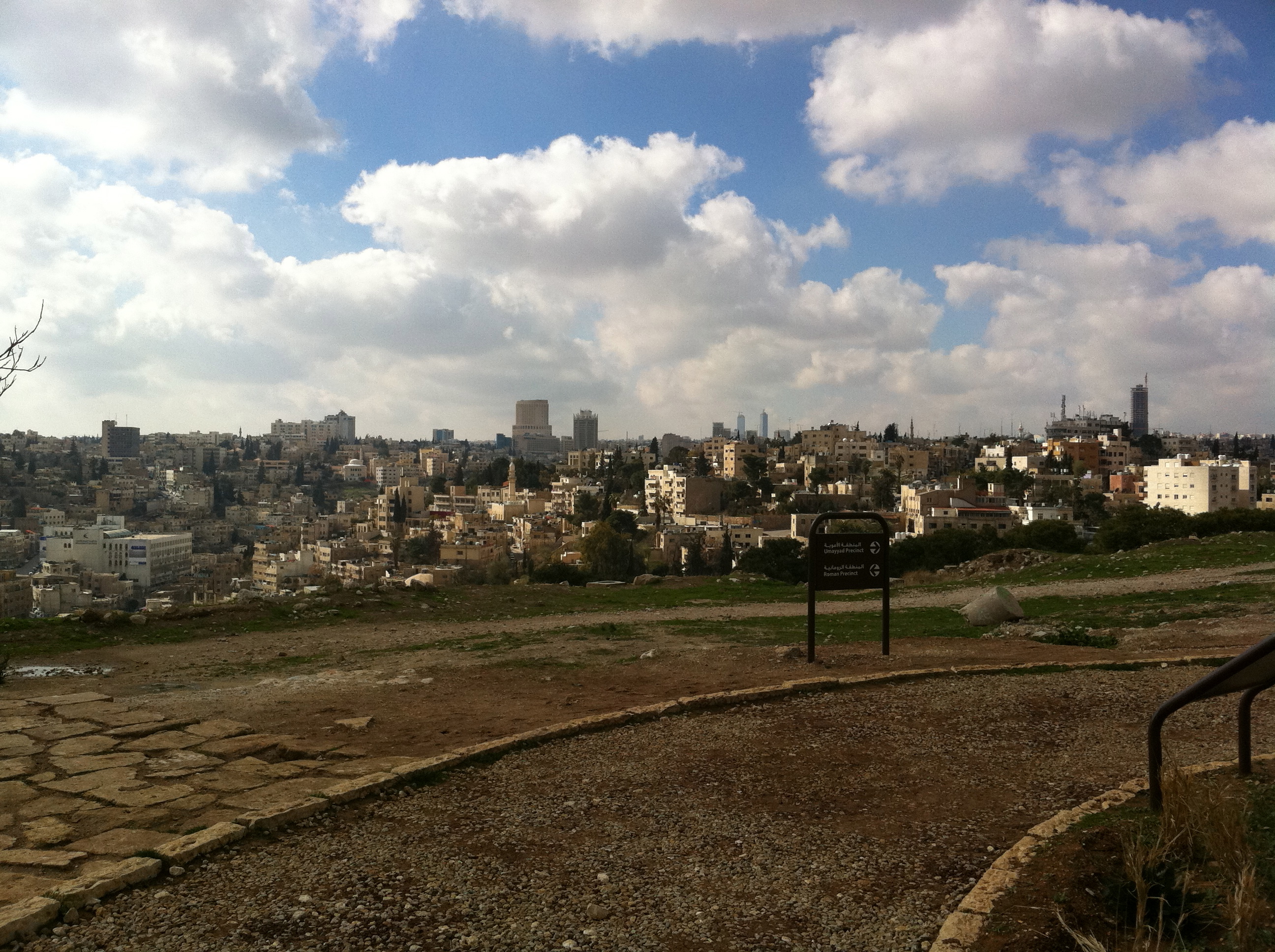
View of Amman from the Archaeological Museum

I do not have a picture of the next very memorable incident. As we were driving around, there was a massive building ahead that Khalid identified as the US Embassy. I had my camera in hand so I took a picture. Just as I finished, Raed and Khalid told me very loudly that pictures are not allowed. It was too late. The Jordanian Police pulled us over and Khalid jumped out to explain that I didn’t know the rules. They were angry and asked to see my camera. They deleted the picture and finally let us go. I think they figured out I wasn’t taking pictures for my terrorist cell. It was a little scary though.

We went to an interesting place for lunch. It was definitely set up for tourists. I offered to pay for Khalid and Raed’s lunches but they told me that their lunches would be much less costly than mine, even though they ate in the same restaurant. They sat nearby and I had way too much food. I couldn’t resisiting ordering chicken wings as one of many appetizers that came, which weren’t bad but not up to the Buffalo Anchor Bar’s wings.

Amman Chicken Wings
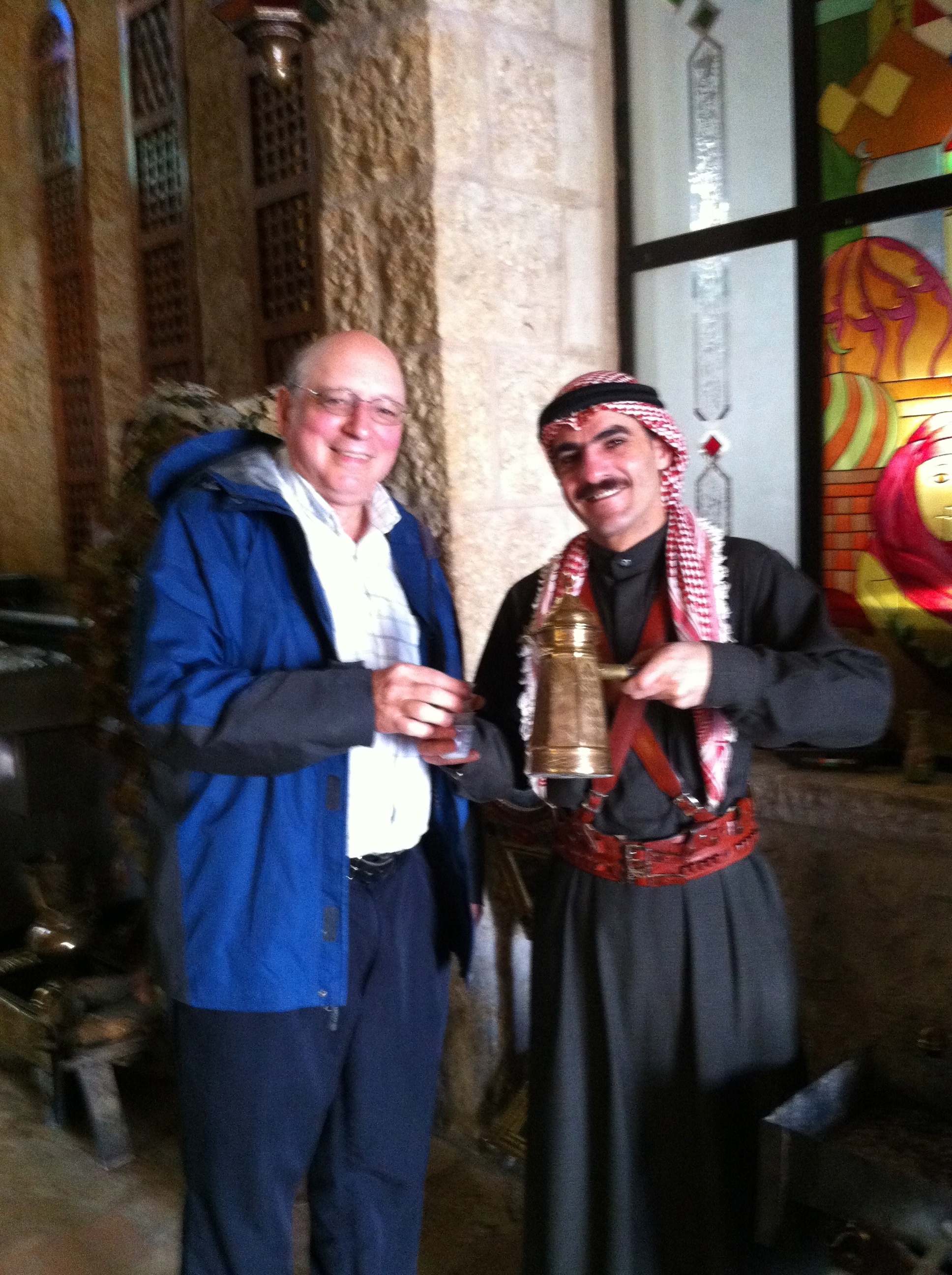
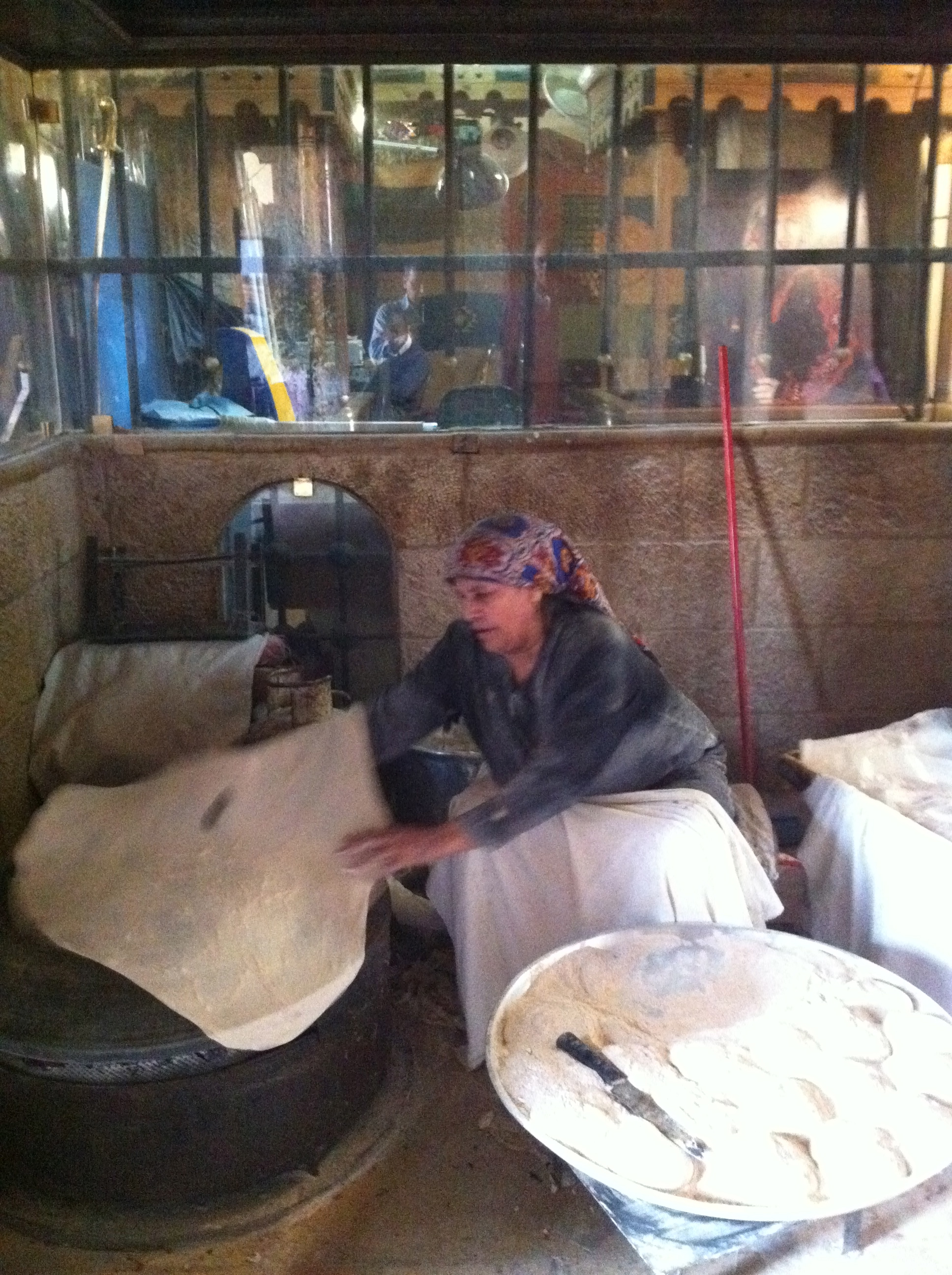


Tea server at lunch (left), home made bread at the restaurant (right)

We had a three hour car ride to Petra, which was the reason for going to Jordan in the first place. It was mostly a four-lane road. Sorry I didn’t count the pieces of sand we passed but it would have taken a few hundred life times. The sand was quite beautiful though. The drought in Jordan was so bad that they were in the middle of a multi-year project to create a water pipeline from the south to Amman.
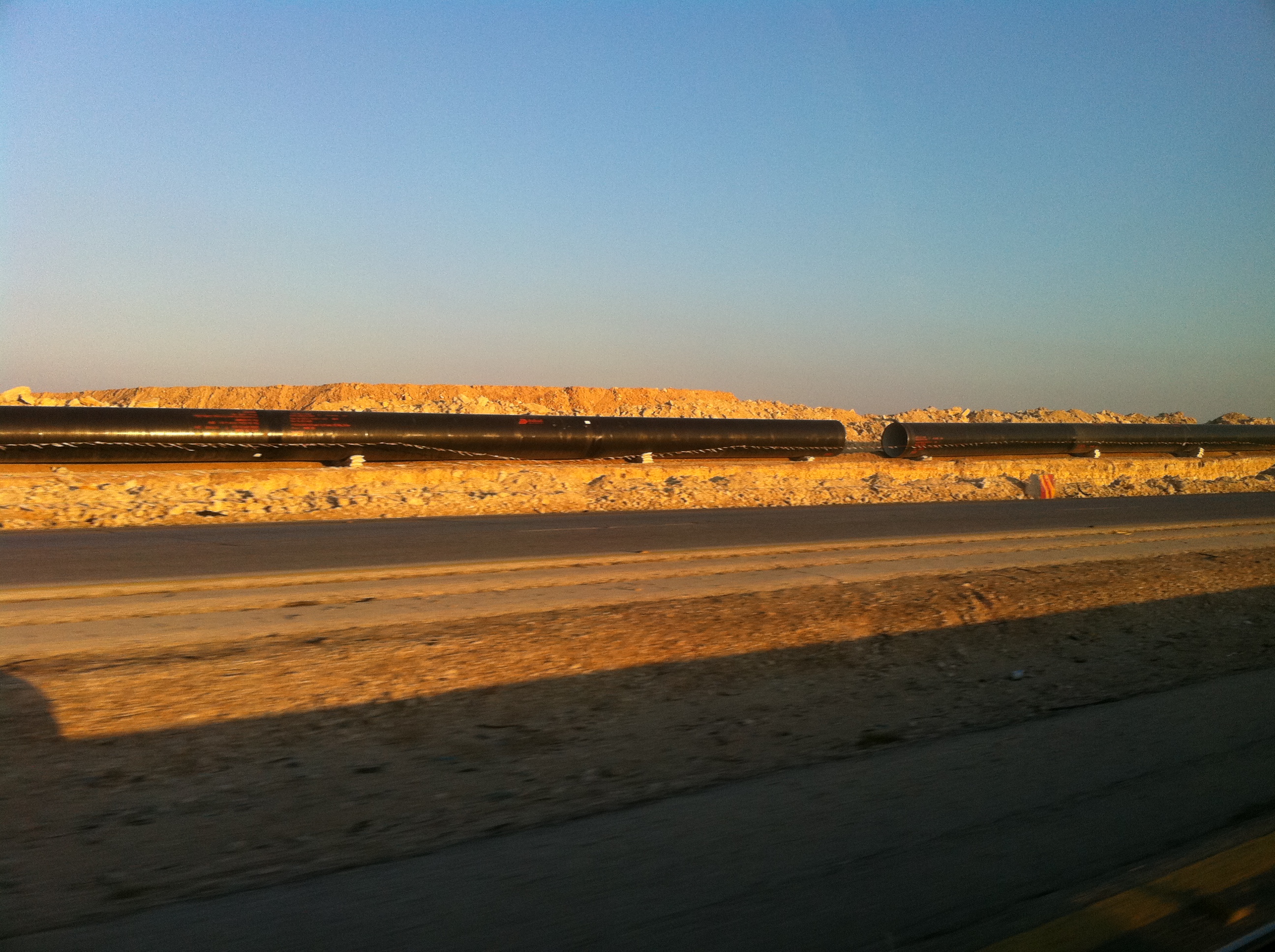
 

Pipeline waiting to be assembled to bring water to Amman

The hotel I stayed at in Petra was called the Petra Panorama and had perhaps the most amazing layout I’ve ever seen. It’s terraced over a hill. The lobby is on the 14th floor and there’s an elevator to the 11th floor only. To get to the 1st through 10th floors, you have to walk a hallway on the 11th floor to get to another set of elevators. My room was on the 11th floor and shared a massive balcony with two other rooms. The view was spectacular.

Petra Panorama Hotel (from a postcard). My room was on the 11th floor at the bottom of the white building on the top of the picture.

I went to the lobby to work on my blog since that was the only place that had internet. I could use my cell phone data plan for internet but my computer had to rely on the hotel wifi, which was slow, expensive, and intermittent. I shouldn’t complain since I was in a very far reaching area of the world. I could access Facebook on my cell phone but I got a message that the URL was blocked when I tried to get to Facebook on my computer using the hotel wifi. Khalid’s daughter spends a lot of time on Facebook as do all of her friends so this is an unusual occurrence according to Khalid. I’m not sure if this denial was based on recent events on the Middle East or for some other reason.

 

Screen shot of access to Facebook being blocked from the hotel in Petra

I went to the bar to moisten the dryness from all the sand (not really, I just wanted a beer) and ended up hanging out some with two women named Paloma and Rosana from Madrid, who were traveling on their own. They were very wonderful people to talk with and share stories (nothing to worry about, Margaret). They work for the largest telecom company in Spain to protect its logo and other visual displays. I sensed that they just loved travelling and fulfilling their adventurous spirits. It’s great to see people who instead of just hanging out at home are going to out of the way places and having dinner with people like me. I shouldn’t put down hanging out at home. I’m doing it now and it feels great. I heard from them after I got back and they are planning to go sometime to Asia and are jealous of my upcoming trip. So, “Hi, Rosana and Paloma, it was great talking with you, keep up your adventures and maybe we’ll meet somewhere like Antarctica sometime.”
 

Day 22 Feb. 17 Crossing continents and getting burned

Leave a comment


Yesterday was an intense day, filled with walking to many of the most important sites of Istanbul. Today felt more relaxed. Even though we did get to famous tourist sites, we also got to see Erdinc’s home area and it felt good to be cruising through the streets of Istanbul again, even though I did enjoy walking all day yesterday.

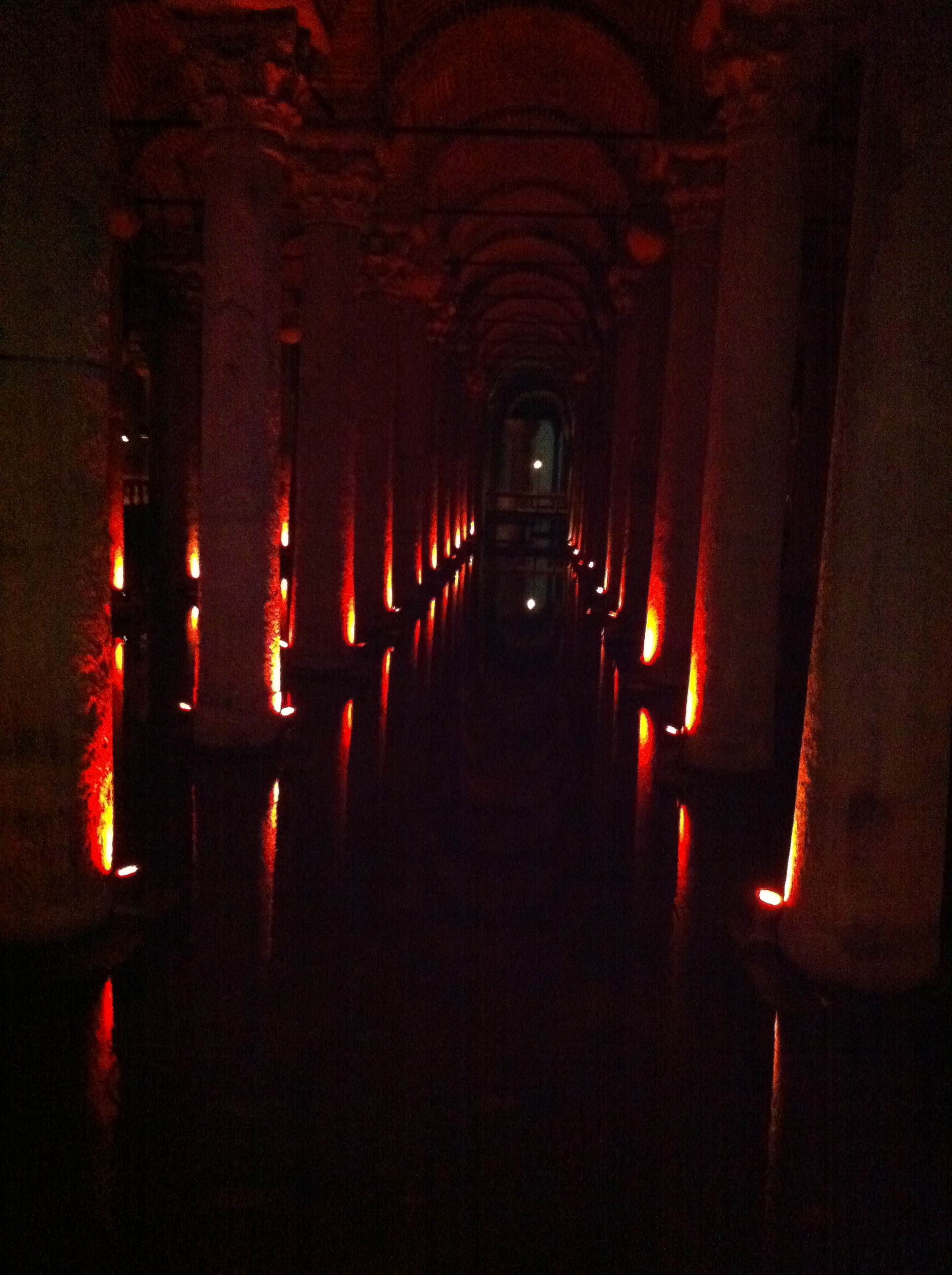
We started at the Basilica Cistern, which was originally built underneath a basilica and is one of hundreds of ancient cisterns in Istanbul. The water reserve was built in the 6th century. The water came from 19 kilometers (11 miles) away and the columns are 9 meters (30 feet) high). This strange mixture of columns from a basilica in a reservoir was made even stranger and more beautiful by the lighting they gave it.

Basilica Cistern, combination of a church and water reservoir

I loved the statues of Medusa in the Basilica Cistern. Her hair is filled with snakes and she is supposed to be able to turn anyone who looked at her into stone. She was therefore used to protect buildings. Apparently the effect was so strong though that they put her upside down or sideways and at the bottom of columns. Quite an amazing effect. It worked. I would definitely not mess with Medusa or any building she was protecting.


Medusa with her hair of snakes, protecting the building but so scary that they put her upside down (left) and sideways (right) and at the bootom of the columns

The Basilica Cistern is such an eerie and beautiful location that it makes sense that it  was used in the James Bond film From Russia With Love in 1963 and the 2009 film The International.

Our next stop was the Istanbul Archaeological Museum, which again I thought would be a bit tedious but turned out to be really wonderful. The best part for me built on a family story. In the 1950’s my family was traveling around the world and we stopped at the Hanging Gardens of Babylon in Iraq. We unfortunately “took” some pieces of the gardens and my mother and sister made this mosaic using those pieces. There were similar Babylonian mosaics in this museum.

Mosaic made by my sister and mother using pieces from the Hanging Gardens of Babylon

Babylonian mosaic from the Istanbul Archaeological Museum

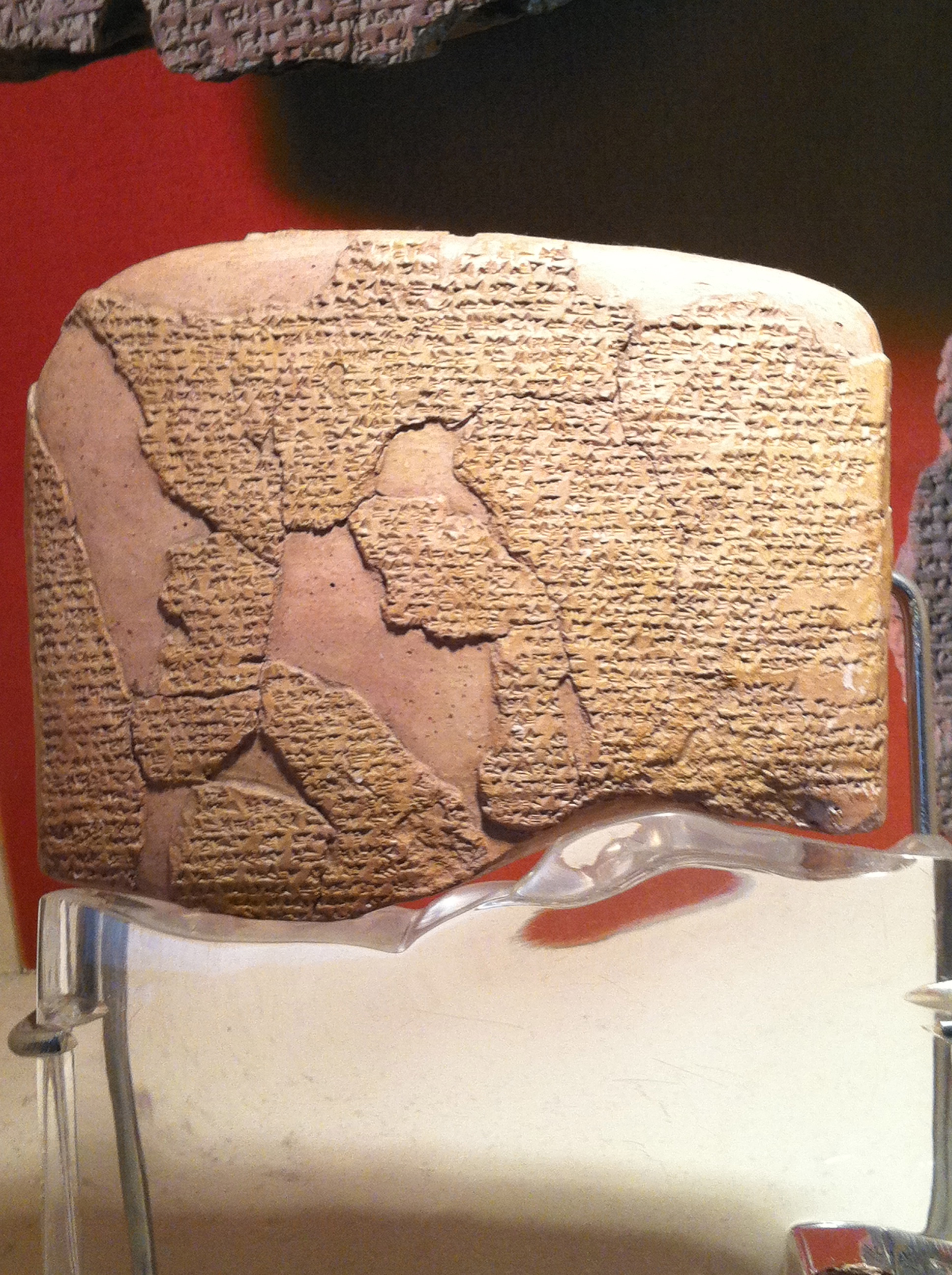
Over and over it became clear to me how wonderful it was to have a guide. Erdinc pointed out that the most famous piece in this museum was the actual Treaty of Kadesh from the 1200’s BCE. This treaty is considered so important in world history that a copy is in the UN headquarters. The Hittites and Egyptians both claimed victory after a nasty 4-day battle in modern Syria. After a while, they decided to have a peace treaty since they were both being threatened by other enemies and could not afford to fight each other. The Egyptian version says the Hittites came seeking peace while the Hittite version says the Egyptians were seeking peace. I like the idea that each side saved face while saving the lives of soldiers. It’s called the earliest known parity peace treaty as opposed to peace treaties signed when one side is victorious.

Kadesh Treaty — from 1200’s BCE, the oldest known parity peace treaty

A little math break. My picture didn’t come out good but they had a list of ancient Mesopotamian weight units. One “Talent” was about 30 kilograms (66 pounds), one “Shekel” was about 180 grains or about 8 grams, and 1 “Mina” was about 500 grams.

The most famous version of the Code of Hammurabi is in the Louvre in Paris but there is a copy in this museum too, from 1750 BCE (not our 1750, the other one). The code has 282 laws, from the seemingly fair such as “If anyone opens his ditches to water his crop, but is careless, and the water floods his neighbor’s field, he shall pay his neighbor corn for his loss” to the amazingly unfair “If a man strikes a pregnant woman, thereby causing her to miscarry and die, the assailant’s daughter shall be put to death.” The code is considered the first constitution and includes the concepts of presumption of innocence and the need for evidence in trials. (Wikipedia)

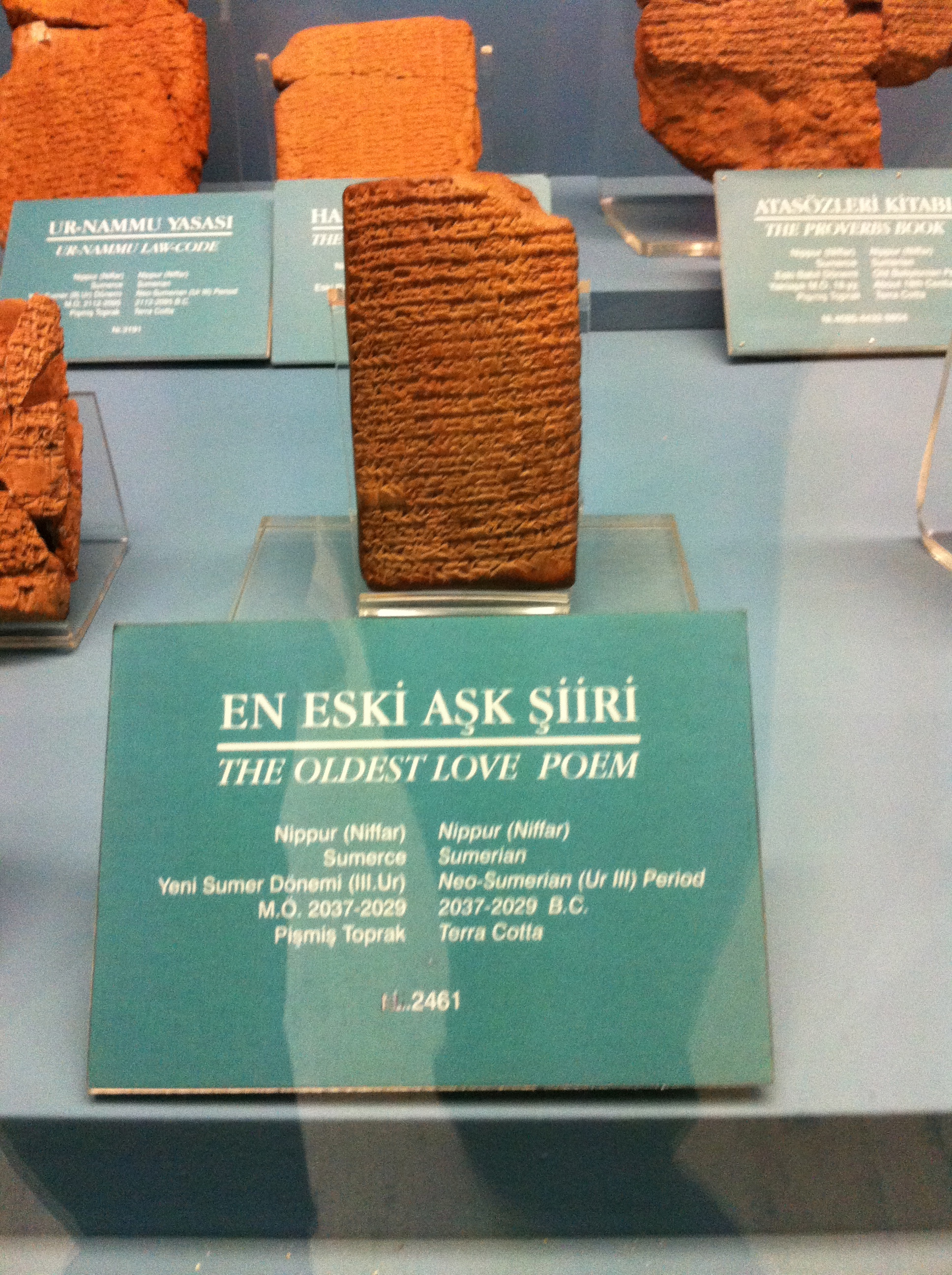
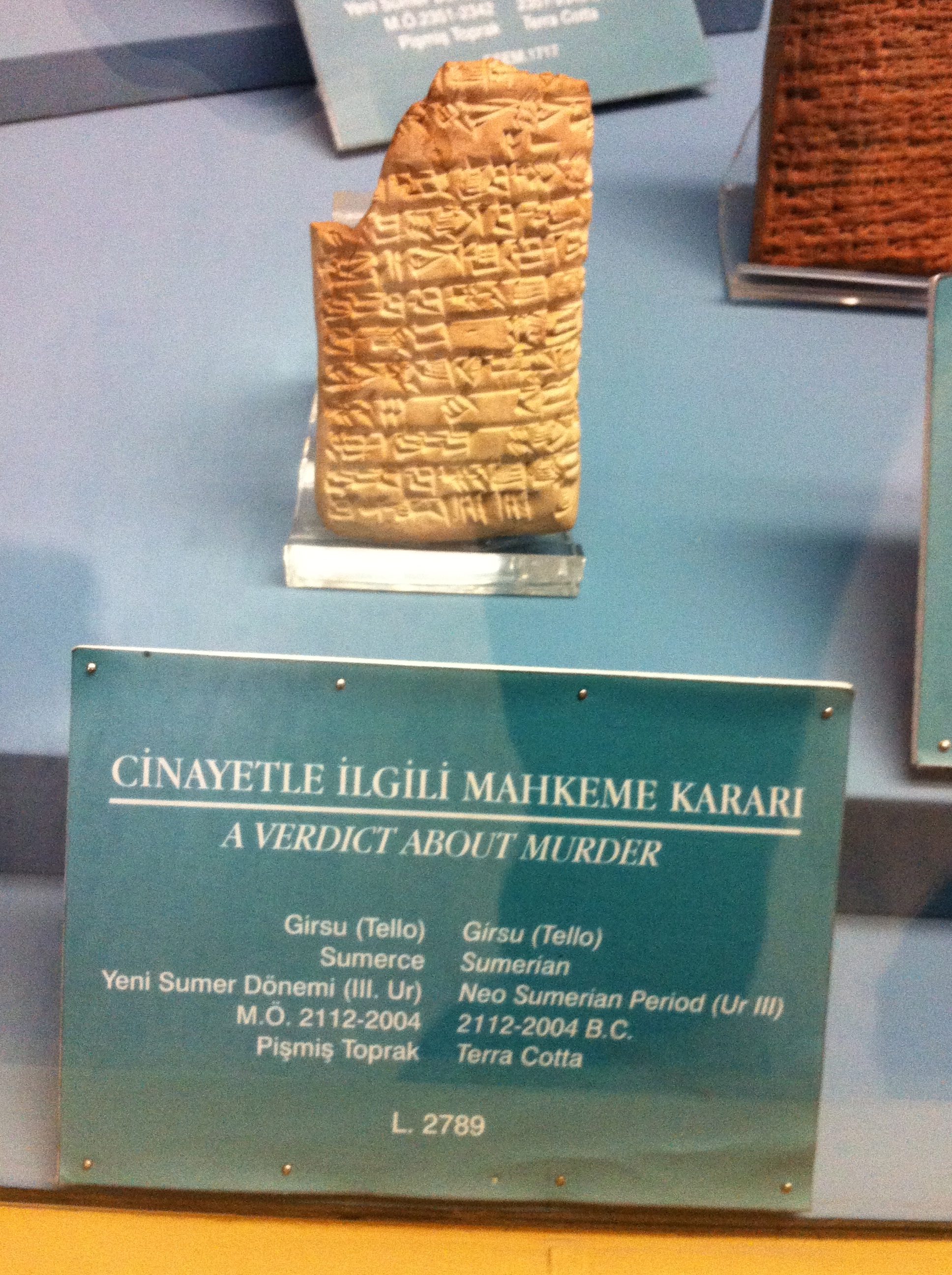
There were also a bunch of other ancient texts. I wish I knew the actual text of what was written.


Code of Hammurabi (1790 BCE, left), Oldest Love Poem (2037-2029 BCE, right)


A Verdict About Murder (2112-2004 BCE, left), A Juridical Decision Considering the Breaking of an Engagement (2035 BCE, right)

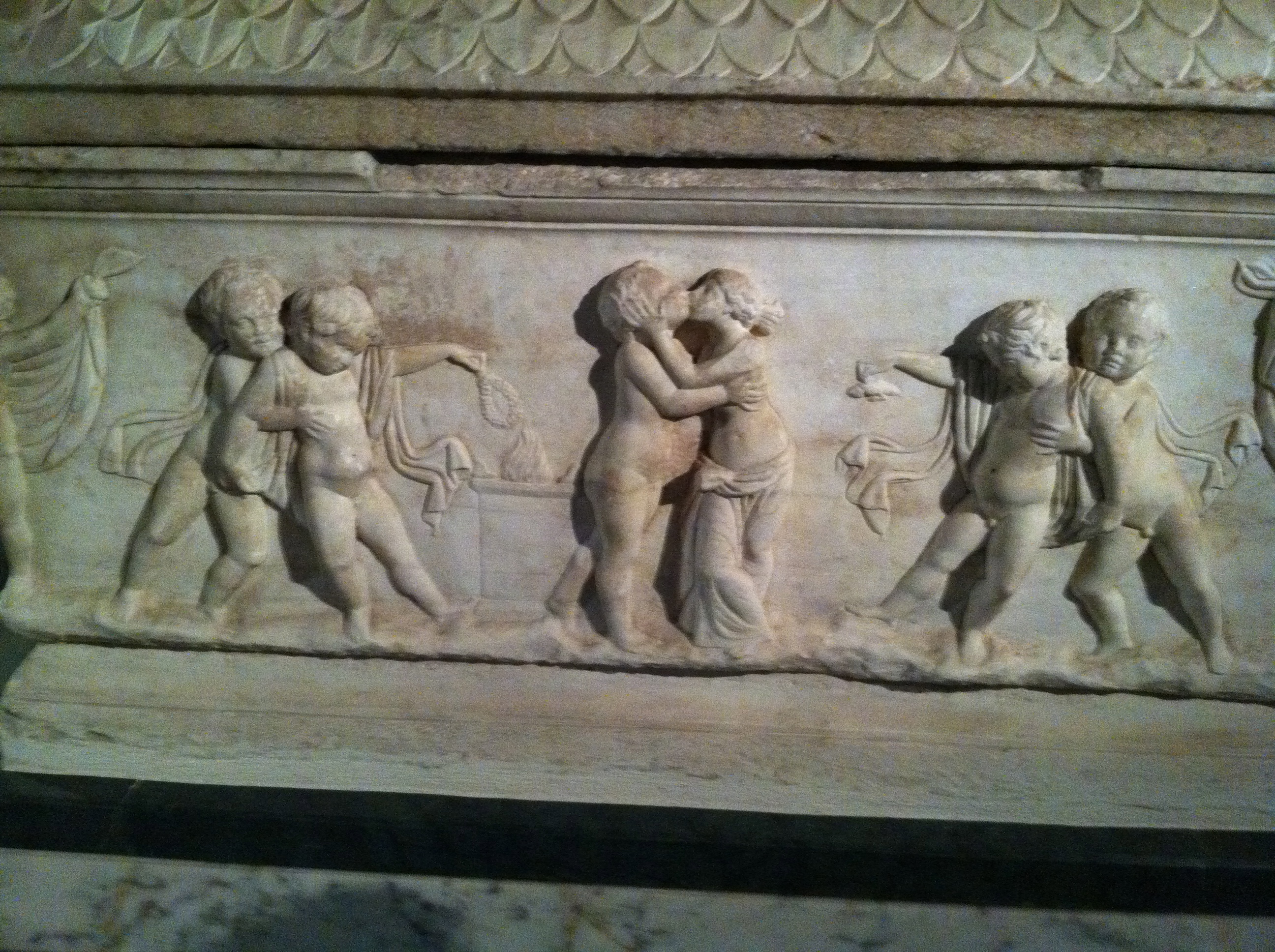
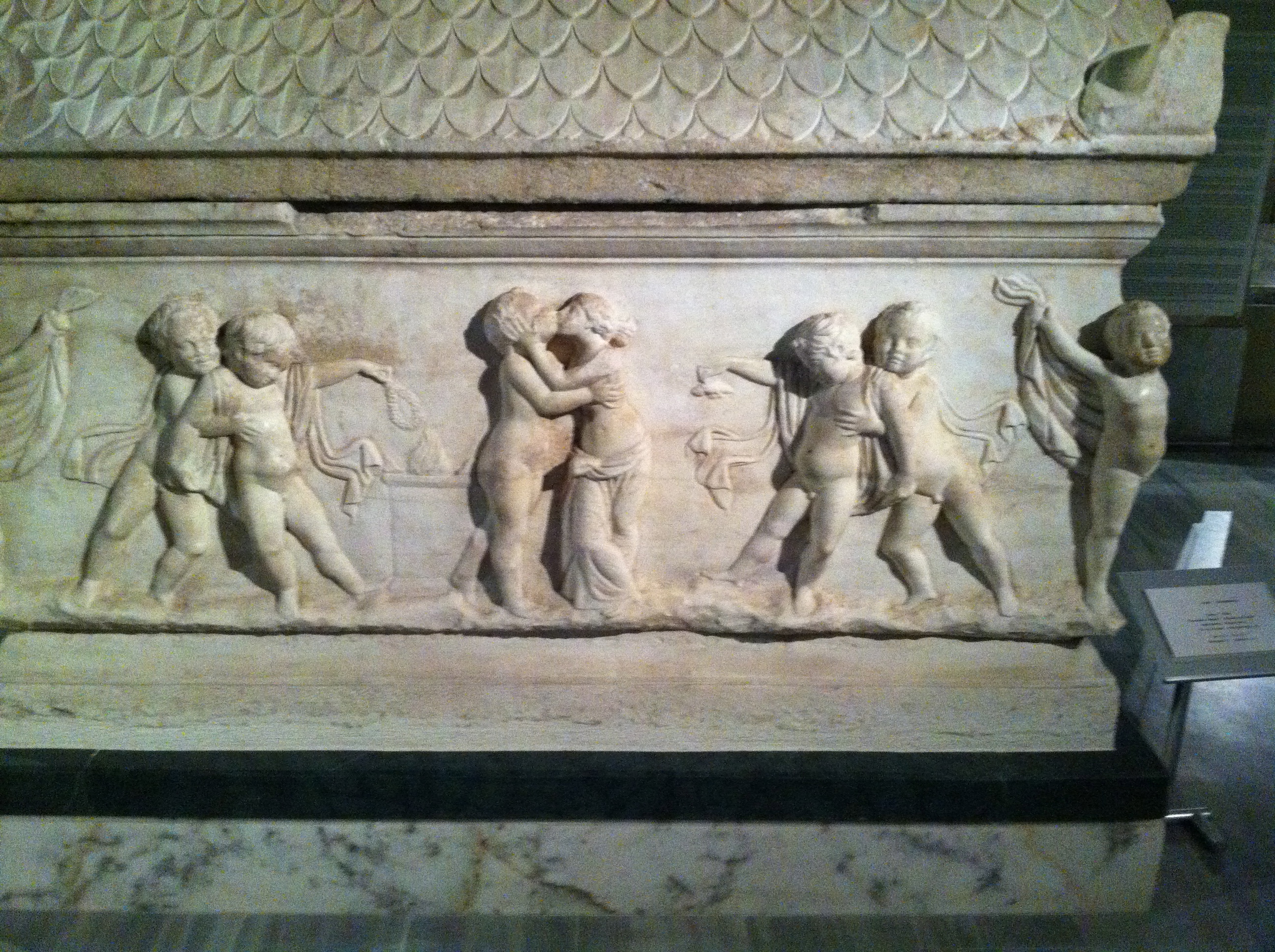
There were several rooms of Greek sculptures and tombs.

A little young for this kind of thing?


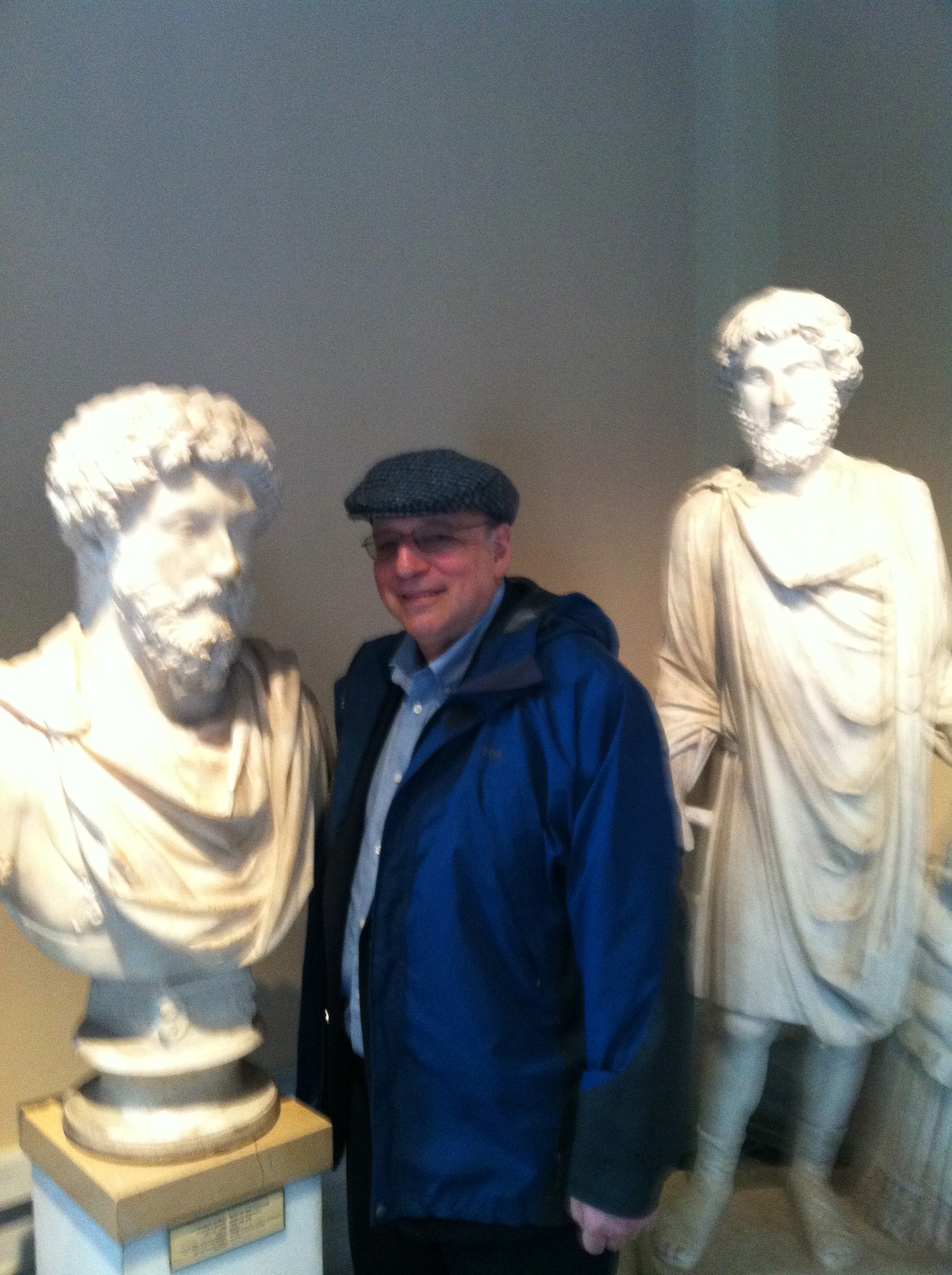
Can I take him home with me? (left), My very old friend, the Emperor Marcus Aurleius (161-180 AD)

Alexander the Great on Horseback on the far left

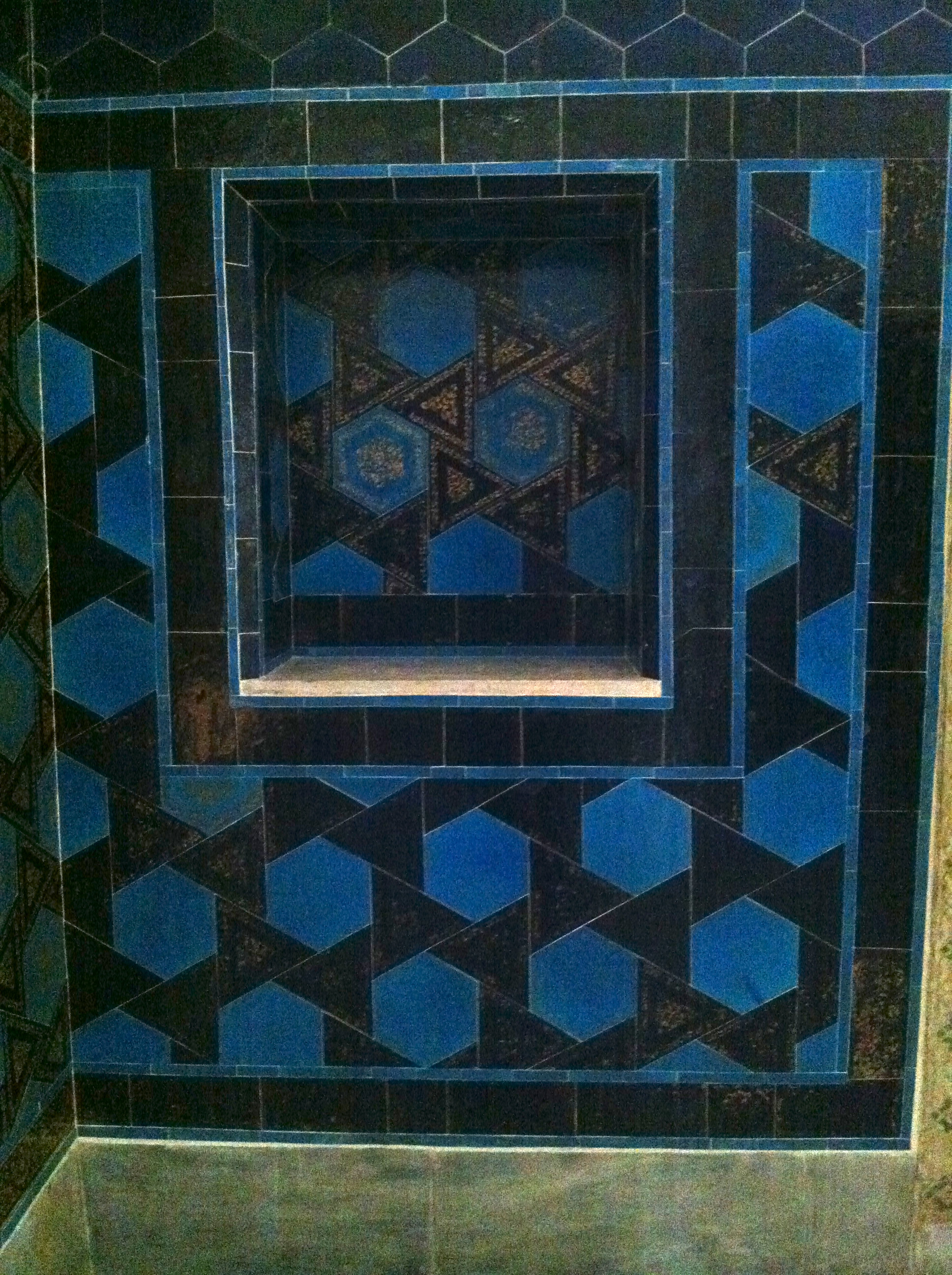
I spent a long time looking at the tessellations of Islamic Art, repeating the same geometric shape (hexagons, trapezoids, and triangles) that has been modified.


Islamic art from hexagons, triangles, and squares

I had mentioned to Erdinc at the beginning of the day that our itinerary did not include crossing from the European side of Istanbul to the Asian side. Of course, the whole idea of there being two separate continents called Asia and Europe is suspect to begin with, at least from a physical point of view. Clearly North America, South America, Asia, Australia, and Antarctica look like separate continents on a map, yet Asia and Europe physically just flow from one to the other. There certainly are cultural difference between the two continents but the differences between all the different cultures of Asia are masive too. However, they have chosen the Straits of Bosphorus that divides Istanbul to be part of the line between the two continents.

Erdinc made a great suggestion to go and see his town within the city limits of Istanbul on the Asian side, which turned out to be a highlight for me.


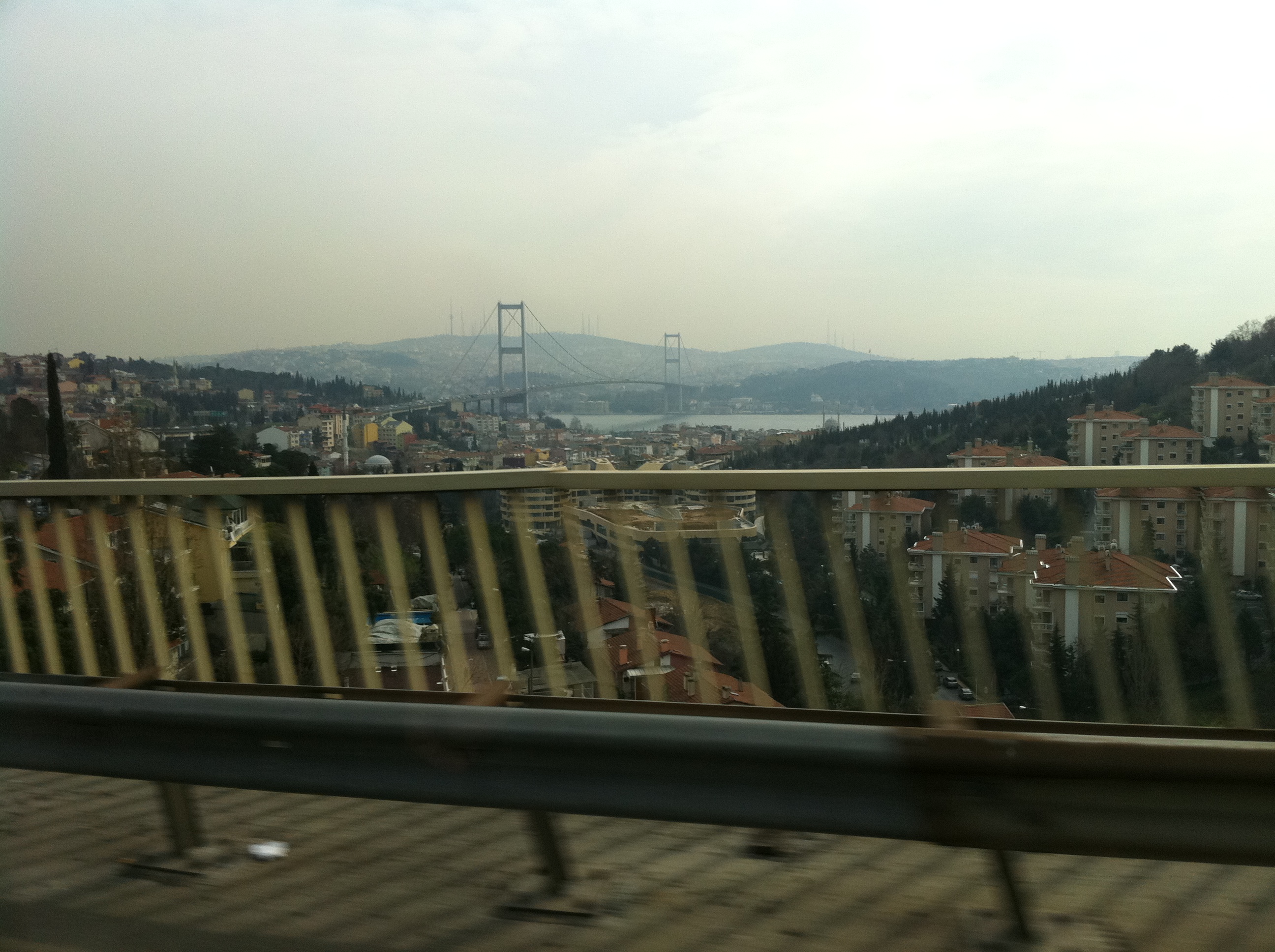
Approaching the bridge to Asia


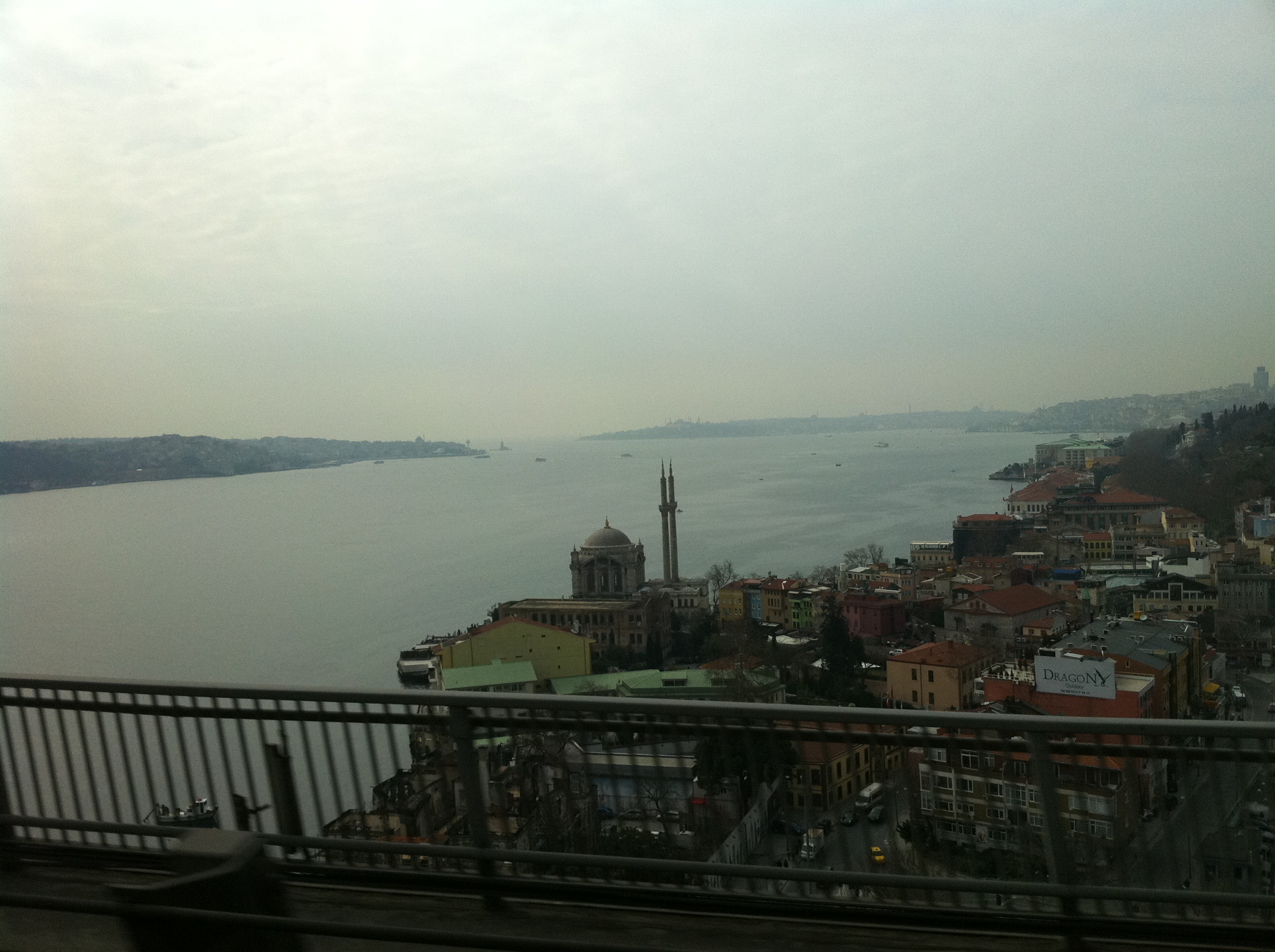
Looking to the Sea of Marmara from the bridge across the continents


The European side from the Asian side

Erdinc took me to one of his favorite eating places far away from where tourists would typically go.

Lunch


A synagogue

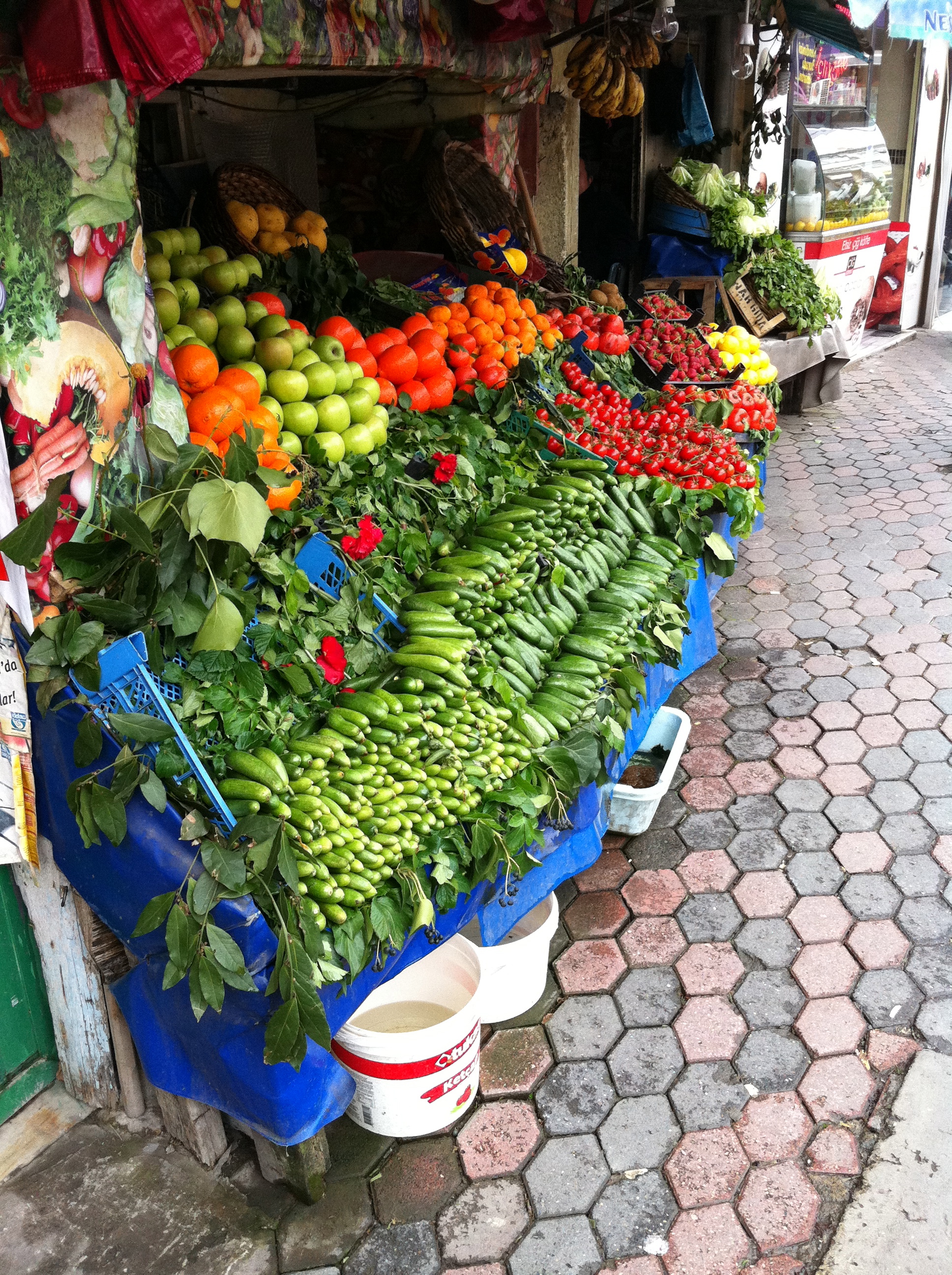
I relly enjoyed walking around Erdinc’s area of Istanbul, called Cengelkoy. He said Cengel means “hook” and its named for the sharp hook-like turn of the Bosphorus that it clings next to. I’ll just show some street scenes and some fishermen from Cengelkoy. Then I’ll show how I got “burned.”


Scenes from Erdinc’s home town in Istanbul, called Cengelkoy

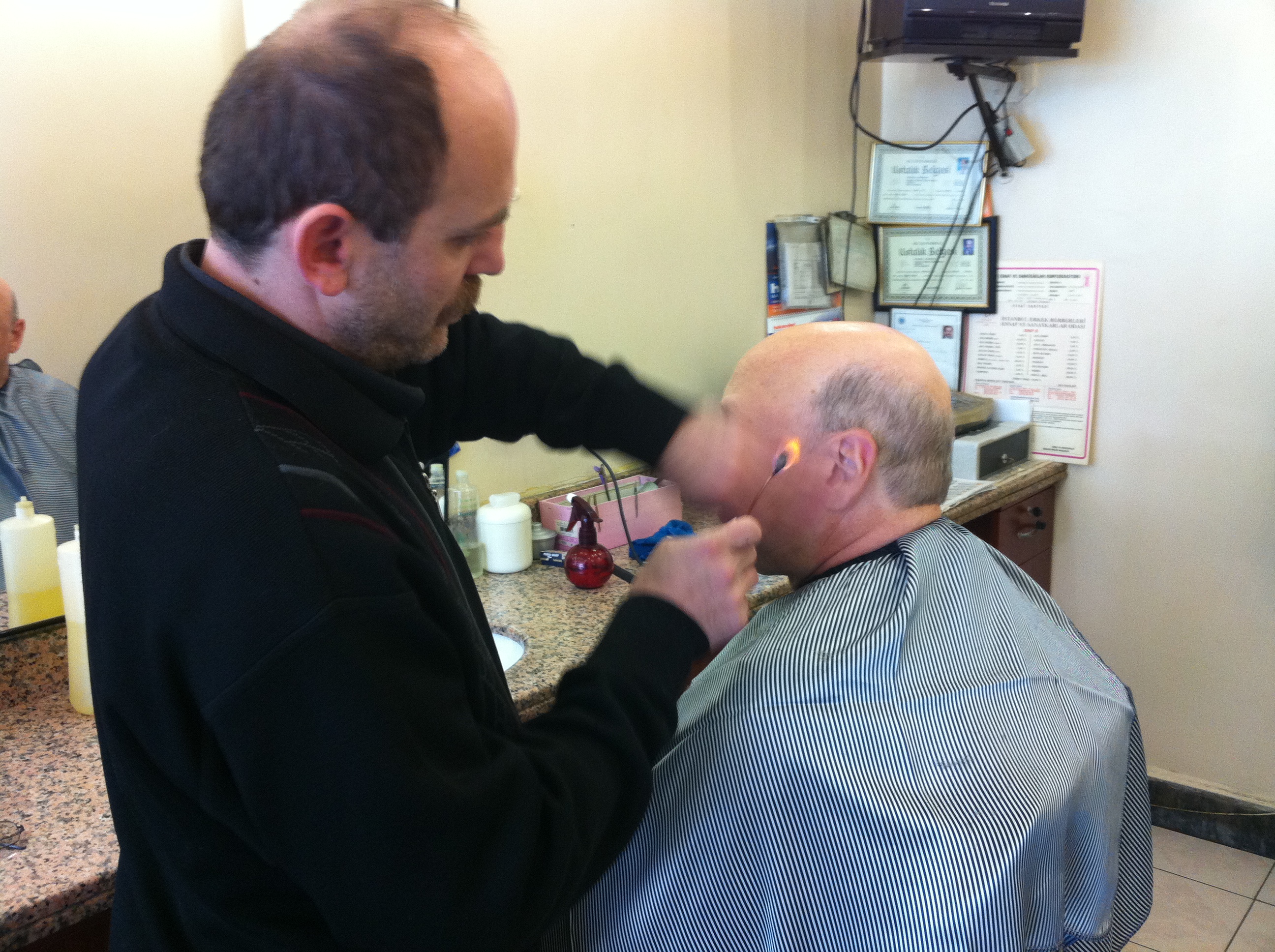
He introduced me to his barber as we walked by and I joked that I could use a haircut. Next thing I know I’m in his chair getting the most thorough hair cut I’ve ever had. Not only did the barber cut what’s left of the hair on my head but he trimmed my eyebrows, my ear hair, nose hair, and all around my throat. What he did next would have scared me if I’d had time to realize what was happening. He lit a match and starting waving it around my ear.

“That’s not for me is it?”

“I’ll confess to anything, just go no further”

I told him what he wanted and he let me go.

I really enjoyed my time with the barber and in Cengelkoy. Erdinc did feel there is a different atmosphere in the Asian side of the city. He feels it’s more down to earth, cheaper to live, and less touristy. I hope to be able to figure out extensions to trips like this in the future.


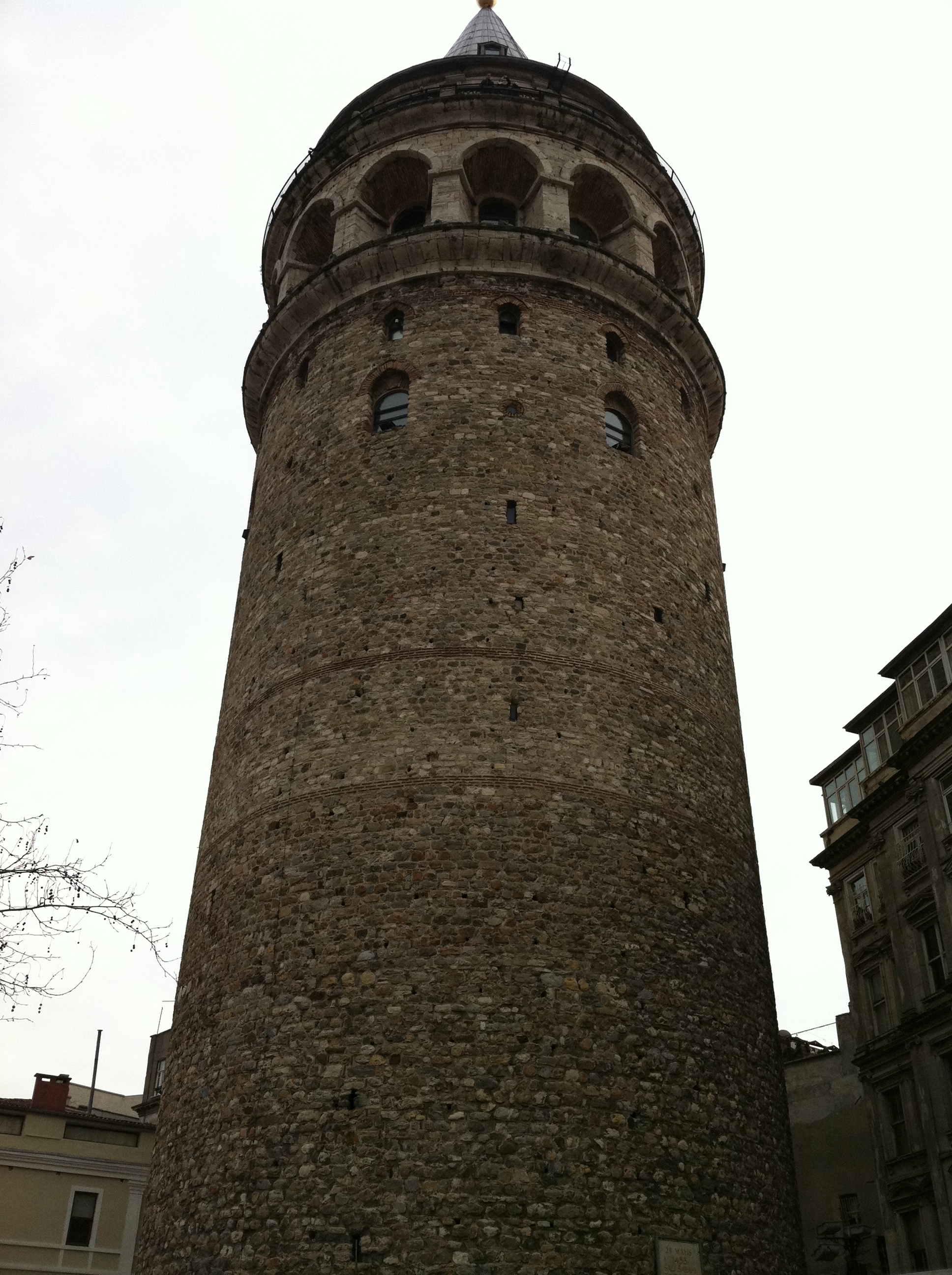
We then went back to the European side to the Galata Tower, buit by the Genoese in 1348. It’s 67 meters (220 feet) high and has great views of the city.

Galata Tower from 1348

View from Galata Tower

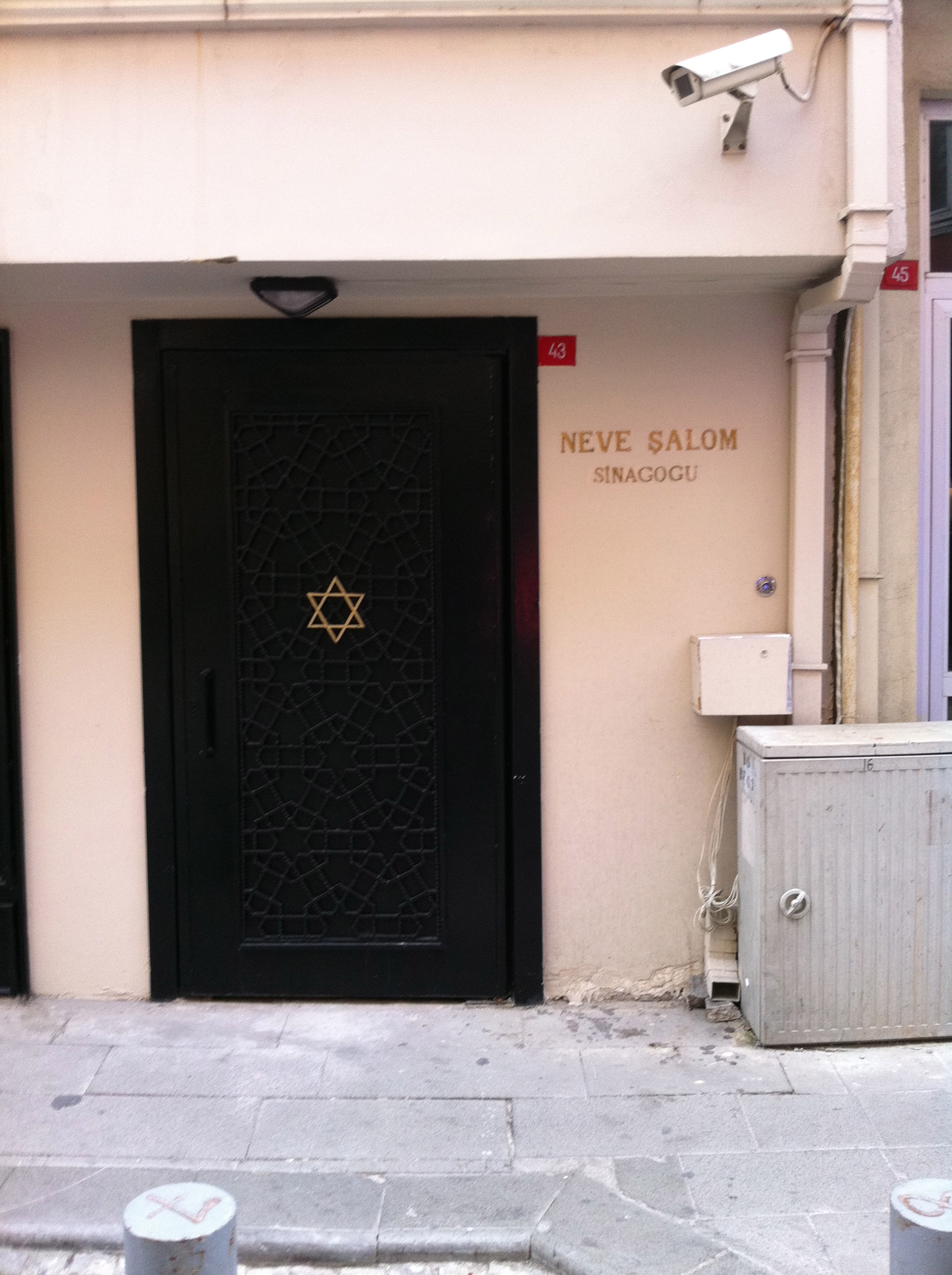
The Neve Shalom Synagogue had been bombed in 1986, 1996, and 2003 and is supposedly well protected now.


Neve Shalom Synagoge

The Roman Aqueduct

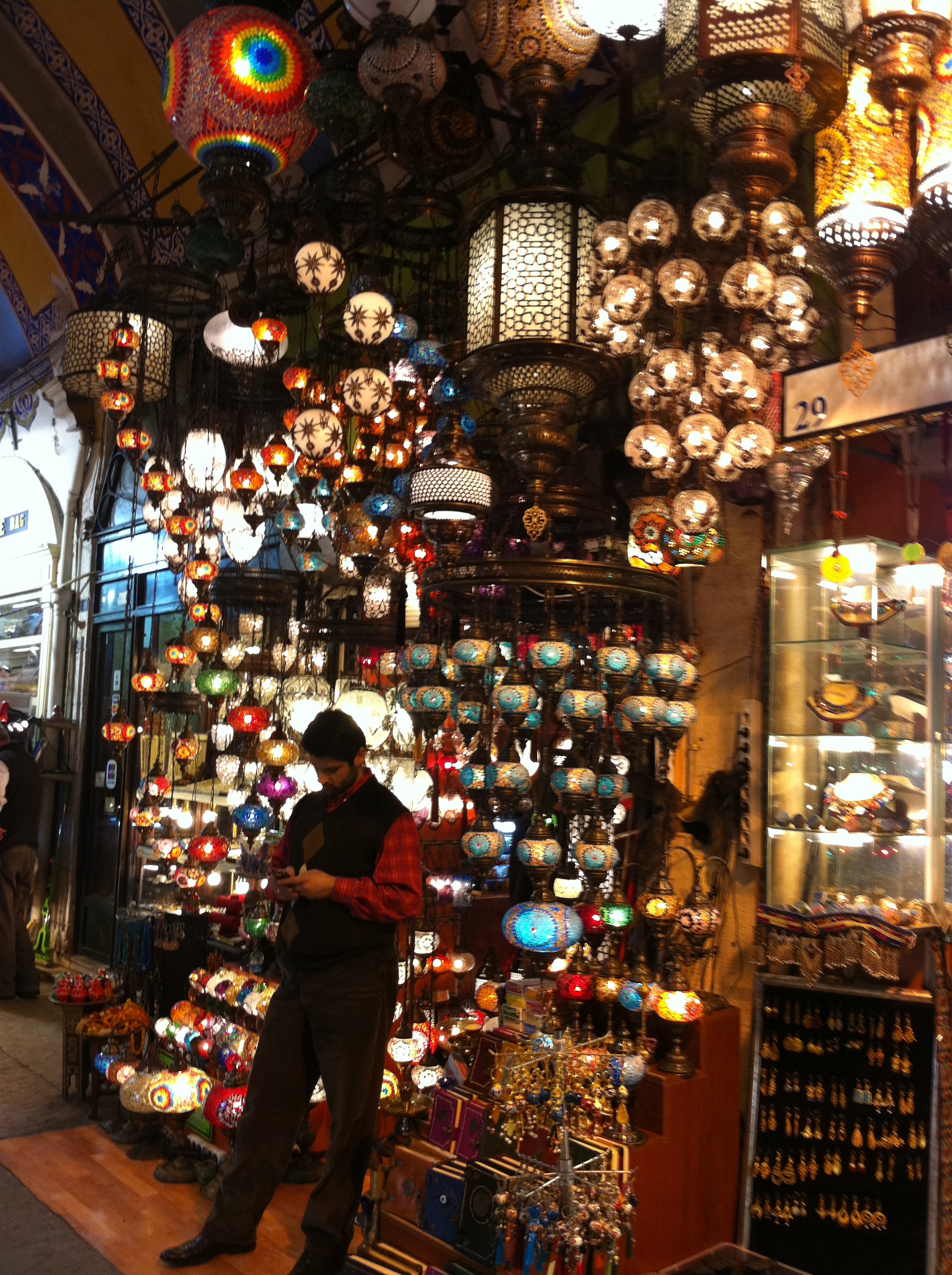
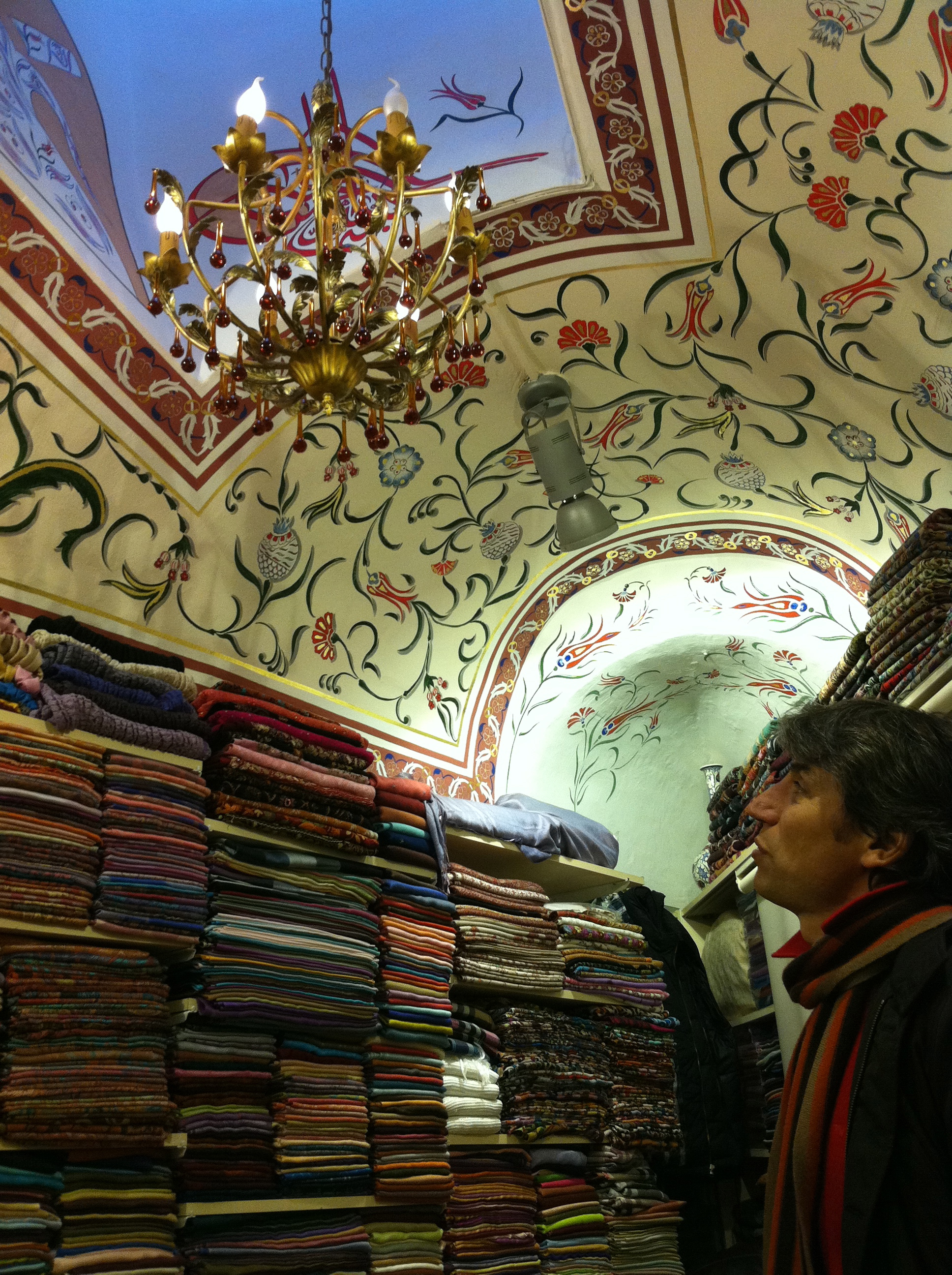
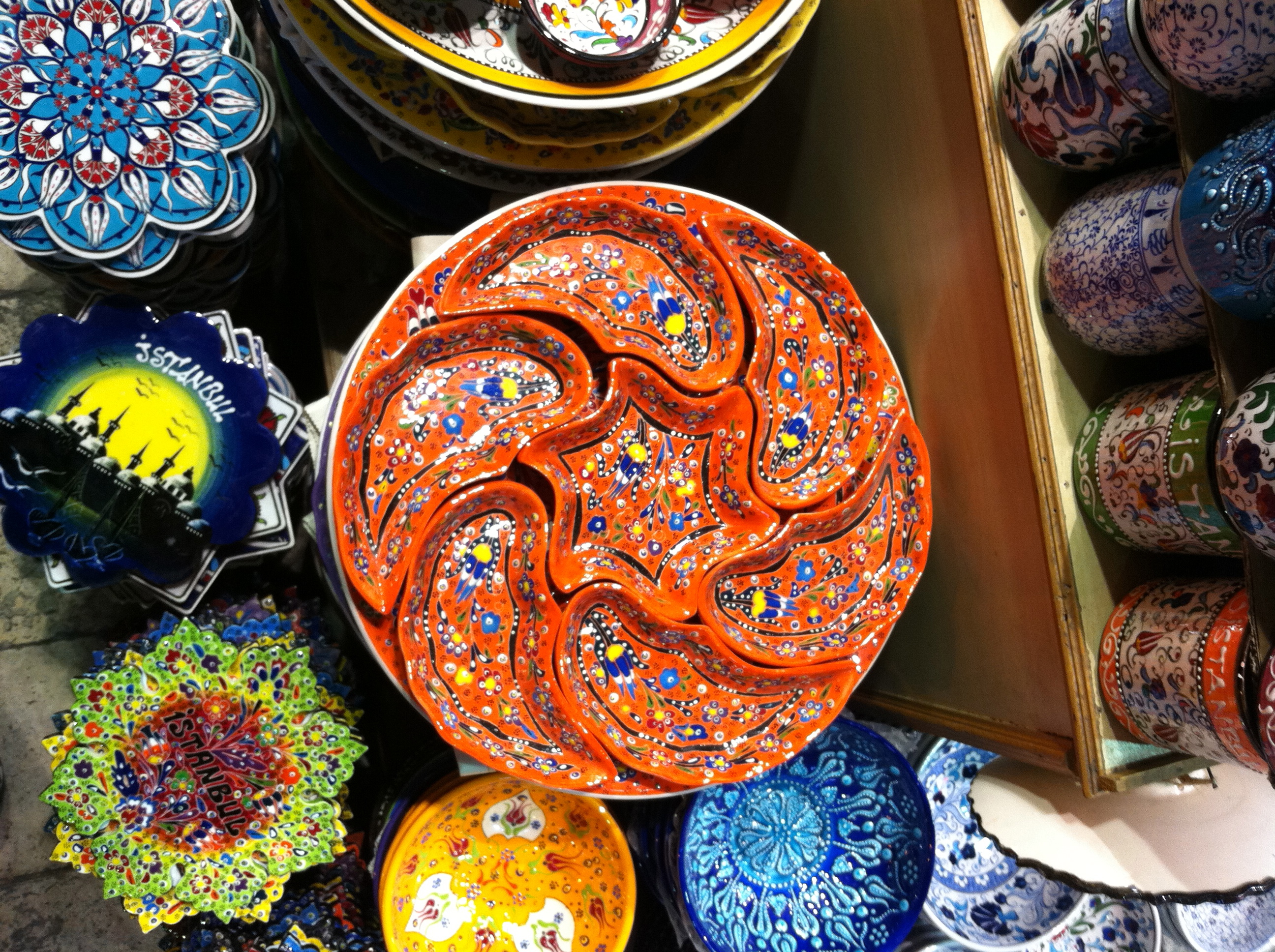
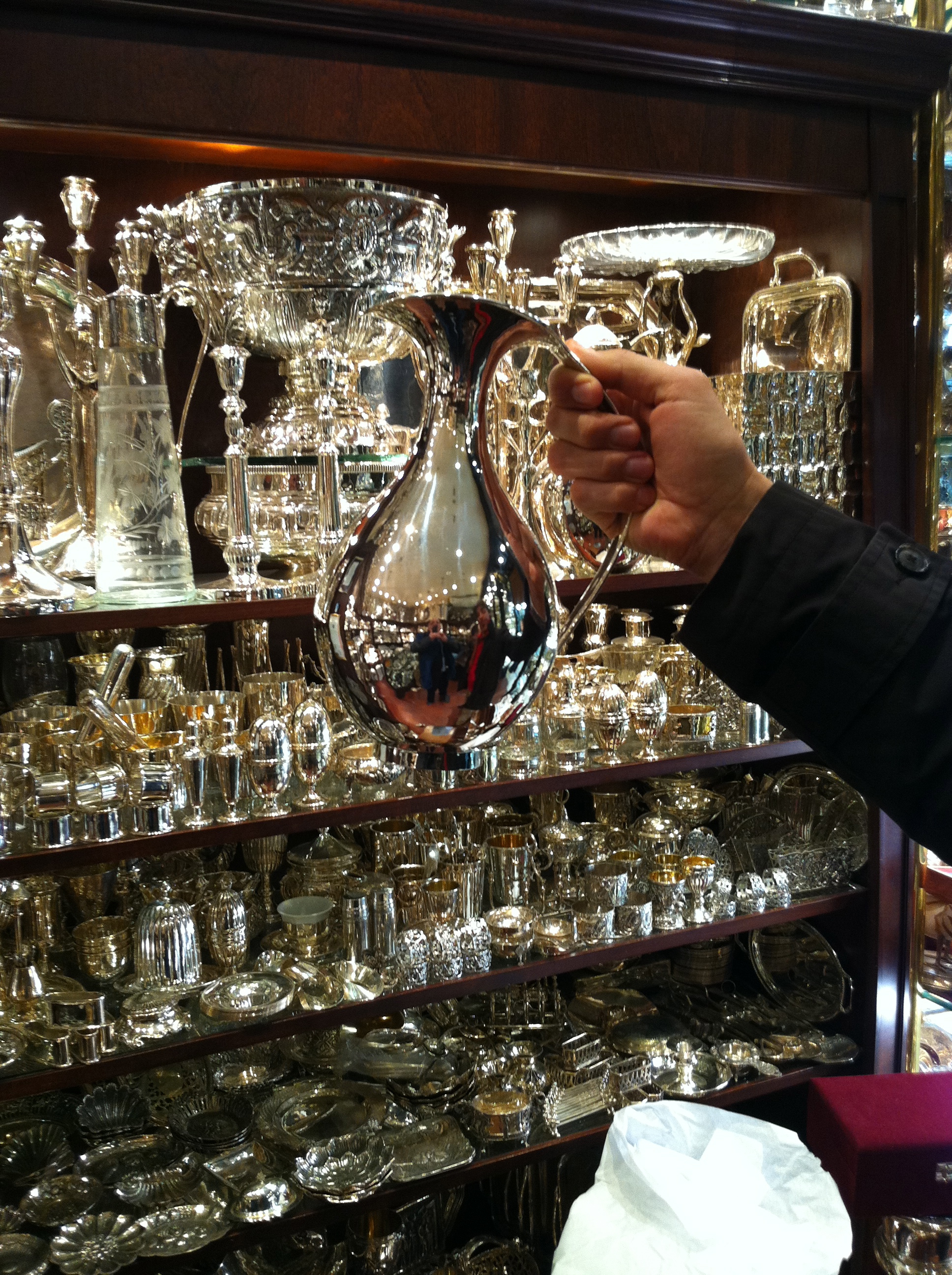
The Grand Bazaar is like a massive covered city of shops and I wrote about it also on my Day 23 blog. Here are some pictures.


Scenes from the Grand Bazaar

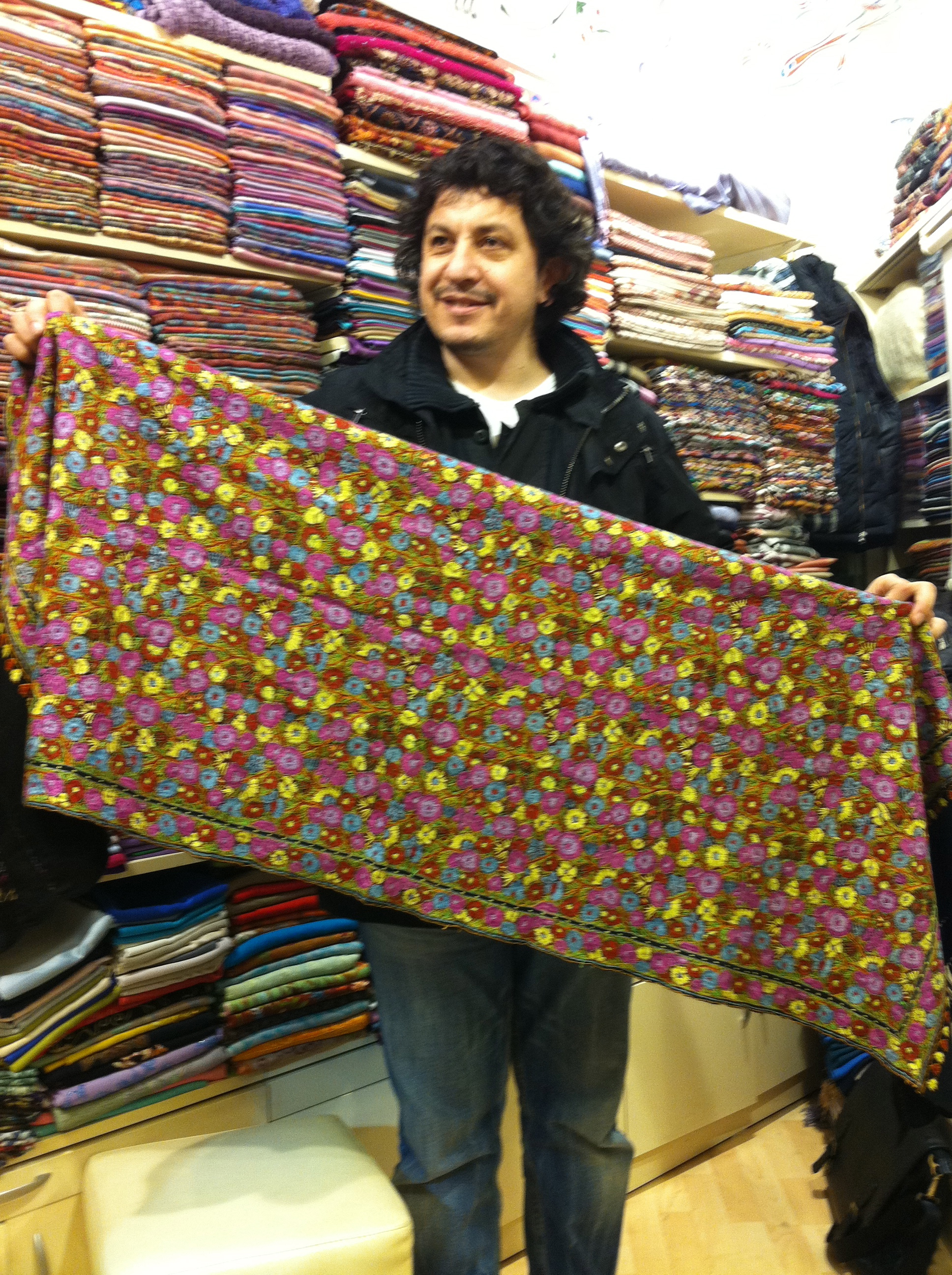
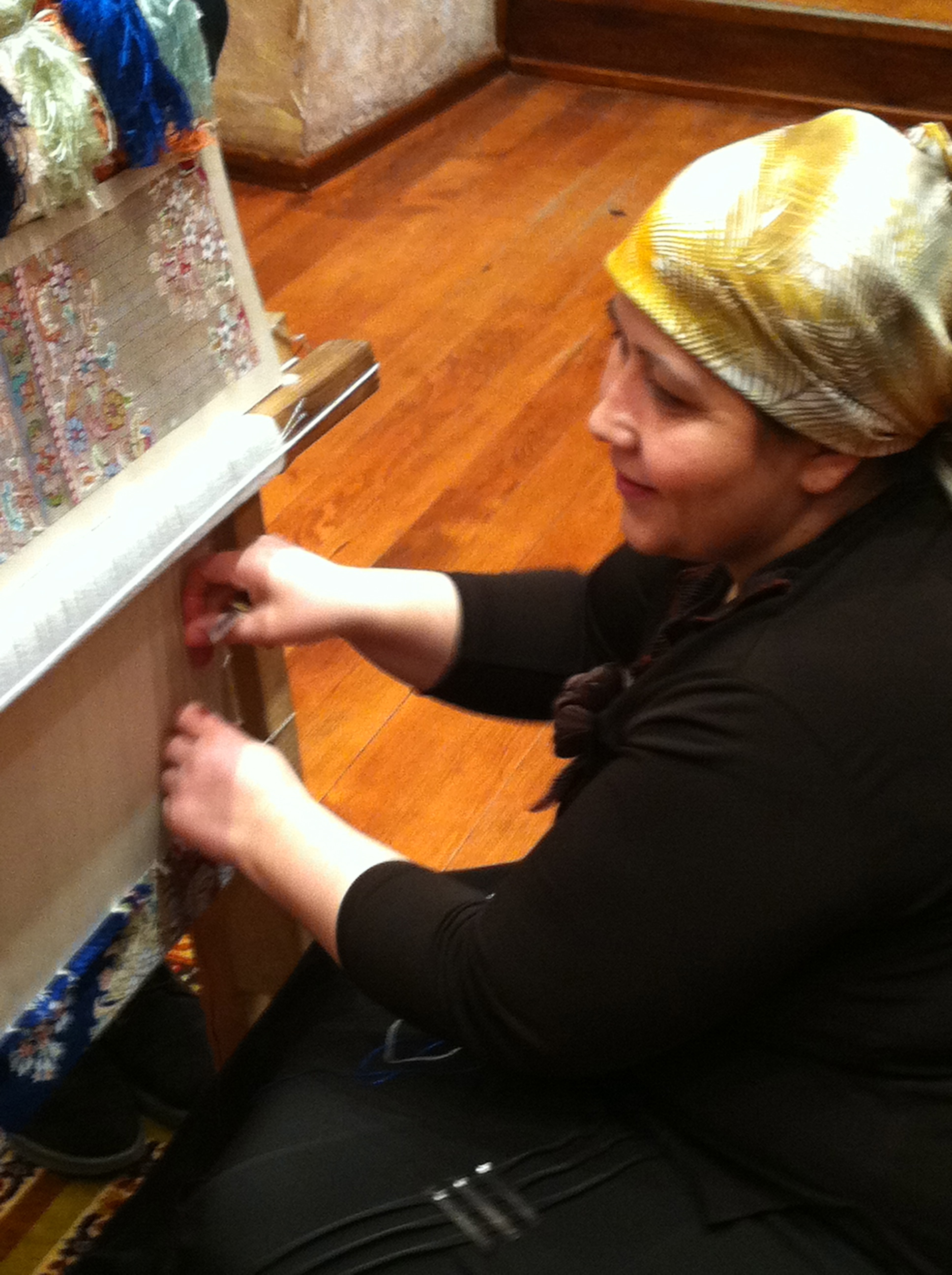
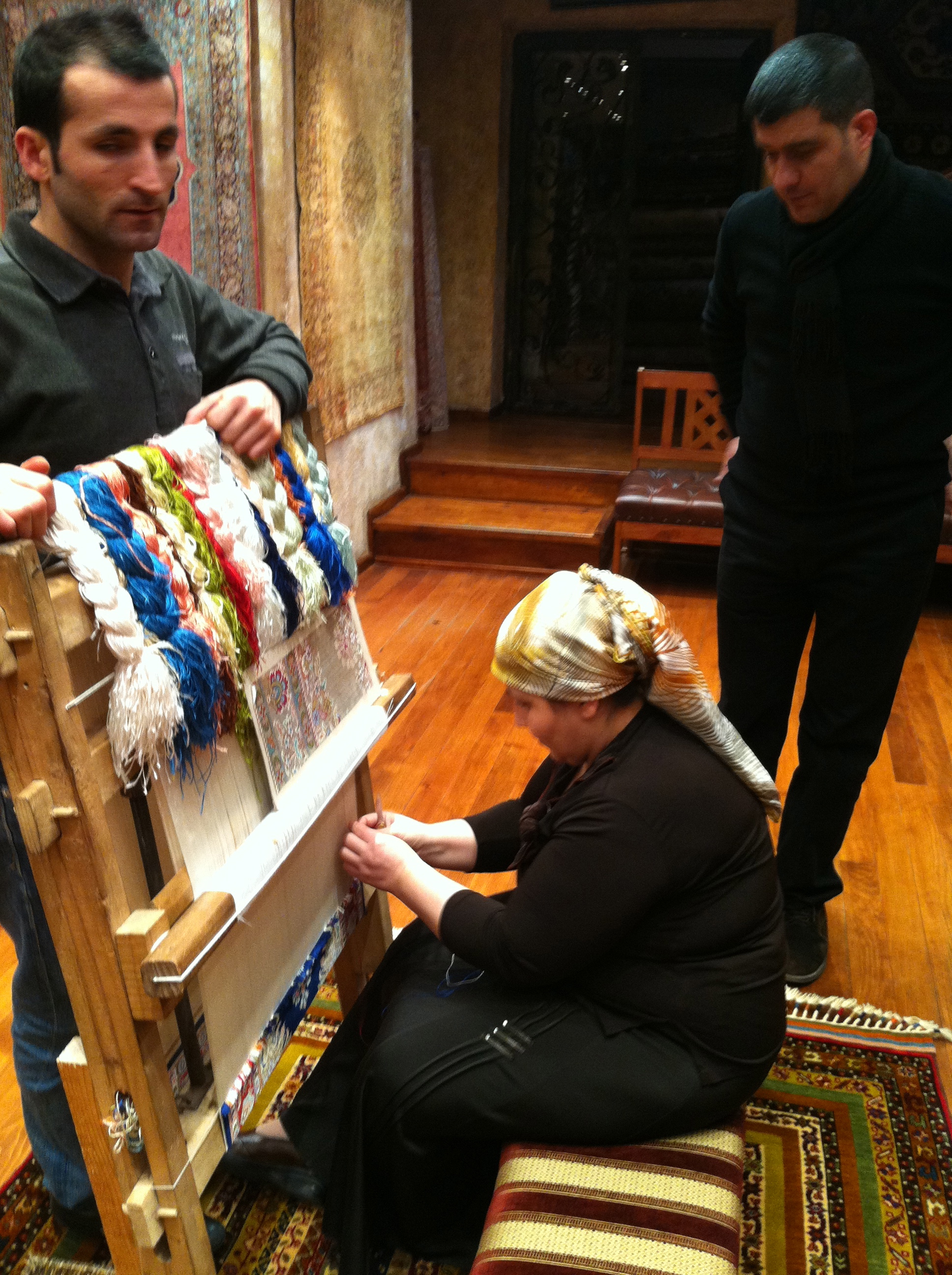
We finished the day with carpet making and carpet sales demonstrations. I was fascinated with the carpet weaving and told them the story of how computer programming has its roots in weaving.Although I couldn’t remember the full story, I have since looked it up in Wikipedia. Joseph Jacquard created a mechanical loom in 1801 that is known as the first machine to use punched cards to control a sequence of operations.”The ability to change the pattern of the loom’s weave by simply changing cards was an important conceptual precursor to the development of computer programming.” (Wikipedia)


Carpet weaving demo

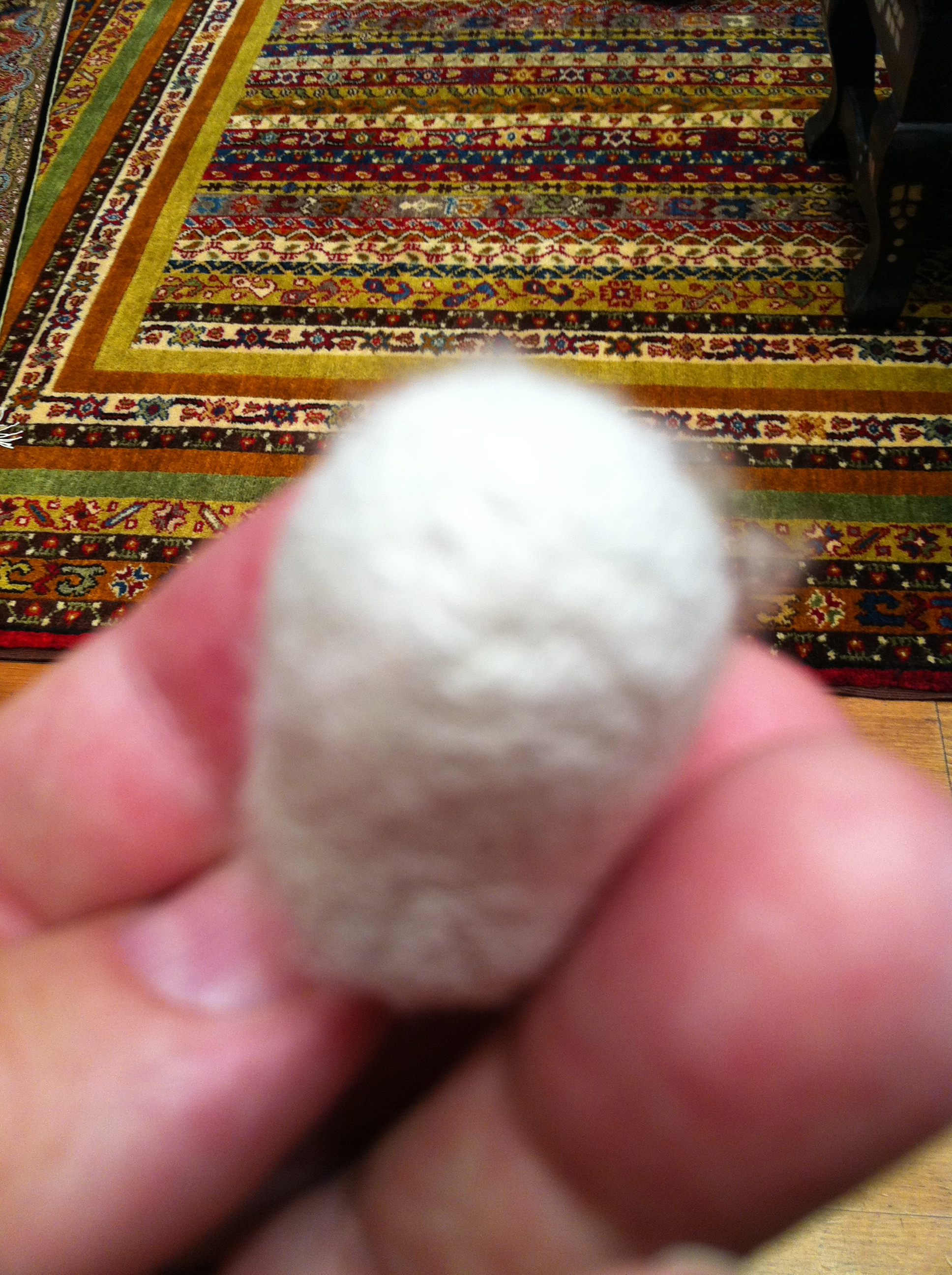
Larvae from the silk making process


They had no chance of making a sale with me. As they pointed out, making these carpets took somewhere around a year’s worth of work and of course, cost a lot of money. I couldn’t see buying something like this and stepping on it or putting it on a wall. I don’t get spending that much money for something to walk on. The seller clearly knew his stuff and went way beyond me. I was glad to have seen it though. It would not have been right to go to Turkey without seeing carpets. My favorite part was when the workers would carry a heavy carpet and loudly slap it down so it unravelled just right.

I went back to the hotel and packed up for the trip the next day to Greece.


Day 21 Feb. 16 The Greatest Hits of Istanbul were truly great

1 Comment

I’m writing this on March 4, over two weeks later. I have good notes of where we went and all my pictures, so hopefully I’ll be able to get the flavor of what happened. I remember looking at this day’s itinerary and being a bit worried. As I wrote in an early blog, I don’t have a great feeling about museums. I like to move through them quickly and don’t like to spend time reading long descriptions while standing for a long time. As it turned out, I had nothing to fear, what I saw this day was spectacular and very memorable. Just yesterday, I was at a doctor who instead of talking about my health went on and on about how much he loves Istanbul (of course, I started the conversation about travels, it’s not his fault).

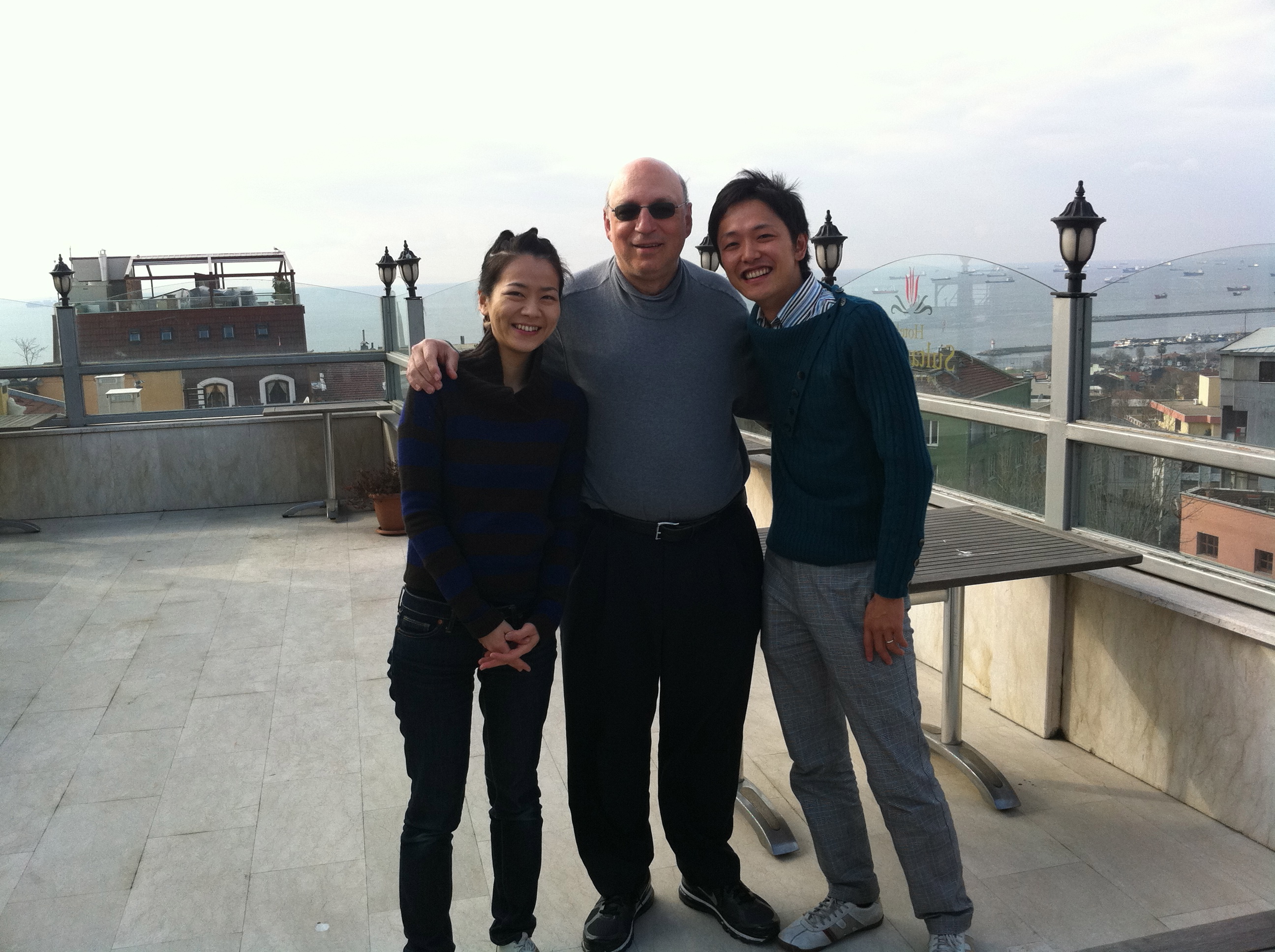
Breakfast had a couple of highlights, one was the view from the restaurant, which was on the top floor with big windows and an open air area. The other was meeting a couple from Japan. He’s a judge and she’s a lawyer. They met while she was arguing a case in his court and were on their honeymoon. I would have liked to talk with them more, they were really friendly and I would have loved to hear more about the Japanese legal system.

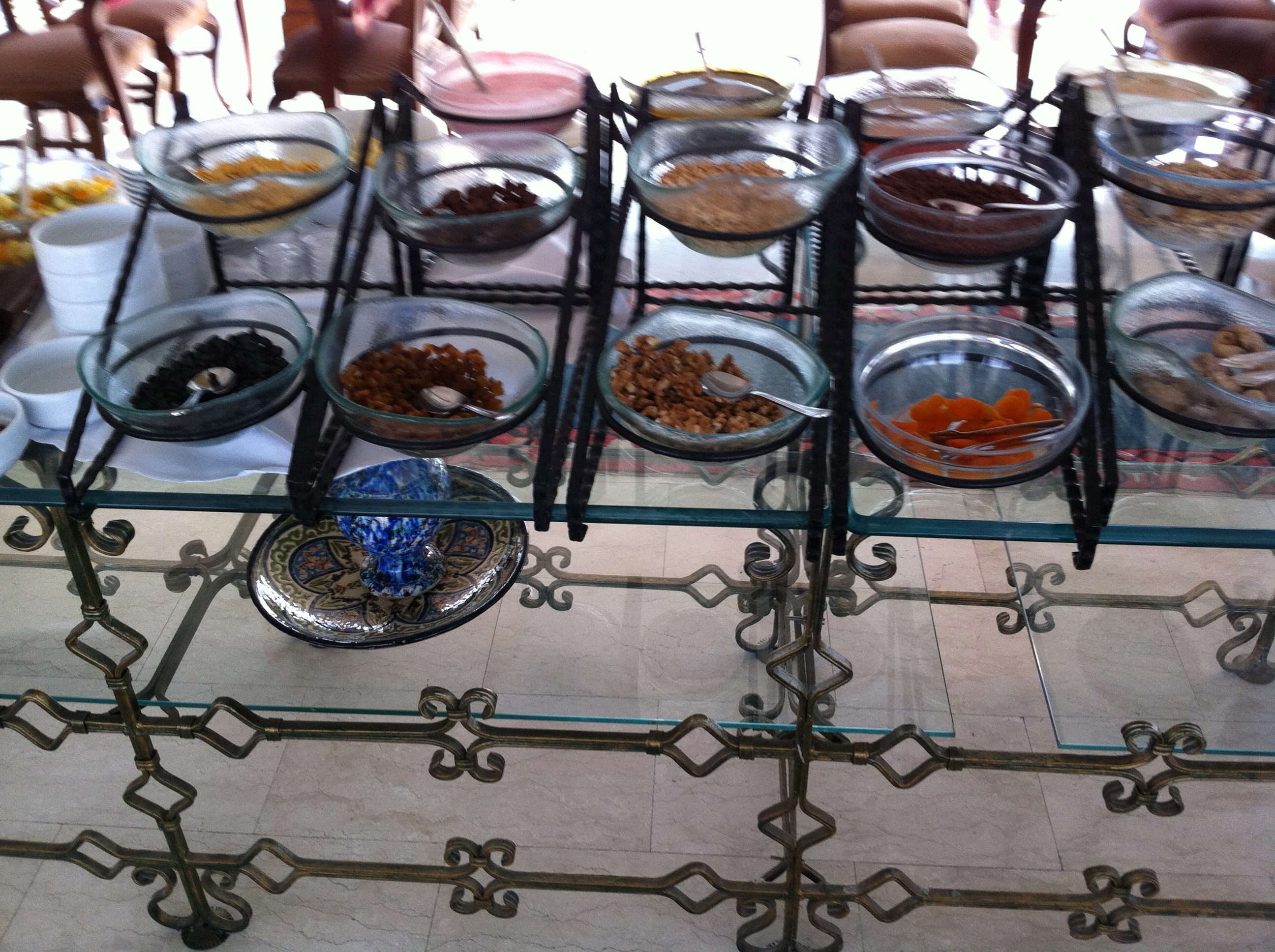
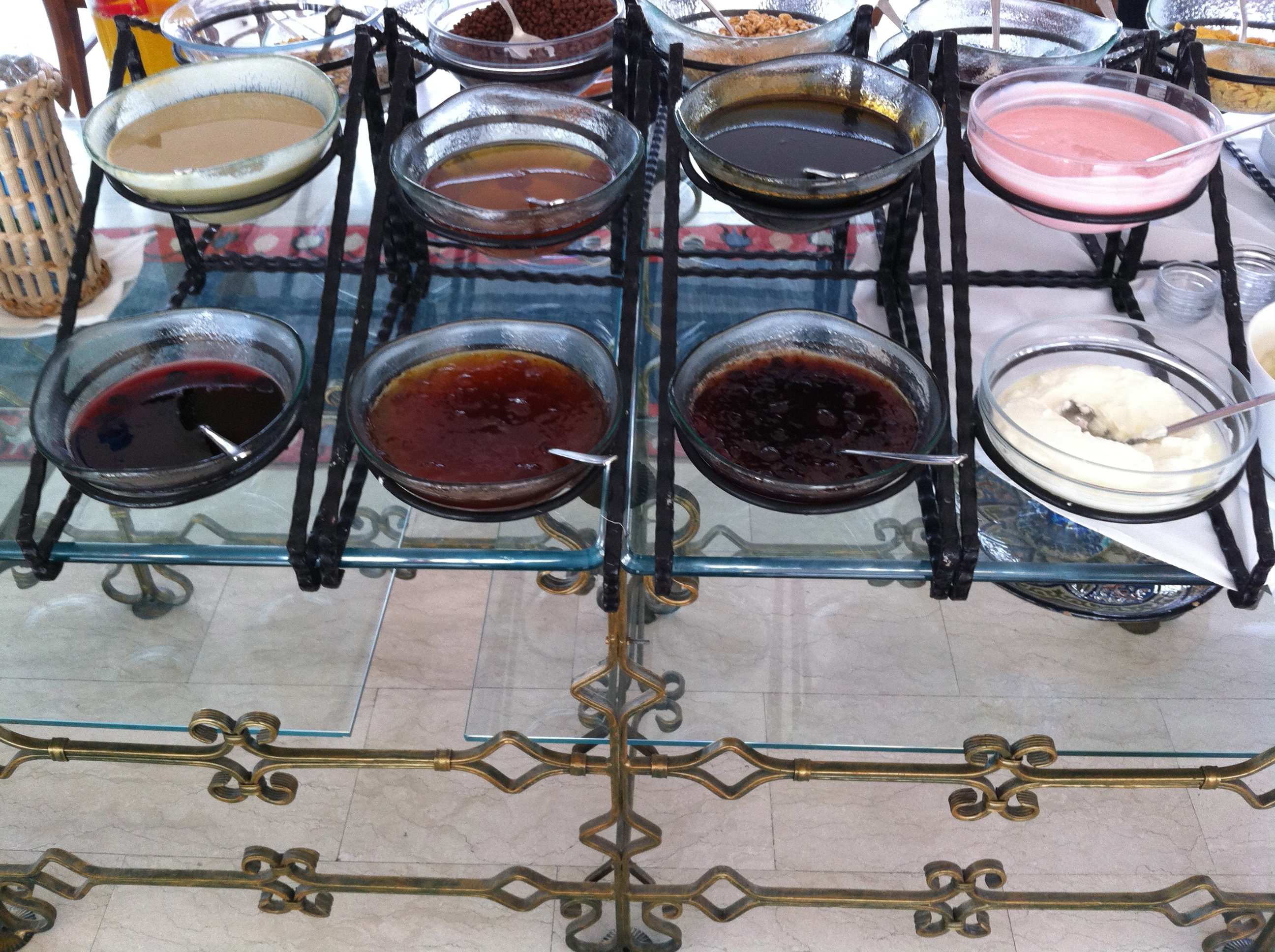
Condiments and toppings from breakfast, glad I didn’t try them all

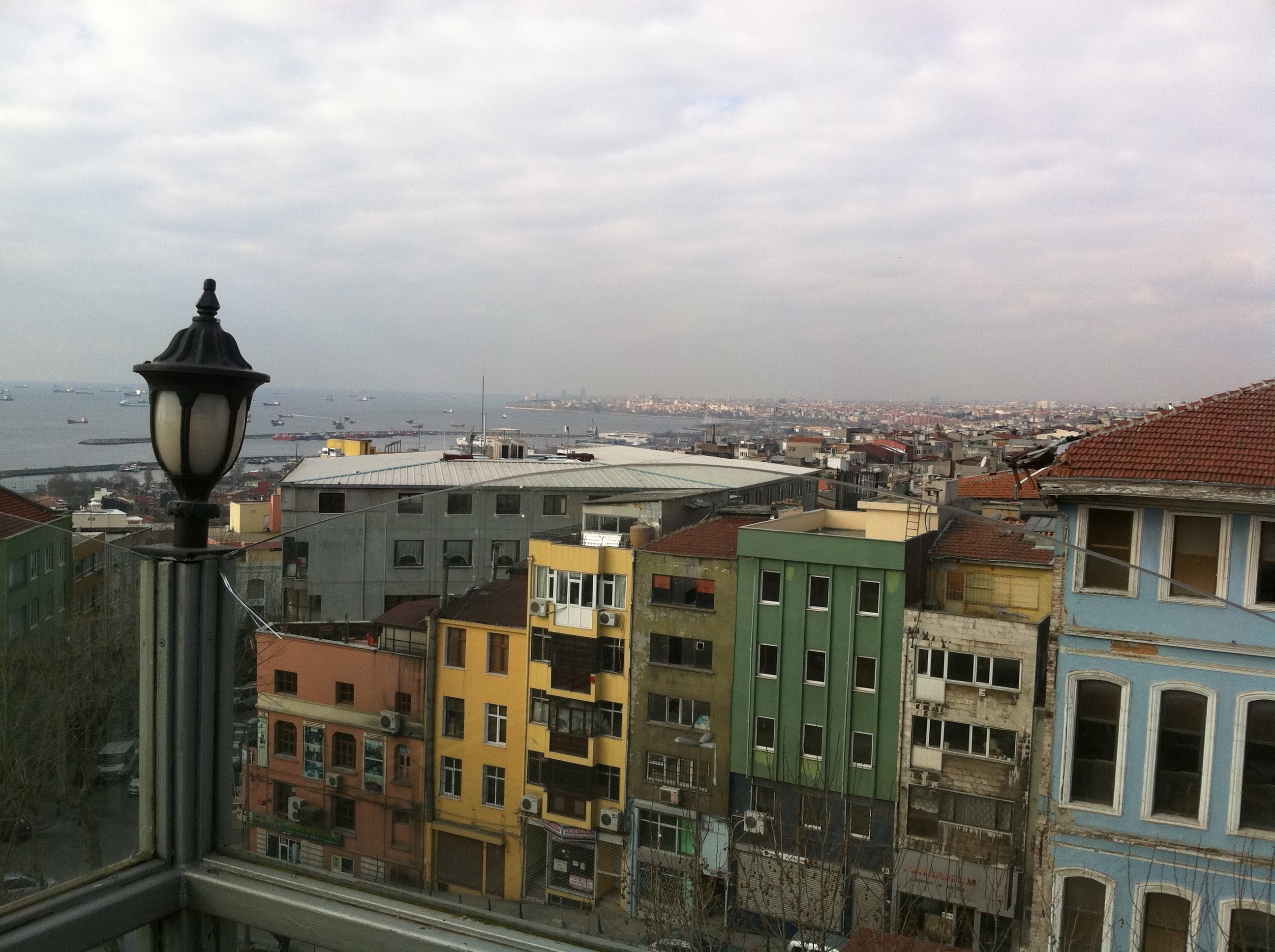
View from the breakfast room, Bosphorus on top, mosques on bottom

Japanese honeymooners, met while she was arguing cases in his courtroom

I was a little worried since we were not having the driver today. Many of the main attractions of Istanbul were within walking distance of the hotel.


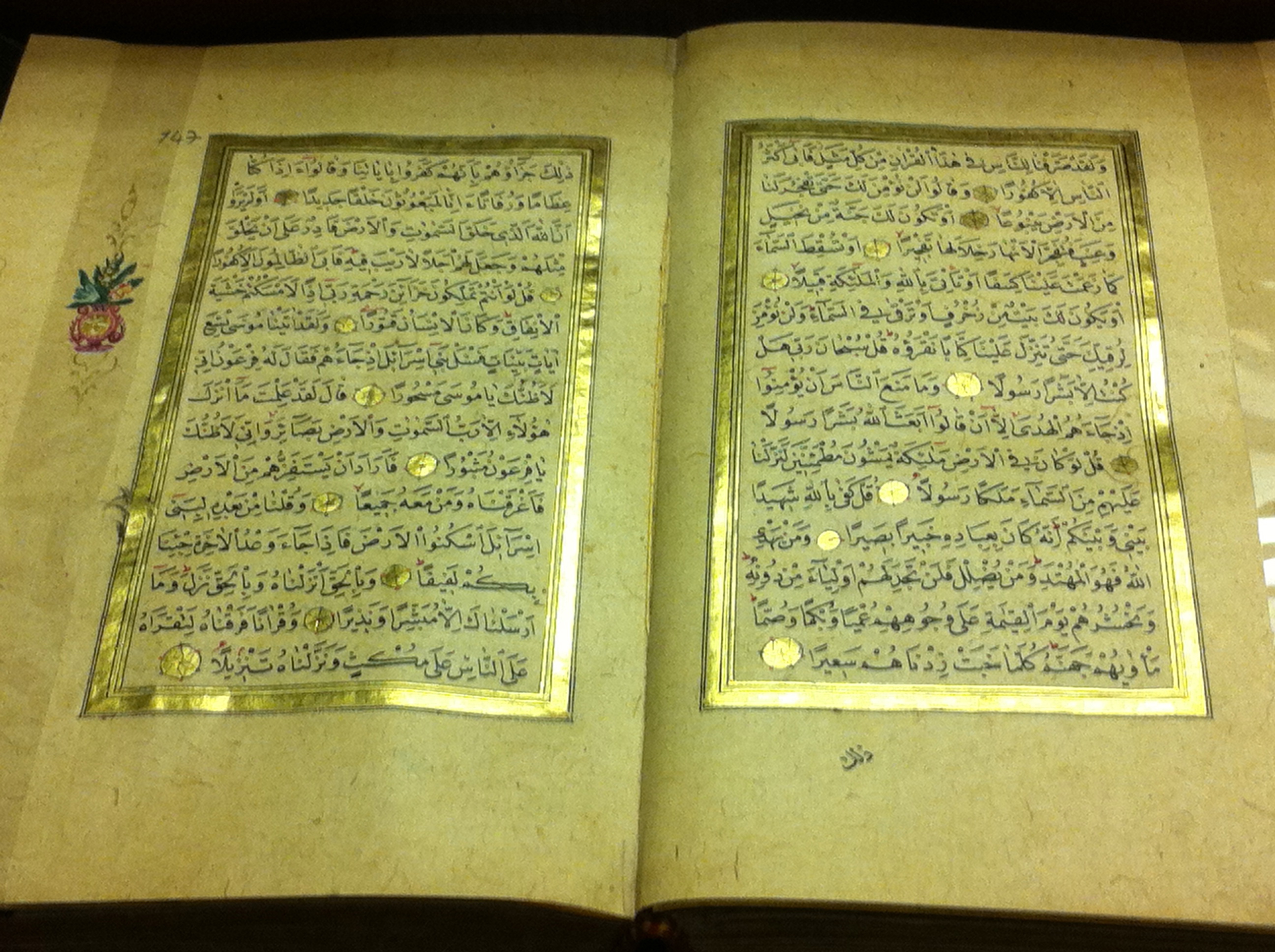
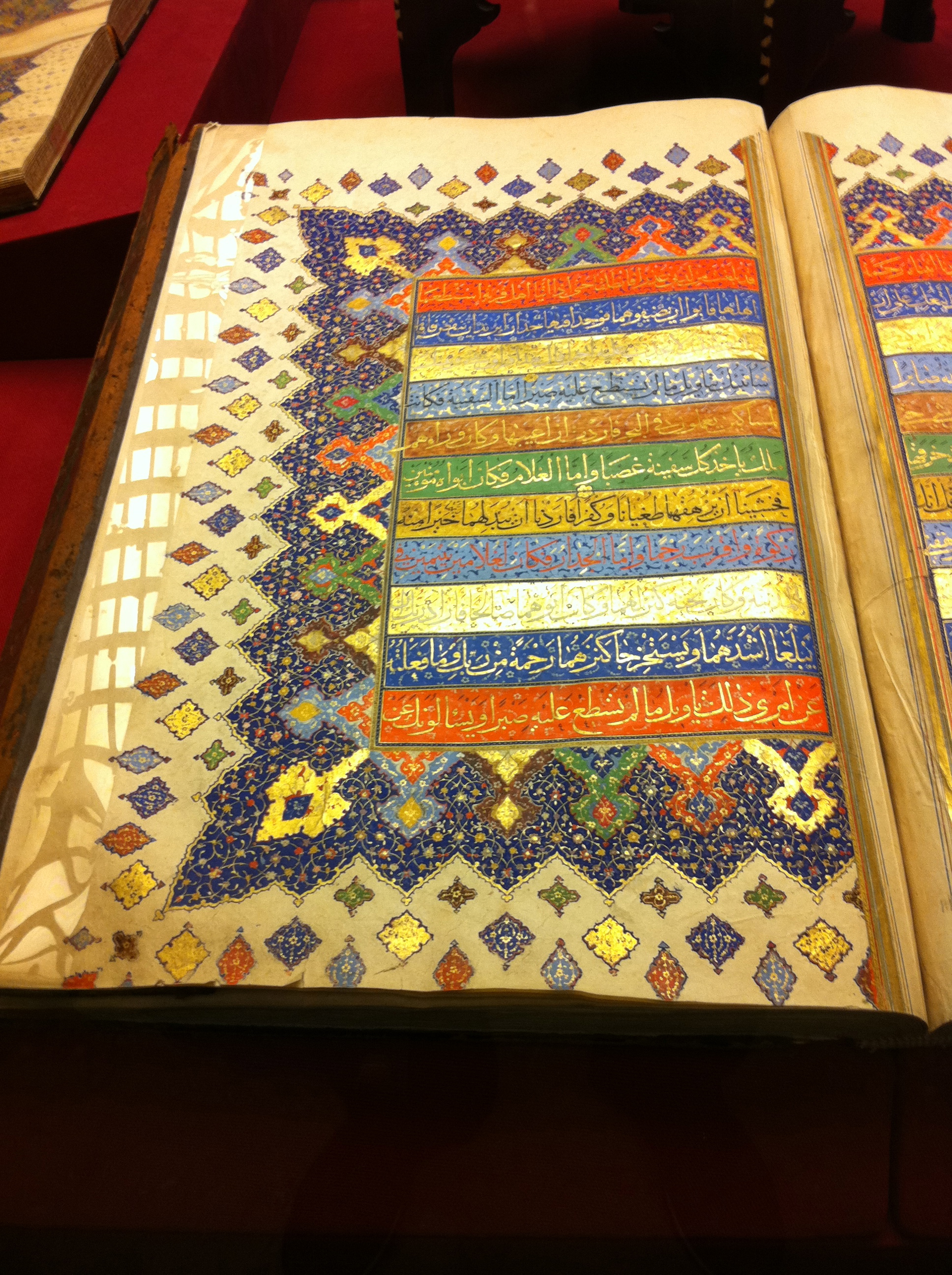
Our first walk was to the Islamic Art Museum. Since the Moslem religion does not allow depictions of faces, they have come up with beautiful patterns in their architecture and art. The calligraphy is beautiful also.

My hotel bill or a page from the Koran done in 1760


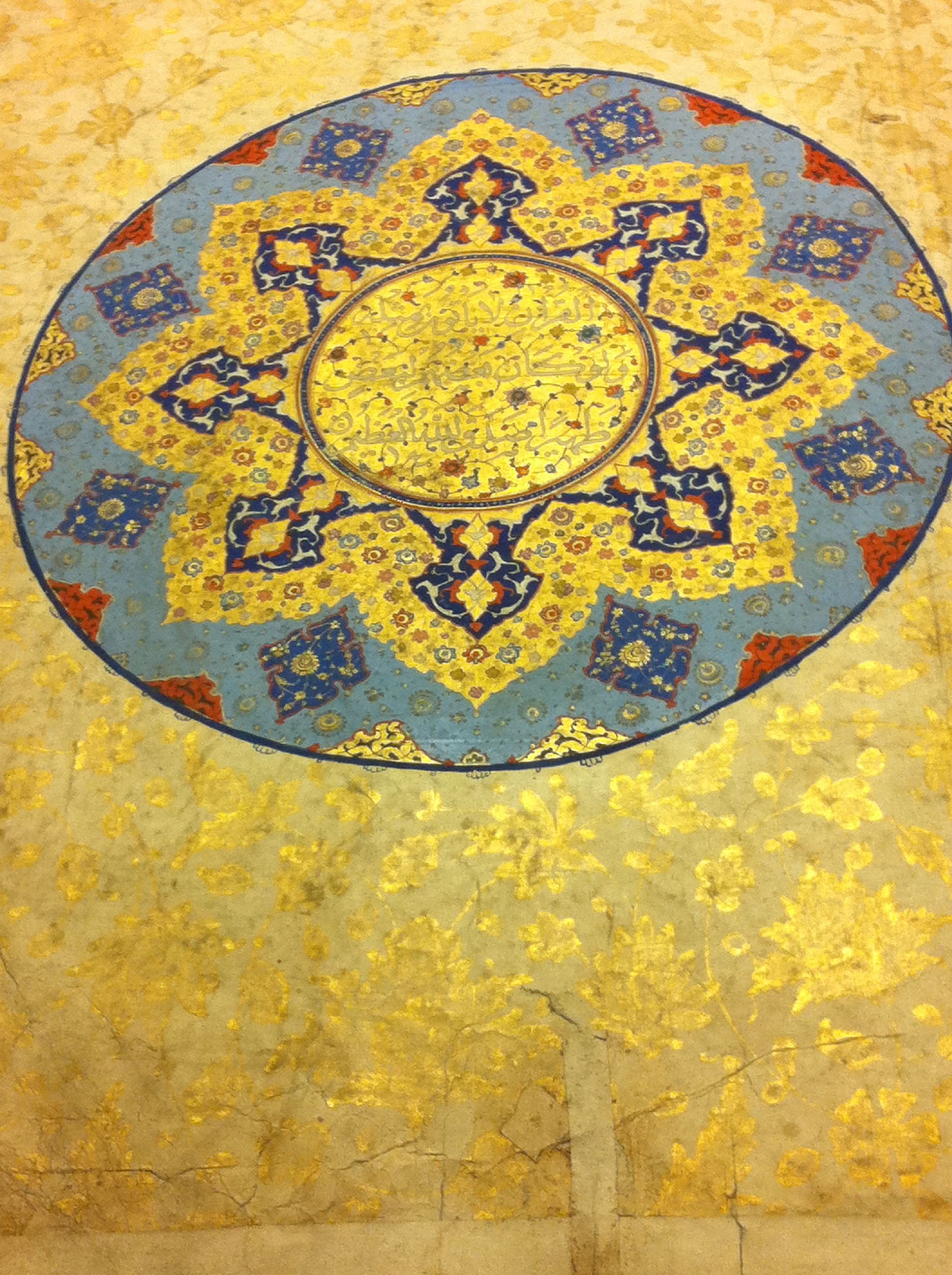
Koran from 1580 (left)

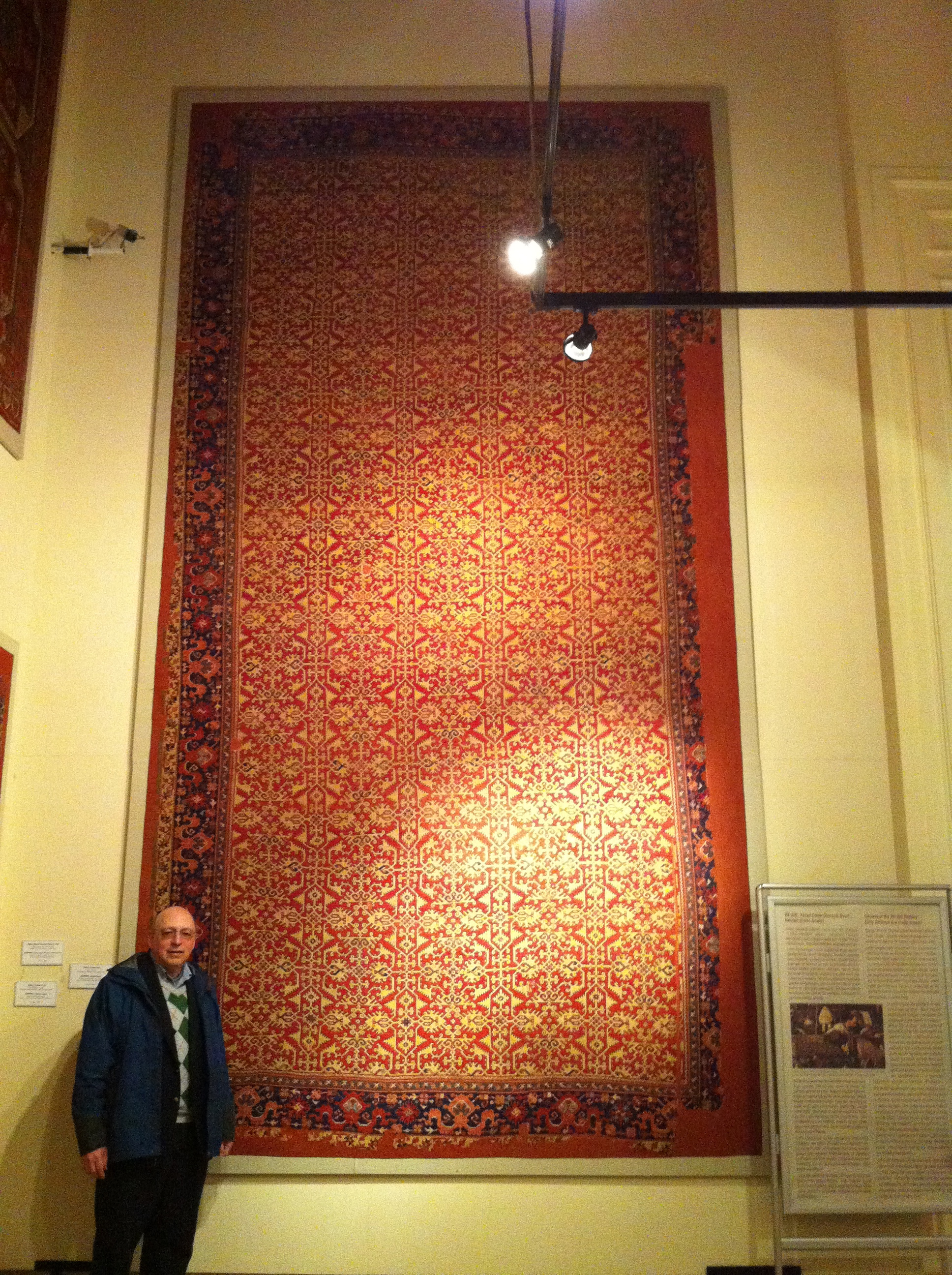
I spent a long time looking at one carpet, in the Lotto style. I had a long conversation in French with a guy from Quebec who was traveling all over the world. I got him to take the picture on the left, since Erdinc had left me to explore the museum on my own.


Loto carpet

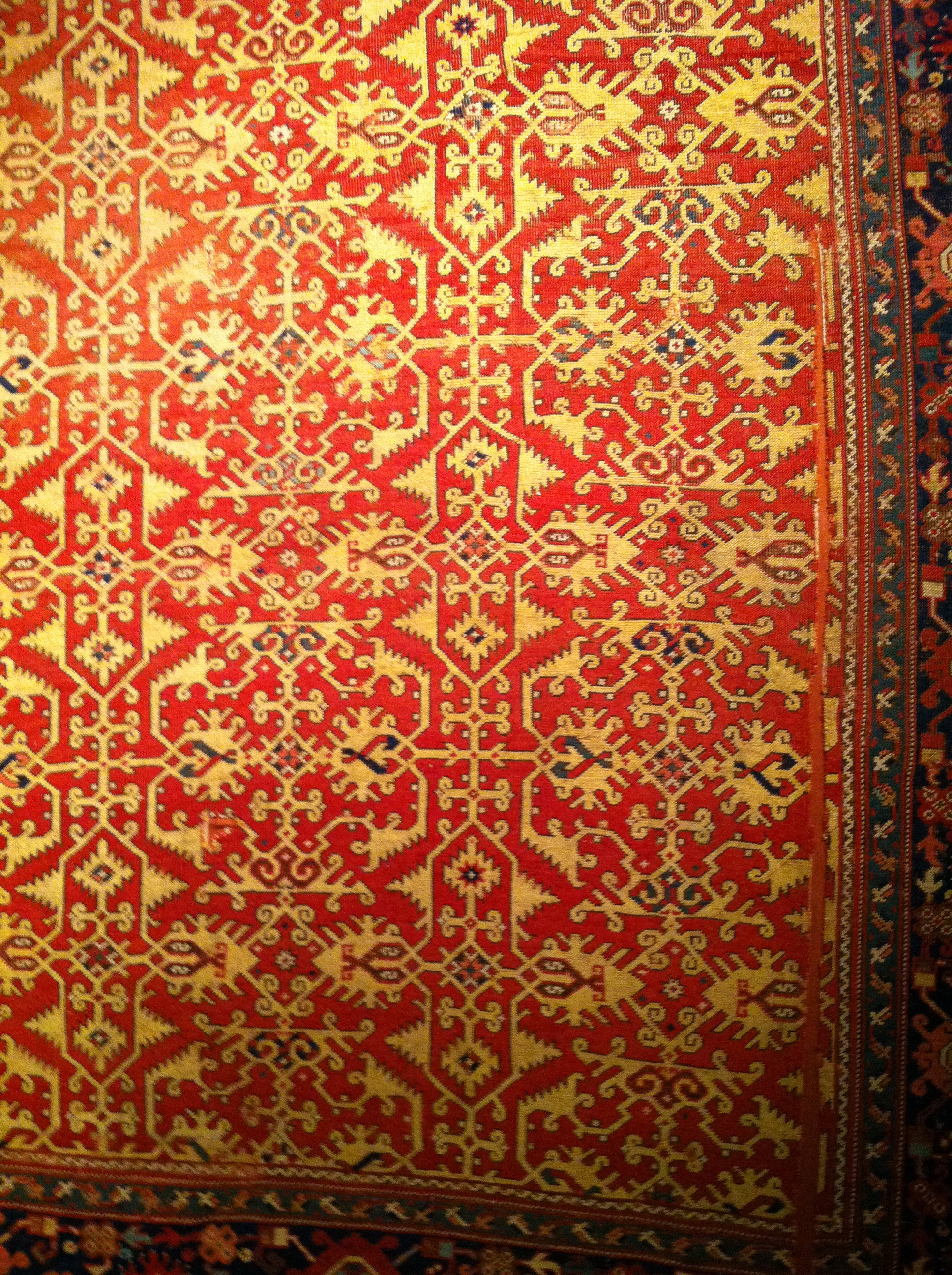
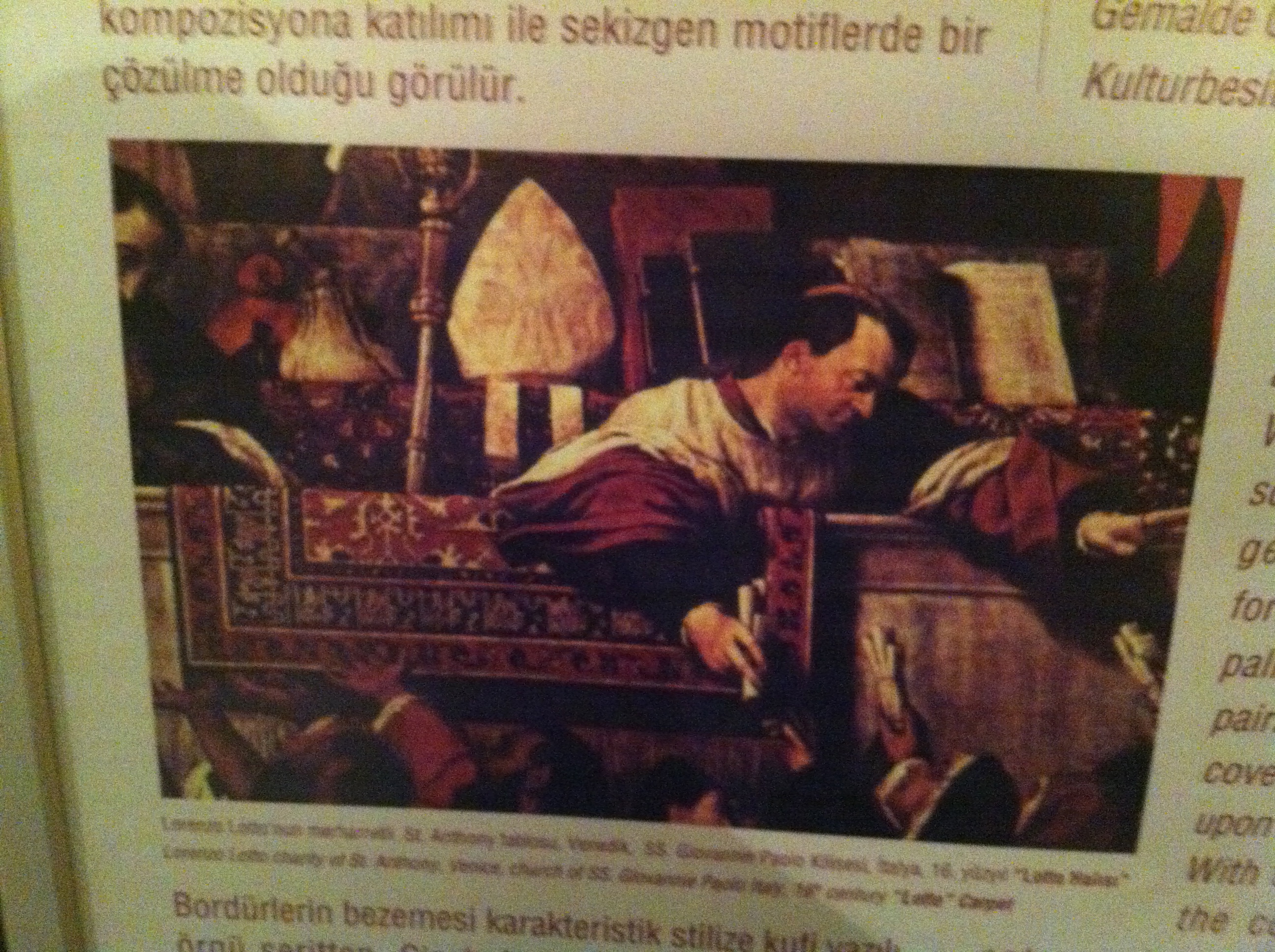
I’m going to desrcribe what’s going on in my terms then I’ll type up here the description from the museum. The whole carpet is divided into squares. In each square there are repeating octagons. If you put octagons together, you get holes between them so they put diamond shapes to fill those holes. They modified the pattern by putting plant shapes in straight lines to the point where it gets hard to see the original octagons. The same pattern is repeated many times.

In Lotto carpets, the surface is divided into small squares. Each square contains an octagon, and diamonds are placed in the spaces in between. While the octagon and diamond scheme is preserved, plant motifs are geometricized. The composition formed by connecting whole and half palmettes and symmetrically placed pairs of rumi leaves by thin branches covers the whole surface like a web, upon the principle of infinite repetition. With the addition of plant motifs to the composition, it is seen that octangonal motifs somewhat dissipate.”


Diamond in the bottom center separates octagons in a Lotto carpet. The octagons have been “geometrized” by abstract plant shapes.

The best way to appreciate museums for me  is to find something that attracts me and spend time with it, rather than try to get it all like I did with these carpets. Lotto carpets are named after the Italian artist Lorenzo Lotto (1480-1556). Here’s an example of a painting with a carpet in this style from Lodovico Carracci in 1590. The painting is called “Two Chess Players” and is located at the Gemalde Galerie in Berlin.

1590 painting with a Lotto carpet

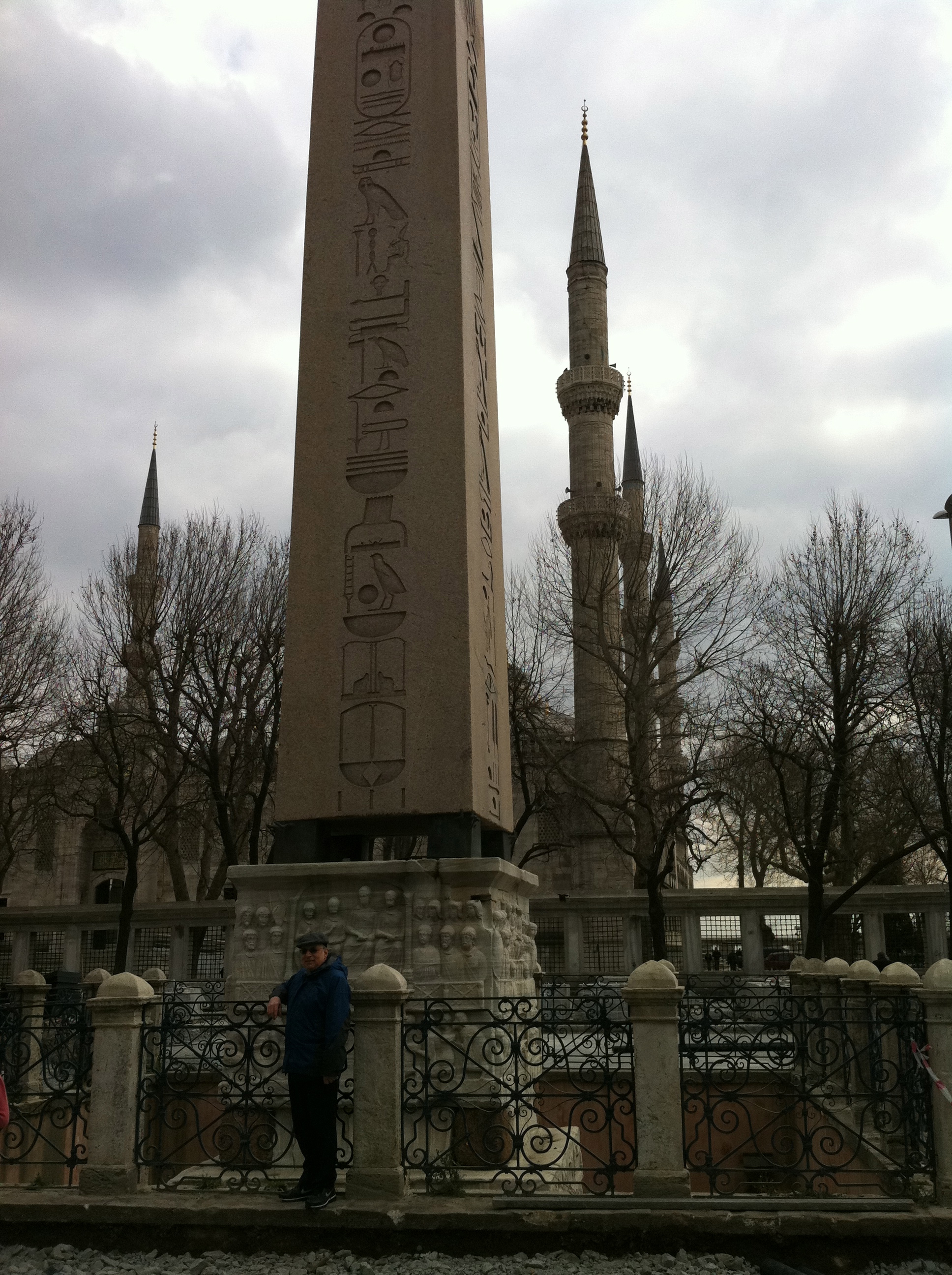
We then moved out to the cold and saw the Egyptian Obelisk in the hippodrome. I also saw the similar obelisk at the Place de la Concorde in Paris. There’s a third one somewhere. Here’s the info from Wikipedia. “The Obelisk of Theodosius is the Ancient Egyptian obelisk of Pharaoh Tutmoses III re-erected in the Hippodrome of Constantinople (in the modern city of Istanbul, Turkey) by the Roman emperor Theodosius I in the 4th century AD.”


Me in front of the Obelisk (left), and with the top not cut (uncircumcised?) in a picture from Wikipedia (right)


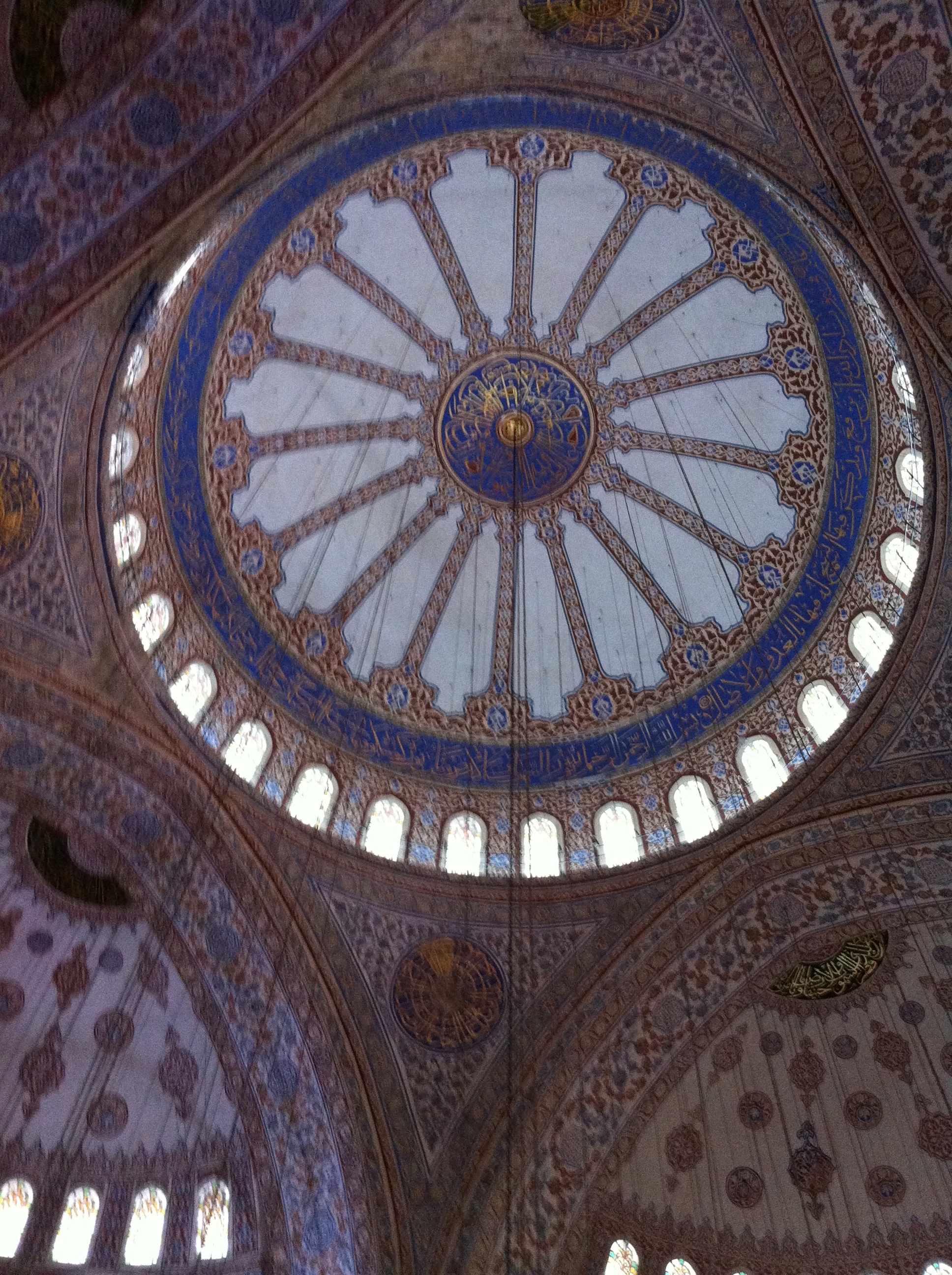
There’s little to say about the Blue Mosque, except that the pictures give no real sense of how beautiful it is. There’s a good reason why it’s called the blue mosque, you definitely feel the blue all around you.


Blue Mosque, picture from Wikipedia


The amazing Blue Mosque, nothing left to say

Erdinc then took me to a pottery studio where the artist below created a piece of pottery from scratch in just a few minutes.


Pottery demonstration

I’ve been taken to many places on this trip where the “opportunity” to buy things were clearly made available. When we moved into our house in 2002, we decorated the house and have had no interest in redecorating since then. My sister will often shuffle things around and she’s always buying new items. Neither Margaret or I really care enough about it to bother. We both feel our house looks fine.

Strangely enough though, I found a piece at this studio that really intrigued me. It was a tessellation of hexagons, with five evil eyes in each hexagon. It’s based on a Hittite design going back 4000 years and can be used as a wine carafe which is easy to clean (although I’m not sure I would ever actually put wine in it). The sun god is represented by the hole in the middle and maybe came around the time that the Hittite’s invented the wheel. It was made by the master potter of this studio. The evil eye apparently is very important in Turkish culture, not to cause evil to others but to protect us from evil.

Here’s the description that the company (İSTANBUL FIRÇA) sent me. I’ve edited it to correct spelling and grammatical errors.

“Dear Larry,

I just want to leave information about your Hittite wine carafe.

4000 years ago the Hittite civilization had lived in Anatolia. They worshipped many gods and the sun god was one of the most important. They created a wine carafe for dedicating their sun god. The pitcher consists of four parts. The center of the pitcher looks like the shape of the sun.

Our family design was created by our Great Grandmother. Basically it has tulips, carnations, and roses designed with evil eyes on quartz/ceramic pottery. But sometimes the artists use their special imagination like your tesselation style pitcher made by Mustafa Mersin.”

The piece of pottery I bought

It was ridiculously expensive — 3100 Turkish Lira plus 200 Lira for shipping ($1965+125). As you have figured out, I ended up buying it. Here’s how the bargaining went the next day (after I had time to think about it and run it by Margaret). Margaret felt I should go ahead if I really wanted to, it was hard for her to get excited about it after only seeing a picture.

Them — 3300 Lira ($2090), everything from here includes the $125 shipping

Them — 2600 TL ($1650)

After I thought about it, I thought I would be willing to pay 2100TL ($1330) so I offered 1600TL ($1015) with the idea that the midpoint of 1600 and 2600 is 2100.

After I offered 1600, he went on a long description of how wonderful the piece was and what a good deal 2600 was.

Here was where I did the one smart part of my bargaining. I worked at a computer store in the early 1980’s when we were the only ones to have the rights to sell the first IBM PC. It was the only computer that used MS-DOS rather than Apple’s OS or the now ancient CP/M. I went to a 2-day sales training session and one thing I learned then that is so important in sales and in teaching is to know when to shut up. In sales, when you ask someone if they want to buy something, you really should take the uncomfortable silence and wait for their answer. If you start talking, they will often feel off the hook and say no. I also believe that it’s easy in teaching to talk for a full class period. It’s much harder and usually much more effective to create a learning situation where you shut up and have students working and / or thinking.

Back to my negotiations, he was hoping I would go up from 1600 before he went down from 2600. My silence got him to counteroffer 2300 ($1460). He went down 300 (from 2600 to 2300) so I matched him and went with 1900 ($1205), up an equivalent 300 from 1600.

He went down only 50 to 2250 ($1425) and I made the mistake of going up 200 instead of matching his 50. I had just offered my final goal of 2100 ($1330) too early in the process. He maybe felt sorry for me and went down 100 to 2150 ($1365). I split the difference and thought we had a deal at 2125 ($1345). Just to make his superiority known, he offered 2128 ($1350) and we shook hands.

When I mentioned what I paid to Erdinc, he said 2000 is a good deal, which is less than what I paid. Possibly I could have offered 100 TL and gotten it for half the price I paid, who knows. I do know that I’m not good at negotiating and don’t enjoy it. My father was an amazing expert at it and considered it one of his favorite sports. Our family lore includes a story that he was having so much fun negotiating in Egypt in the 1950’s that he barely made the boat by seconds.

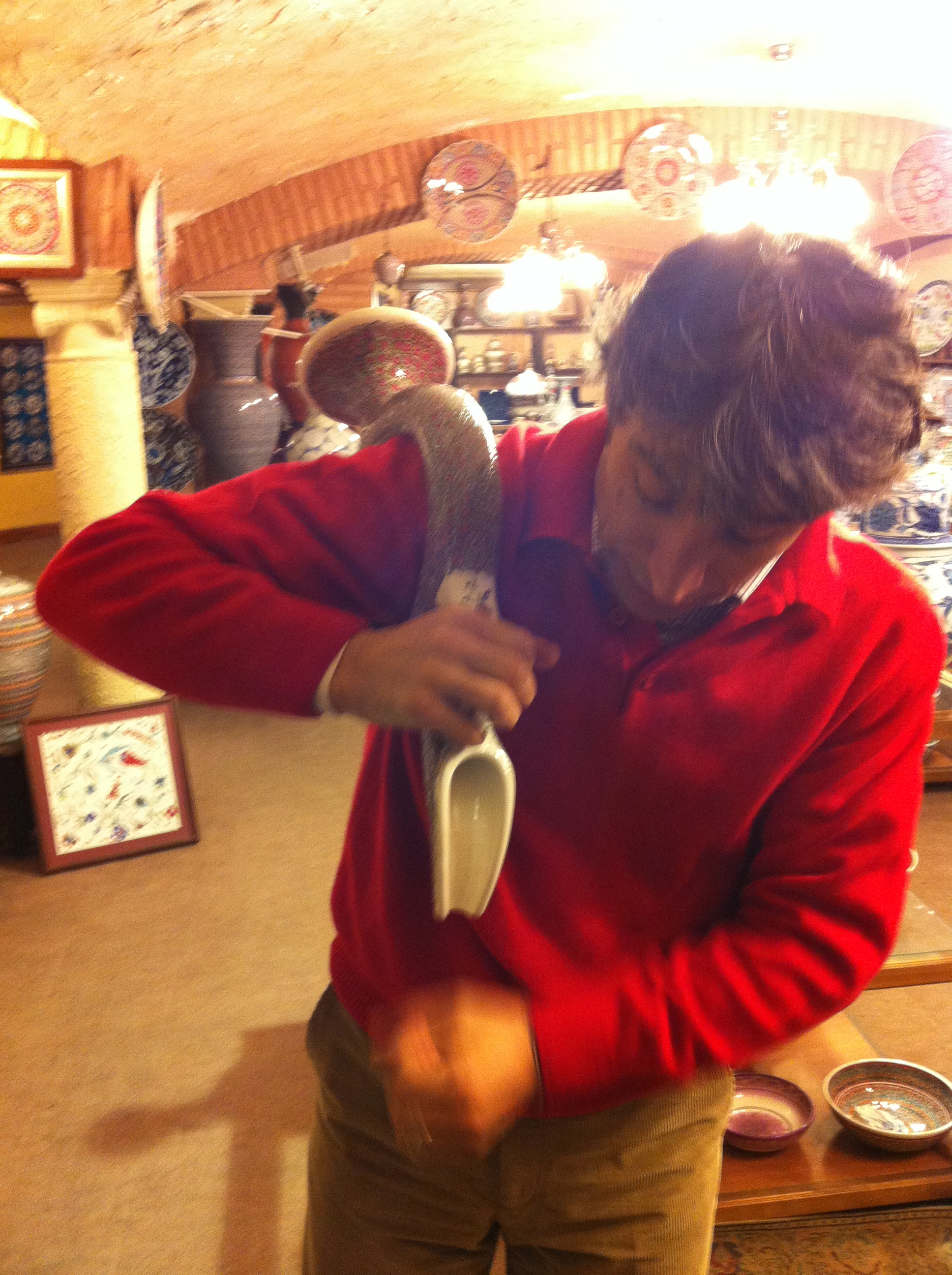
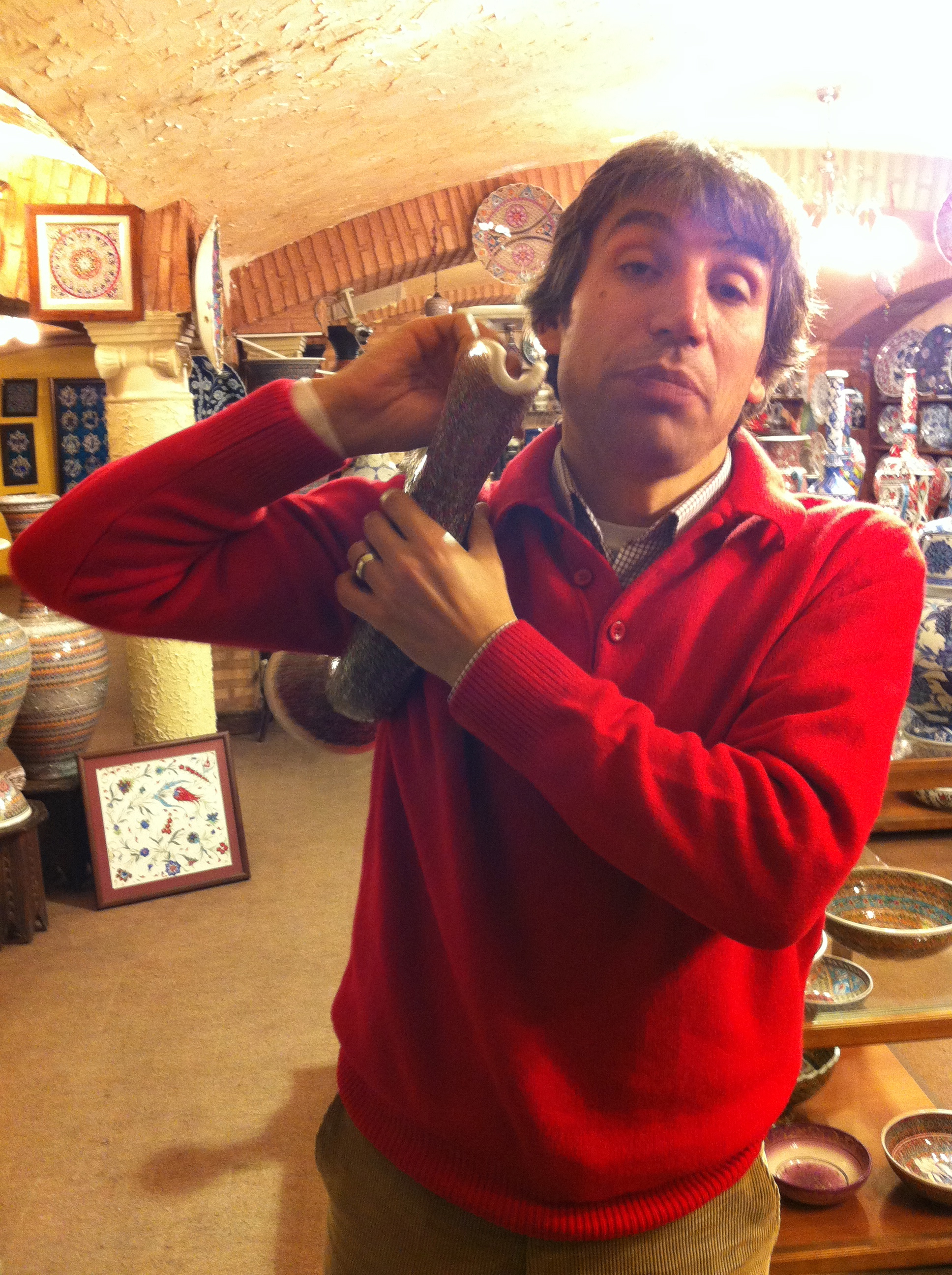
My $1350 piece of pottery in action. Hopefully the evil eyes will keep me from buying too much stuff in the future.

Even after the trauma of negotiating and spending that much money, I’m glad to have done it. It’s the only real piece I bought the whole trip and I do love the tessellations, the evil eyes, the sun god theme, and the wine carafe. It will be an excellent memory.

The Topkapi Palace took a while to go through. All the stories you imagine about a sultan’s palace with his harem and large indoor baths were real here.


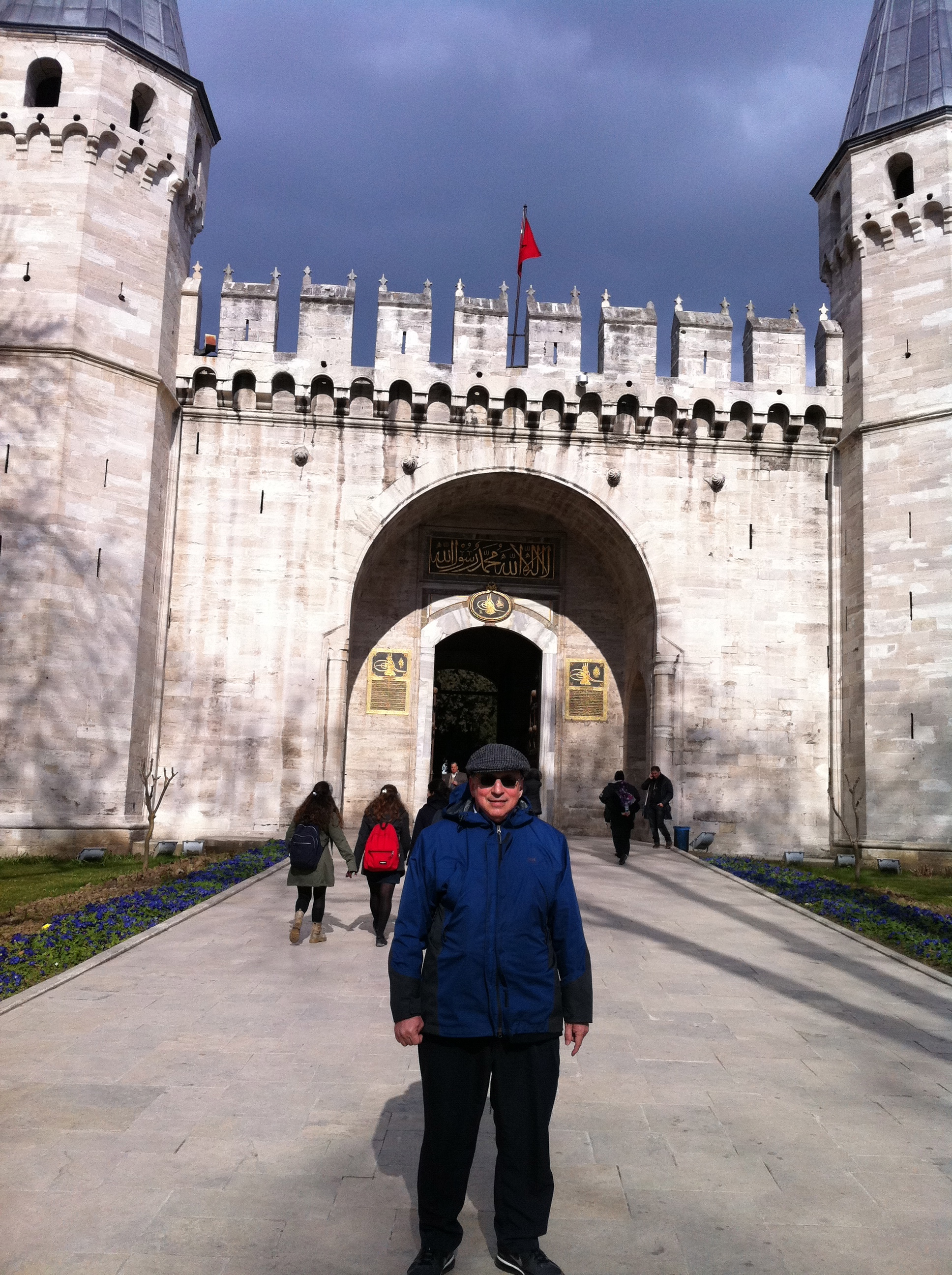
Gate of Topkapi Palace with logo of sultans (left), model of the Palace (right)


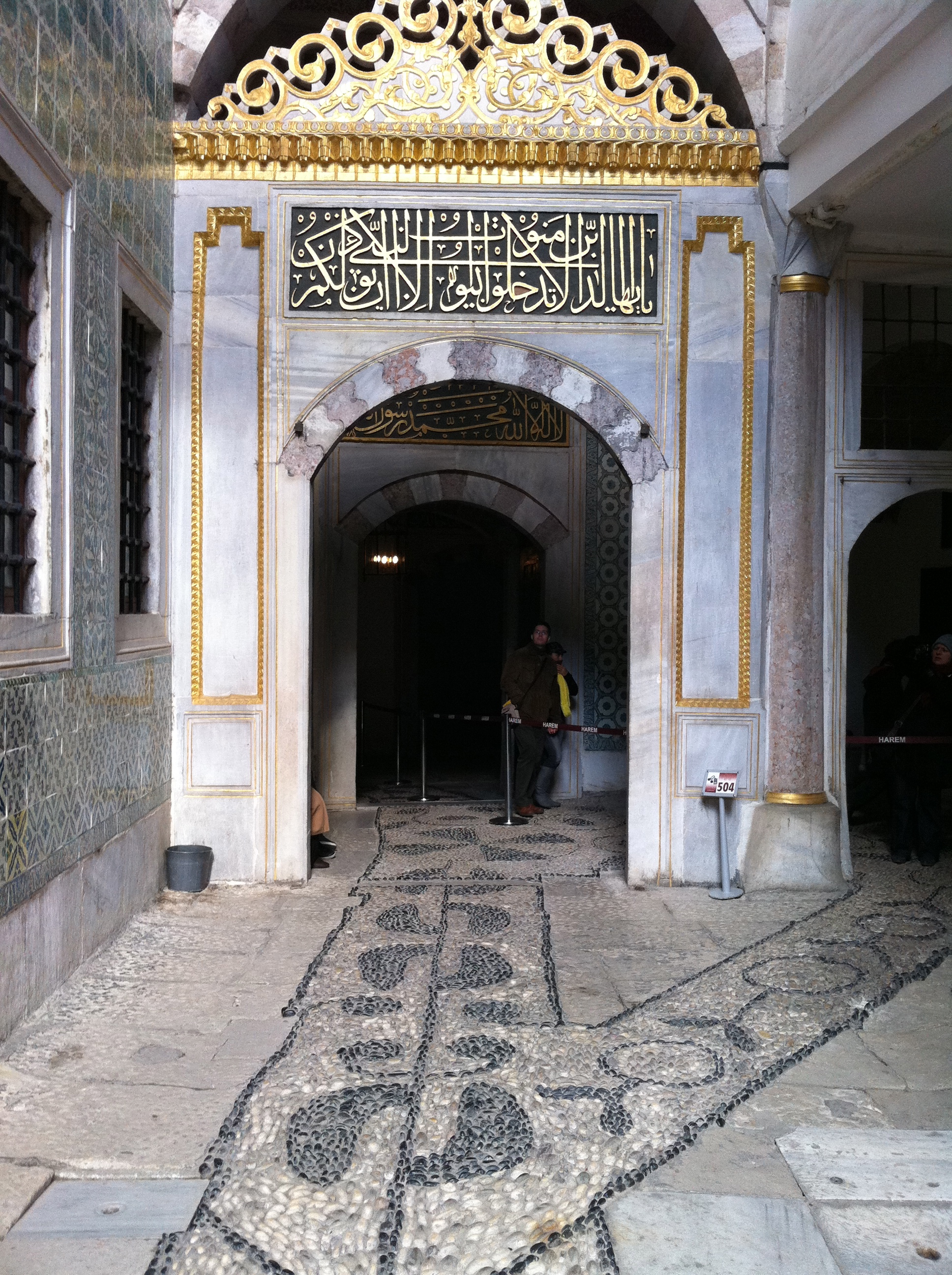
Entrance to the Harem, in case you know any women (or Eunuchs) looking for a job


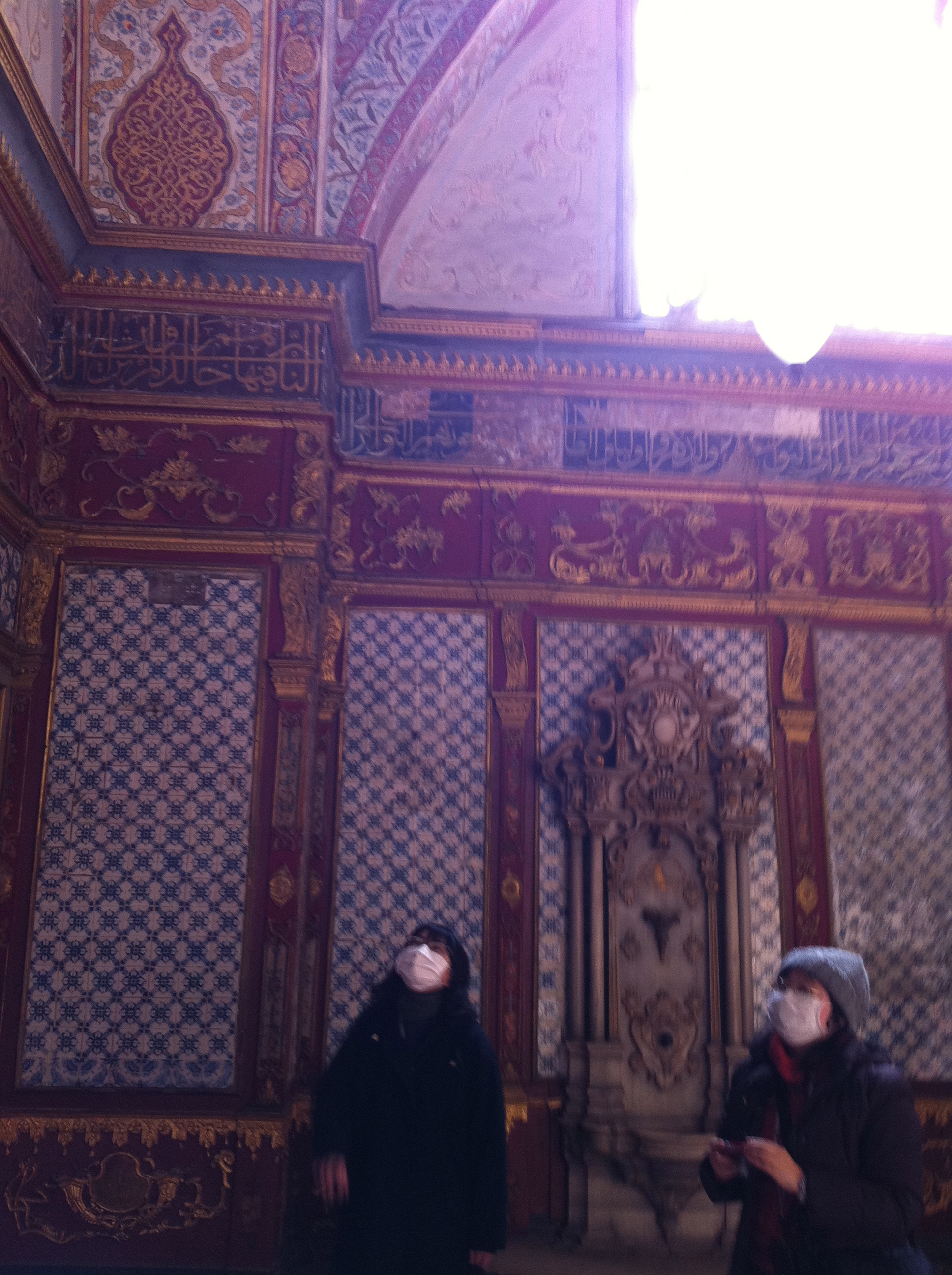
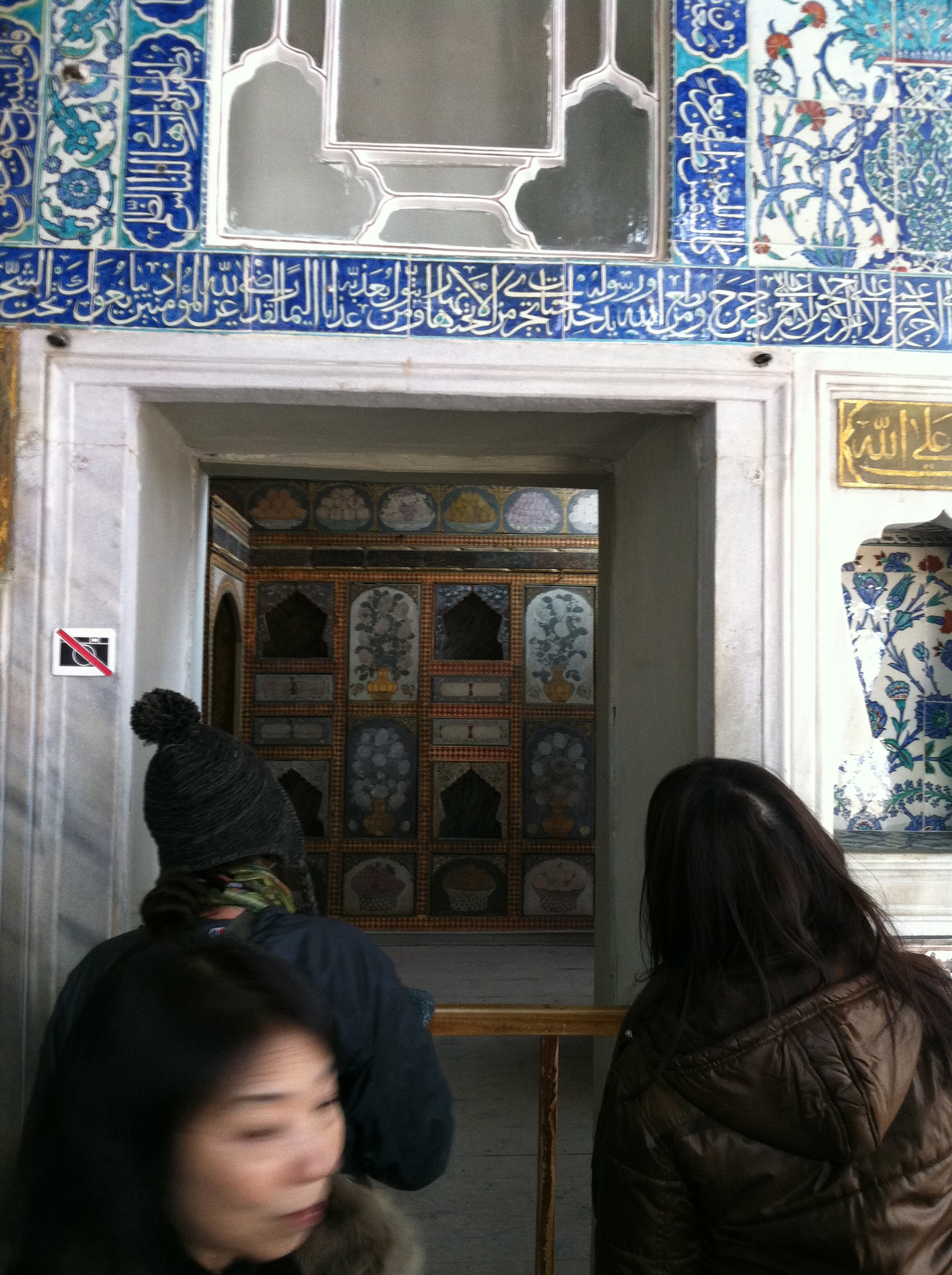
Scenes from inside the Topkapi Palace

Views of the Bosphorus from the Topkapi Palace

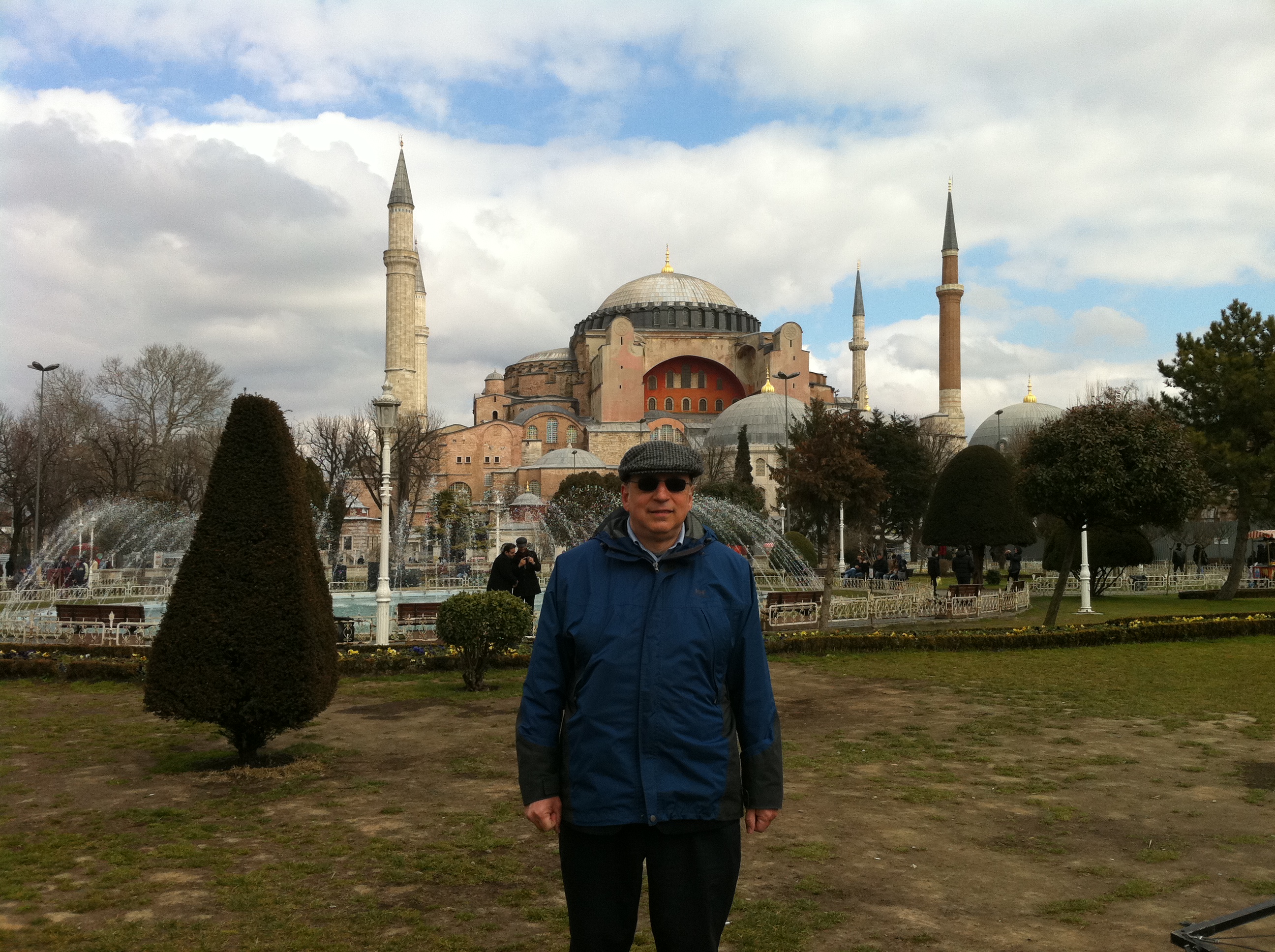
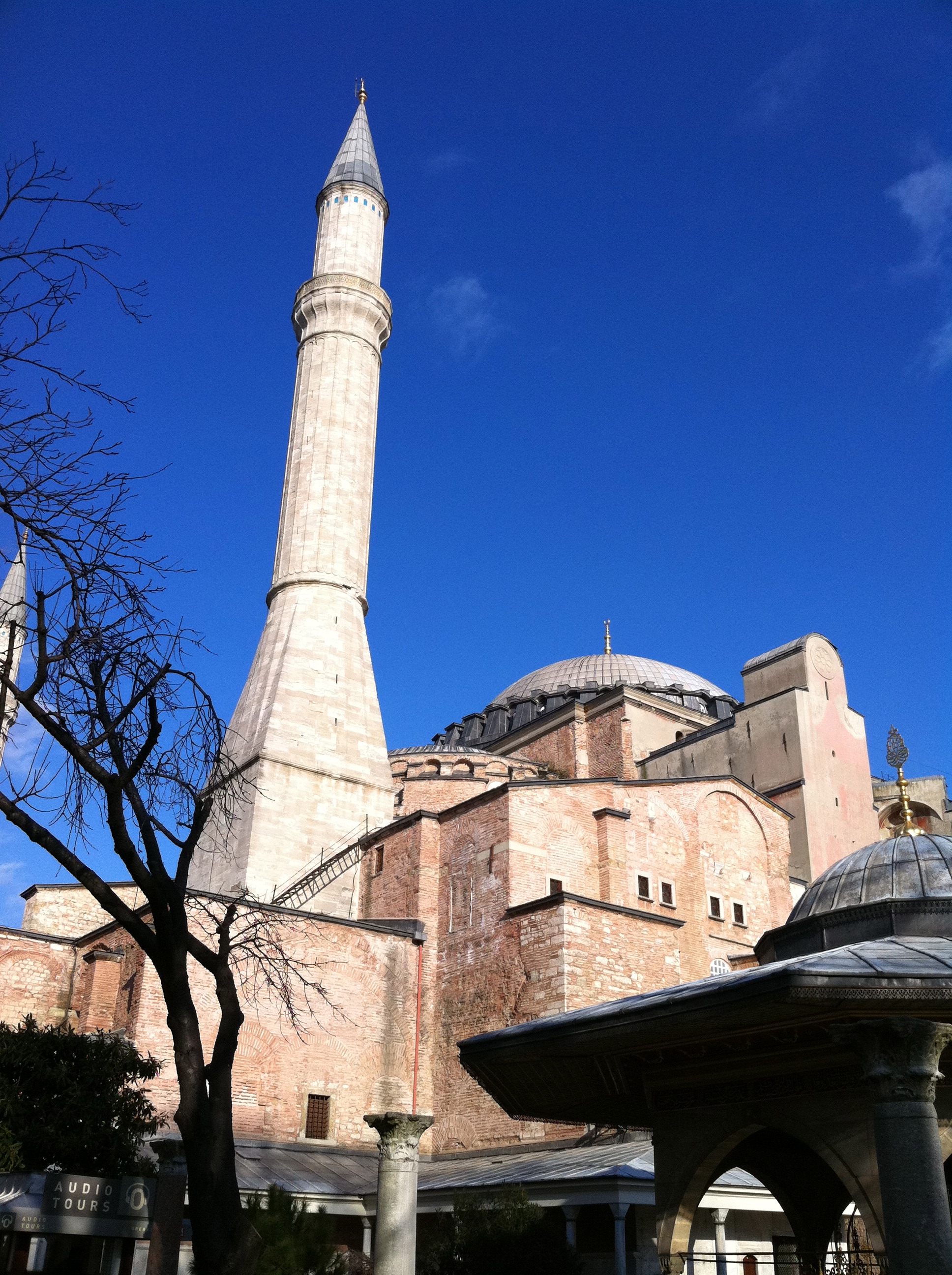
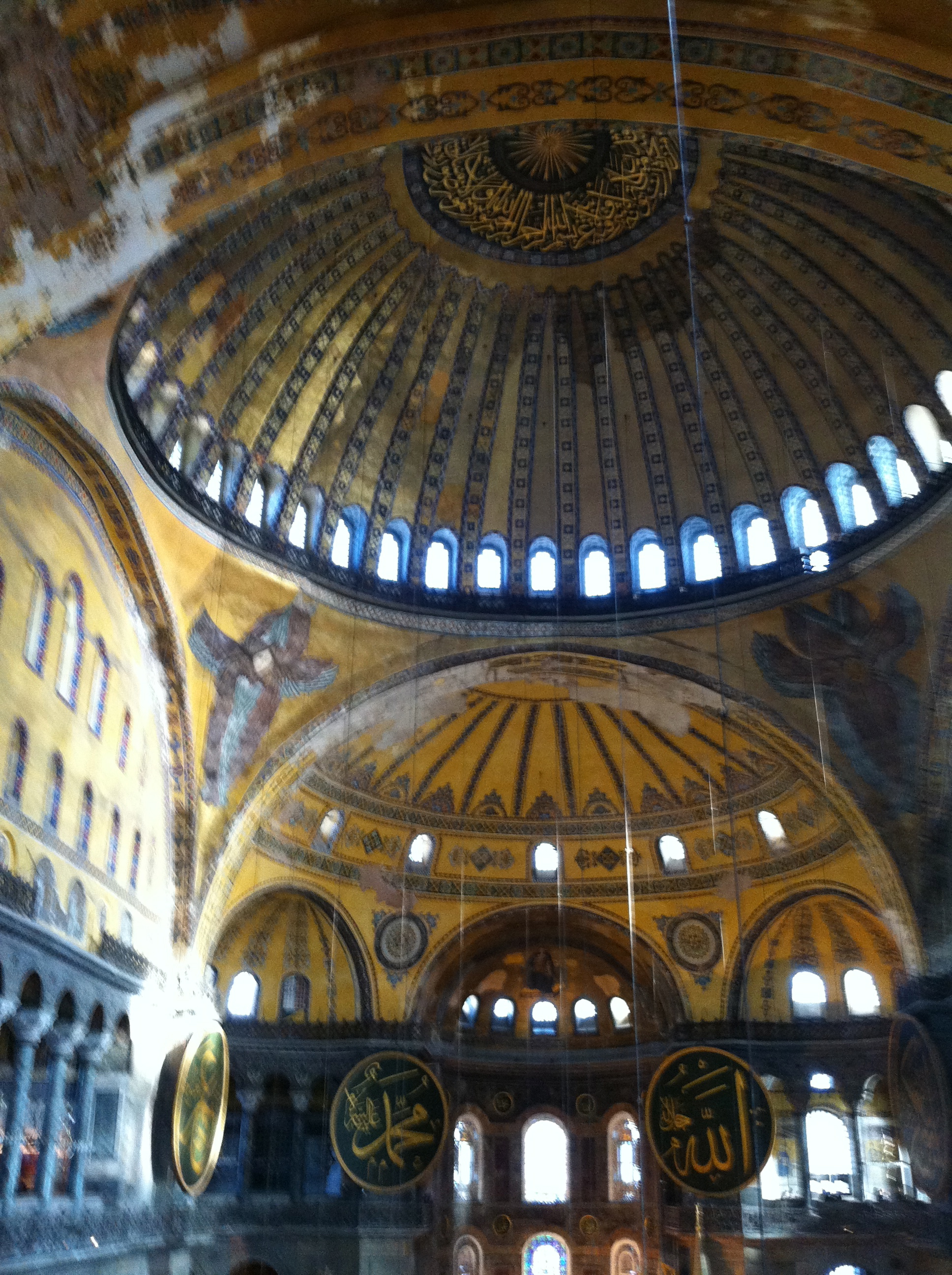
Next was the Hagia Sofia or St. Sophia, probably the best known monument in Istanbul and even more famous than the Blue Mosque. It was a church and headquarters of the Orthodox church 360 until 1453 (except for a brief time when it was a Catholic church during the Crusades). Then from 1453 to 1931 it was a mosque. After Turkey became a secular state, they turned it into the museum it is now. It was a bizarre feeling to see Christian icons from over a thousand years ago, rediscovered fairly recently, in what looks very much like a mosque.

According to Wikipedia, it is considered the epitome of Byzantine architecture and is said to have “changed the history of architecture.” It was the largest cathedral in the world for nearly a thousand years, until Seville Cathedral was completed in 1520.
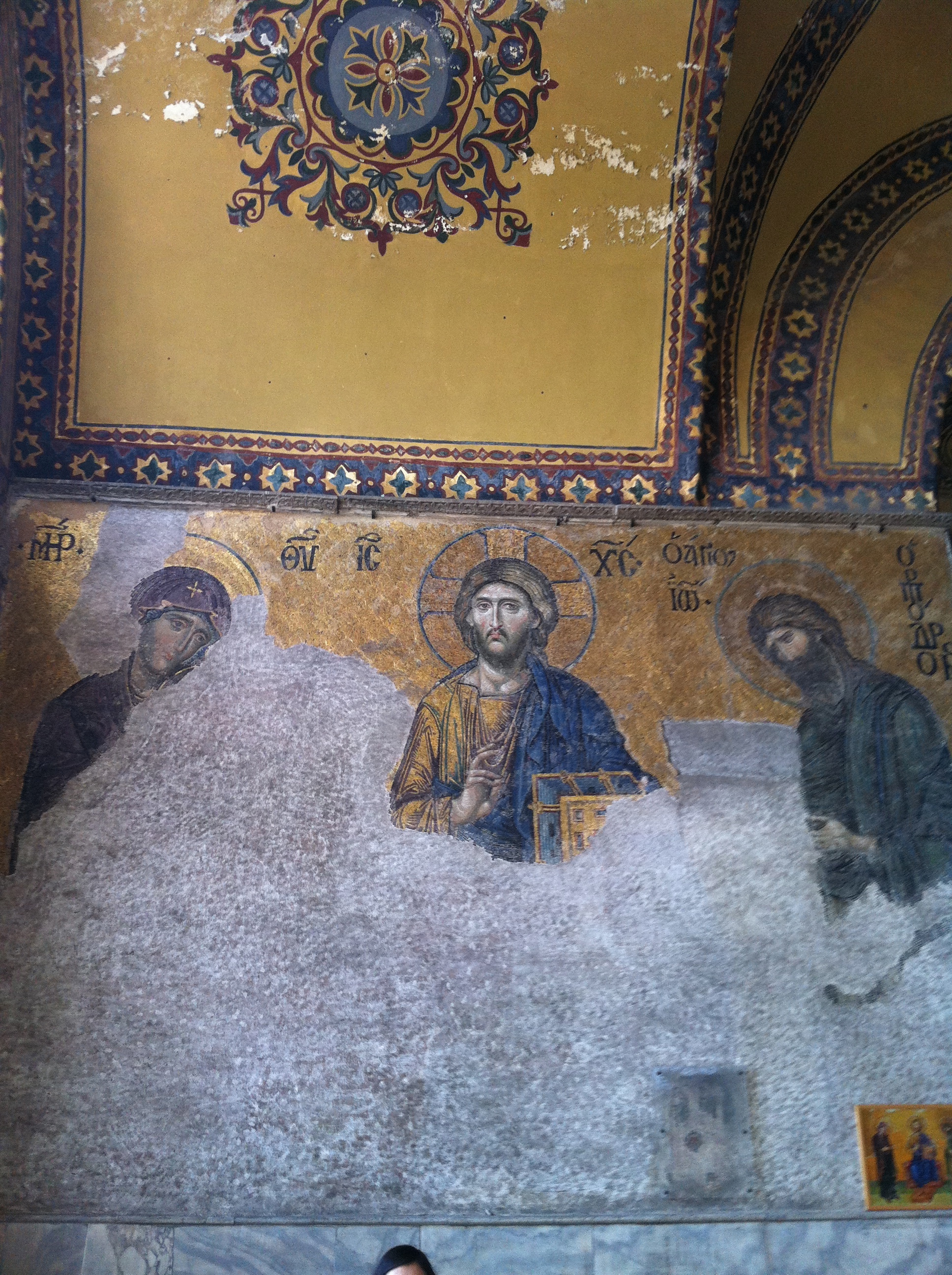
I’m glad I don’t have to make this decision. “Because of its long history as both a church and a mosque, a particular challenge arises in the restoration process. The Christian iconographic mosaics are being gradually uncovered. However, in order to do so, important historic Islamic art would have to be destroyed. Restorers have attempted to maintain a balance between both Christian and Islamic cultures. In particular, much controversy rests upon whether the Islamic calligraphy on the dome of the cathedral should be removed, in order to permit the underlying Pantocrator mosaic of Christ as Master of the World, to be exhibited (assuming the mosaic still exists).” (Wikipedia)


The Hagia Sophia from the outside


Hagia Sophia from the inside, the dome is 56.6 meters (186 feet) high and has a diameter of 31.87 meters (105 feet). Would it be a good place for ice hockey?

The lights almost look like water lilies from the upper gallery

Stunning ancient Christian icons

One of the Seraphin from the Hagia Sofia discovered 6 months ago, representing one of the 4 evangelists (either Matthew, Mark, Luke, or John)

This was really almost too much to see in one day. It was fun walking through the streets of Istanbul, even though it was relatively cold. I would have liked my winter jacket but I had plenty of layers.


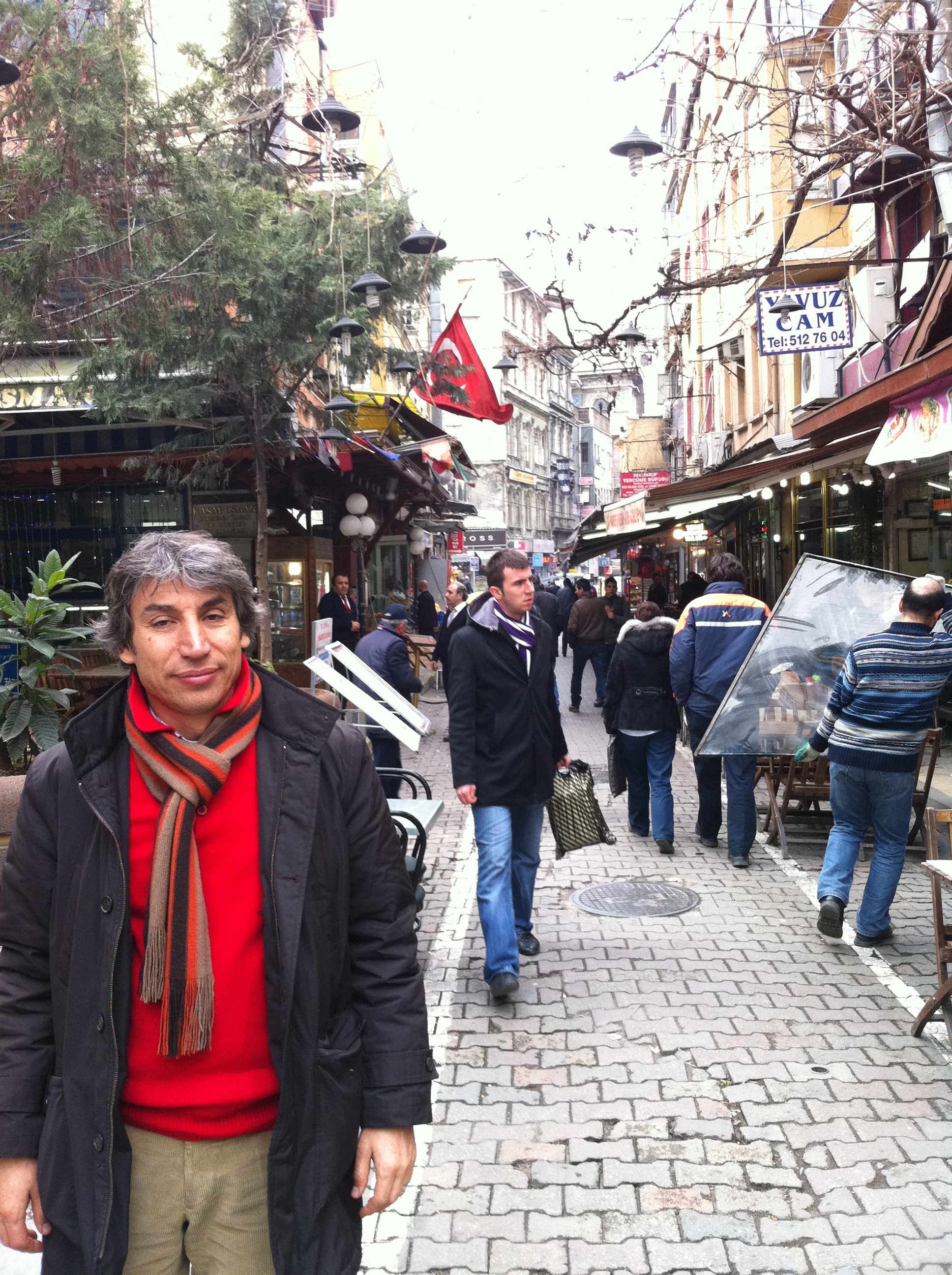
My guide, Erdinc, and an Istanbul street scene


Day 24 Feb. 19 I Love Cyprus and Will I Be Different?

Leave a comment

I don’t even remember what made me suddenly think today whether I’ll be a fundamentally different person when I return from this trip. The human mind is amazing in the way it jumps from thought to thought with sometimes no rational link between the thoughts. Maybe there is a link but it all happens so quickly that we don’t have time to figure it out. Maybe most people don’t care, maybe you don’t care while reading this and are hoping I’ll just get on with it.

As I was saying, will I be fundamentally different when I return from this trip? If you remove the word “fundamentally” the answer is obviously yes. We change in tiny increments every moment. I think I’m close to thinking through some answers to “who am I?” Israel really helped out by giving me some experiences related to my half-Jewishness. The sense of alienation I’ve felt all my life has come clearer to me. What it means in my life and whether I should do something about it have not come yet. I’ve seen a great deal of varieties in how to live that I hadn’t seen before. I don’t know the answer to the question yet. I still have another 4-week trip to Korea, India, and China coming up.

I love Cyprus. As I said before, it seems to be just a fundamentally healthy country. It’s filled with wonderful history, it’s a fascinating mix of Greek and English culture, and it has great weather and beaches. Its biggest problem is the complex problem of the Turkish controlled north and the independent Greek-speaking independent country in the south. Some complain about the many wealthy Russian immigrants who have brought some wealth to the country but have maybe had the stronger negative impact of increasing prices.

I hadn’t planned to come back here but after almost changing my plans, I checked and found out that if I’m not on the flight tomorrow from Cyprus to Athens, they will cancel my whole trip home. I really do want to go home. It was not a hardship for me to go back to Cyprus though. I only had this one day but it was a wonderful day.

George’s brother-in-law Christos picked me up at the airport last night and again at 10:30 AM today to go on a sightseeing trip. Although I have so much to see in Cyprus, the most obvious glaring hole from what I missed on my previous visit was the city of Paphos.

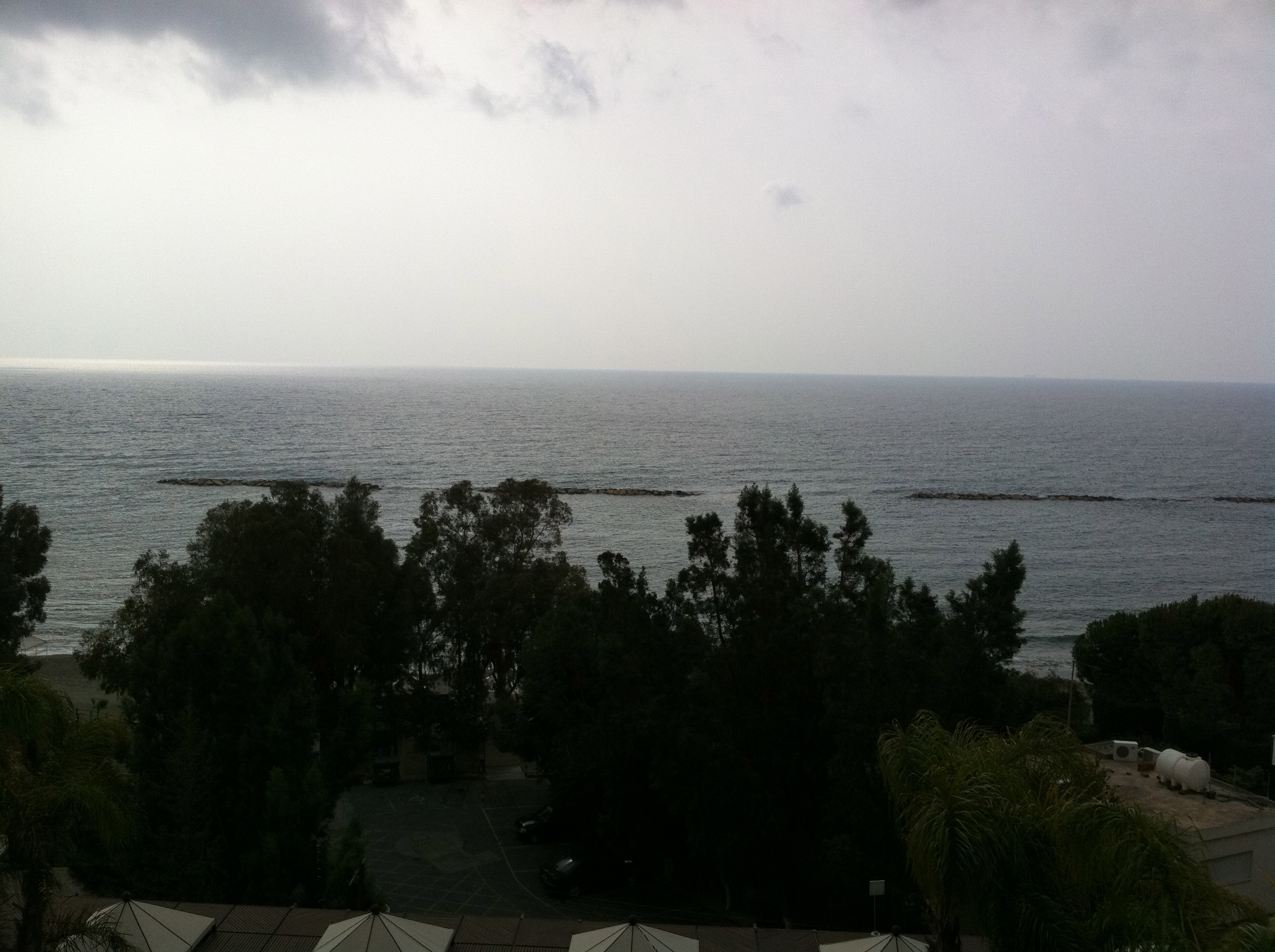
Looking out at the Mediterranean from my hotel balcony.

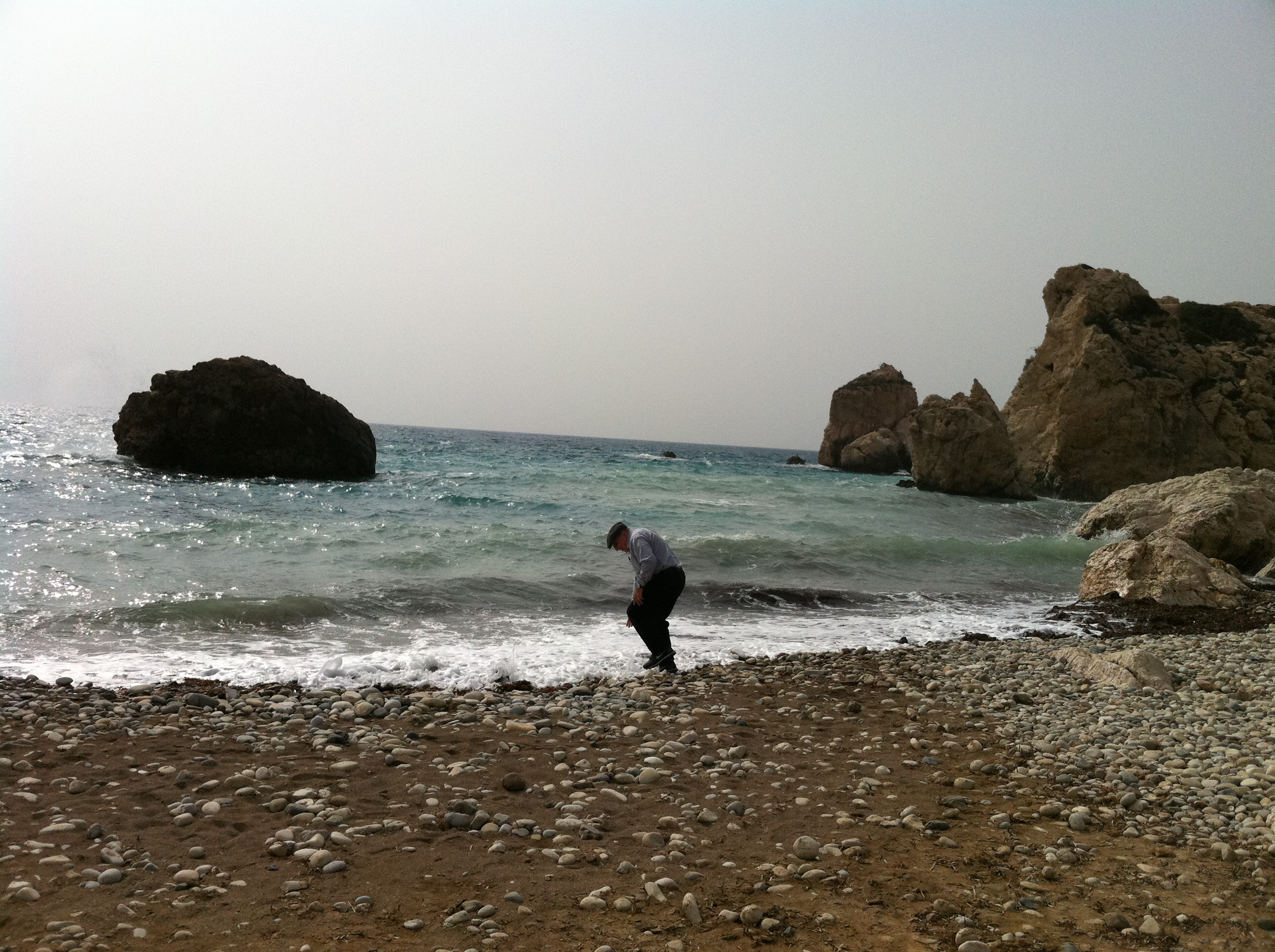
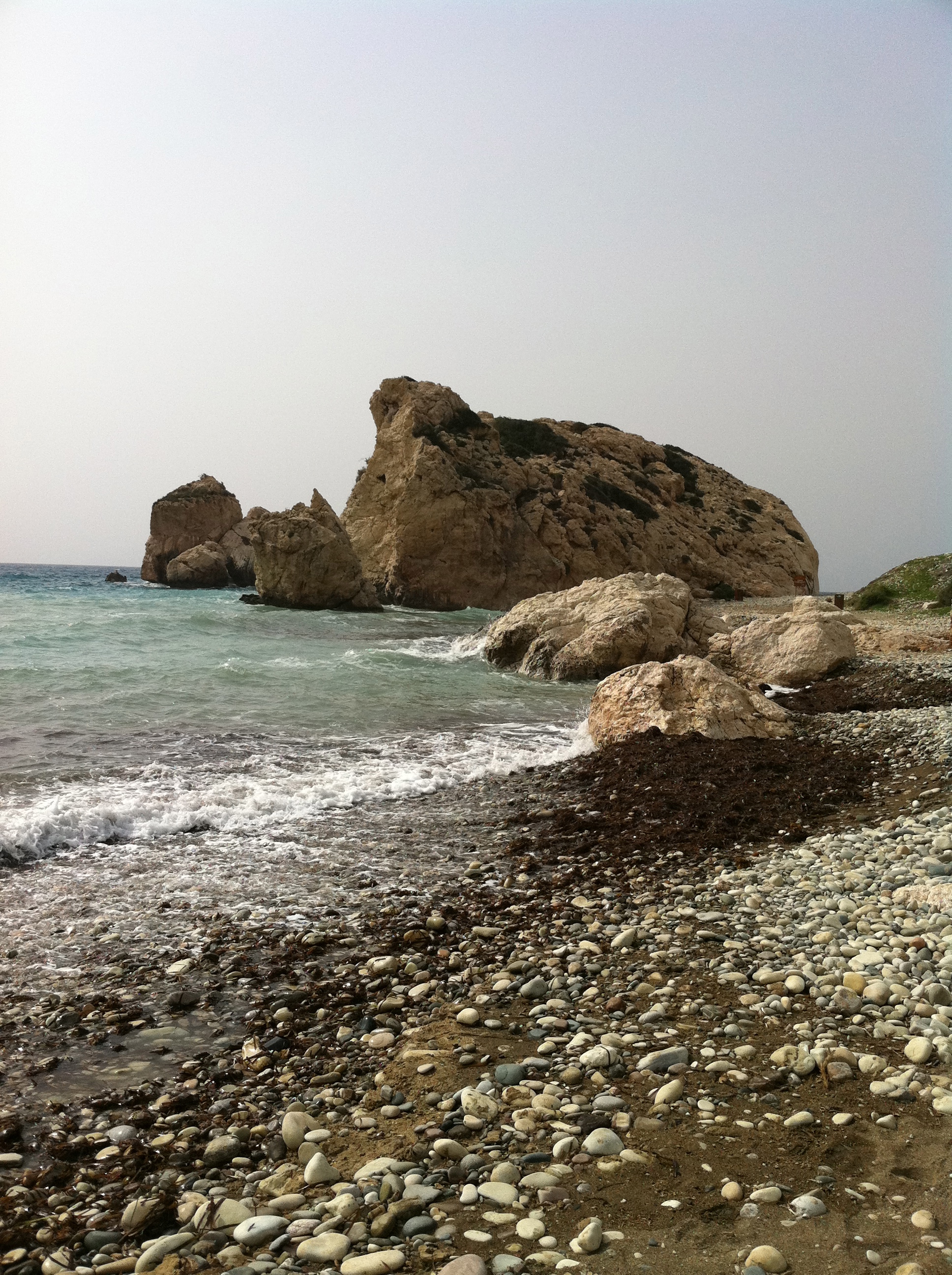
Our first stop was a return visit for me to the rock that is reputed to be the birthplace of Aphrodite (Petra Tou Romiou). Last time it was dusk and I fell at the water’s edge. I attributed it to my hidden desire to meet Aphrodite. Now I’m sure Aphrodite and I have something going on. I didn’t fall this time but I did fail to get out of the way from a wave and got my shoes soaked.

My second encounter with Aphrodite

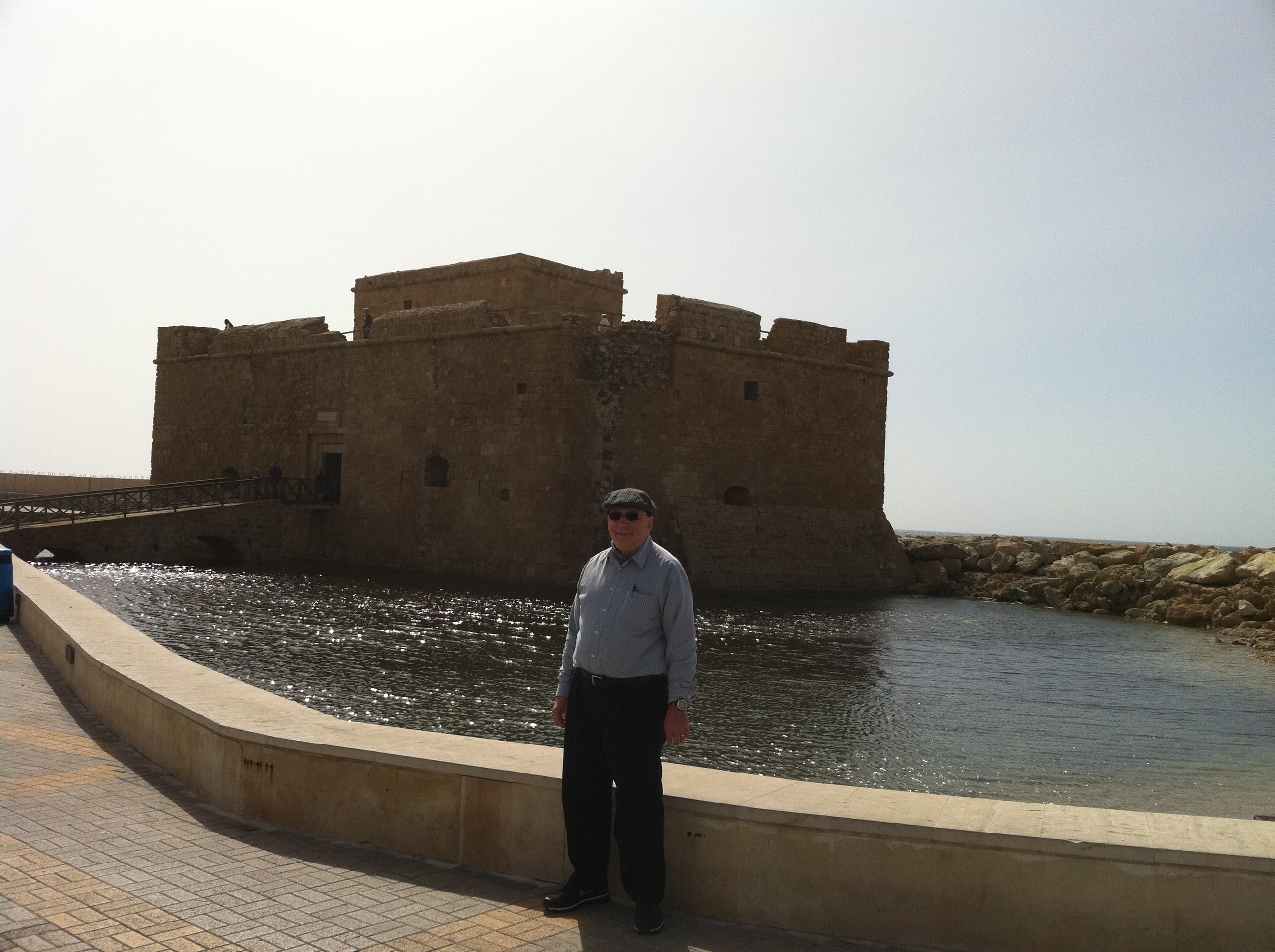
We headed to Paphos and saw some wonderful sites. Parts of the Paphos Castle go back to the Crusaders in 1222.

My taxi driver / tour guide / new friend Christos. His son is studying flute at IUP.

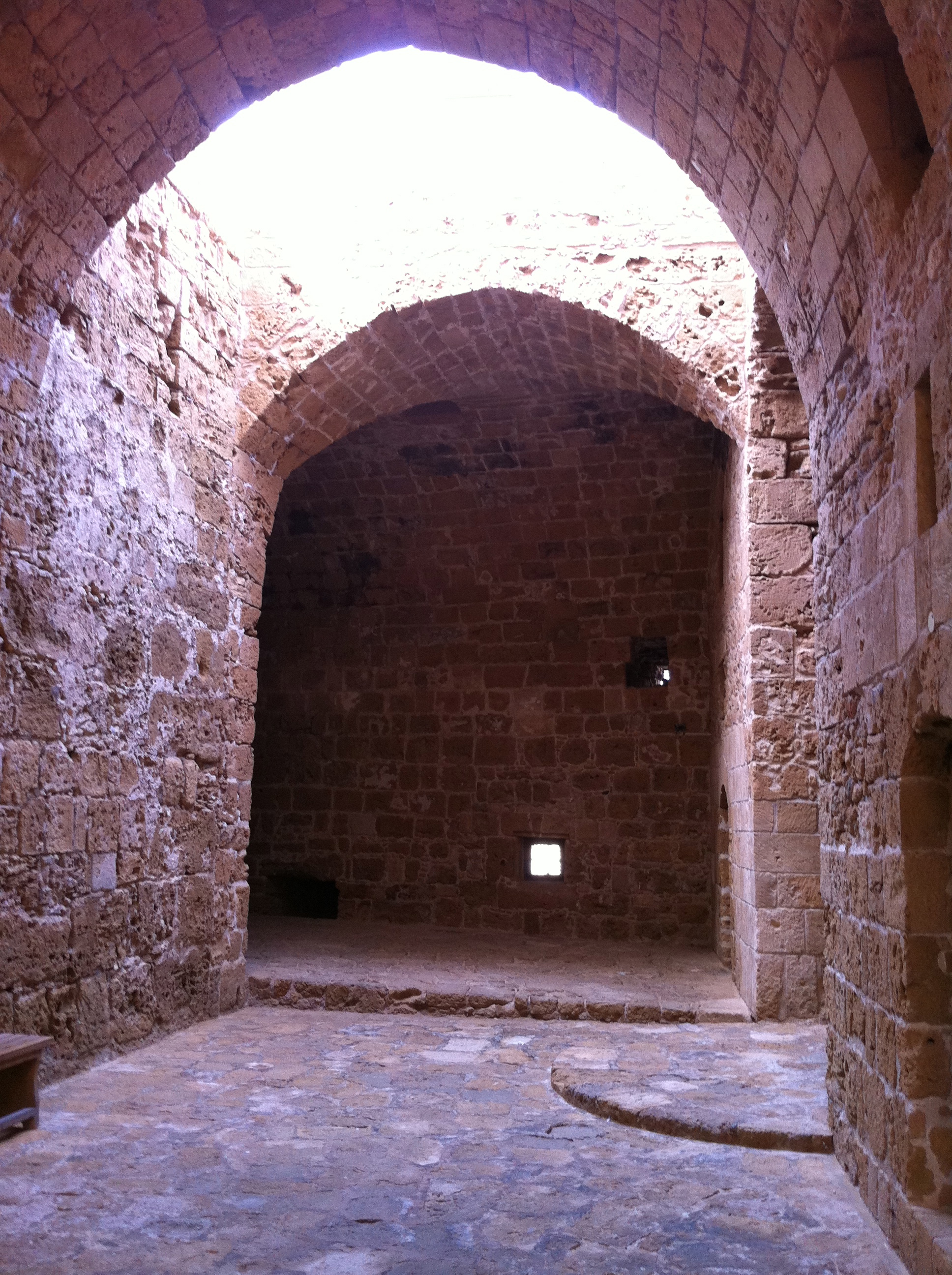
They had areas in the Paphos castle called oubliettes (from the French word for “to forget”) for long-term prisoners. Make sure you don’t bring any liquids through airport security or you could end up in one of these.


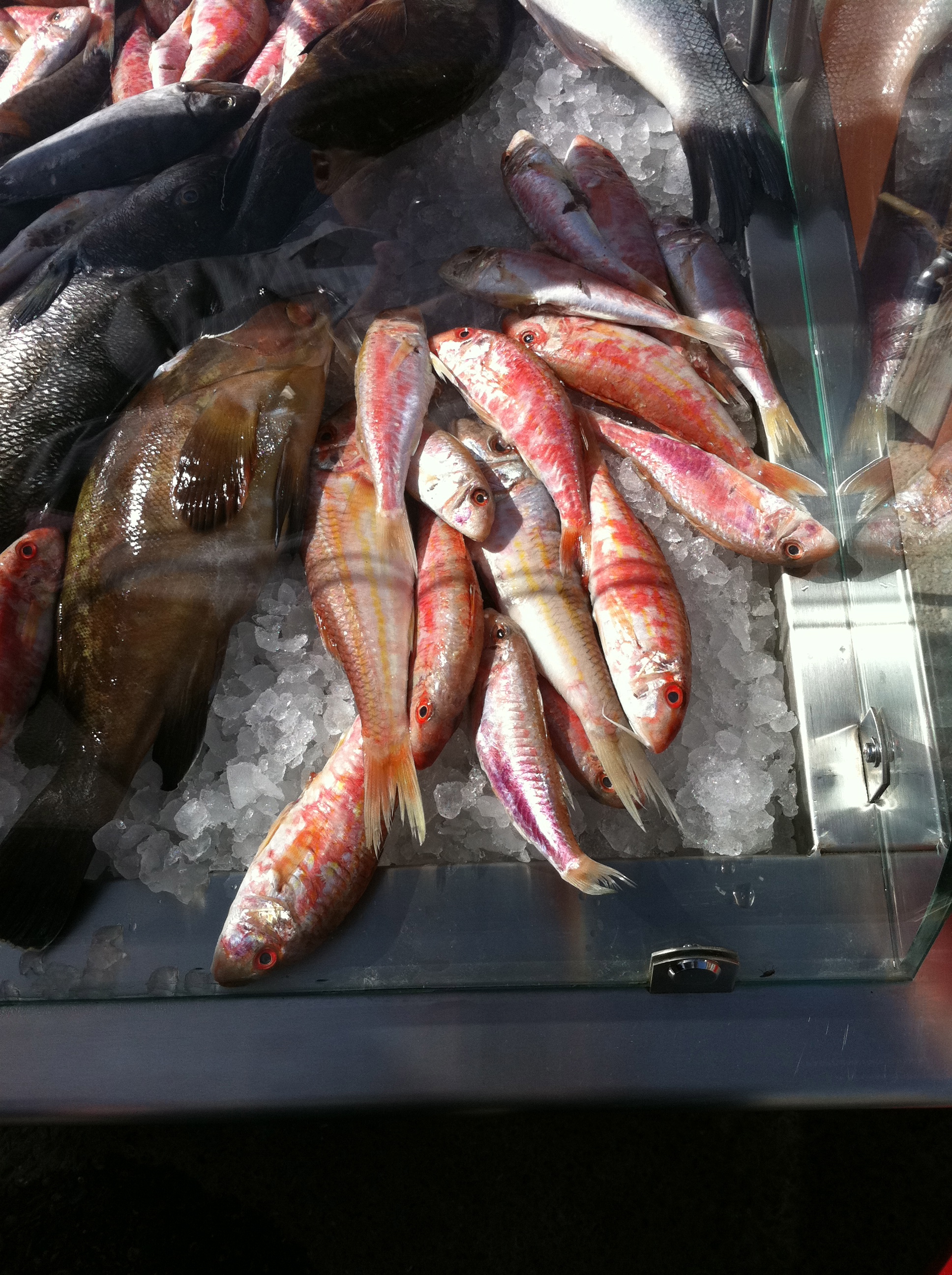
Fish caught in the Paphos harbor

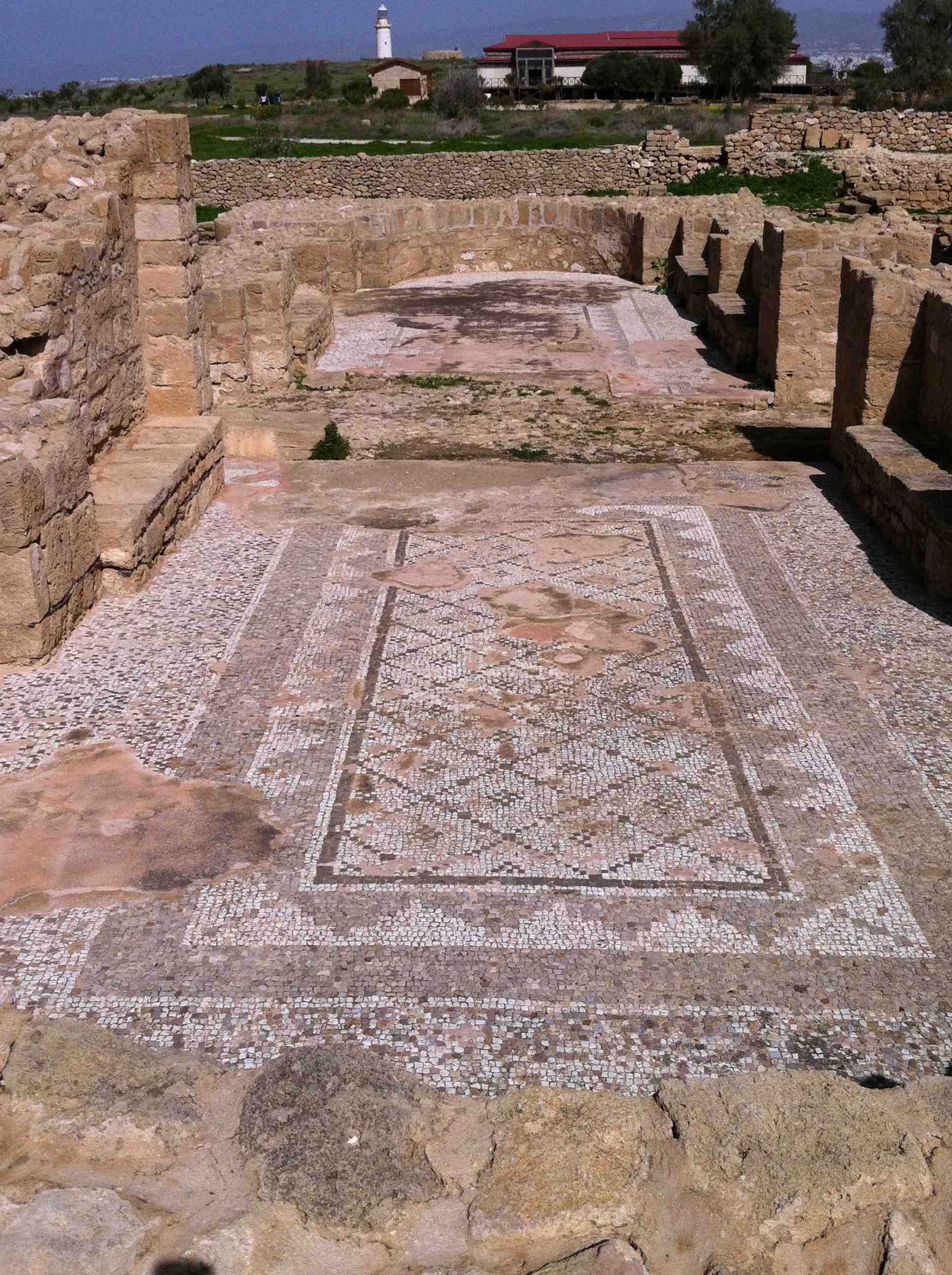
The archaeological museum turned out to be open air ruins rather than pieces inside a building. I liked this more. The House of Dionysos is from the 2nd century and discovered in 1962.

If you double click on this, you should be able to read it.

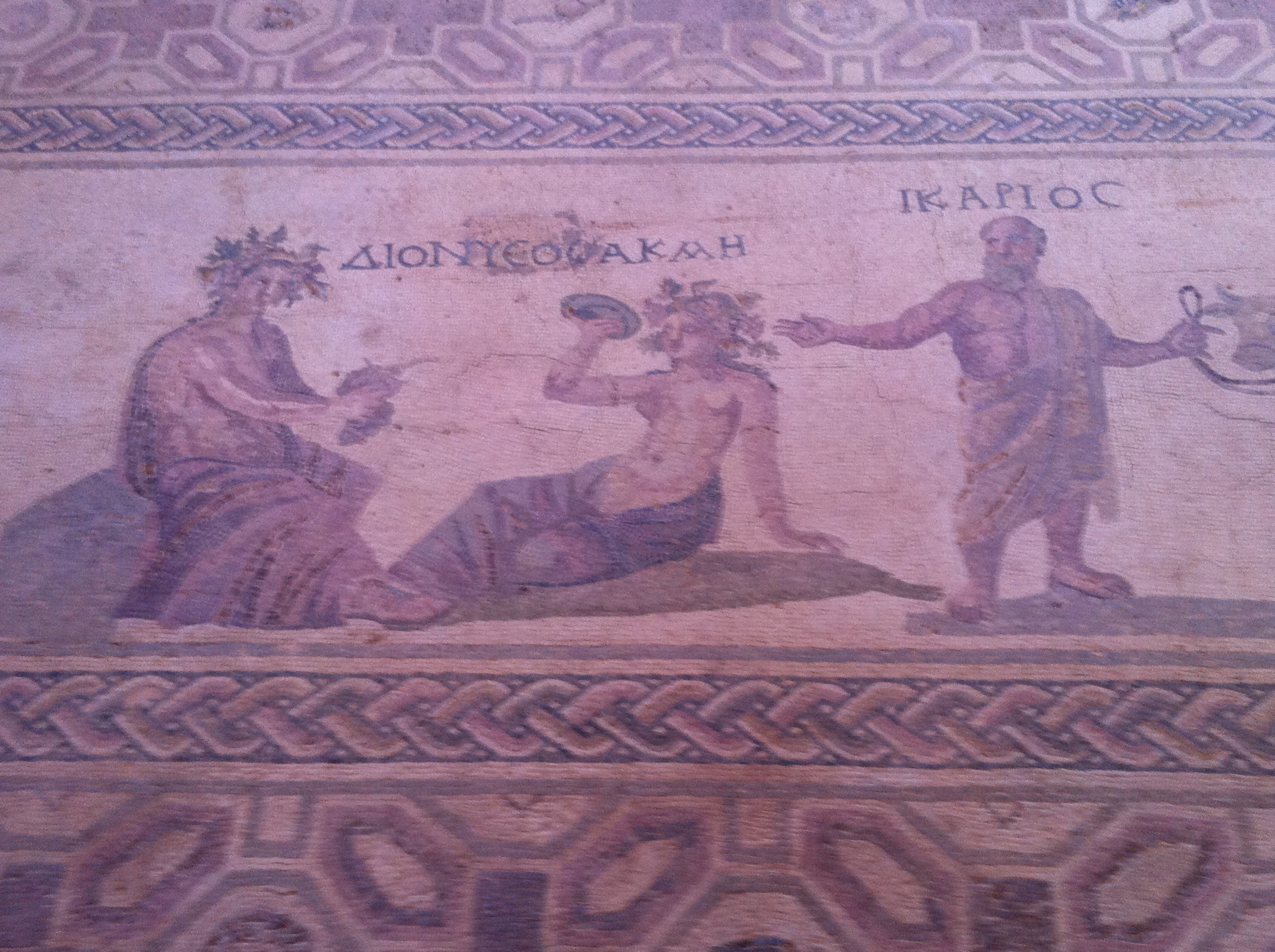
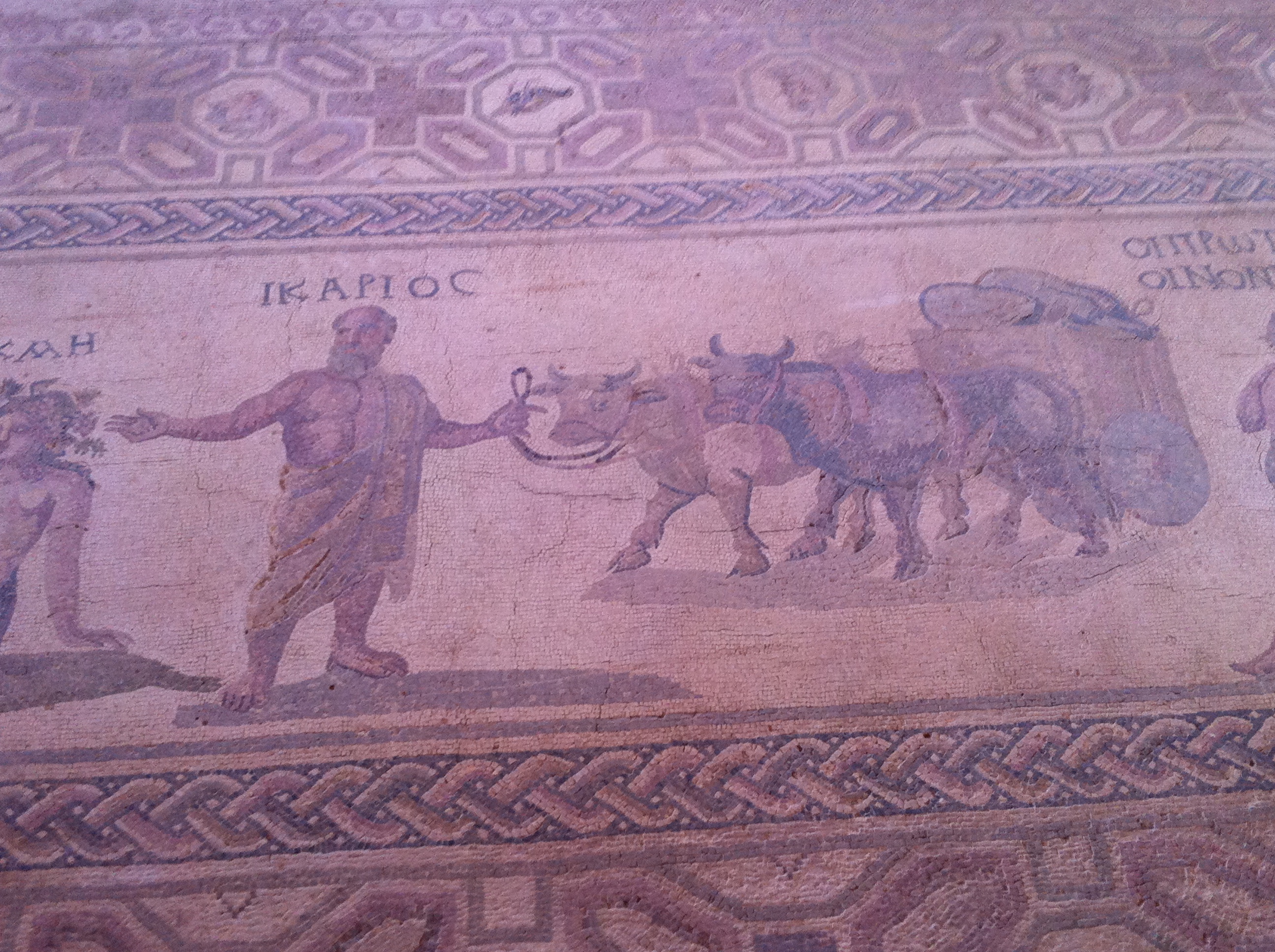
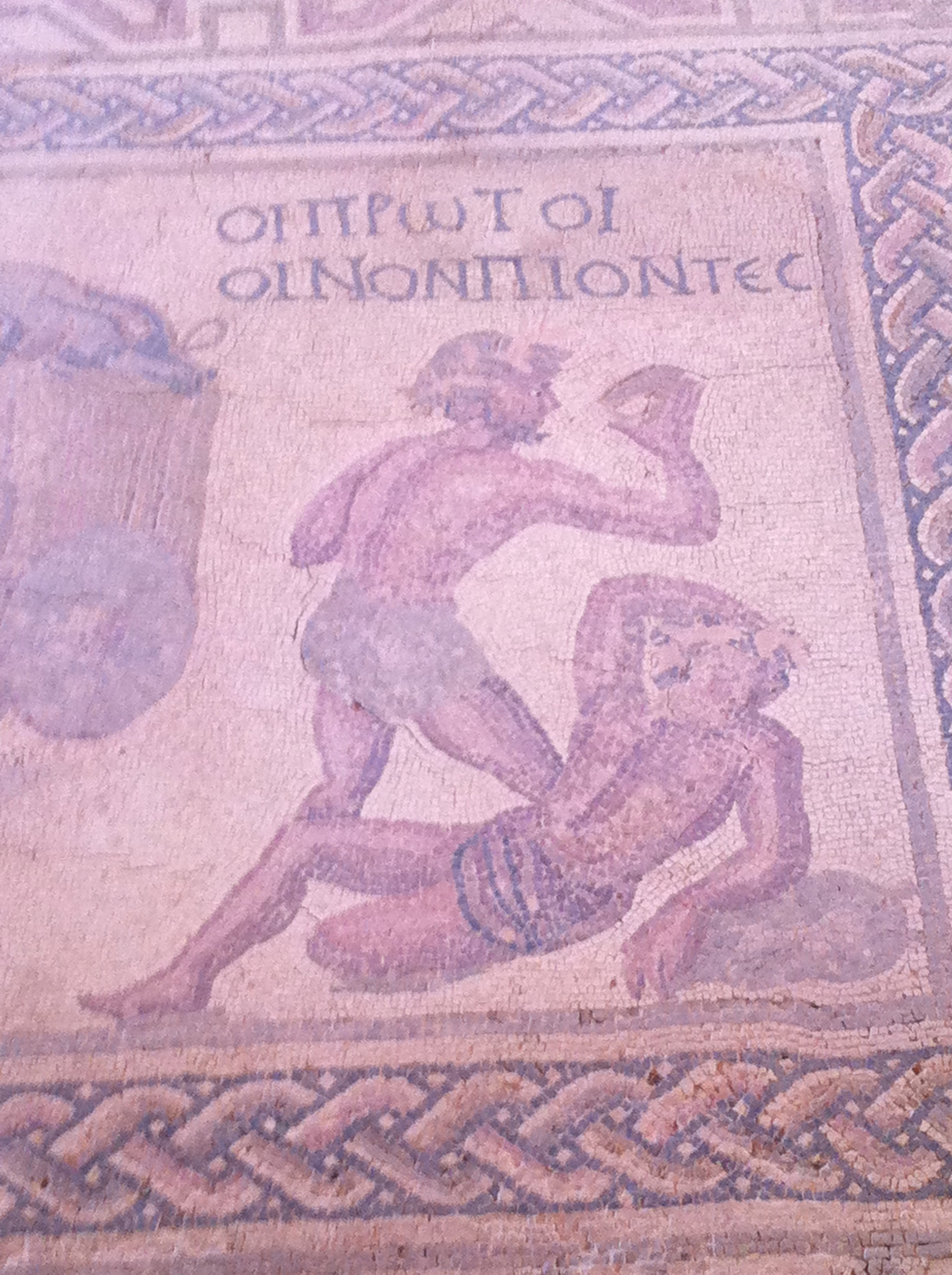
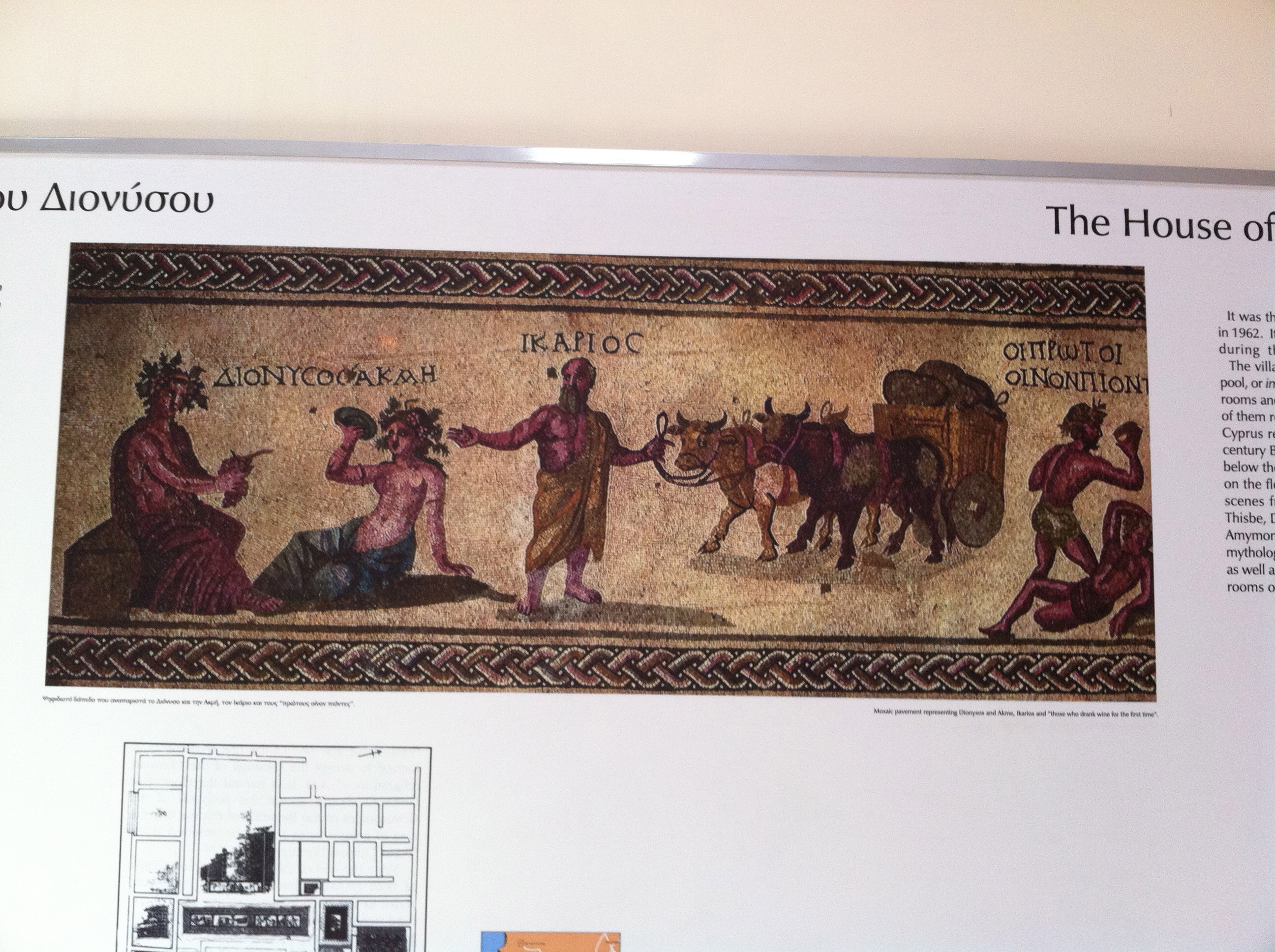
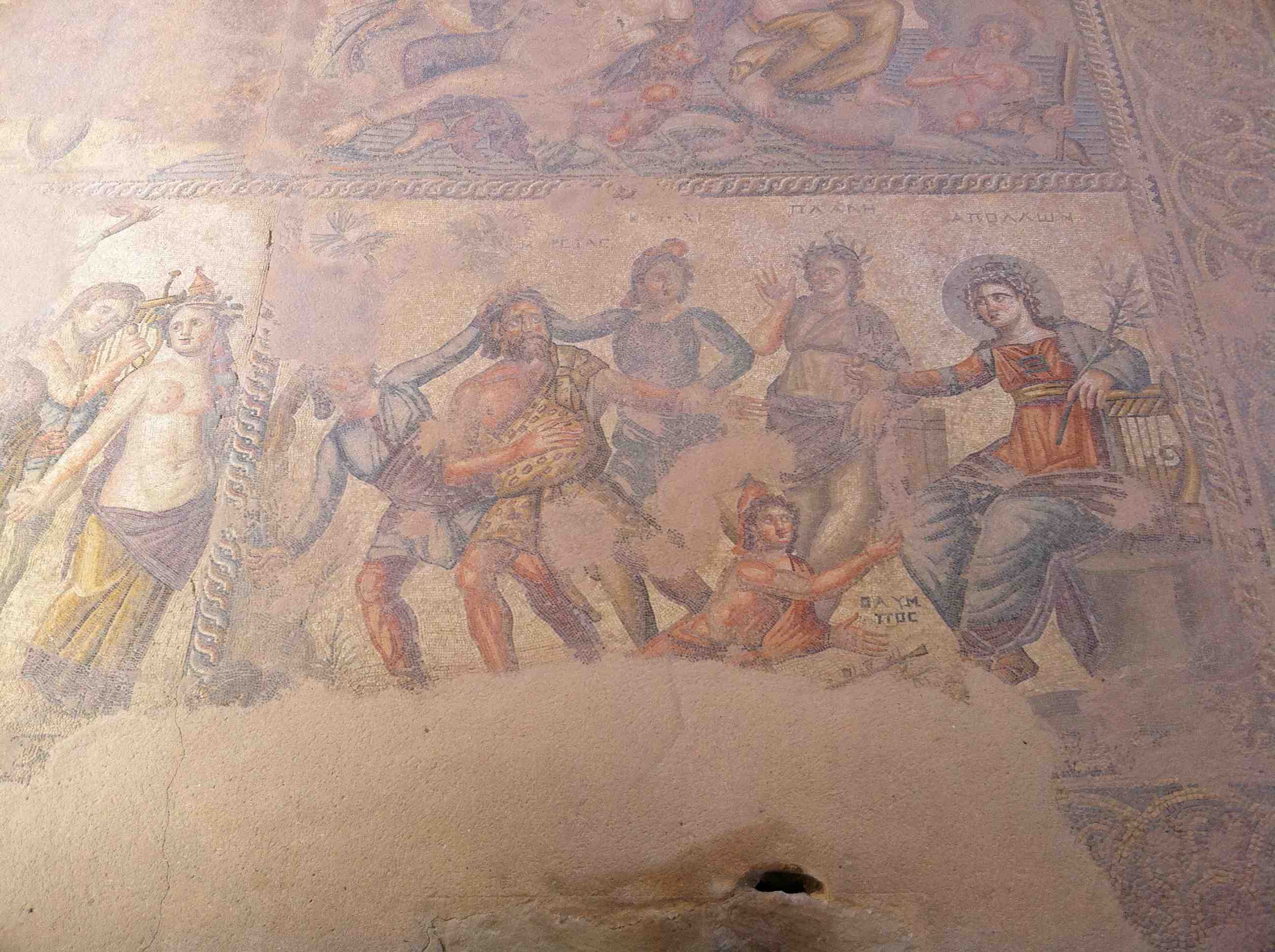
Here is one of the mosaic floors, with Dionysus, Icarus (who flew too close to the sun), and I’m not sure who the one is on the right. My nephew Nick will know. The mosaic was too big for one picture so it’s split into these three. The full mosaic is below from a sign, not the real thing.

The full mosaic, from a sign.

Mosaic from the Archaeological Museum at Paphos

Hoping I was taller than the columns

Lot of drama in these mosaics

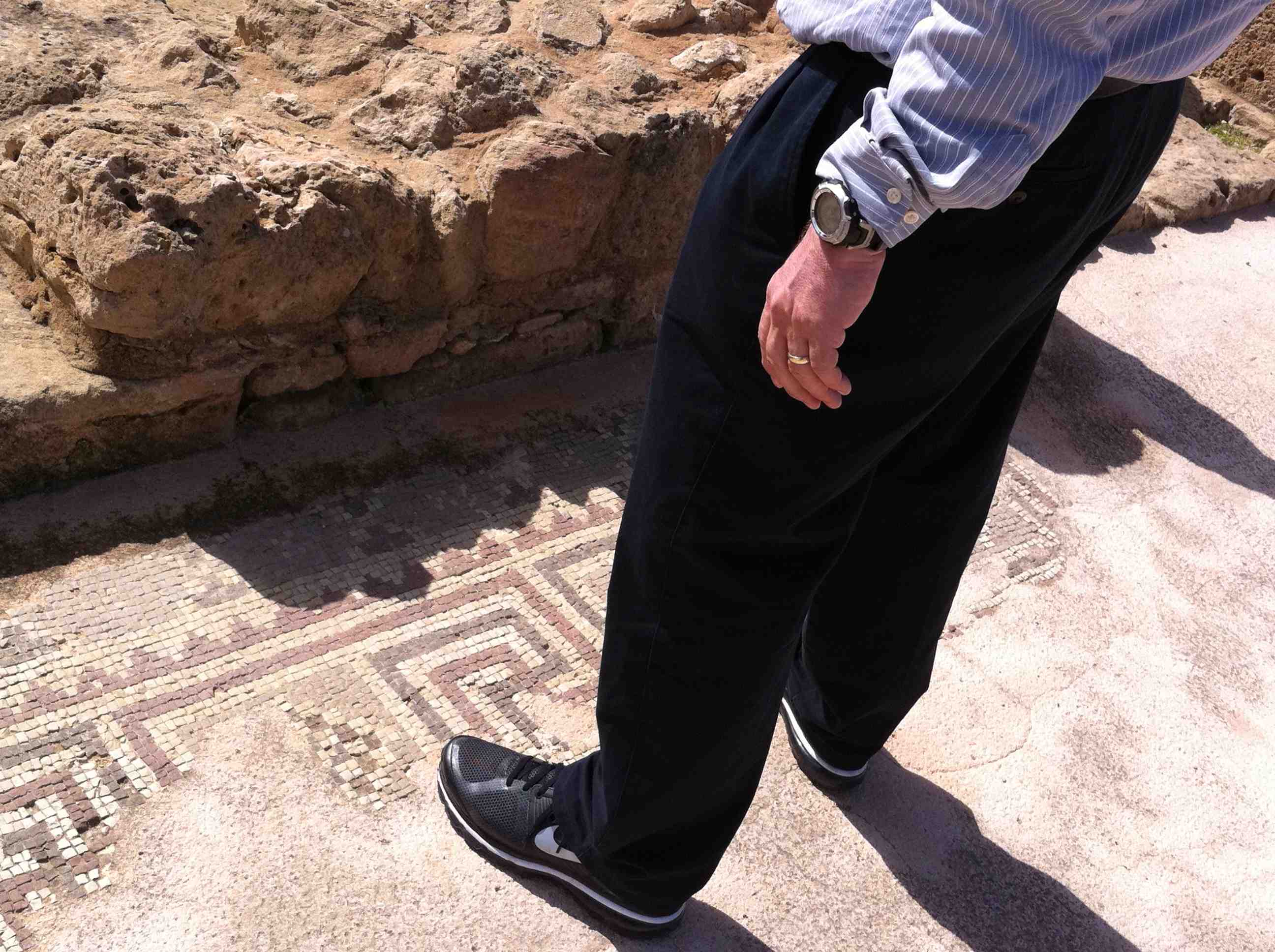
Disturbing that some of the mosaics are out where idiots like me can almost step on them

There was an area called the “Tombs of the Kings” which apparently was not for kings but wealthy people from the Greek and Roman eras.


Tomb of the Kings — nice place to visit but I wouldn’t want to live there

Thought I might take it home but was not sure it would fit in my suitcase.

Christos invited me to join his wife and family for lunch, along with Irene and George’s family. I offered to have their oldest son, who goes to IUP come over for dinner the week after I get back when Keith is in Indiana for spring break. We Skyped to IUP and probably woke him up. I had a wonderful meal, the first home cooked meal since Mickey cooked in Tel Aviv. I only had a brief discussion with Christos’ wife Christina about the mathematics of music theory, which she teaches along with piano and guitar. I said goodbye to Irene and George, this time for real, at least for a while.

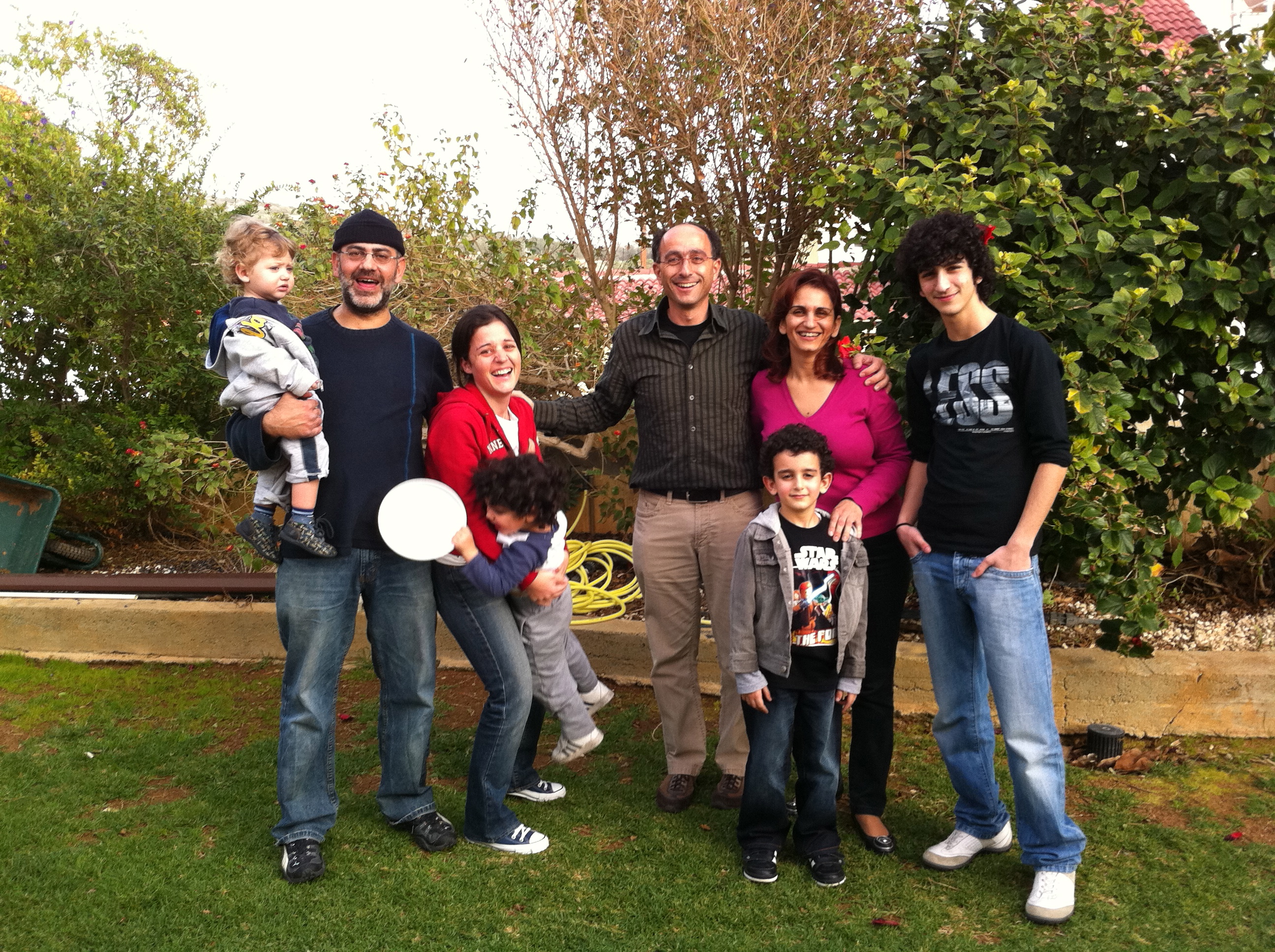
Irene and George and their kids on the left. Their in-laws, Christos, Christina, and their kids on the right. Nice picture.

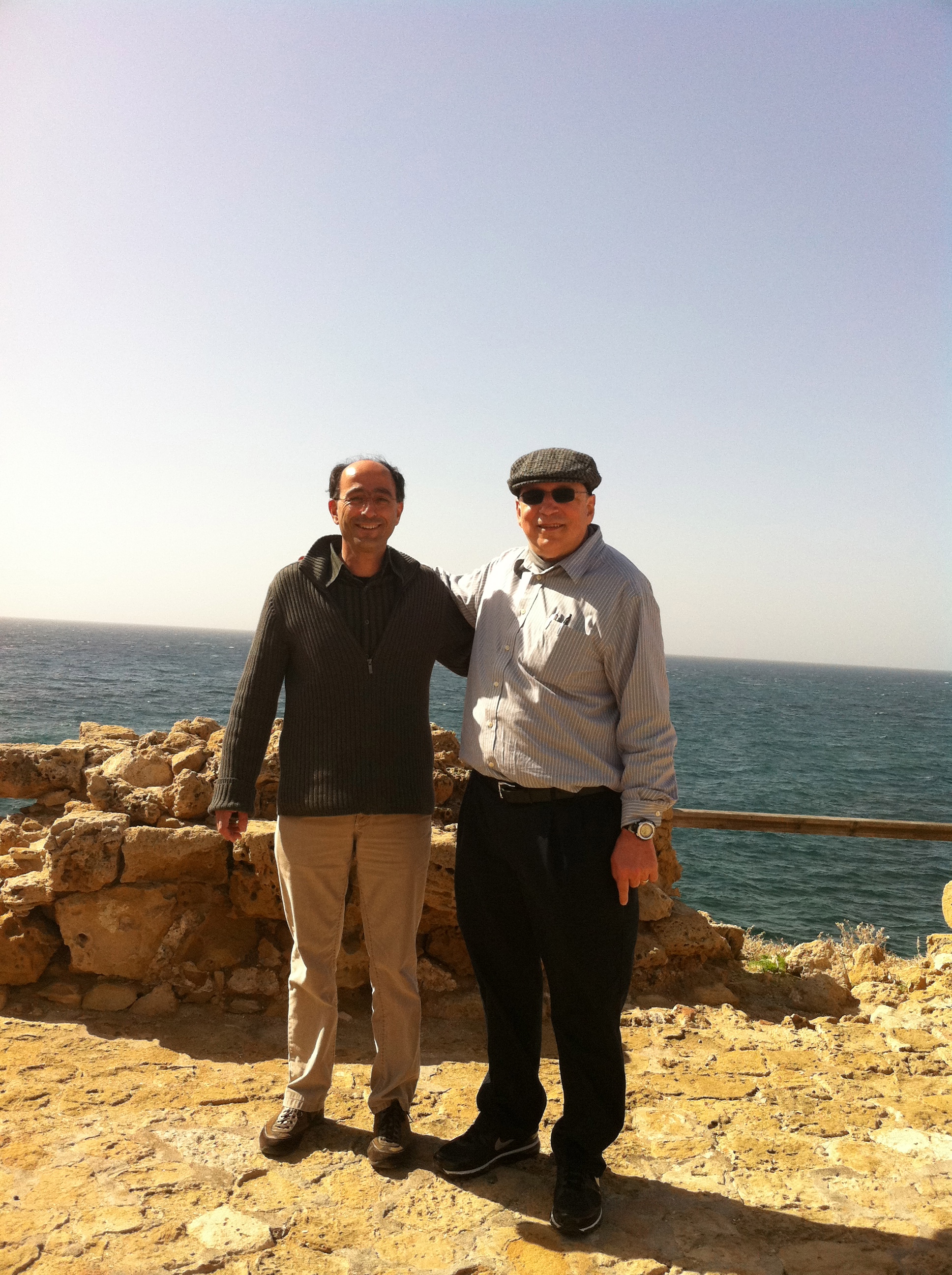
Christos got me back to the Four Seasons 15 minutes or so before my appointment with an old friend of maybe my oldest friend, Michael B. Thereza is a professor at an English-speaking university in Cyprus and is a fascinatingly multi-faceted person. Near the end of our approximately 3-hour conversation, we imagined that we probably met in the 1970’s. The event was Michael B.’s beautiful multimedia infrared photography show in Ithaca, NY. It was something that we both remembered from a relatively long ago era from which most events are long forgotten. She teaches courses for international students who are going on travel study programs among other things. Her specialty is Ancient Chinese and Japanese Art. As someone who does not believe in reincarnation, I was challenged by her telling me about her feeling that she knew more than anyone should have known about this art when she first learned about it in a Cornell course. Her professor didn’t believe that she could be that good without having studied it previously. Our conversation was filled with sharing selected highlights and favorite thoughts from our lives. I knew that someone who was important to Michael B. would be someone to immediately be totally open with. She reciprocated and I felt like we had known each other for years not minutes.

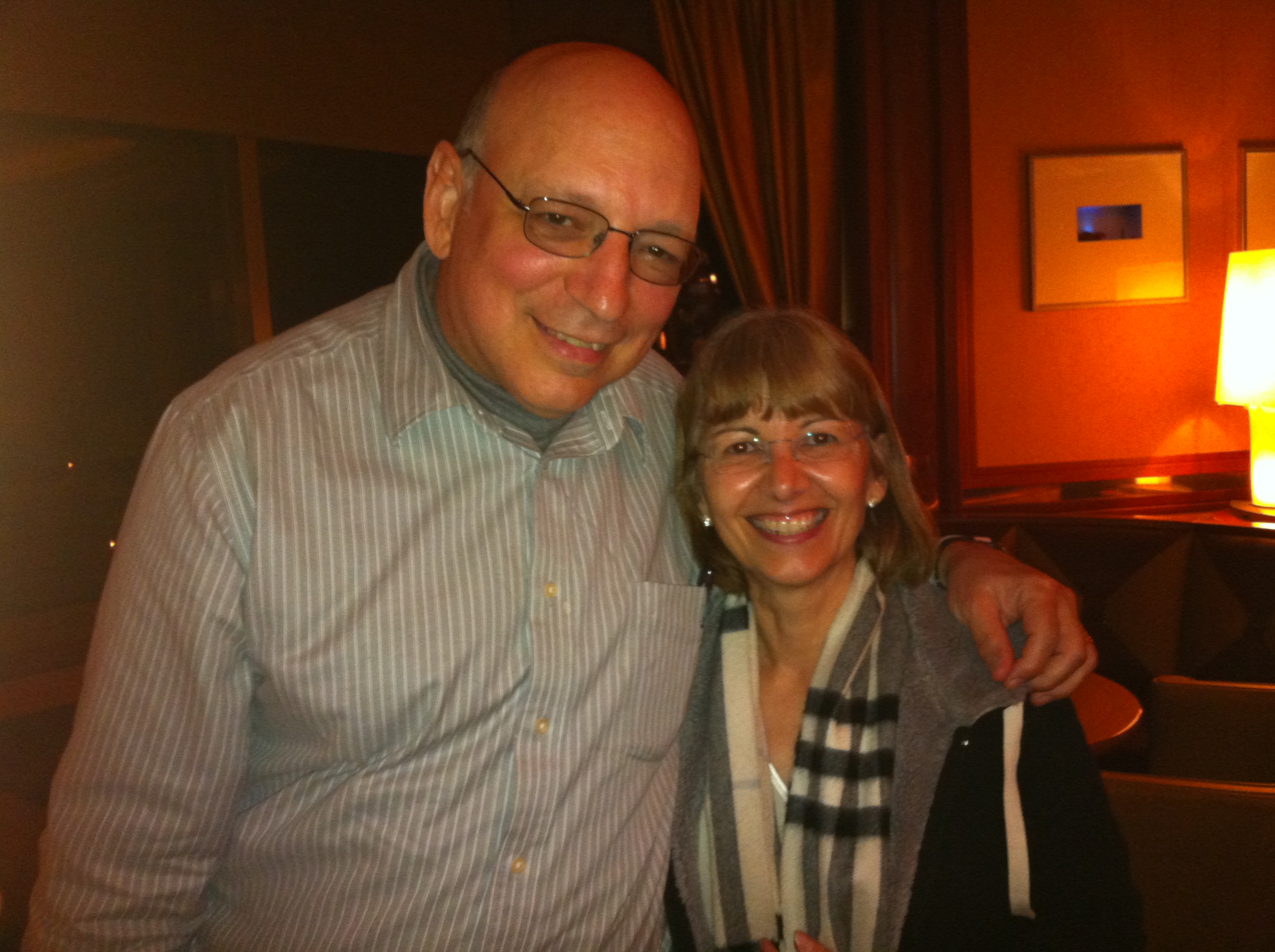
Thereza and me

Before she headed out to Nicosia for a wedding, the Headmaster of the school I taught at who I consider to be a new friend came with her daughter to deliver the pen pal letters from the Cyprus students responding to Katie B.’s students in Indiana, PA. One of the packages was open and I read some.

The Headmaster Nick and his daughter (one of the pen pals in the 5th grade class I taught), giving me the pen pal letter replies

Here are some quotes from 5th graders.

“In Limassol we have a fish restaurant called M1. Mr. Sodiris, the owner is also a fisherman and he serves only fresh fish of the day. If you ever come to Cyprus, I will take you there to eat. I hope you like to eat fish too.”

“Yes, you are right. We don’t get lots of snow as we have lots of sunshine and it’s never below 14 degrees!!! But in the mountains there is some snow but not for long. Cyprus is a small island with lots of history. We have nice food like haloumi cheese and souvlaki (small pieces of meat with spices on a grill), my favorite food is pizza and I love grilled haloumi cheese in pitta bread. In the summer it is really hot around 40 degrees so the schools clse at the end of June until September so most of fthe time I spend at the beach with my mum and dad. The other half of the summer I go to Russia and spend time with my grandparents which is a nice change as the weather is different.”

“Winters are not very cold but summers are extremely hot. The temperatures reach up to 40 celsius so lots of people walk about topless. Most tourists spend time visiting the famous sites like the old castles and archaeological sites so should you ever visit me, I will show them to you, In winter, most of us go to the Troodes Mountains to sleigh and to ski. Do you know I am only 3 days older than you are!”

“I have not read Percy Jackson and the Olympians but I’m sure they are good books to read. Have you read any books by Roald Dahl? My best book is the Twits. It’s really funny.”

“I come from a family of four. My mum is a teacher and my dad is a doctor. I play basketball and swim throughout the year. I also play guitar. I don’t play much on-line games because I get lots of homework although sometimes I play vice city. On the weekends, I spend lots of time with my cousins when I play loads of play station games.”

Like I said, “I love Cyprus”

After ordering one more beer, I wasted time in my ridiculously extravagant hotel room and thought about how nice it would be to go to bed early since I had a 6:20 AM departure tomorrow for the airport, then a full day in Athens. I also thought that it would be an even better idea to actually go to bed rather than thinking about how good it would be to go to bed. You can see where this is going and unfortunately, it’s not going to bed early.

Day 25 Feb. 20 Acropolis: above it, climbing to it, and going to sleep with it in my face

Leave a comment

About 6:05 AM, I had some conflicting feelings.

On the negative side:

  • I was behind schedule to finish packing and would have to rush to check out in time to meet Christos at 6:20 for the drive to the airport
  • My stomach didn’t feel great
  • My shoulder didn’t feel great
  • It hurt to be awake after only 4-5 hours of sleep
  • I wouldn’t be able to have any coffee or food until after the 40 minute drive to the airport, checking in, and going through security and passport control in Larnaca, Cyprus
  • I had a 1 hour 40 minute flight with its stresses
  • The burden of being away for 3.5 weeks was getting to me

On the positive side:

  • When I got to the airport, I’d have plenty of coffee, free internet, and food in the Business Class lounge
  • There would be a massive breakfast and plenty of coffee on the plane
  • I could nap later in the day
  • In a few hours, I’d be climbing the Acropolis to see the Parthenon
  • I’d be home in 2-3 days

I realized that this balanced to about 90% positive and 10% negative.

In conclusion – “Stop whining, you lucky SOB!”

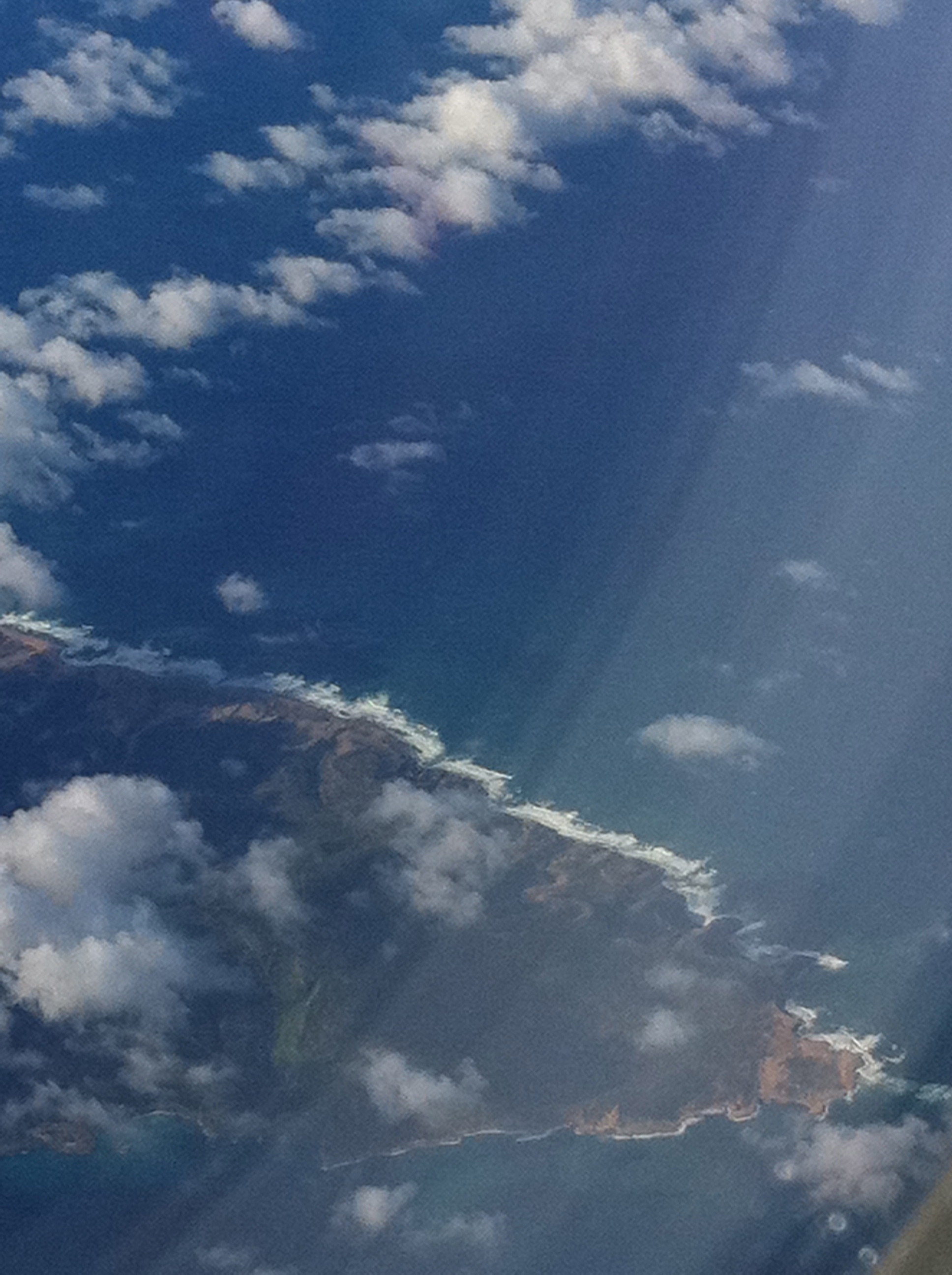
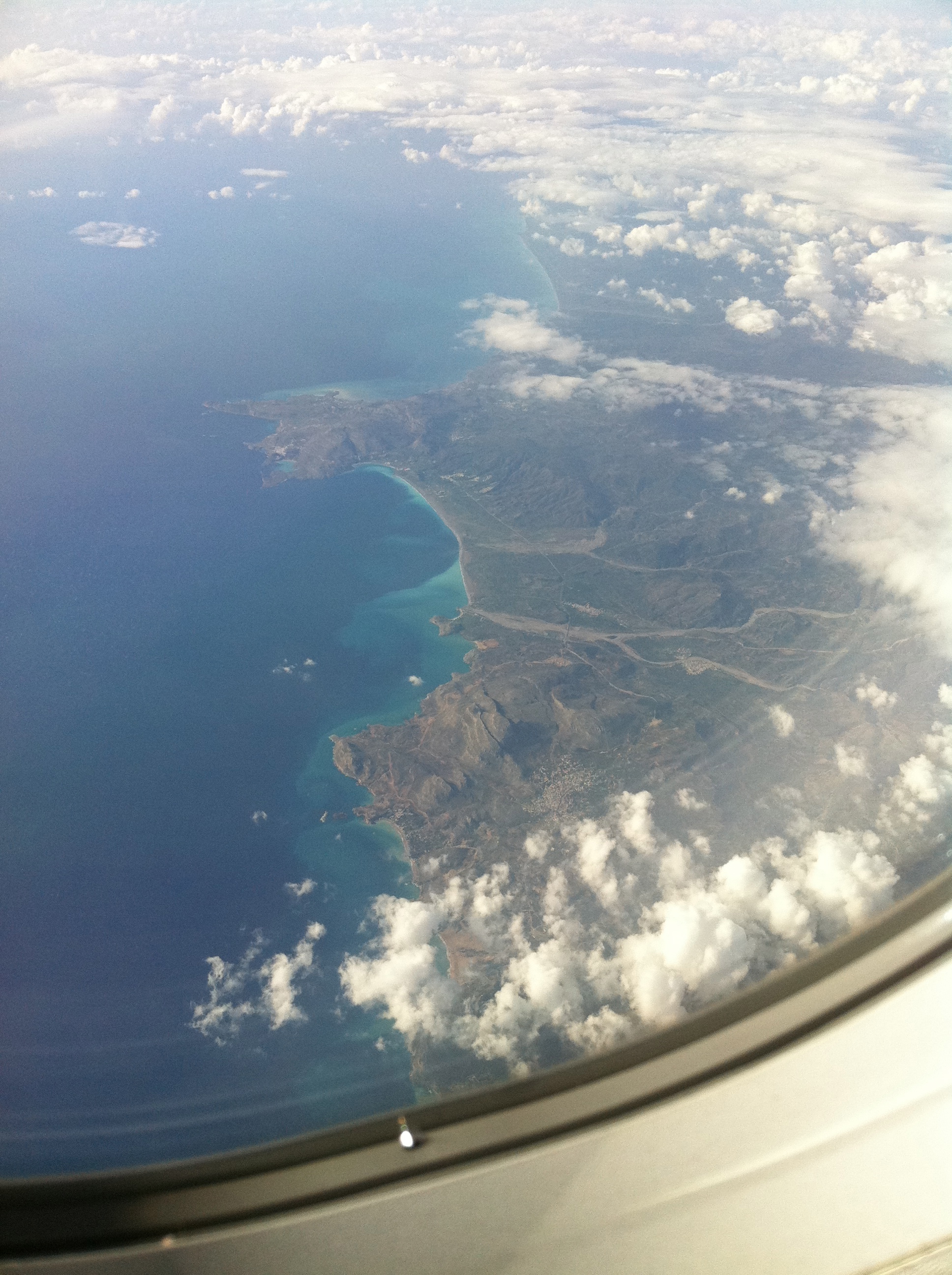
Last view of Cyprus, I’ll miss it (left). Thanks to iPhoto’s GPS, this is Crete (right)


When I mentioned to Michael V., who lives one block from us in Indiana, PA that I would be in Athens, he recommended that I use his favorite taxi driver in Athens. Michael is of Greek ancestry and visits Greece a lot. I had called the taxi driver, Tolis, a couple of months ago and got his email. We had made various arrangements partly with suggestions from Michael.

A quick shout out to Michael V. Tolis was a great find and made my two days in Athens much better. THANKS!

Tolis was there with my name on a sign as soon as I cleared passport control in Athens. I had been warned in Cyprus that there is almost always some kind of strike or big demonstration going on in Athens and sure enough there was a mass transit stoppage planned for Monday (tomorrow) from 11-3. This impacted the travel plans. I definitely would go out of town tomorrow when the stoppage is going on rather than today. If there was a problem with seeing the Acropolis and the Parthenon on Monday, I would be heartbroken. It was crucial to see the Parthenon first thing. Since it was too early to check in to the hotel, Tolis left me off at the foot of the Parthenon and he waited in his taxi for me.

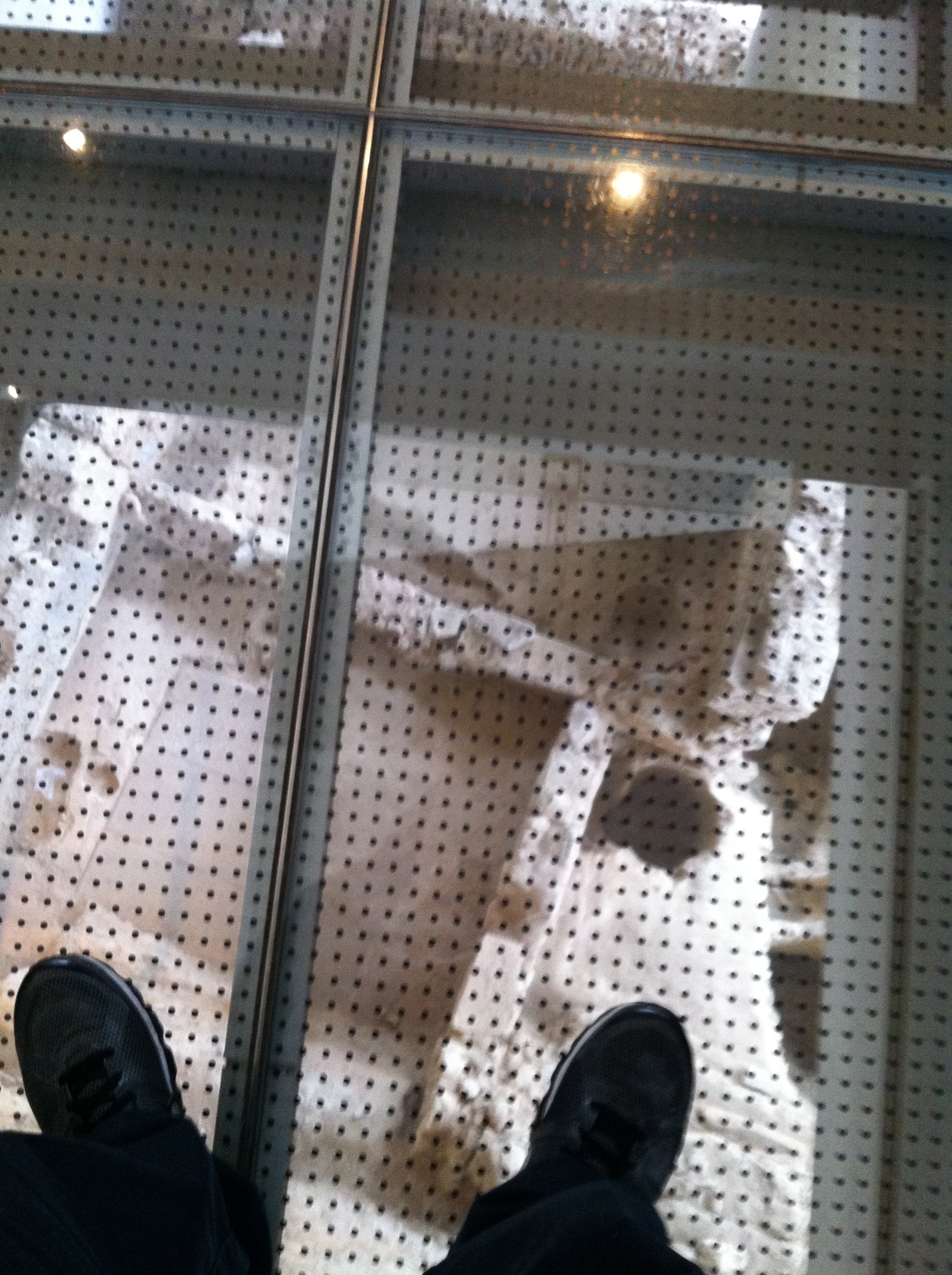
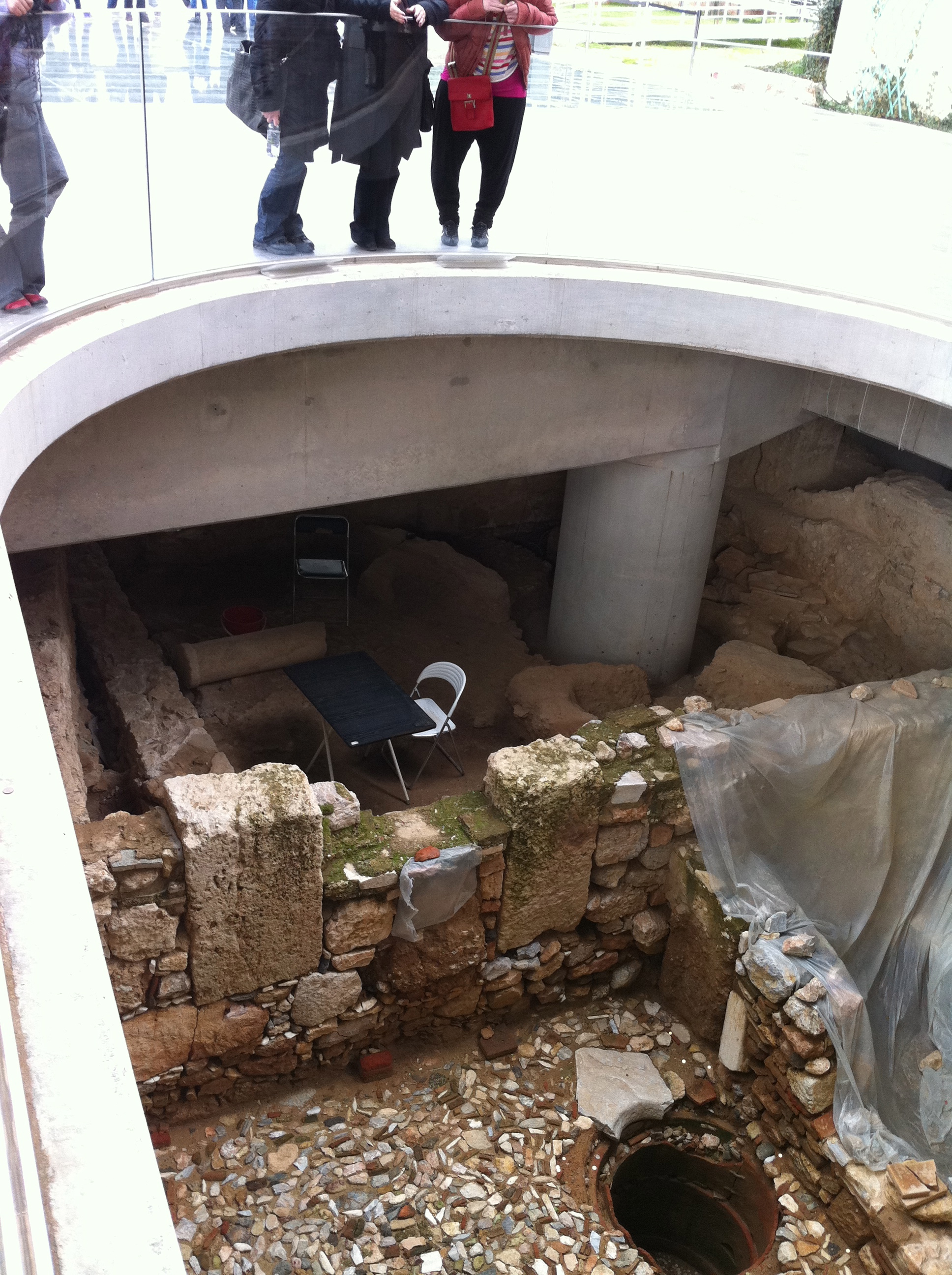
Greece has been trying to repatriate some of the Parthenon relics that were taken by the British and now stored in the British Museum. Greece had been criticized for not having a big enough museum to display what they wanted. So now they built a much bigger museum. The most interesting feature to me was that when they discovered an archaeological site below the building, they put in glass floors. I’m not sure why they put these annoying dots on the glass. Maybe it keeps people from thinking they are magically flying above the ground or something stupid like that.

Standing on top of a working archaeological site


The only part without the glass and dots. I wonder which ancient era the table and chairs come from (I’m guessing the 1970’s), right.

The museum was very spacious and the pieces were high up with plenty of room to see each piece. There was so much to see that I quickly got overwhelmed. Instead of really enjoying the experience I got eager to go and see the Parthenon. I did get everywhere in the museum but only a few times did I just stand and stare for a while. Maybe this had to do with the fact I didn’t have a guide telling me which pieces were the big deal. I hadn’t realized before this how much my guides had helped with focusing my attention on a few pieces that were especially important.


The museum had a no camera rule, probably because of the danger of flash on the relics. Other museums allowed cameras but no flash. Probably they didn’t trust people to turn off their flashes. Margaret criticizes me for deciding on my own which rules to follow and which to break, without knowing the reason for the rules. It felt right for me to actually obey this rule though.

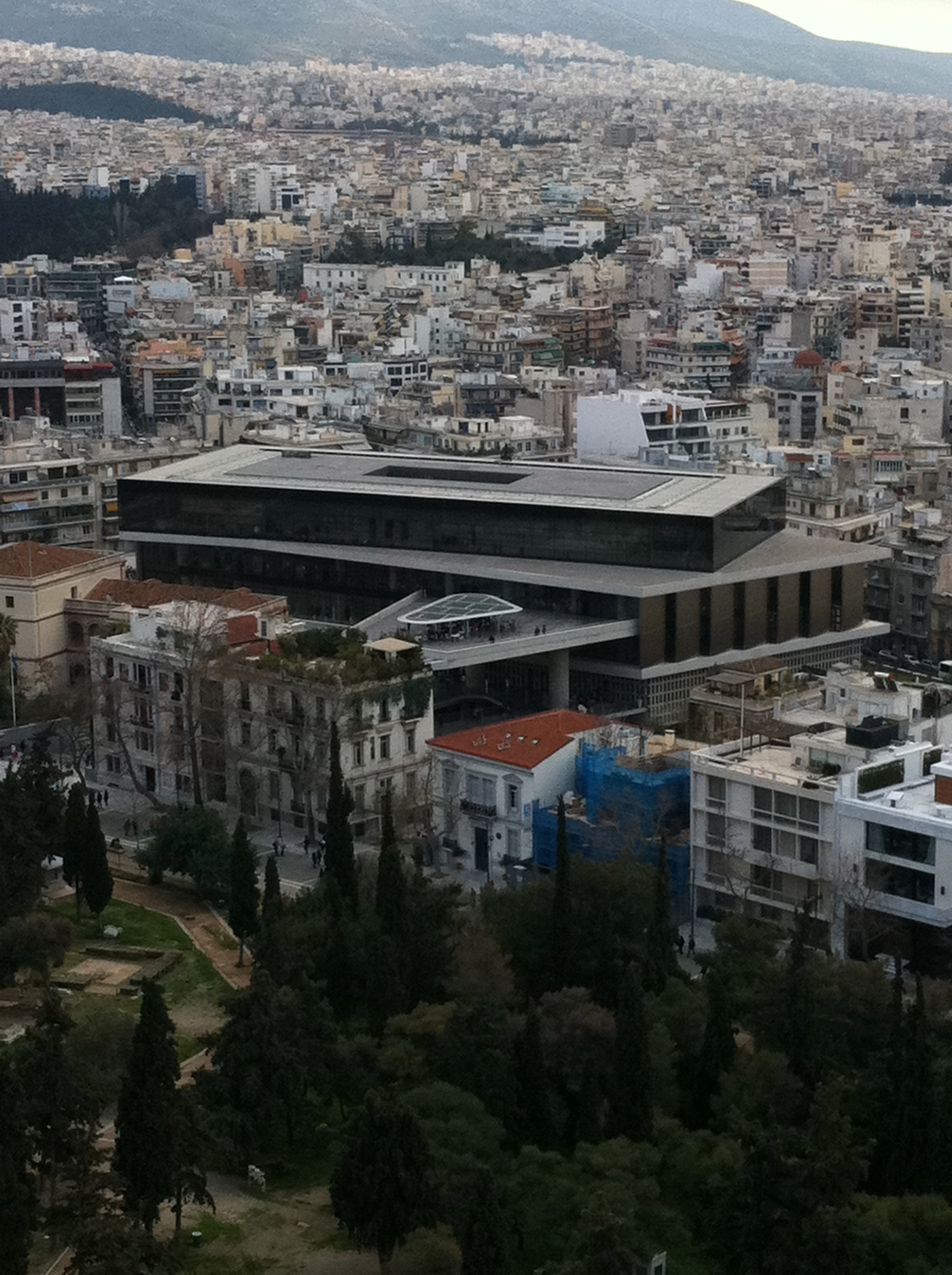
New Acropolis Museum from the top of the Acropolis

I’m pretty sure “Acropolis” means something like high city. It certainly involved some elevation change. I rediscovered the effect of gravity on one’s energy. Fortunately, the effort was many times more than worth it.

Later I discovered that I was sweating so much from the climb that my passport got a little wet. Fortunately, there’s no real damage. I need to get a plastic passport cover, although it will be annoying given the number of times you have to show your passport. The passport is used instead of airline tickets, they just scan it to bring the flight up. I needed it multiple times for each flight and repeatedly at border crossings and a few times inside Israel. Every hotel makes a copy of the front page. I usually never put in anywhere except my front pocket or a couple of times in the hotel room safe.

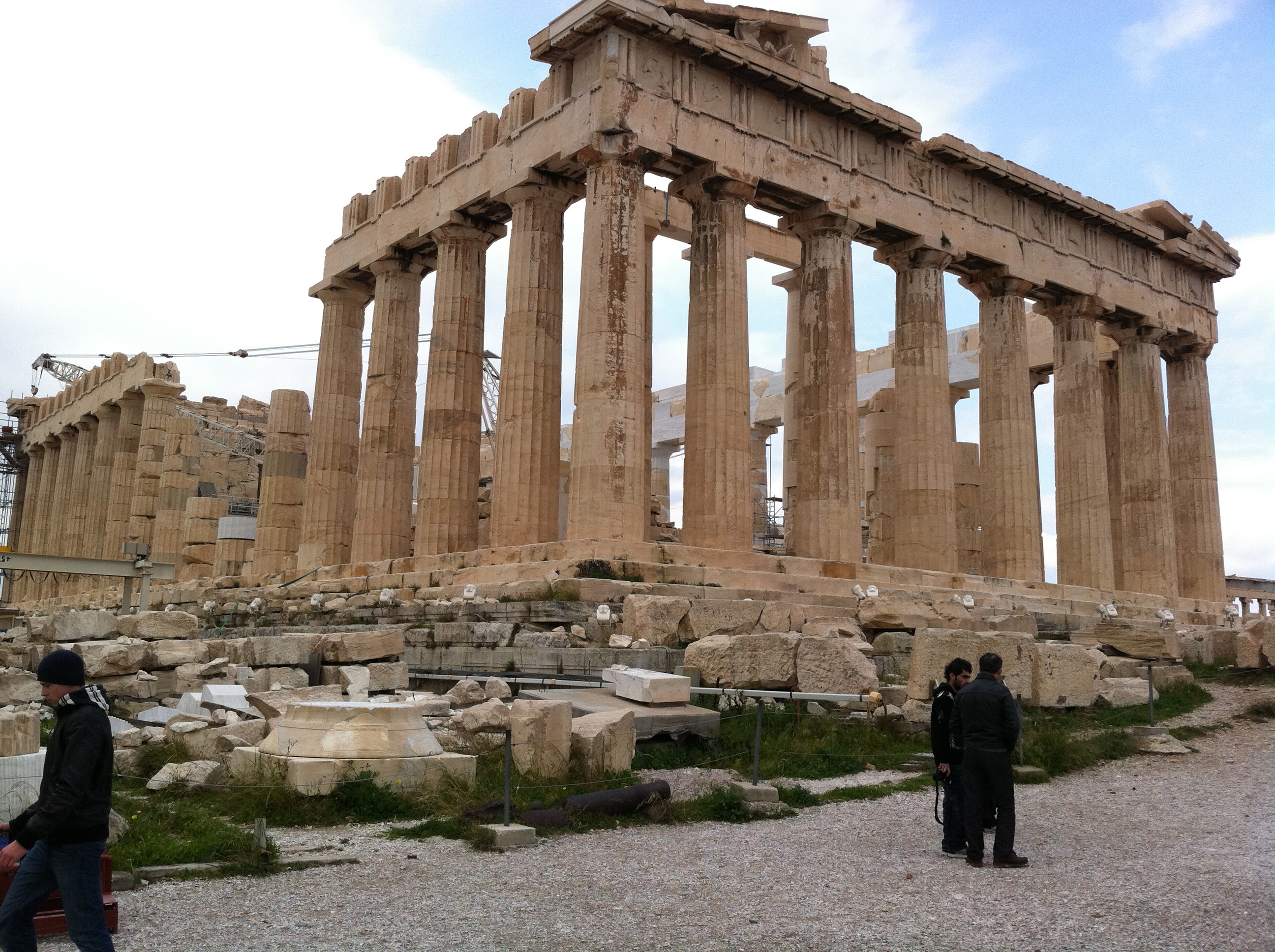
What a thrill to be at one of the man made wonders of the world. It is as impressive as you would think it is.

Athens First National Bank (also known as one of the seven wonders of the world)

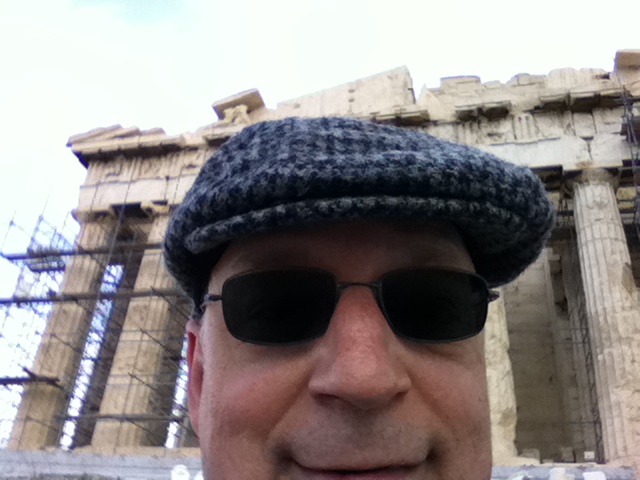
I promise never to take a picture again with the front camera, sorry for posting this

Other views of the Parthenon, truly wonderful to be there

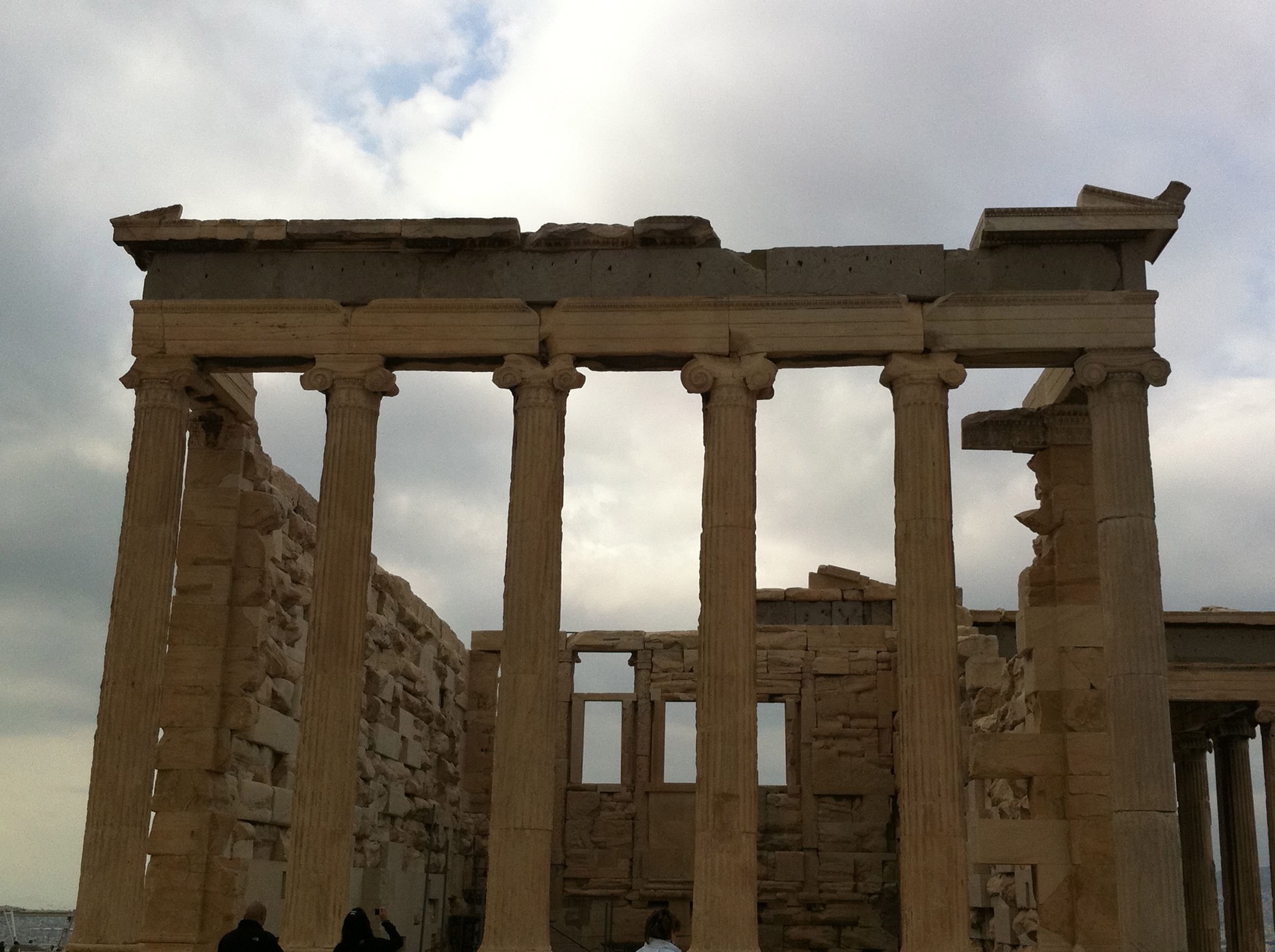
The Erechtheion, another amazing building on the Acropolis

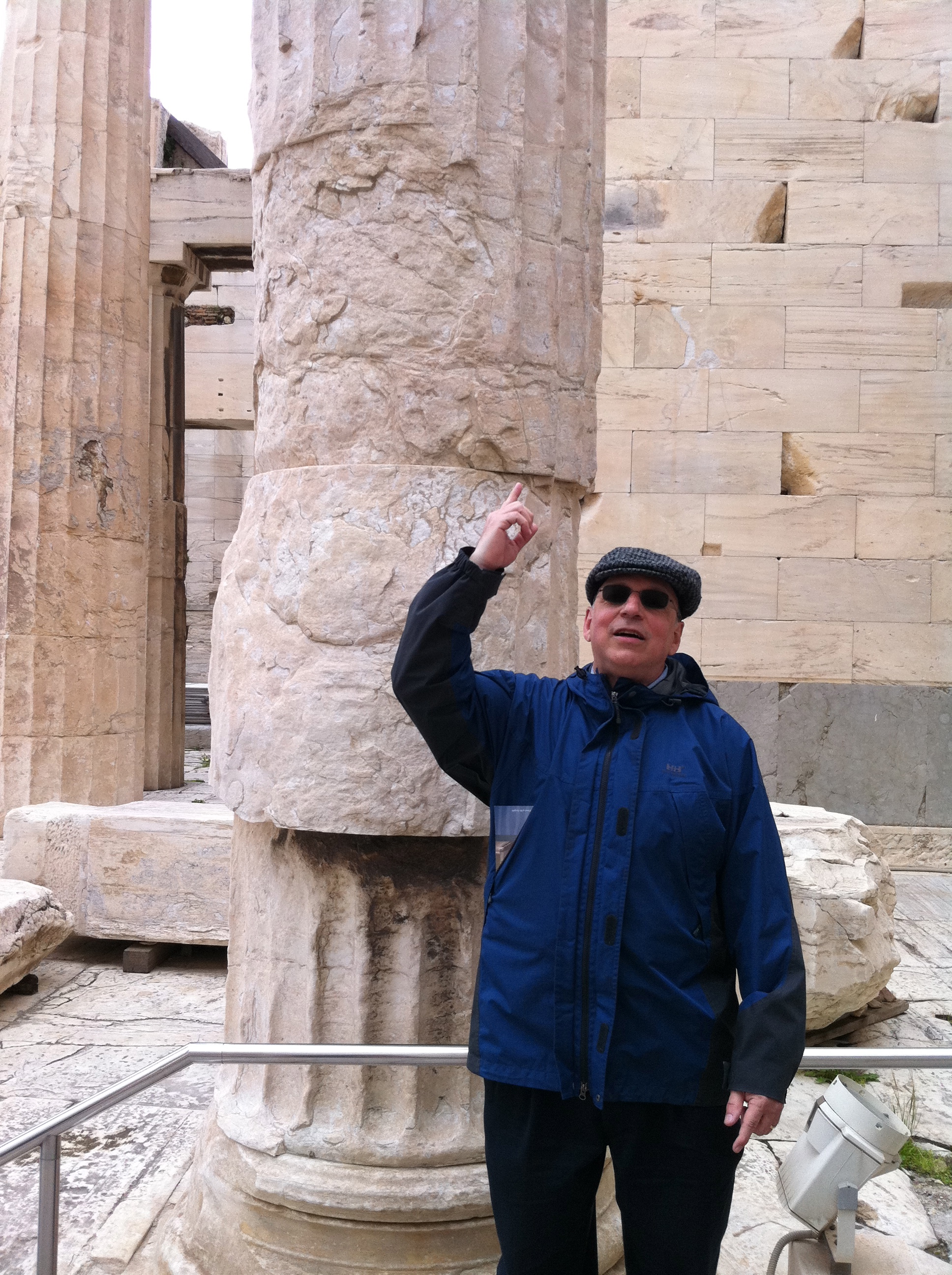
The Propylaea, still another building on the Acropolis. I’m trying to get a guy I recruited to take my picture to get the whole column rather than taking the picture so low. It didn’t work.

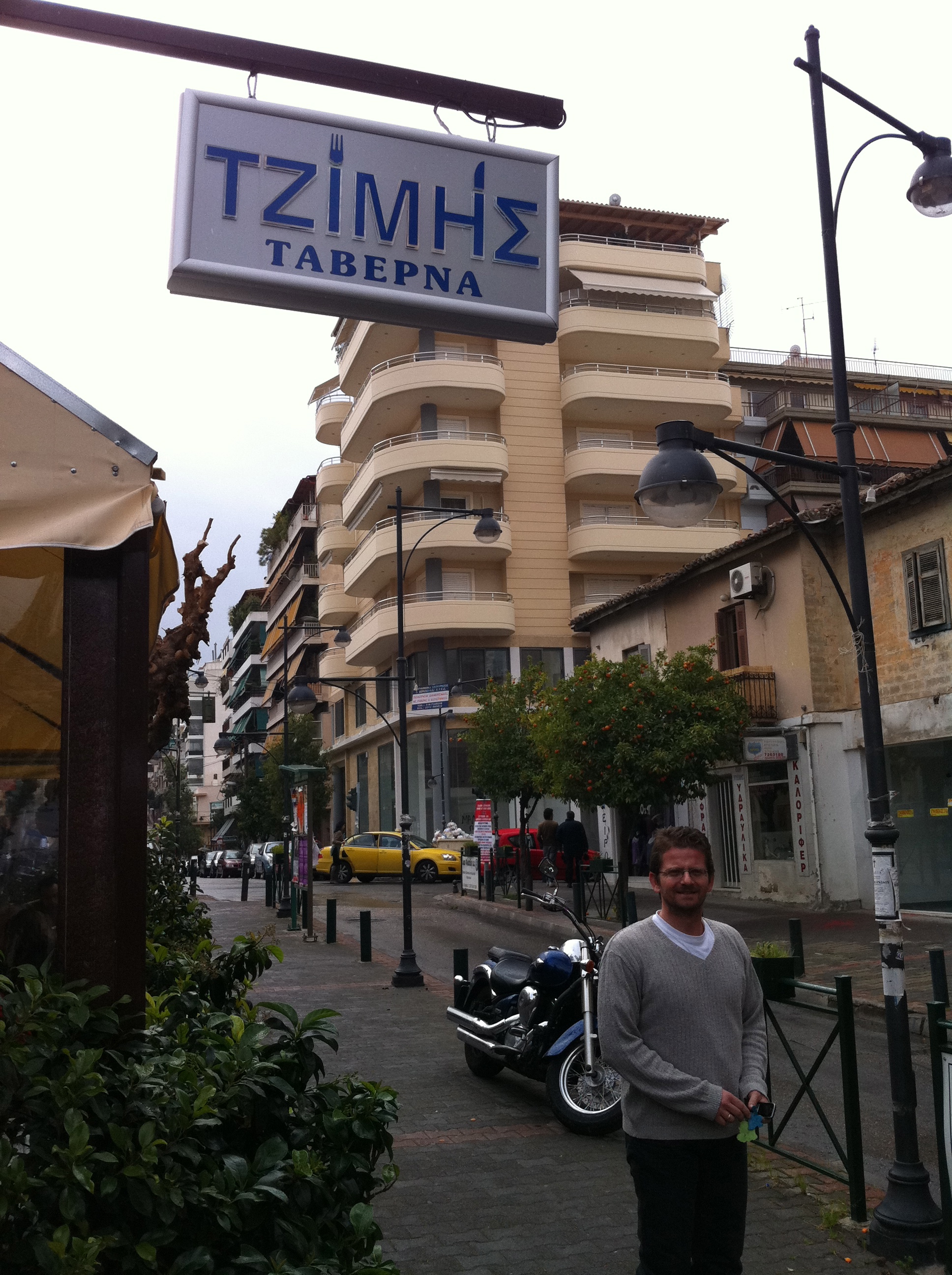
I asked Tolis about getting lunch at a place where he would go rather than at a tourist place. He took me to his favorite taverna in the area of Athens he lives in called Pagrati.


Tolis outside his favorite tavern, called Tzimes, or Jimmy’s (Demetri’s), left.

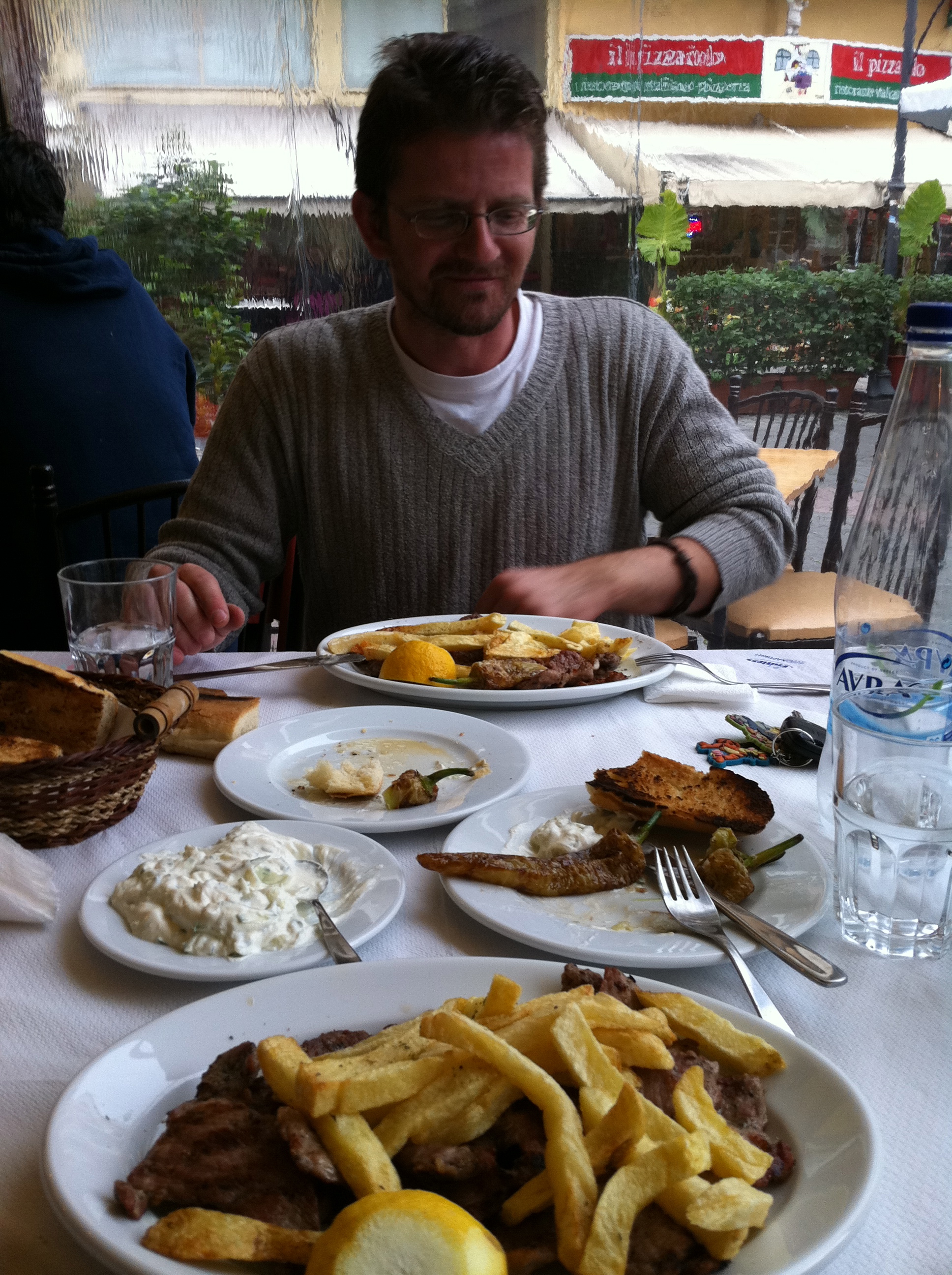
Grilled pork, tatziki, and grilled peppers (right).

As we were finishing, we ran into his best friends who had just been hanging out with his sons and wife. He told me the next day that they found me “cute and nice.” I loved being called cute. I wonder if that’ll be the last time anyone ever calls me that. I have a memory of being called cute when I was very young and asking my parents what it meant. I remember them taking a long time to explain it and I still didn’t get it until they used it in other situations. Why I would remember that is beyond me.

Tolis’ friends who called me cute

Tolis’ wife is Turkish I guess makes it official that a theme of my trip is the relationship between Turkey and Greece. That relationship is at the heart of modern Cyprus. The comparison between Istanbul (where I had been that morning) and Athens to me was significant. To Tolis, there wasn’t that much of a difference. I’m not sure if it was the difference between the Muslim culture of Istanbul and the Greek Orthodox one or the feeling of being in the two big very Asian feeling markets (Spice Market and Grand Bazaar) that made Istanbul feel less European than Athens.

His wife is still a Turkish citizen and owns property in Heybeliada, one of Princes Islands in the Sea of Marmara, just outside Istanbul. She would have to sell her property if she became a Greek citizen. Their kids are Greek citizens but if they serve in the Greek army, they could also become Turkish citizens without having to join the Turkish army. It was good to see one of these classic hatreds being overcome in a healthy way. His wife makes a living giving private Turkish lessons.

After lunch, I was ready to go to the hotel and relax a bit. At check-in I accepted their offer for a room with a view of the Acropolis for 19 euros beyond the 105 euros I was already paying. This turned out to be an excellent choice. Not only did I have a stunning view of the Acropolis from my balcony but the Parthenon stared at me while lying down in bed.

View of Parthenon from my balcony (left), from my bed (right)


After an extended nap, I got up to go to the corner of Mitropolos and Aolo where two of the most interesting areas meet called the Plaka and Monasteraki. I had no idea which area I was in but I just kept walking around. There seemed to be very few tourists out, mostly Greeks in their 20’s. I went into a bar that was really hopping, people dancing on the tables, live music, people singing along. I clearly didn’t fit with that crowd and wasn’t in the mood to try. Someone could have made a good film at this place about the mating rituals of the local species.


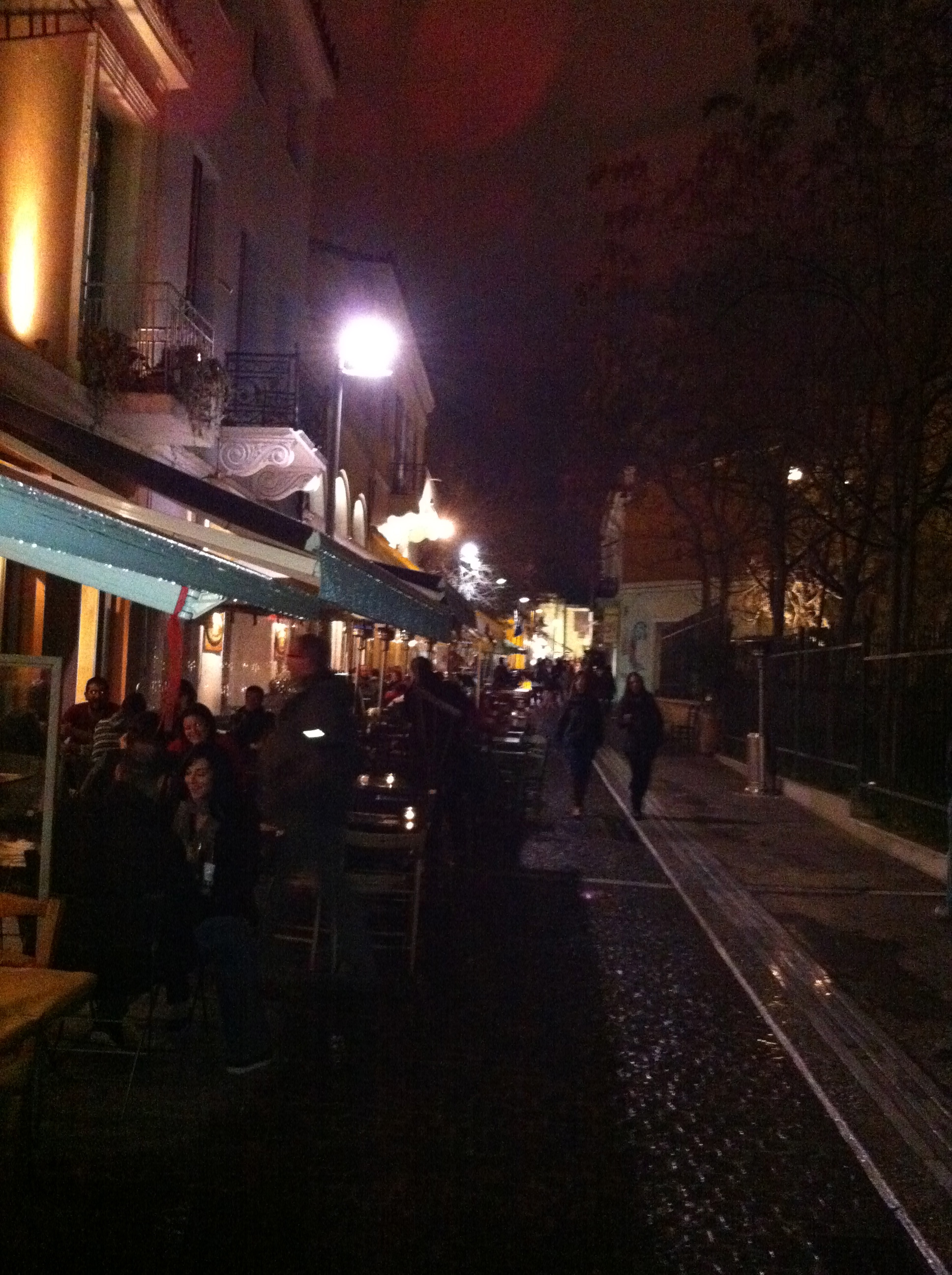
Monasteraki and / or Plaka, not sure which.

I had no idea where I was, but just kept on walking. My goal was to keep going until I had almost had enough, then start looking for a taxi. Before that happened, I had to stop for a gyro or souflaki, not sure what the difference is. A couple of servers at the place I found kept leaving the place with food and coming back in a few minutes. I saw them outside when leaving and they were bringing food from this cheap take out place to the fancy restaurants in the area, probably for twice the price.


The cook and a server at the souvlaki take out place in the Monasteraki or Plaka

It wasn’t bad finding a taxi and I went to sleep looking at the Parthenon. Another intense day.


Newer Entries