“A visit to the Joint Security Area at Panmunjon will entail entry into a hostile area and possibility of injury or death as a direct result of enemy action. the Joint Security Area is a neutral but divided area guarded by United Nations Command military personnel on the one side (South), and Korean People’s Army personnel on the other (North). Guests of the UN Command are ppermitted to cross the Military Demarcation Line into the portion of the JSA under control of the Korean People’s Army. Although incidents are no (sic) anticipated, the UN Command, the United States of America, and the Republic of Korea cannot guarantee the safety of visitors and may not be held accountable in the event of a hostile enemy act.”
It went on with instructions like “Fraternization, including speaking or any assocation with personnel from the Korean People’s Army / Chinese People’s Volunteers is strictly prohibited.” Also, “Visitors will not point, make gestures, or expressions which could be used by the North Korean side as propaganda material”. I wasn’t thinking of going for a beer with them but apparently people have been idiots in the past.
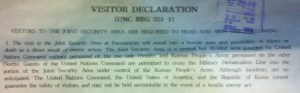
Not a warm fuzzy feeling coming from the release we had to sign. We didn’t have much time to read it but maybe that was better.
It was bizarre and breathtaking to actually be at the site that I had seen in pictures and movies before. A North Korean was standing on the opposite side. Several South Korean soldiers were protecting us. Two soldiers were half hidden behind a building. Apparently that’s to partially protect them if they are shot at and also so that they can use hand signals from their hidden hand.

The US soldier in the front was our guide. You can see a South Korean soldier on the edge of the blue building on the right. He’s half exposed and half protected by the building so that he can give signals to soldiers behind him. The nearer half of the blue buildings are in the South Korean side and the back half of the buildings are in North Korea. The white building in the back is the main North Korean observation area.
If you look carefully at the next picture, you can see a bump running from left to right half way back. This bump is the Military Demarcation Line (MDL), which is the border between the North and South. The blue building is controlled by the South Koreans but it is half on the southern side of the MDL and half north of the MDL.
Negotiations building at Panmunjon. The bump halfway back on the building is the MDL, the dividing line between North and South
They brought us into the blue negotiations building on the left of the previous pictures. There were two South Korean guards, one straddling the line and one at the very end of the North Korean side making sure we didn’t exit the wrong way. The US soldier made it clear that those two soldiers will not talk to us or make any gestures unless we try to go out the back to the North Korean building or harass them.
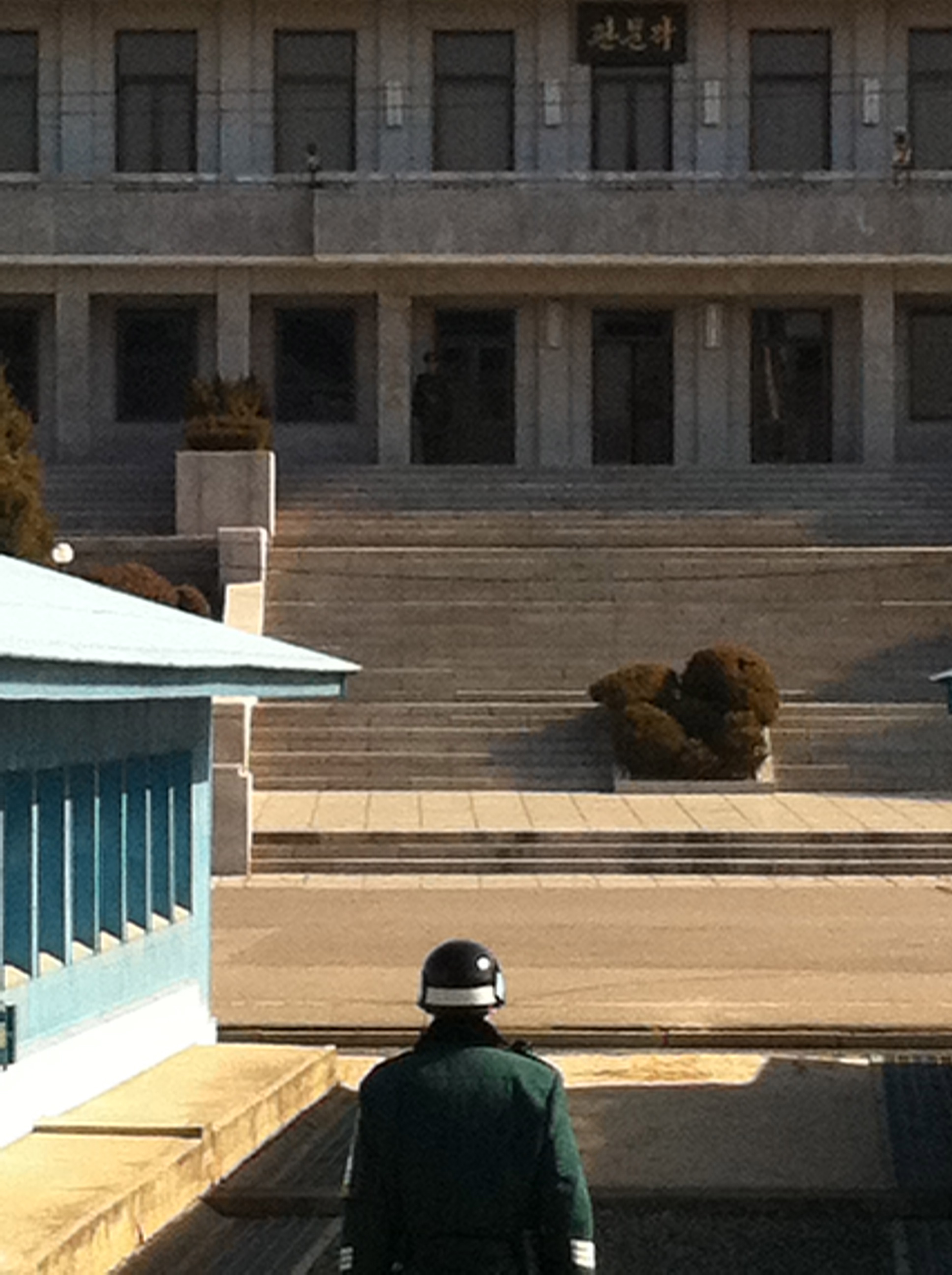
If you look carefully, you can see a North Korean soldier in the doorway immediately in front of the South Korean soldier in the white building in the back. I wish I had a better zoom.

South Korean soldier straddling the line between the North Korean side and the South Korean side. Our guide is on the left.
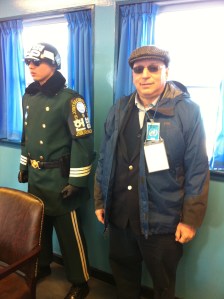
I’m on the North Korean side, the soldier is right on the line. I’m protecting the soldier here. At least I’ve got the sun glasses for the job.
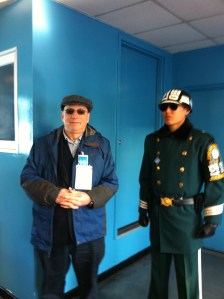
This is the guard at the far end of the North Korean side of the negotiations building. I would have defected to the North if he hadn’t have stopped me. Actually, trying to go past him to the North would be the biggest event of my life and by far the stupidest thing I could have done, even considering all the stupid things I’ve done in my life.
It was a surprisingly emotional experience to be on the North Korean side and to sense the ironically heavy feelings of these South Korean guards who were motionless.
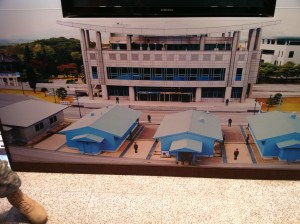
View of the South Korean side from the North Korean building. This is not my picture, if it was you would be reading about me in the news. This picture was provided by the North Koreans. I have a picture from the road in front of the large building in the back but we were told not to take any pictures of the South Korean cameras near the top of the building. We were of course being closely watched and if we took a picture of those cameras, a soldier would have been there in seconds to take our camera.
Table that the Armistice was signed on in 1953. Hawkeye from MASH would have been happy to see that.
We were then taken to an observation area to see the North Korean “propaganda village” just over the border. Supposedly all the buildings in the village are fake, like Hollywood sets. The flag is the second tallest one on the world and weighs something like 600 pounds just for the flag itself. They had a smaller one but when the South installed one larger they installed this one. The South hasn’t retaliated so the flag war ended.
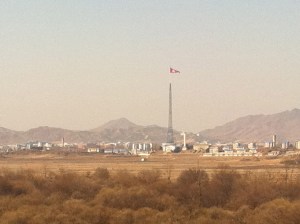
North Korean “propaganda village” with its false fronts and 600 pound flag
There were two buses, each with their own US soldier as a guide. I got the following picture of the guide for the other bus. I asked him where he was from and he said Pittsburgh. I asked for more details and he said he lived in a small town I wouldn’t have heard of. I told him I’m a professor at IUP and he said he’s from Kittanning and just bought a house in Homer City, which is only 5 miles from my house. I pressed him further and he was amazed that I had knew exactly where Coral is, which is actually where the house is. Small world.
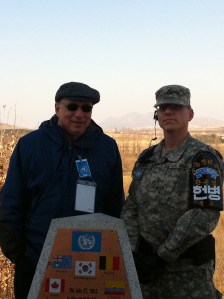
Guide who lives in Coral, PA just a few miles from my house
It was weird to be just a few feet from the famous “Bridge of No Return”. I think they said Bill Clinton accidentally got on the bridge and was quickly brought back.

The famous “Bridge of No Return”. Prisoners of War were brought here and told they could cross the bridge to go home or stay. If they crossed they could never return.
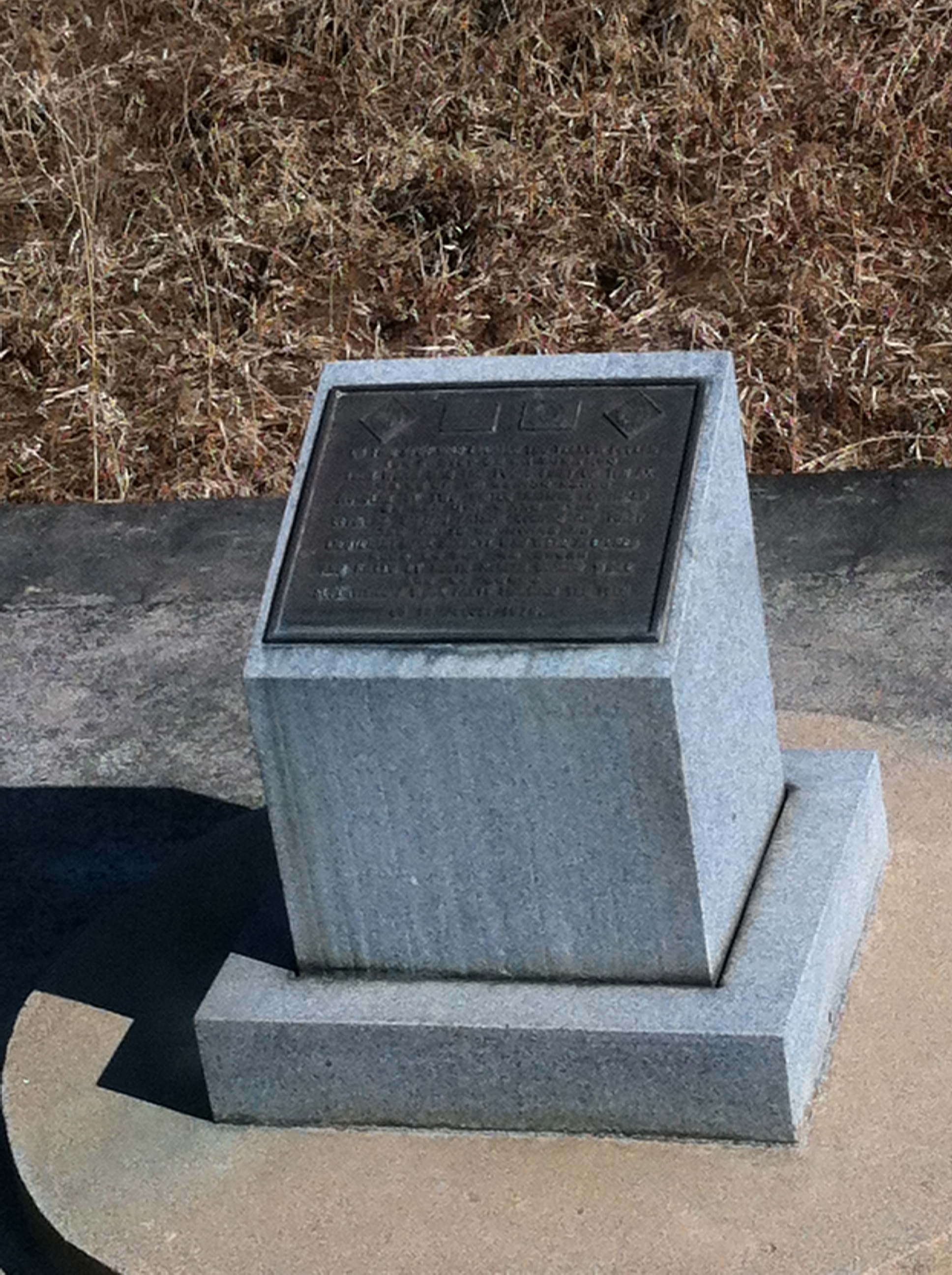
They then took us to the axe murder scene. There was a tree blocking the view between two observation posts so the Americans and South Koreans came in 1976 to trim it. The North Koreans had a surprise attack and killed the Commander, Captain Boniface and a Lieutenant. Three days later, Operation Paul Bunyan had 850 men with air support to cut the tree down with North Koreans watching. The US camp is now called Camp Boniface. For much more detail on this incident, go to http://en.wikipedia.org/wiki/Axe_murder_incident
Mock up of the North Koreans killing 2 US soldiers during the “Poplar Tree” incident in 1976 (left), monument at the location of the incident (right)
We then went to the Third Infiltrarion Tunnel. They have discovered 4 tunnels built by the North Koreans that cross the DMZ and could be used have been used for an invasion. They think there are 10 or so more that are still undiscovered. This one was discovered in 1978 with information from a defector. It’s a little over a mile long and is only 52 kilometers (32 miles) from Seoul. We were not allowed to take pictures.
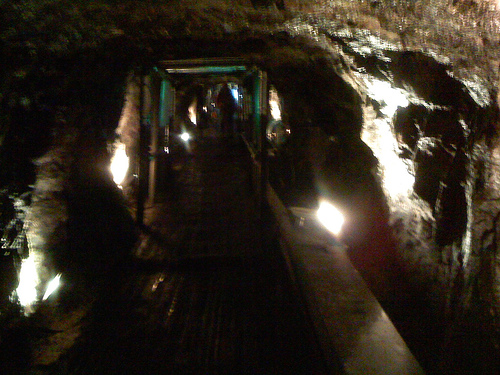
We got yellow hard hats and then went down a very long steep tunnel to get the 240 feet of elevation change for the entrance to the infiltration tunnel. The tunnel itself was a little claustrophobic. I hit my hard hat about 10 times and a couple of times it was enough to knock the hat off. I’m glad it was the hat that got knocked not my head. The literature said it was 2 meters wide (a little over 6 feet) and 2 meters high but at times it was narrower and lower than that. It was especially difficult when people came the other way. The walk ended at the first of three thick barricades. Going back up was also quite a challenge.
This was a scary event for me for the claustrophobia, banging my helmet, the steep climbs up and down, and for the realization that this was built for a North Korean invasion. I’m very glad to have done it though. Another unforgettable part of the trip.
Picture of the Third Tunnel found on the Internet. We were told not to take pictures.
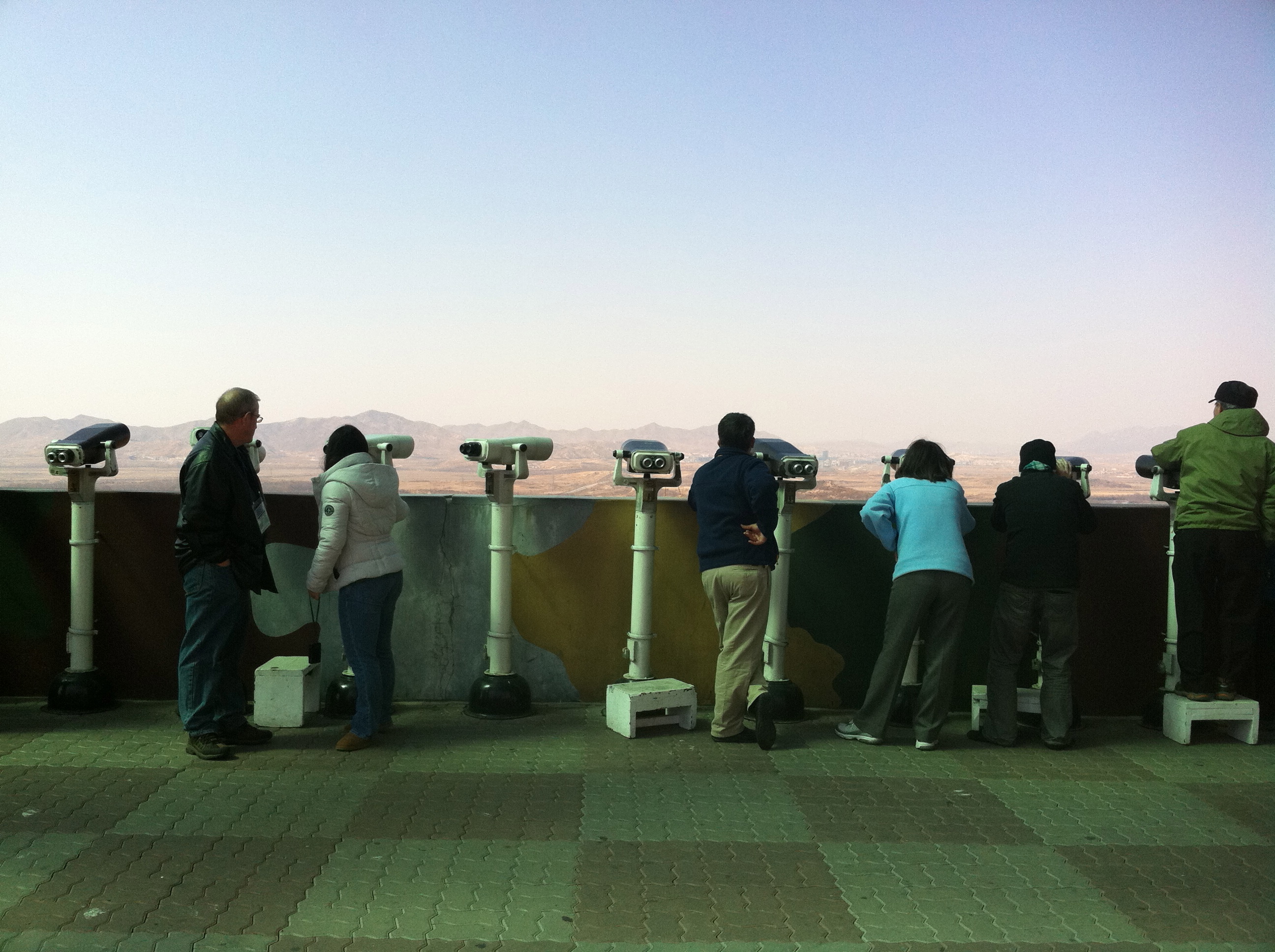
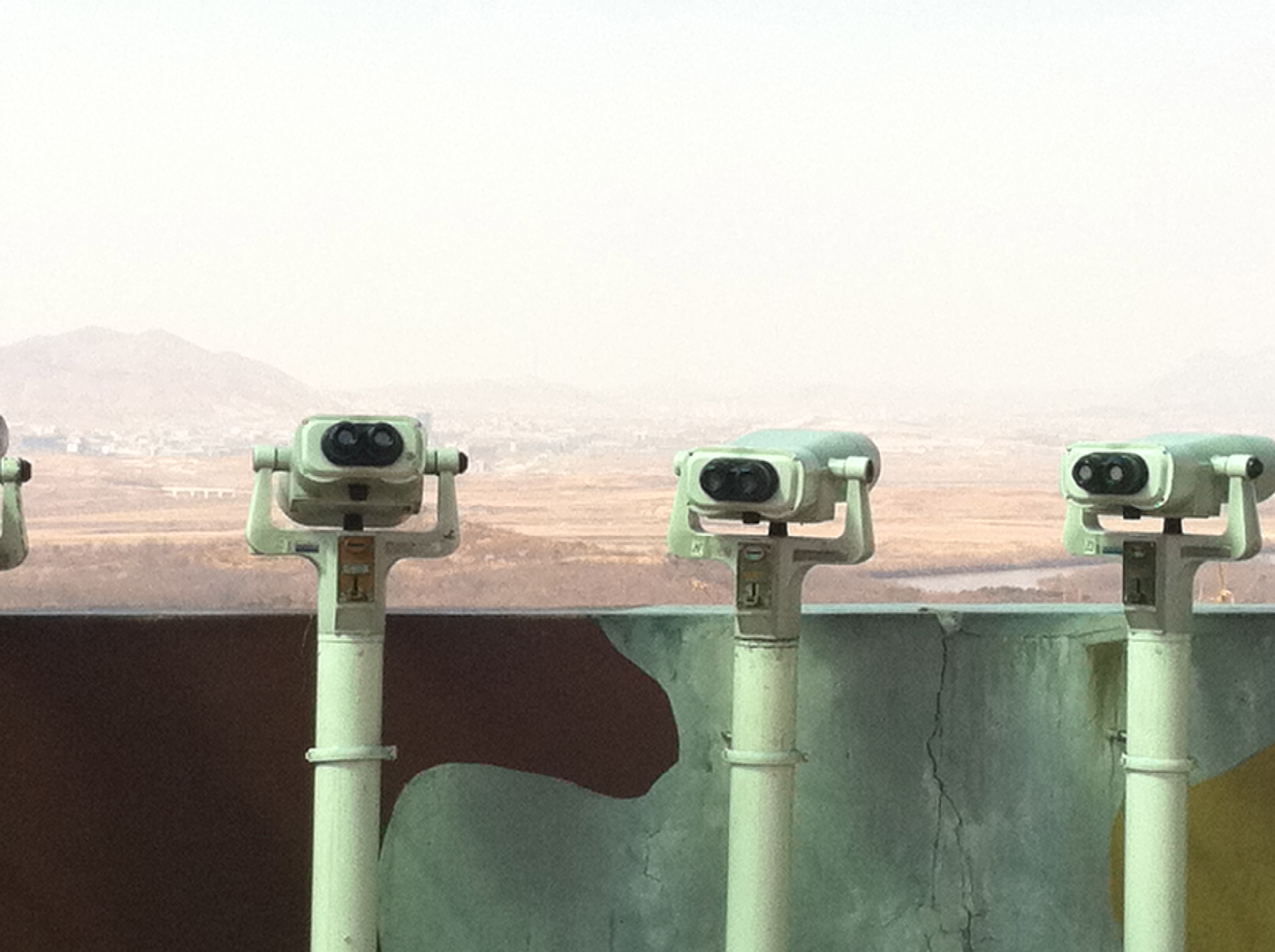
Our next stop was the Dora Observatory,which had a great vista of the North Korean propaganda village, the South Korean model village, and the whole DMZ area. You could also see the industrial area in North Korea that was built with South Korean money. Unfortunately, they did not allow pictures in front of a yellow line, which meant the pictures were nowhere near as good as they would have been right at the wall. The person next to me took a picture at the wall and within about 10 seconds out of nowhere a soldier came up and took his camera to erase the picture.
Best pictures I could get from Dora station since they did not allow pictures beyond a yellow line several feet back from the wall
My iPhone 4 map from the Dora Observatory. We were at the blue pin and the red pin is where I was staying at Korea University, maybe 35 miles away. Notice how there is no map information for North Korea.
We went to the Dorasan Station for lunch. I had bi-bim-bap again like on the plane coming over. Beef, cabbage, vegetables, beef, and rice all mixed in with spicy red paste and the always present Kim Chi (spicy cabbage) and soup were also included.
As always, some of the most interesting times come when you meet a person with a unique story. The American I sat next to for lunch was living on a small Japanese island 1000 kilometers (625 miles) south of Tokyo. He went to Carnegie Mellon in computer science, had an internship with Microsoft in Seattle, then a job in Beijing with many of the same people from the internship. He seemed to have dropped out and was enjoying life on this small island with his girlfriend learning Japanese. He was eager to get back to the island and his girlfriend but was worried about travel in Japan in the wake of the nuclear disaster in northern Japan. We agreed that it should be OK since he would just have to pass through Tokyo, which is far away from the disaster. However, the island doesn’t grow much food and relies on supplies from the rest of the country. If there started to be shortages, they would not be in a good situation. If you’re reading this, please let me know what you’re up to. I forgot to get his email or even his name.
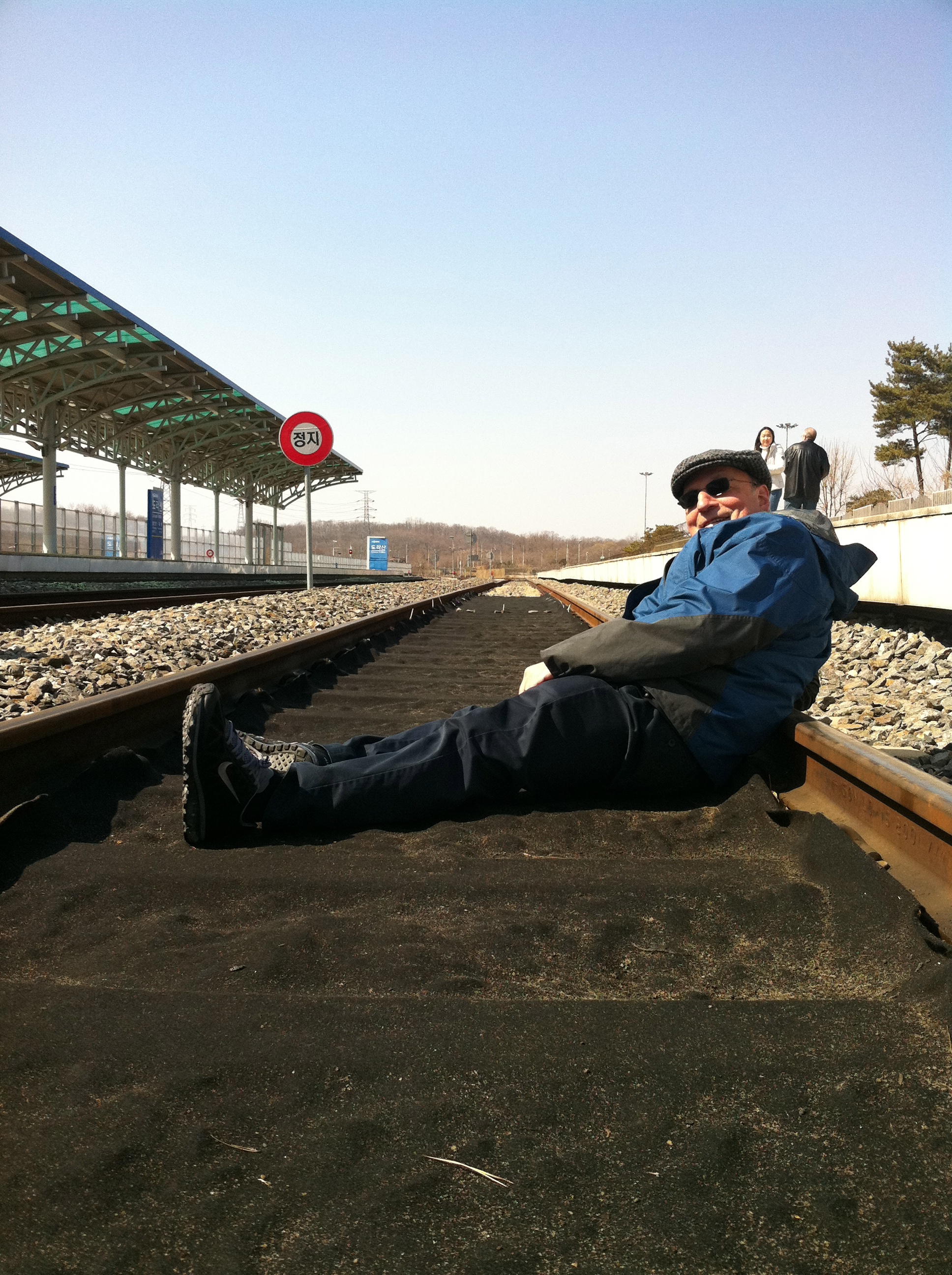
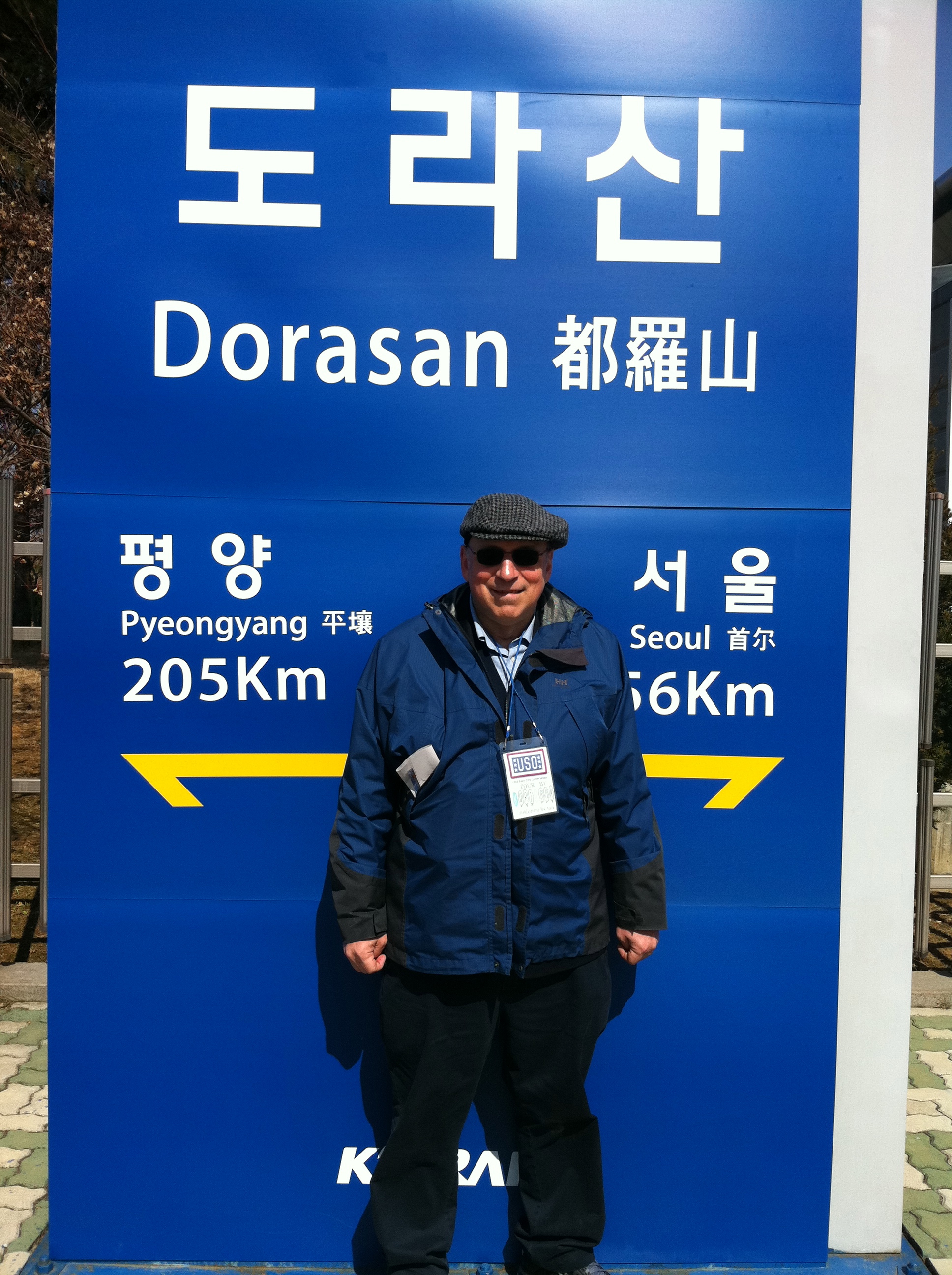
We then were able to go to the tracks of the Dora rail station. This was designed to go to North Korea, then on to Europe by way of the Trans Siberian Railway. Now it’s used for people coming from Seoul to administer the North Korean industrial village.
Sign at Dora Station, hoped to be a link to be able to get to Europe through the Trans-Siberian Railway but now the last stop
Resting on the tracks just a few hundred yards from North Korea, 35 miles from Seoul, and 130 miles from the North Korean capital
The trip back was uneventful. The bus took about one hour then I went to a small grocery store near the army base to get some food for dinner at my apartment. I took a taxi, ended up not eating anything, and went to bed early.
I admit to being a little shaken up by this experience, especially at Panmunjon. Not only was it disturbing to be in one of the scariest political locations in the world, I could sense the emotion of a country torn apart. I had only arrived in Korea the day before and this day made it clear I was no longer in Indiana, PA.
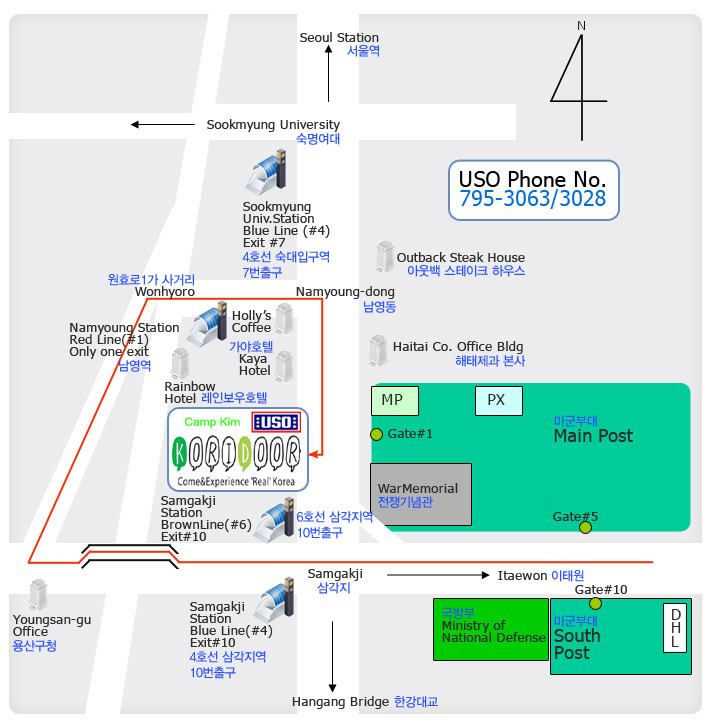 Confusing map to get from the subway stop to the US Military Camp where the USO tour began It took a little over an hour to get to Panmunjom, also called the Joint Security Area (JSA). This is where the armistice stopping the fighting in the Korean war was signed in 1953. The tour guide said her grandmother’s siblings are all in the North and haven’t been heard from in decades. People in the North have no external Internet, phones, or mail. There have been reports of widespread hunger. Very sad.


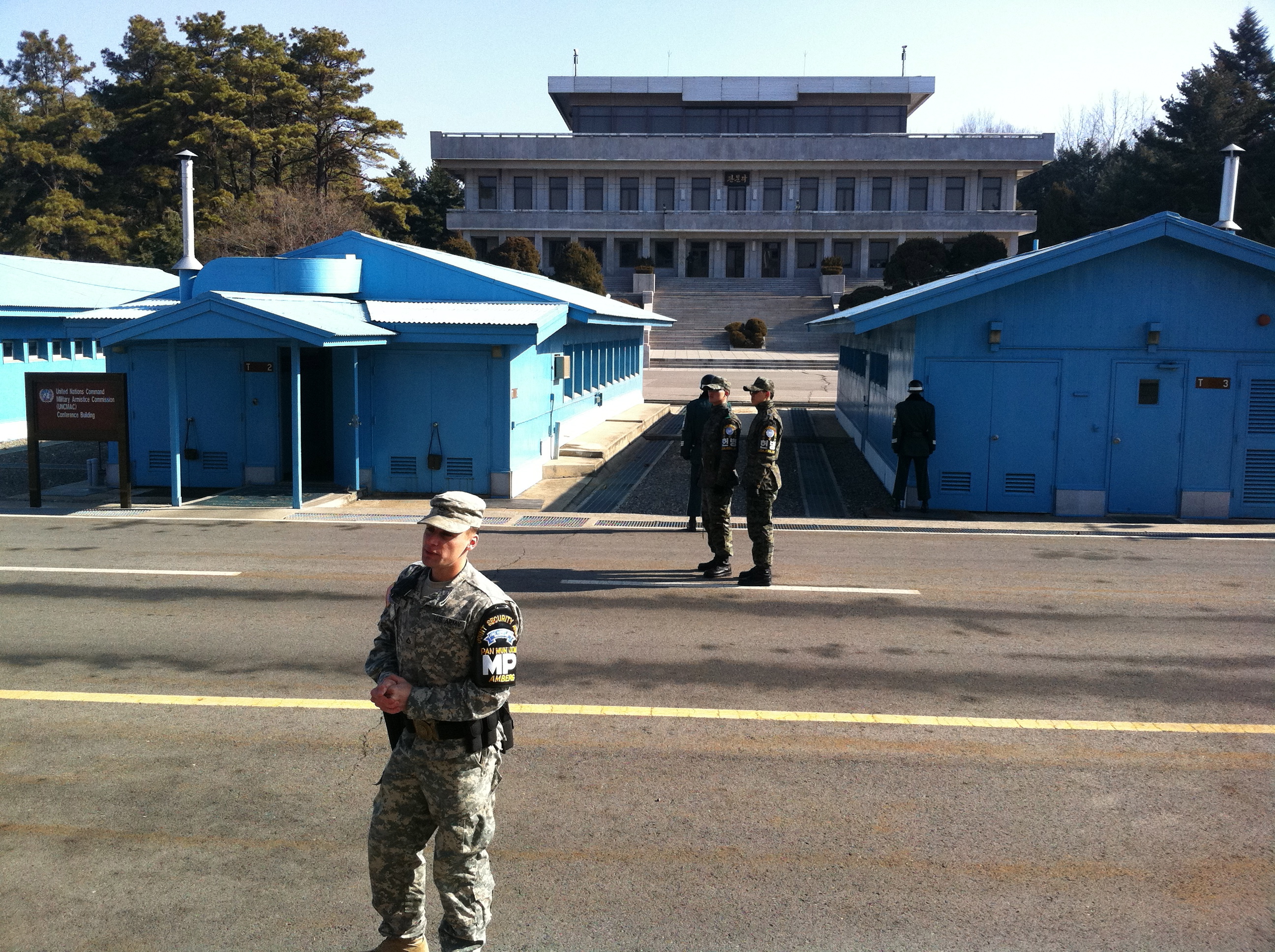 The US soldier in the front was our guide. You can see a South Korean soldier on the edge of the blue building on the right. He’s half exposed and half protected by the building so that he can give signals to soldiers behind him. The nearer half of the blue buildings are in the South Korean side and the back half of the buildings are in North Korea. The white building in the back is the main North Korean observation area.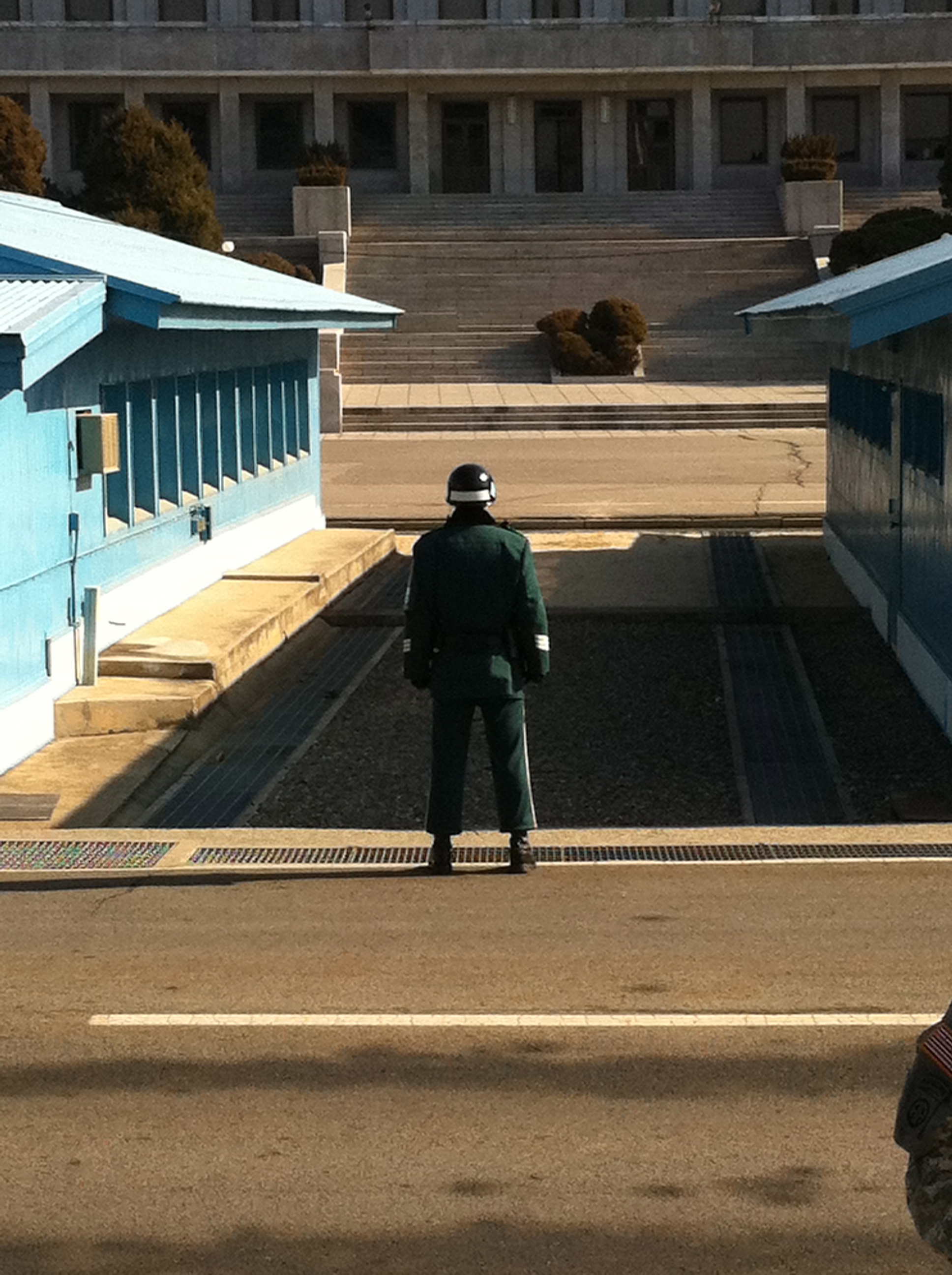
 South Korean soldier straddling the line between the North Korean side and the South Korean side. Our guide is on the left.
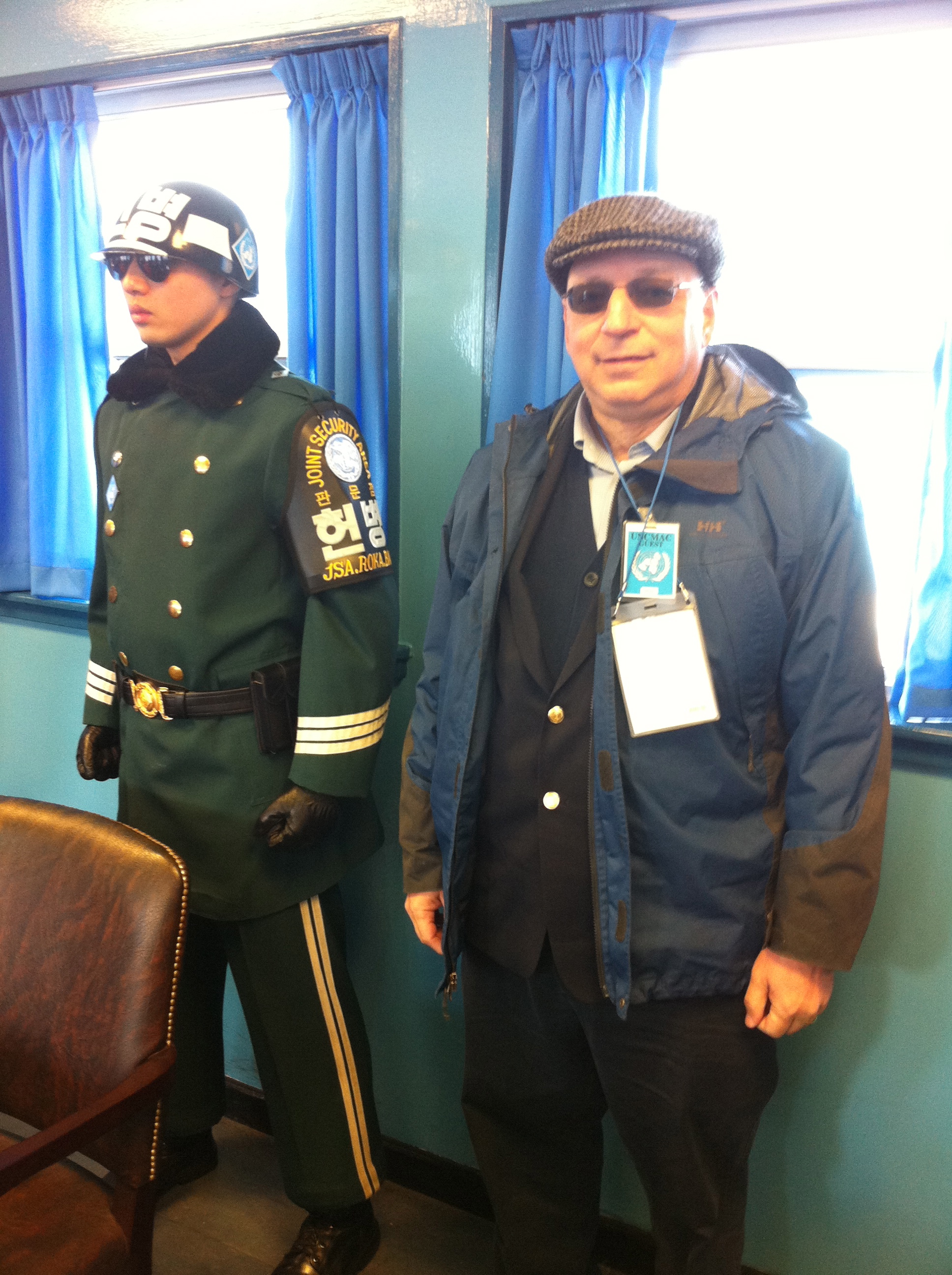 I’m on the North Korean side, the soldier is right on the line. I’m protecting the soldier here. At least I’ve got the sun glasses for the job.
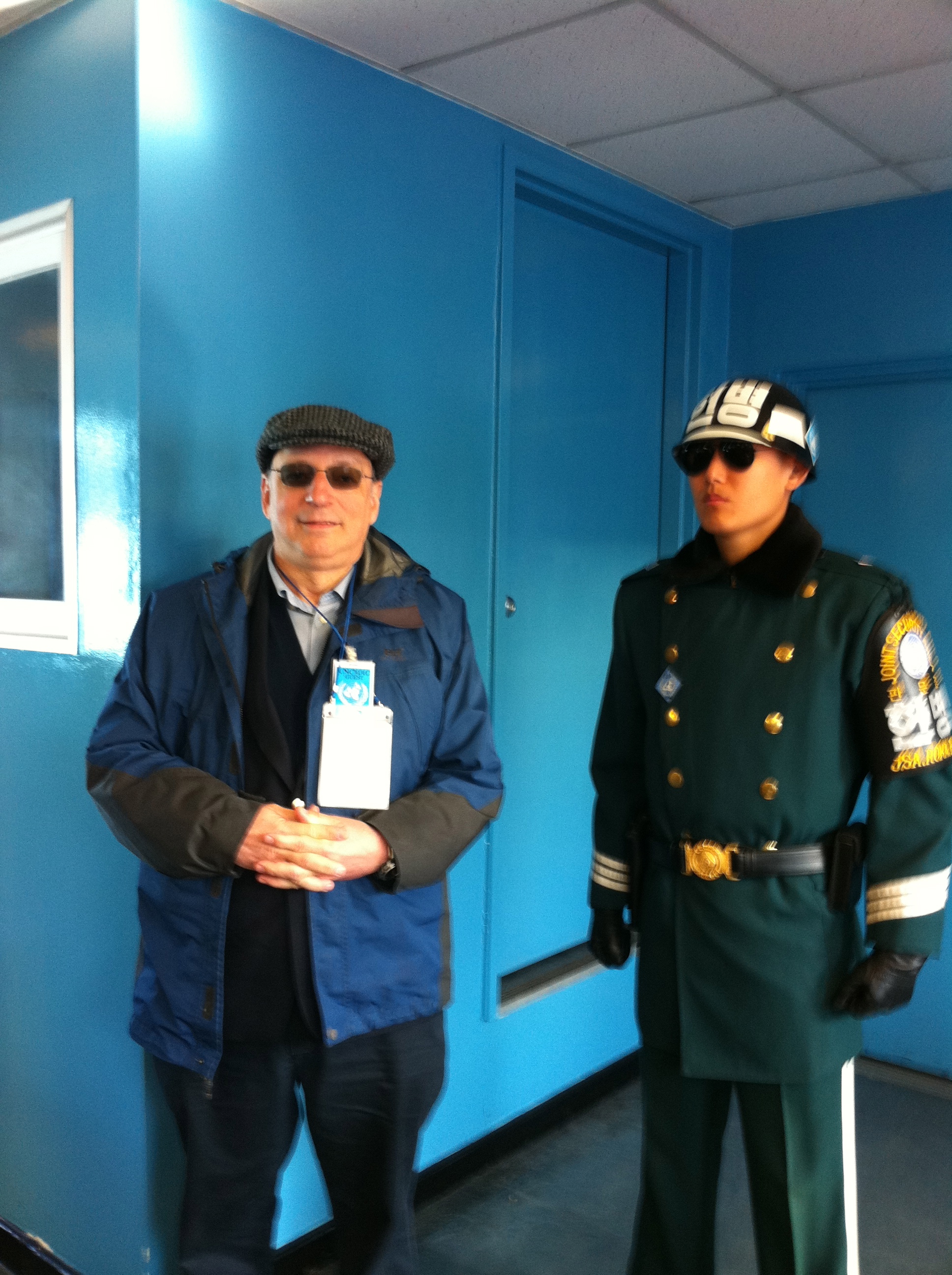 This is the guard at the far end of the North Korean side of the negotiations building. I would have defected to the North if he hadn’t have stopped me. Actually, trying to go past him to the North would be the biggest event of my life and by far the stupidest thing I could have done, even considering all the stupid things I’ve done in my life.
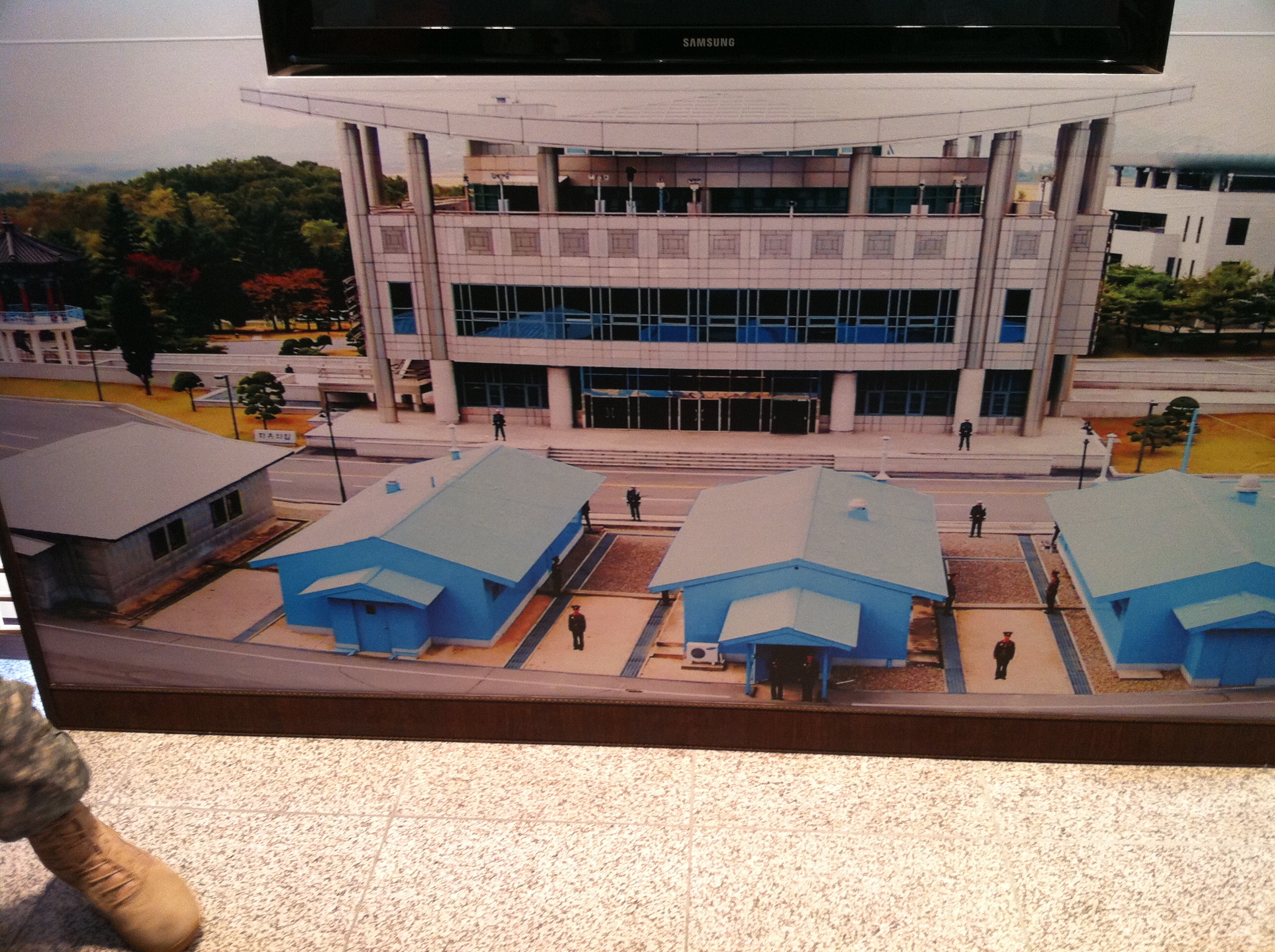 View of the South Korean side from the North Korean building. This is not my picture, if it was you would be reading about me in the news. This picture was provided by the North Koreans. I have a picture from the road in front of the large building in the back but we were told not to take any pictures of the South Korean cameras near the top of the building. We were of course being closely watched and if we took a picture of those cameras, a soldier would have been there in seconds to take our camera.
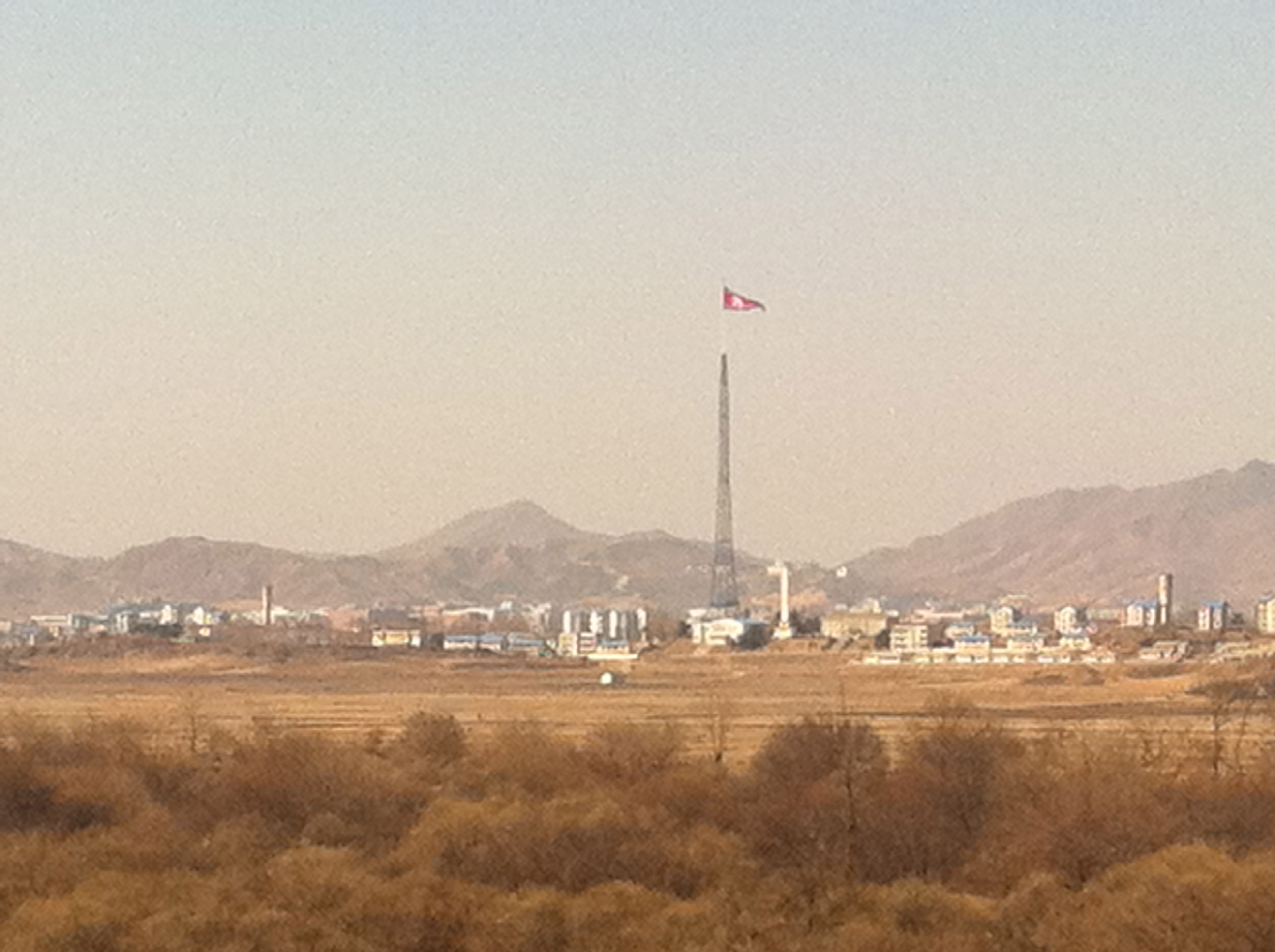 North Korean “propaganda village” with its false fronts and 600 pound flag
 Guide who lives in Coral, PA just a few miles from my house
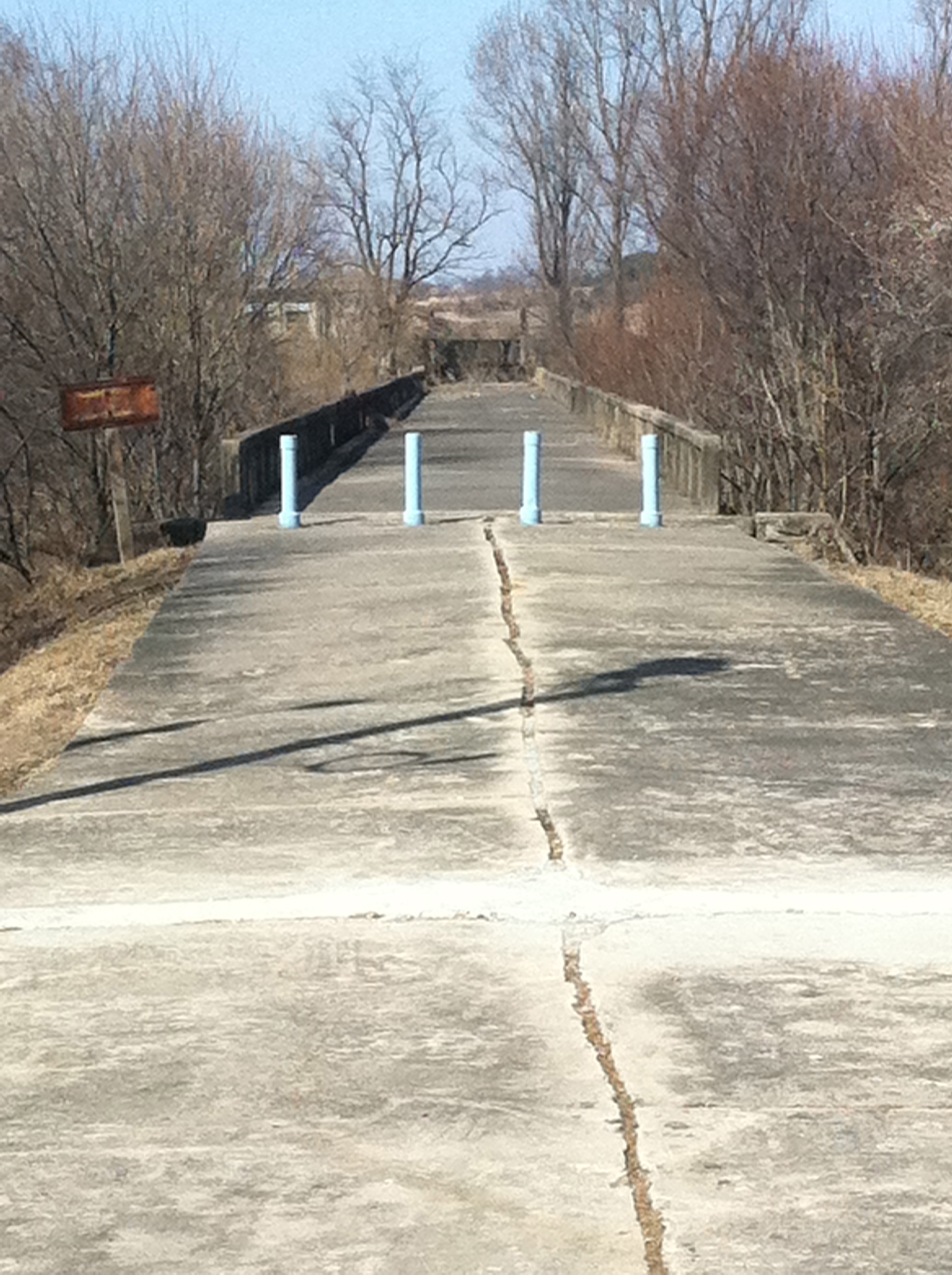 The famous “Bridge of No Return”. Prisoners of War were brought here and told they could cross the bridge to go home or stay. If they crossed they could never return.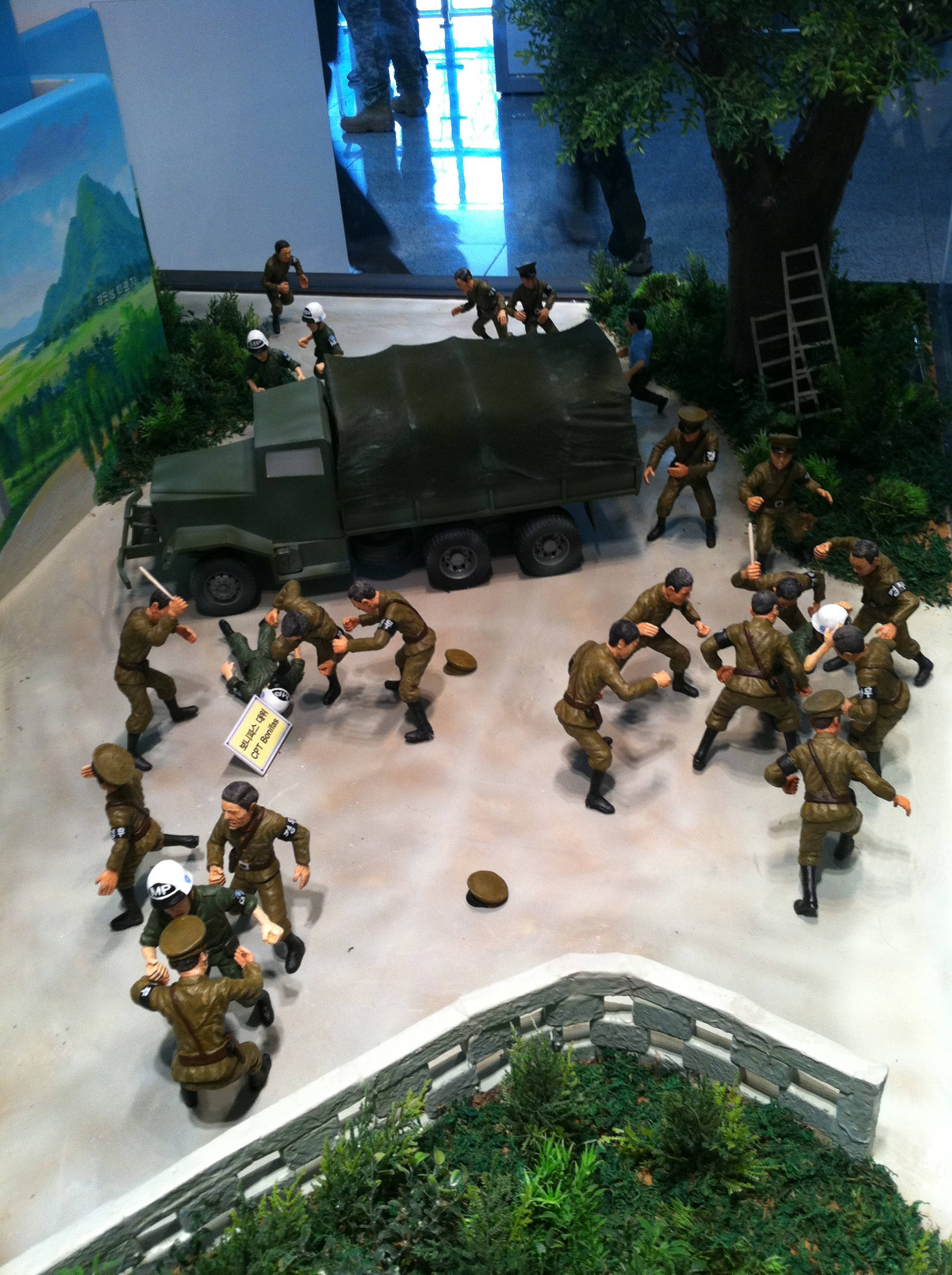


 feldmanlarry
Leave a comment