Day 8 Feb. 3 Cyprus in a Day and Turkish Halvah

Leave a comment

I was sad to be leaving Cyprus but excited about the next phase of the trip to Israel. Anytime you move from one phase of your life to another there are always those two high stress feelings, leaving the familiar part behind and also meeting the unknown. Fortunately, I was to have a transition day of seeing a fairly long list of sights in Cyprus over 8 hours on the way to the airport. A straight drive to the airport is just 45 minutes. Irini found a taxi driver, Stegos, to take me for 120 Euros or about $160. When he left me off, his meter showed about 180 Euros so it was a good deal. I also gave him 65 Cypriot Pounds, which were obsolete and could only be cashed at the National Bank in Nicosia. Mary Beth had given them to me to give away if I couldn’t cash them. They are worth over $120 if they can be cashed. He was going to try and if not, he was going to keep them as souvenirs.

Stegos was an interesting guy, divorced twice, once to a Romanian bride who I think was arranged for him to go to Romania and get. His explanation of his blended family got too confusing to me to fully get straight. He spoke decent English that he learned from being a taxi driver, not from his 8th grade education. He and I became friends that day and I’ll miss him.

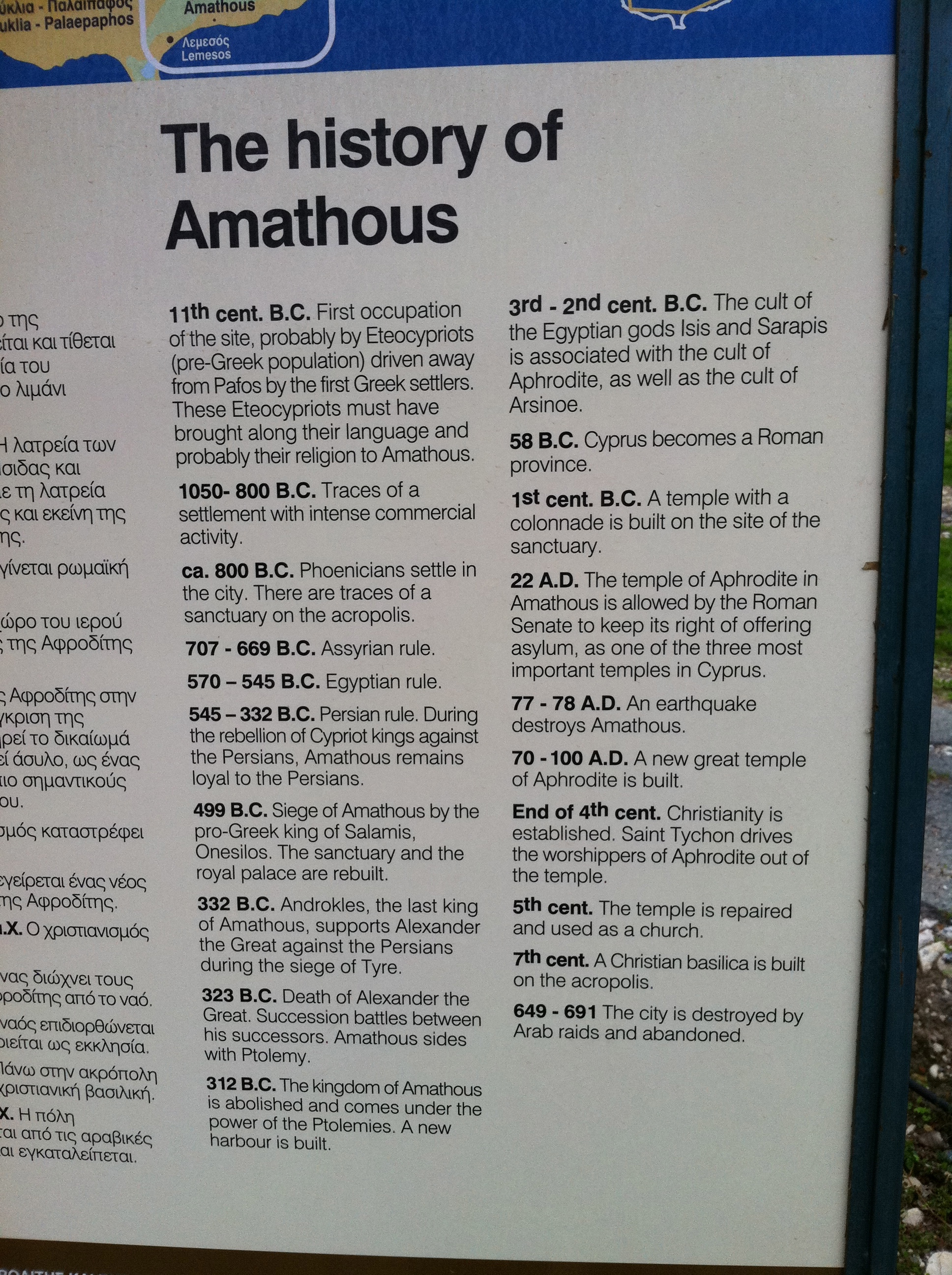
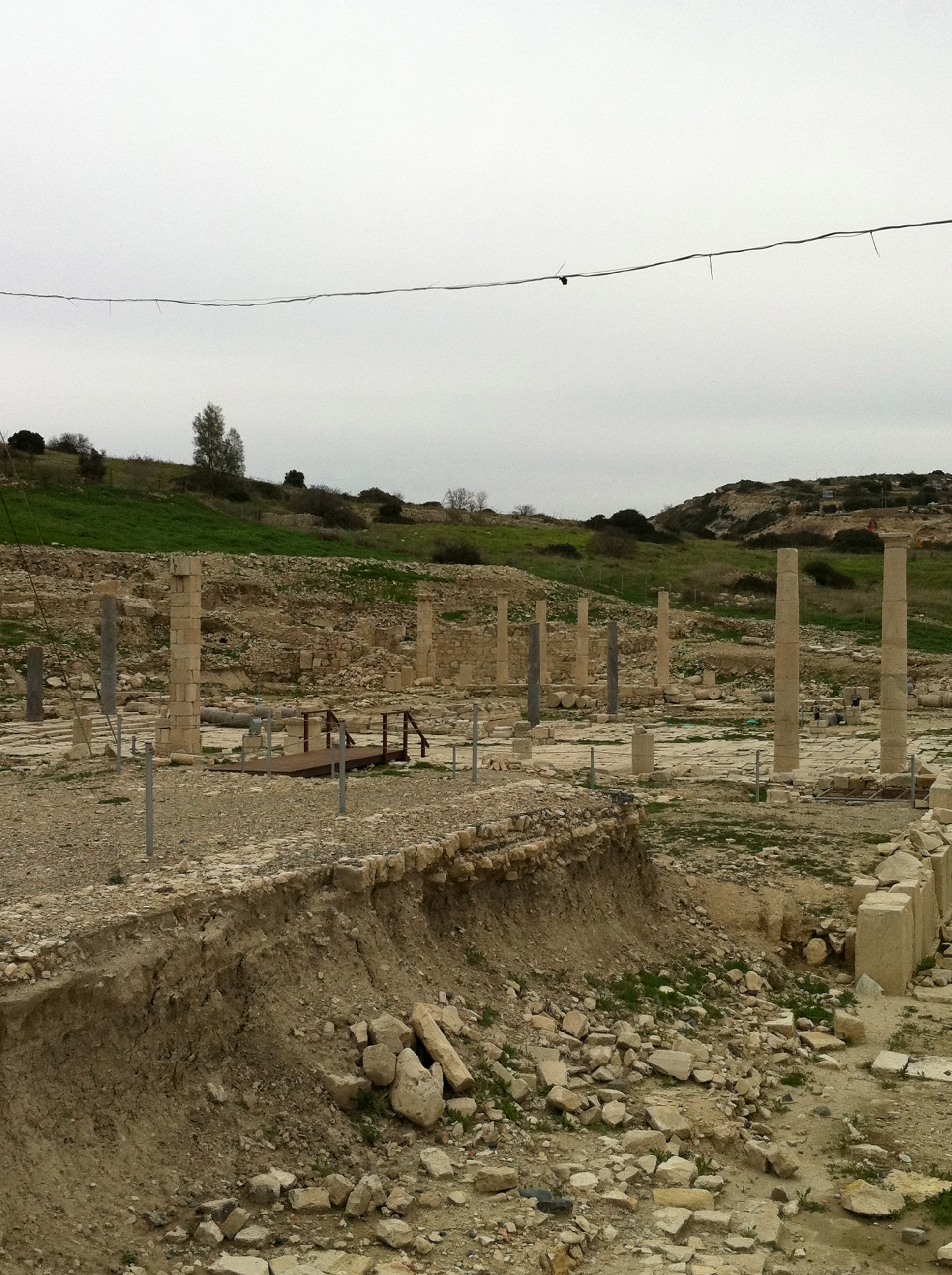
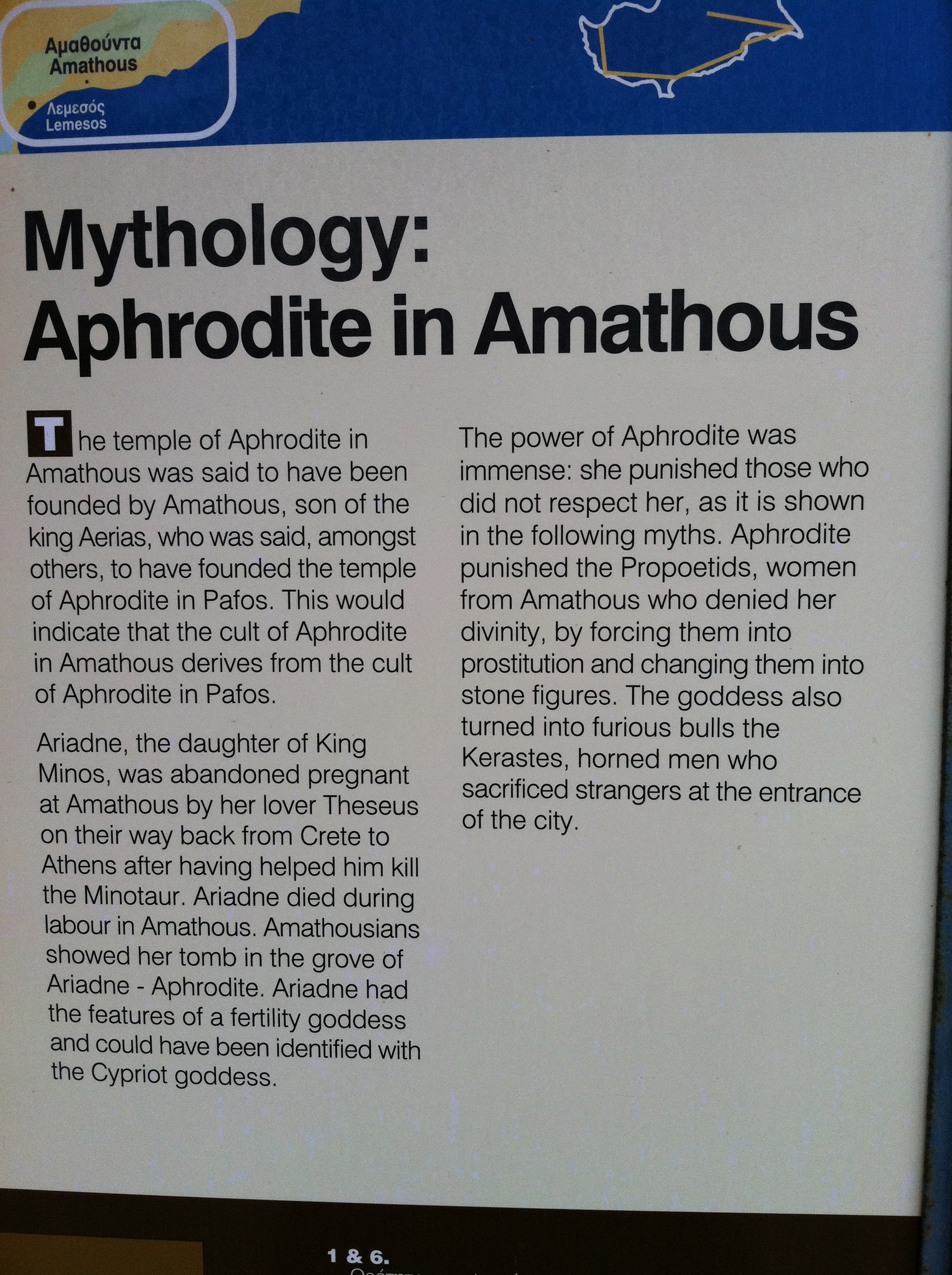
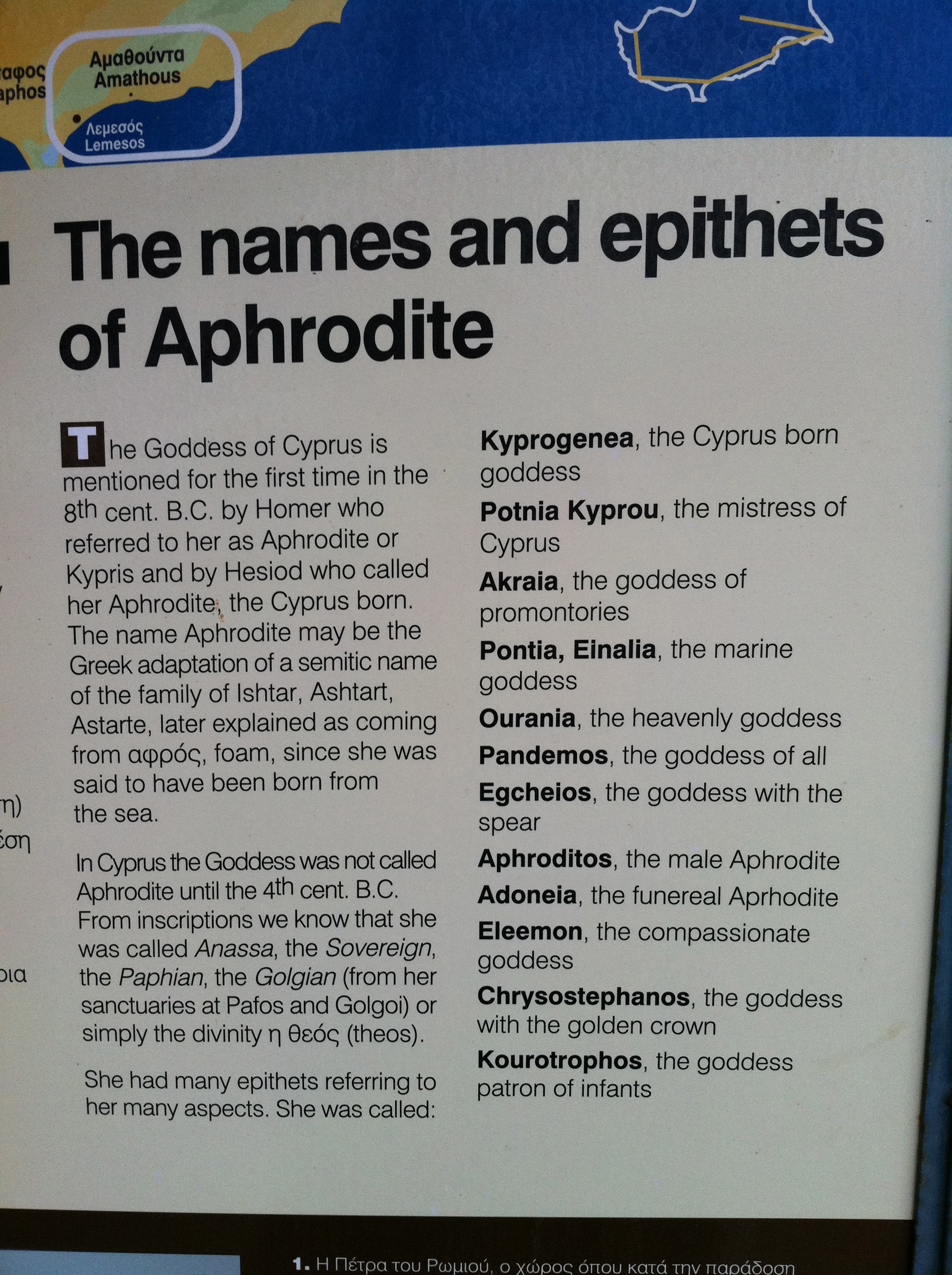
The first place we went to was called Amathounta, an archaeological site going back to the 11th century BCE. I’m starting to worry about my encounter with Aphrodite a couple of days ago. She had a lot to do with this site. As it says in the second column of the picture on the left, Aphrodite punished women who denied her divinity by forcing them into prostitution and changing them into stone figures (seems like stone figures would not be very effective prostitutes for most customers). She also turned men into furious bulls who sacrificed strangers at the city. My message to her if she can hear me is “Please forgive me, Aphrodite!” If she can’t hear me, never mind.
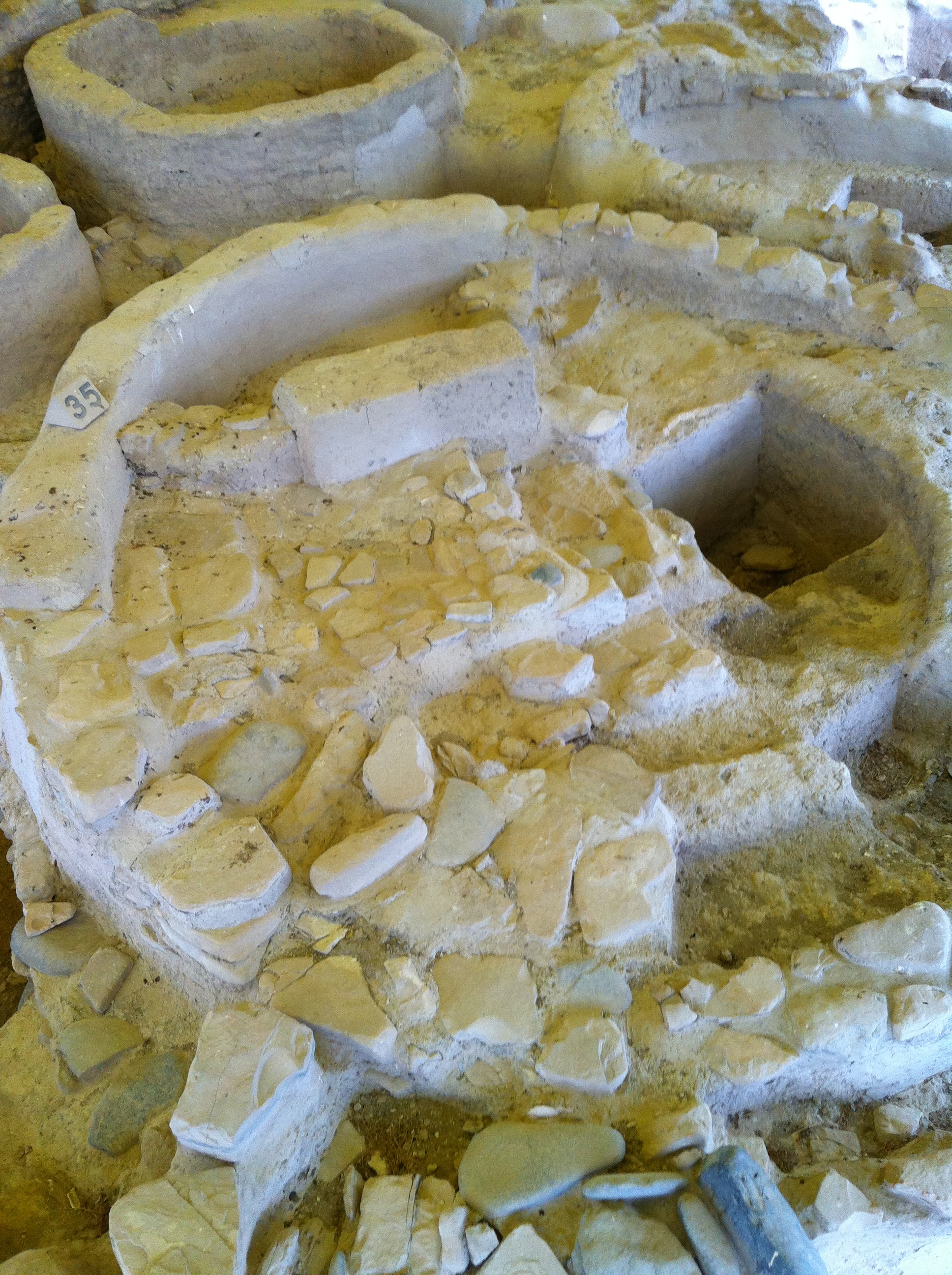
We then went to a Neolithic archaeological site from 7000-5500 BCE called Tenta. At first I thought the name came from the tent-like structure designed to protect it (built in 1995) but that’s just a dumb thought on my part, sorry for sharing it with you. I wonder what people 9000 years from now will be saying about us.
We then went to two villages way up in the mountains called Pano Lefkara (high Lefkara) and Kato Lefkara (low) to a shop where they sold lace and silver jewelry. They told me that every woman loves jewelry and lace. Margaret – in spite of the fact that I’ve never seen you wear jewelry or express any need for lace, as a woman you must obey. I had a nice talk with the grandmother at the shop who lived in Queens in NYC for 30 years. The people did not give me a hard sell and it was fun to see this part of the island.

I could keep track of how long each stop was by how many cigarettes Stegos smoked. As soon as we got out of the car, the cigarette ritual began. He told me how many hours he worked a week, I don’t remember now, but I wonder how many of those hours went to the tobacco industry. He was very careful not to smoke near the car though and “let he who is without sin cast the first stone” or whatever the quote is.

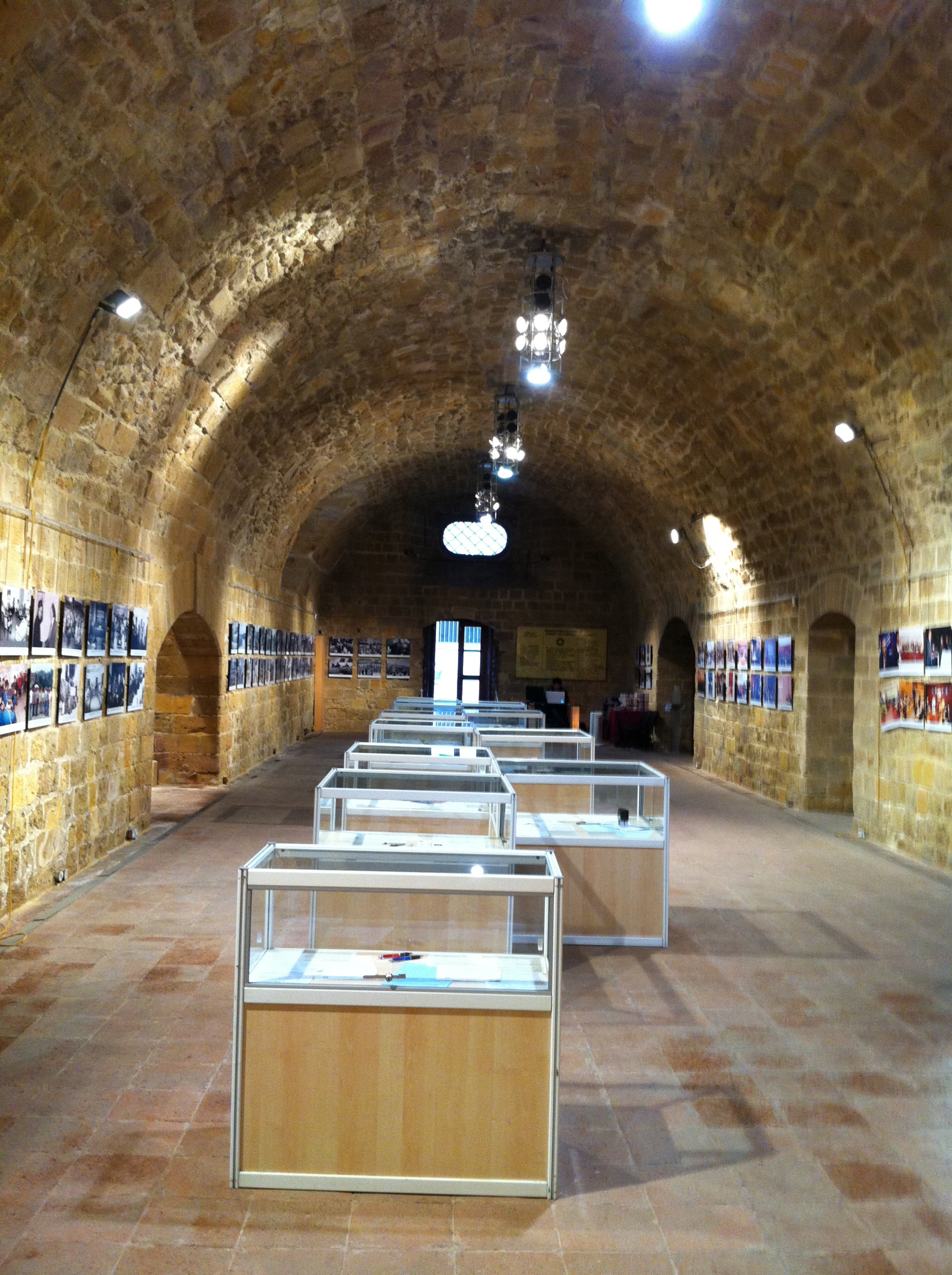
Next was the capital city of Nicosia, which they advertise as the only divided capital city in the world. We checked out a couple of museums – the national archaeological museum and a Cypriot historical museum called “Pili Amochostou”. We also went to the museum for the founder of the nation, Archbishop Macharios. After Stegos finished a cigarette at each place he joined me since he had never been in these places himself. Next was a great view of the area from the top floor of an office building but I was itching to get to the Turkish side.
Apparently, only in the past few years has the border between the independent Greek-speaking country of Cyprus and the Turkish area of Cyprus been opened for easy travel. Stegos was able to enter with just his ID card and they gave me a quick visa on a separate sheet of paper. This was a particular thrill for me, it seemed like one of the more obscure places in Europe. We walked around through the Turkish shops and saw the Selimiye mosque. I bought some pistachio halvah from Turkey, which is the most famous halvah (not that most people know what halvah is). I used to get halvah in Montreal and it’s great stuff. I planned to bring it home and share it with people but I’m eating some right now as I write this in Israel. Sorry.
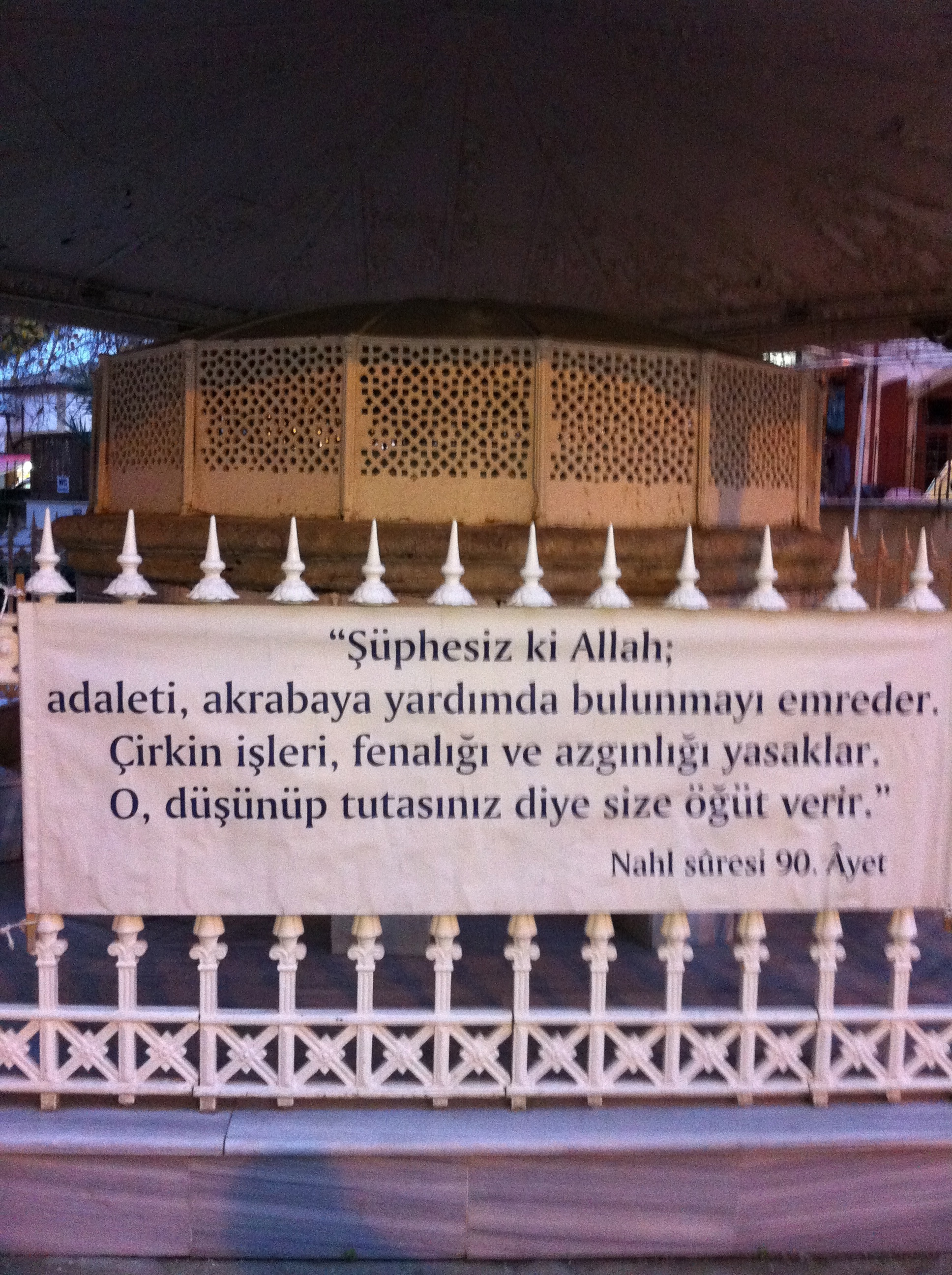
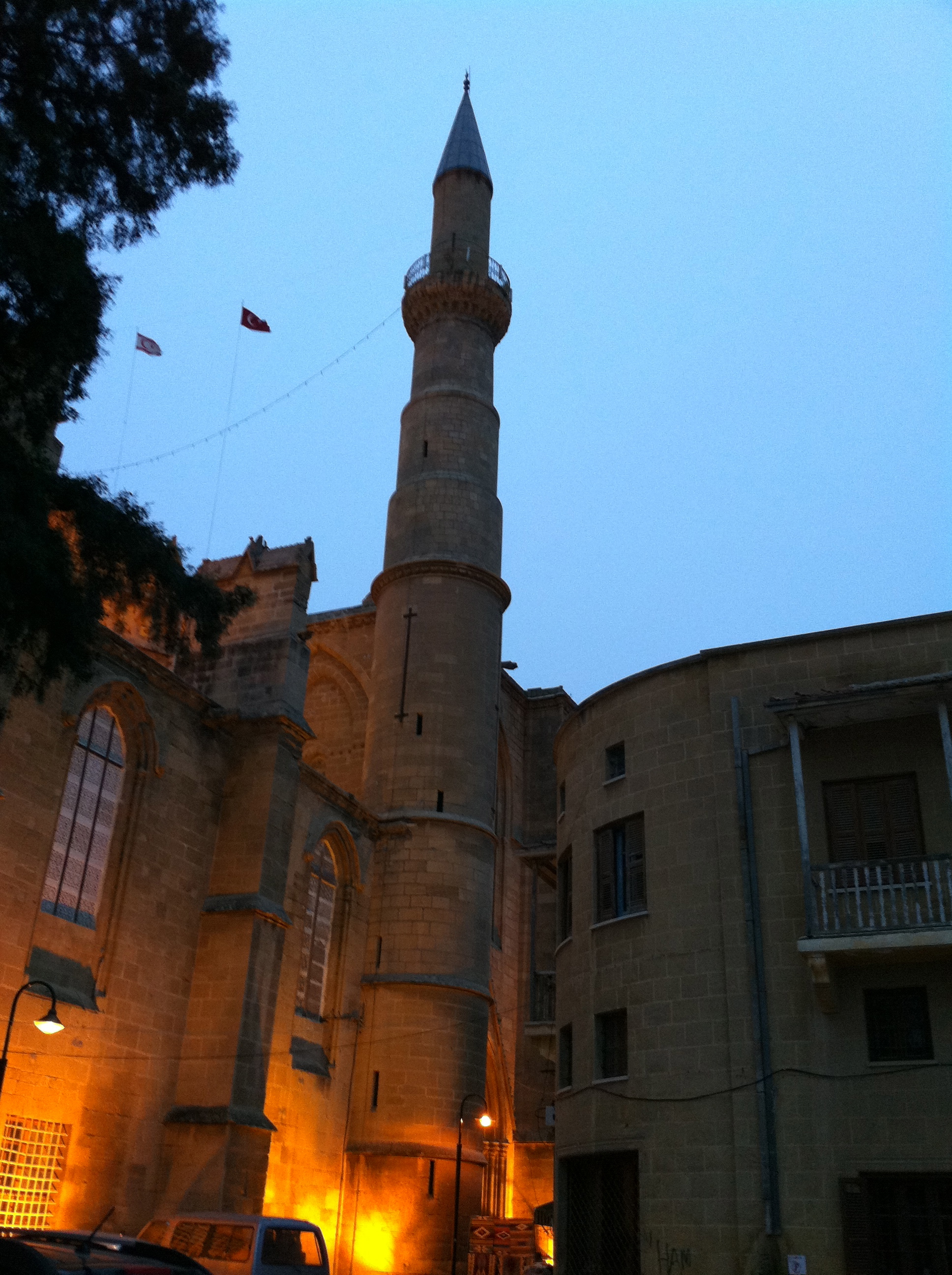
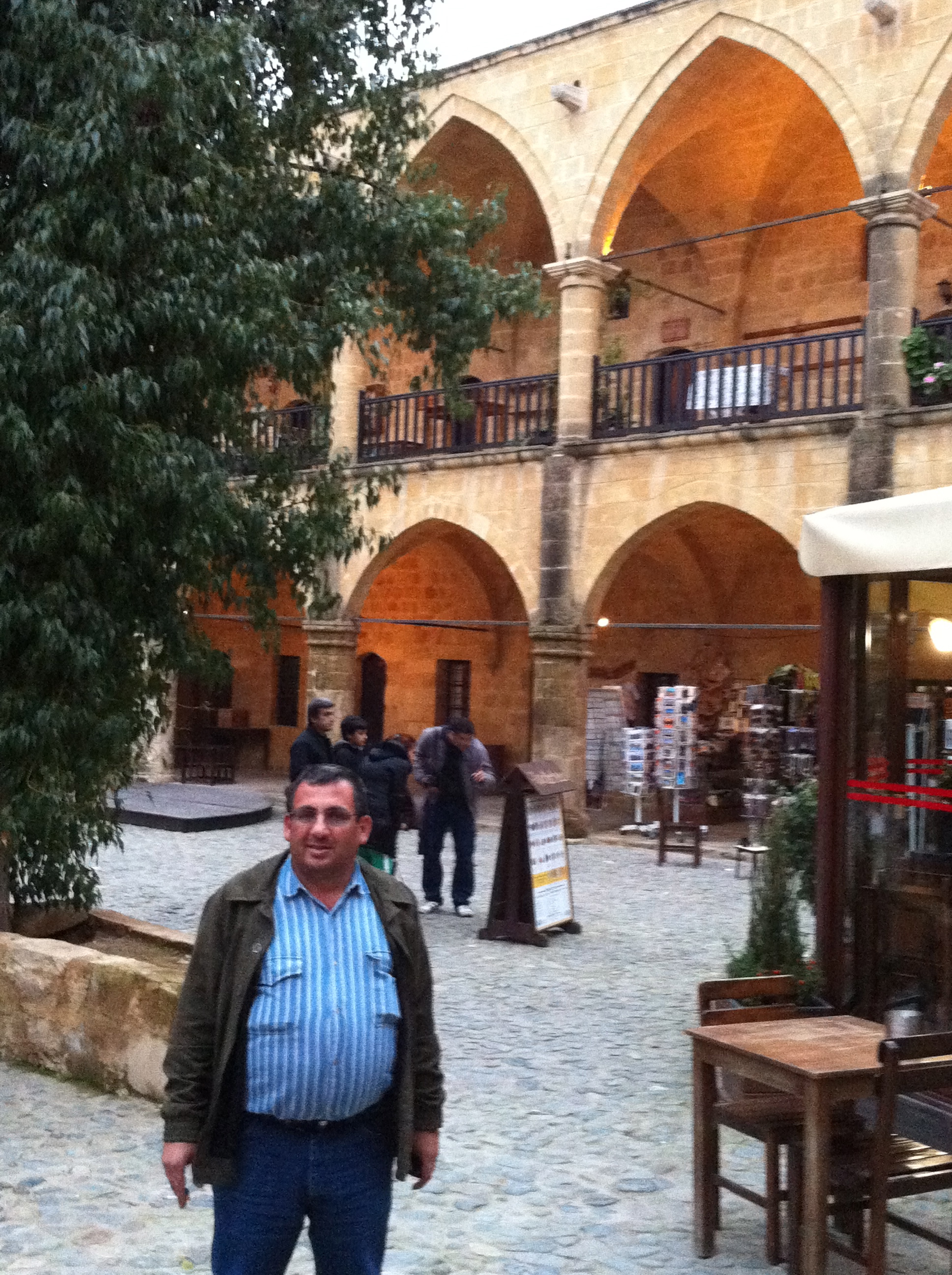
We then went to Larnaka, which is the third biggest city and saw another mosque and were too late to get into the supposedly beautiful Lazarus Monastery. Stegos and I had a farewell coffee in the square facing the Monastery then he drove me to the airport around 8 PM. I was sad once again to be leaving Cyprus. It’s a wonderful place to live or visit.

With my business class ticket, I was able to wait in a very nice upscale lounge. While standing in line for the flight, I casually mentioned something to the woman behind me about waiting and she gave me an unforgettable story. She was an Israeli who went to Cairo for a teachers’ conference. The uprising started as soon as she got there and they were stuck in the hotel, at one point while potential looters were yelling outside. The hotel staff protected the hotel with knives and anything they could find. Finally, a bus took them to the airport where she stood in line from 8:30 AM to 6:30. The airplane had extra small seats and didn’t take off for 2 hours. I felt like a real idiot mentioning waiting in line a few minutes. Please remind me never to complain about anything ever again.
Day 7 Feb. 2 Last day in the school and a third meze

3 Comments

I’m wondering about doing this blog. There’s always a tension between living life and talking about life. Does spending time writing about what you’ve done keep you from actually living and doing new things? I remember being in the St. Lawrence River north of Quebec City watching whales. Video cameras had just gotten affordable so I spent the whole time pointing my camera at the river waiting for a whale to appear. I have a long boring video with a few amazing shots of whales that I’ll never edit or watch. I didn’t really enjoy the moment of being with those whales as much as I could have. Right now I’m in my hotel in Tel Aviv before my friend picks me up so I could be spending my time half sleeping. Put it that way this sounds like a good option. Hopefully, the blog will be read by others or at least by me.

The children in the school are great. They greet me in the halls with “Good Morning, Mr. Larry”. All the teachers and the Headmaster are “Mr.” or “Miss” then their first name. One class is called 5S, since the first name of the teacher is Soulla and the other is 5L for the first name Litsa.

Their homework is filled with wonderful drawings of configurations of seating arrangements with different numbers of tables (area) and numbers of people (perimeter). They had a harder time with the concepts of “I notice that …” and “I wonder if …” Looking back, I should have worked harder on those concepts in the class before assigning it. I didn’t know what to do with my final question that I had printed out to give, possibly as homework on the last day. The students back home definitely showed major advances but only a handful really got it. This is not surprising since the question is a variation of a question given to US and Chinese teachers by the great Liping Ma in her comparative study of teacher knowledge of the content needed to teach conceptually (Knowing and Teaching Elementary Mathematics). So the question was never designed for kids.

After about 50 of my 80 minutes I realized that they were ready for the question if I could have a good full class discussion first. Several students were able to give a correct formulation in the discussion – that if the perimeter increases, the area will only sometimes increase also. We’ll see when I get back and look at the papers. I doubt I’ll look at them while travelling.

I stopped on the way back to the hotel at a little hole in the wall that had a line of people getting take out (“take away” in British English). There was a long row of foods to choose from but the space to walk through and see them was about ½ the size of one person (at least 1 person my size). I remembered Moussaka from the days I lived in a Greek area of Montreal. I couldn’t remember whether it was something I liked or especially disliked but I ordered it just because I remembered liking the name and couldn’t see anything. I’ll quote from Wikipedia. Reading it now, I’m not at all tempted by it but it was excellent. I don’t care for eggplant (aubergine) much but somehow this mix really works.

“It has three layers: a bottom layer of sautéed aubergine slices; a middle layer of cooked ground lamb cooked with onion, garlic, chopped tomatoes, herbs, and spices (cinammon, allspice and black pepper); and a top layer of bechamel sauce or egg custard. The composed dish is baked until the top layer is browned. Moussaka is usually served lukewarm.”

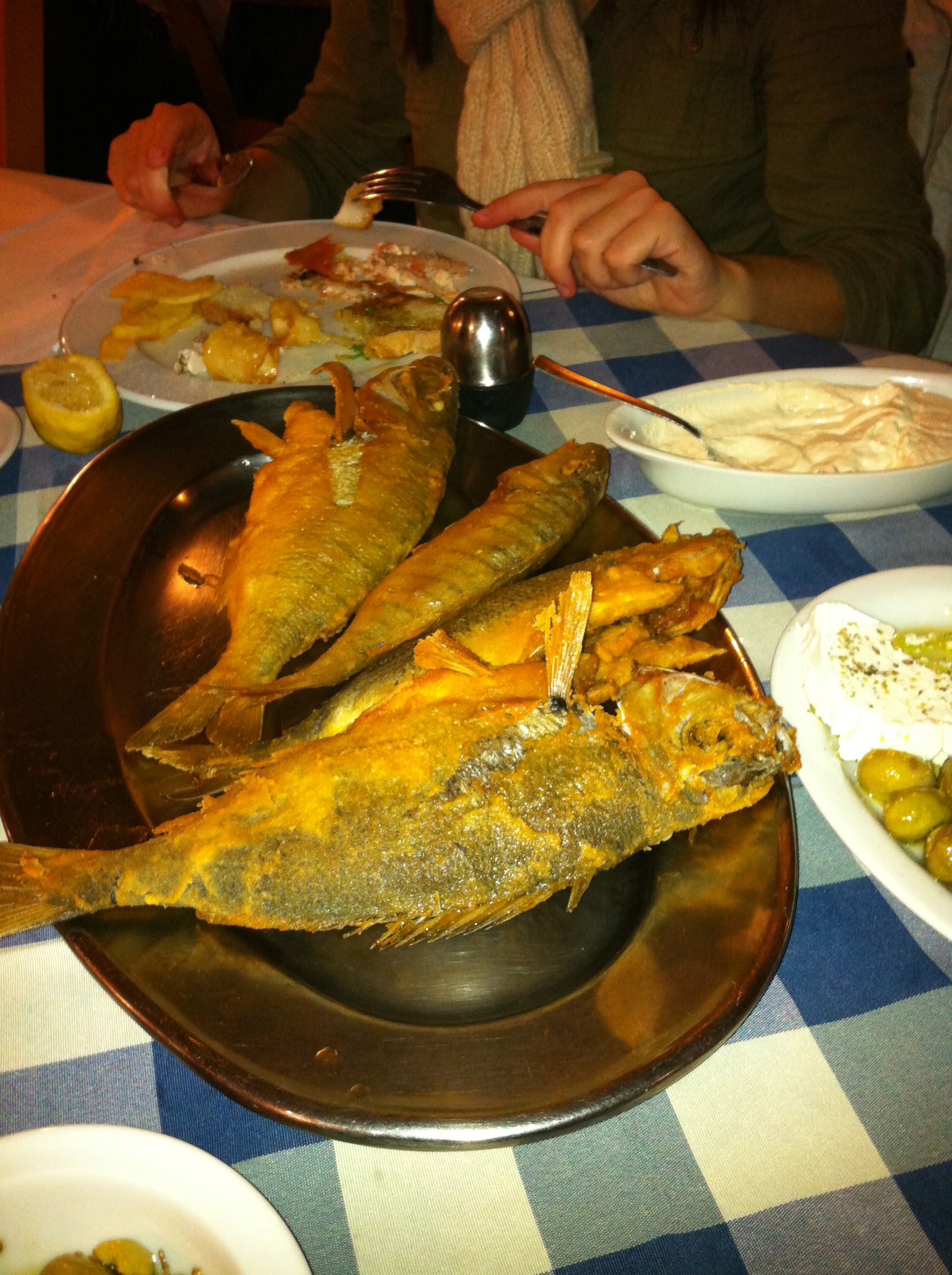
At 9 PM, Irini and Yiorgio picked me up to have another Meze with Nick (the Headmaster). This time, it was a fish one. Technically, it was not a Meze, since Nick picked out the fish rather than having it picked by the house. Here’s just one of the many platters of fish and amazing accompaniments. I realized what a novice fish eater I am. Someday, I’ll spend a summer under the guidance of Yiorgio, whose family were fishers, to learn how to do it right.

Speaking of Yiorgio, he is one amazing guy. He took way beyond the maximum credits allowed at IUP and graduated with a 4.0 in music ed and in record time. He’s an accomplished jazz musician, teaches full time at a school, then teaches part time at another school, besides being a great father. He loves the life he has with Irini, the kids, the beach, the foods, and the world.

Speaking of Irini, she’s one amazing woman. She excelled in our Master’s in Elementary and Middle School Mathematics Education. She’s a very popular math teacher at a secondary school, but is certified in elementary and loves that group. She’s one of the most creative people I know and I’m very indebted to her for arranging this visit to the schools. She also has that infectious positive attitude about life.

The two of them rave about Indiana, PA. I need to video them talking about it so next time I get down on Indiana I can refresh myself. They loved the four seasons, the ambiance of the town, the ease of getting around, and the university. Yiorgio’s experience with the Music Department was inspirational to me. He had gone to the famous Berklee College of Music in Boston and was very disappointed in the poor quality of teaching and the uncaring faculty. He got just the opposite at IUP. His advisor and mentor, Dr. Keith Young not only was an insightful teacher but was an ideal advisor. He fought for Yiorgio to be able to get through quickly and looked out for him in many ways. Yiorgio also raved about Jack Stamp and Dan Perlongo as not just amazing musicians and educators but caring people. He had no bad words for anyone in the department, he had excellent classes.

I’m sad to leave Nick, Yiorgio, Irini, the school, the students, the teachers, and Cyprus. Tomorrow I go on a tour of the island but I probably will not be back to see the people for a while. They have been ideal hosts. They made it hard for me to pay for anything and went beyond what was expected, like loaning me clothes. I’d love to have Nick be the President of IUP, Irini in the IUP Math Dept., and Yiorgio in the IUP Music Dept.

Day 6 Feb. 1 Second Day in the School

Leave a comment

I walked to the school, which felt good. It only took 10 minutes and it was in the 60’s and sunny. I keep forgetting how little sun we have in western Pennsylvania. The students did very well with my lesson on the second day. They are very excited to do this kind of hands-on creative work. I had about an hour between my two 80-minute sessions and I was surprised that the two teachers said they were planning to go down the street to get coffee. I jumped at the chance to join them since it’s hard to be able to talk to teachers away from their students. They stopped by the office to let them know where they would be.

I really liked the fact that they were allowed to leave the school during their prep periods. This is not the case in schools I’ve seen in the US. I asked the Headmaster later about it and his philosophy is to let the teachers teach and stay away from nuisance regulations. He spends money on the school, such as Promethean Smart Boards but doesn’t force them to teach according to the orthodoxy of the day. The students and the teachers seem to me to be very happy and learning well. The two recess slots a day, along with playtime before school seems to help too. Perhaps it’s just this school (The Grammar School), which is private and has an excellent Headmaster and not all Cyprus schools, I have no way of knowing.

One educational model I believe we should be looking at more is Finland. Their students consistently finish almost at the very top in international exams. They pay teachers very well and teaching is a highly respected profession. Teachers are given a high degree of autonomy and helper teachers are in their classes. Their school year is short and their emphasis is on “relaxed schools, free from political prescriptions.” http://news.bbc.co.uk/2/hi/8601207.stm

The Headmaster, Nick invited me for coffee at around 4. I typically don’t like to have coffee after noon or so, since it keeps me up but I jumped at the chance to hang out with him. He is the third one in his family to graduate from New York University. He went on to get an M. Ed. at Long Island University, then came back to run this school, along with his brother who is the Headmaster of the secondary school. They inherited the school from their family and have really made it flourish.

I suggested we have a beer instead, which changed the focus of the encounter. We went to a sports bar that had a lot of Russians in it. Apparently Cyprus has very low taxes so it’s a haven for companies around the world. There is a strong Russian influence and they’re known for having money to throw around. I tried not to look at Russian signs here since I took 5 years of Russian and the Greek and Russian alphabets are similar but different. For example the letter “H” in Russian is the “n” sound, while in Greek it’s “e”. But the symbol for Pi is pronounced “p” in both languages. I found it better not to think of the Russian.

After a couple of beers, he invited me to the Syrian Friendship Club to have another meze. Irini and Yiorgio, if you’re reading this please skip the next sentence (I know you won’t skip it). I actually liked it a little better than the Cypriot meze. It’s the difference between a 10 and a 10+ out of 10 though. I got Nick to point out each of the dishes on my iPhone video. The restaurant was filled with hookah smokers and we were the only non-smokers there, which didn’t bother me for some reason.

I’m trying to figure out how to use video in this blog. WordPress wants $60 per year. The $60 is sort of OK but the “per year” part is unacceptable. I’d like to be able to look at this 20 years from now and there are better ways to spend $1200. I tried to use Microsoft’s sharepoint or sky drive but it rotated the video 90 degrees and has a limit of 50 MB for files, which is about 1 minute. The obvious choice seems to be youtube, which is compatible with iOS and everything else. I’ll get that going one of these days. Anyone have any suggestions?

Day 5 Part 2 Seeking Aphrodite

Leave a comment

After getting back to the hotel from the school, I definitely needed a nap. I seem to be totally confused by the time change or maybe by just getting up before noon or maybe both. I had another thought about time change before I tell you about my attempt to meet Aphrodite. When I go to Korea, there will be a 13 hour time change. When I’m home, if I tried to get used to getting up at 5 PM (just a few hours off from my usual time), that would be 6 AM the next day. So, without making any adjustments I could get up at 6 AM in Korea. Maybe I would have lost one full day.

Irini and Yiorgos picked me up to go to see the “Petra tou romiou” considered the birth place of Aphrodite near Paphos. Here’s the Wikipedia entry.

“‘Foam-arisen’ Aphrodite was born of the sea foam near Paphos, Cyprus after Cronus severed Uranus’ genitals and threw them behind him into the sea, while the Erinyes emerged from the drops of blood. Hesiod’s Theogony described that the genitals “were carried over the sea a long time, and white foam arose from the immortal flesh; with it a girl grew” to become Aphrodite. Aphrodite floated in on a scallop shell. When she arose, she was hailed as “Cyprian,” and is referred to as such often, especially in the poetic works of Sappho. This myth of a fully mature Venus (the Roman name for Aphrodite), Venus Anadyomene[23] (“Venus Rising From the Sea”) was one of the iconic representations of Aphrodite, made famous in a much-admired painting by Apelles, now lost, but described in the Natural History of Pliny the Elder.”

We arrived there at twilight and climbed down a path to the sea. Yiorgos remembered my fascination with touching bodies of water so we got right to the water. When a wave came, I ended up falling and getting “up and personal” with the Mediterranean. I think subconsciously I was seeking Aphrodite, trying to find her at the place where she was born. Surprisingly, I didn’t find her but I did bring back some souvenirs of caked on mud and stone on my shoes.

The view of the stone was slightly eerie but the pictures I took were eerier (great word). I really enjoyed seeing this.

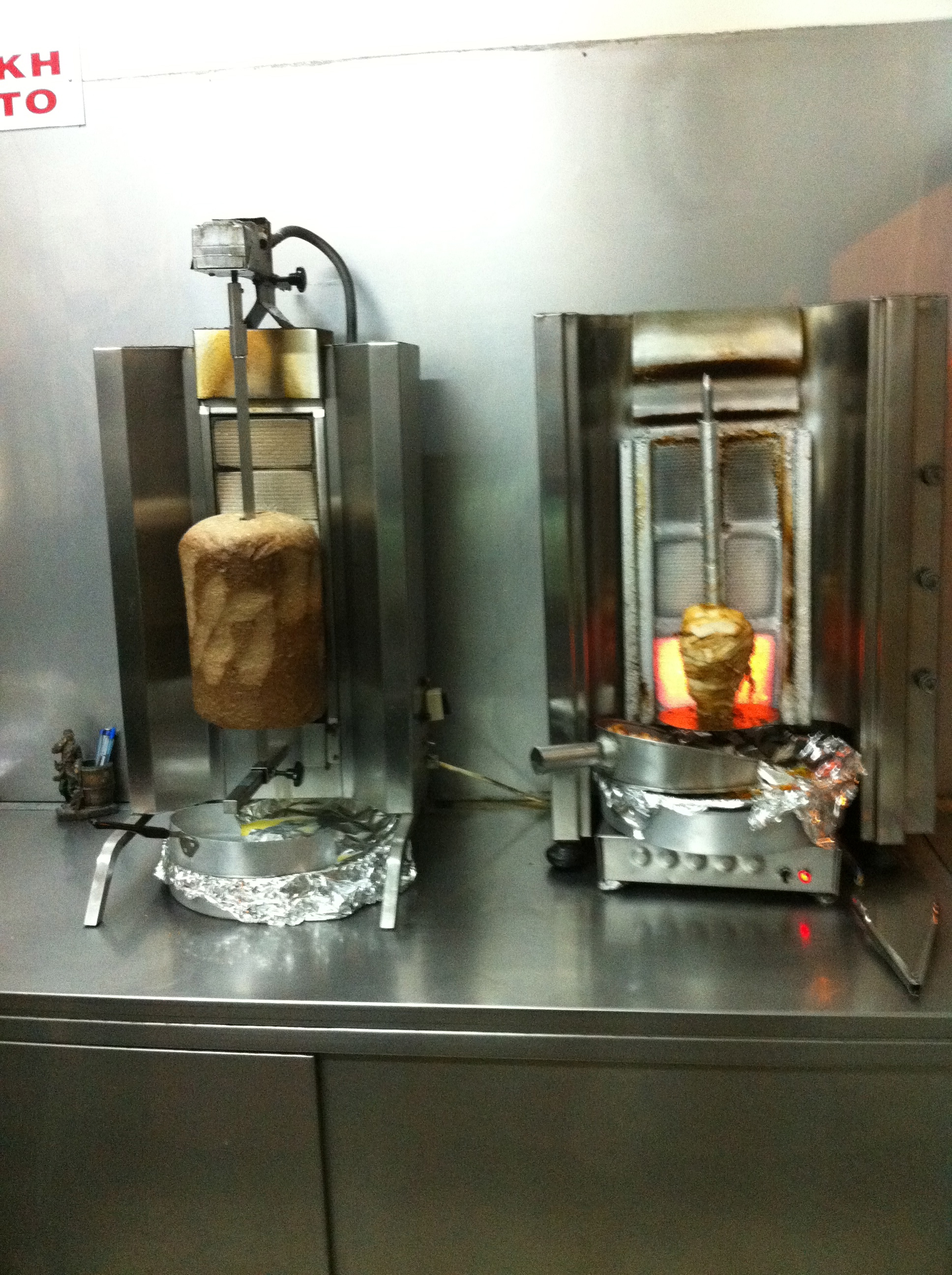
They then took me for some cyprus fast food take out to eat at their home — souvlakia, shieftalia, and gyro, which was excellent. I told them I’d be up for eating anything except squid, octopus, and anything from a US chain.

Day 5 Part 1 Jan. 31 First Day in the School

Leave a comment

I’ve decided to have two posts per day at least for today, one for the school and one for everything else. I taught a lesson over three days of about 75 minutes per day at Horace Mann Elementary School in Indiana, PA. I had the absolute best teacher to work with for this project, Katie Bungo, who has been a colleague for many years. She began as a participant in our graduate classes designed for teachers many years ago. The spring after the summer workshops, the teachers give presentations of how they had actually implemented the ideas for hands-on, conceptually-based math instruction. She had done with her students every idea we had, she had improved them, and she had come up with several wonderful new ideas.  We hired her the next year and many years since to be an co-instructor in our classes. She had gone through a lesson study experience about this exact lesson so I almost got her to do the lesson while I could sit in the back and watch. Fortunately, I decided to do it myself since I would be doing it in Cyprus and later, in South Korea.

I think I can explain the lesson in terms that are understandable to someone who may just barely care. The children’s literature piece is called “Spaghetti and Meatballs for All” by Marilyn Burns. A couple decides to have a dinner party for 32. They rent 8 tables so that four people can sit at each table. As people come early to the party, they push tables together so that people can talk while waiting. For example, they push two tables together and now six people can sit at those two tables. I get the fifth graders to put two square tiles together and count that six people can sit there. The story continues with new configurations. (If you’re still following, you might want to draw the next part out) I let the students come up with their own configurations before showing them what the book did. For example, one way to get 20 people is to have a row of four tables that would hold 10 and then another row of 4 tables (tiles).

As the story and the children’s models change, I introduce the terms “area” for the number of tiles and “perimeter” as equal to the number of people. The main goal is for children to understand these two key concepts in a gut way. I also have the goals of having them see how perimeter and area relate to each other and of course, problem solving, where they hopefully become more flexible thinkers and use their imagination in math. The great Dr. Stephen Brown’s influence is also felt by me having students pose problems. I spent quite a bit of time one day having them follow up on their question of what happens when tables overlap by 1/2 unit.

It went really well with the Cyprus students the first day. Katie had her students write pen pal letters to the Cyprus students, which included pictures. They were wonderful letters and I’m hoping students on both ends get a bit of a similar multicultural experience from what I got in Africa (see Day 4). I gave the pen pal letters out first thing since the teachers had mentioned it to them and it was an excellent ice breaker. They were very excited and definitely interested in replying.

I’m forgot to check whether it’s OK to post video clips or photos of the kids. I’ll check with the headmaster. For now, I’m attaching some photos that don’t include faces. I’m not sure at this point whether I’ll be able to give my question at the end that I gave students in Horace Mann. It was a tough question and originally designed for teachers.

The students seemed very bright and excited. They caught on very quickly and didn’t seem to have many counting problems, there were some. I taught for 4 periods of 40 minutes, 2 periods for each class. They go to school from 8-1:30 and have recess twice each day for 20 minutes each session. They had a recess area that was partly outside on the second floor for the upper grades. The students were of quite a mix of ethnicities. One student asked if I had ever been to Georgia and I said I had. I was about to ask if she had been to Atlanta when I realized she meant the Georgia Republic from the former Soviet Union. There are many Eastern Europeans, Greek, and of course Cypriots. The teachers seemed to have all lived at some point in England or possibly the US or Australia. I think it’s a requirement, but they’re mostly Cypriot, although at least one is from Virginia and one from Australia.

Here’s some student work from the first day.


Second Floor Playground

Day 4 Jan. 30 Recovery

2 Comments

I was getting annoyed with the shower when I got here because no matter how much I turned the control to the left, it didn’t get hot. Fortunately, some elementary problem solving skills clicked in and I turned it to the right and got almost scalded. We treat “left” so badly — “left behind”, “left-handed compliment”, “leftovers”. Left handed people are “left” with few if any left handed desks and so on. Literally on the other hand, we have “our inalienable rights”, the “right” way to do it. Just another form of discrimination but driving on the left does disturb me a bit. As long as I look both ways like we were taught as kids, I should be OK. The history of driving on the left is supposedly that the driver wants to use his right hand to attack people coming the other way if needed. If the driver is on the right side (as they are when the vehicle drives on the left), the sword is in a better position. Then during the French revolution, royalty drove on the left and forced the peasants out of their way to the right. When they overthrew the monarchy, they switched to the right.

Do you care about any of that? Sorry if you don’t. It feels good to me to ramble about something probably mostly unrelated to get started. Getting back to my travels, my hosts took me on a tour of Limassol including a packed pizza and pasta place. In the late 1980’s I decided I was sick of pizza and would only eat it when everyone else was and other options were scarce. It’s taken me up to last year to get over it. I especially liked the very thin crust, the greek spices, and the real tomato taste. We then went to a child care fair that their children were involved with. I used to be chair of the board of directors of the Indiana County Child Day Care organization (which has since improved their name) so it was interesting to see that things seemed pretty much the same.

Another ramble here, it’s good to rediscover that child care and so much of life in some very different cultures is almost the same. I was in Africa for half a year as a ninth grader. I was the first ever European to go to that high school. I was scared at first but discovered that we had many of the same tastes — stupid jokes, dropping pens at a pre-arranged time, trying to avoid homework, and so on. However, when we described our homes and our food tastes and many other things, we were in very different worlds. It was the classic multicultural moment, we’re the same underneath even though we have many valuable differences.

Back to the hotel for what seems like will be a four week recovery, simultaneous to the four week trip.

Newer Entries